Problem solving enhancement Worksheets for Ages 6-9
3 filtered results
-
From - To
Discover our engaging Problem Solving Enhancement Worksheets designed specifically for children ages 6 to 9! These specially crafted resources encourage young learners to develop essential critical thinking and analytical skills through fun, interactive activities. Each worksheet aims to challenge and stimulate young minds, helping them tackle a variety of problems and cultivate logical reasoning abilities. From puzzles to scenario-based questions, our materials promote confidence and creativity in problem-solving. Ideal for classroom use or at-home practice, these worksheets are perfect for reinforcing essential skills needed for academic success. Start your child’s journey towards becoming a confident problem solver today!
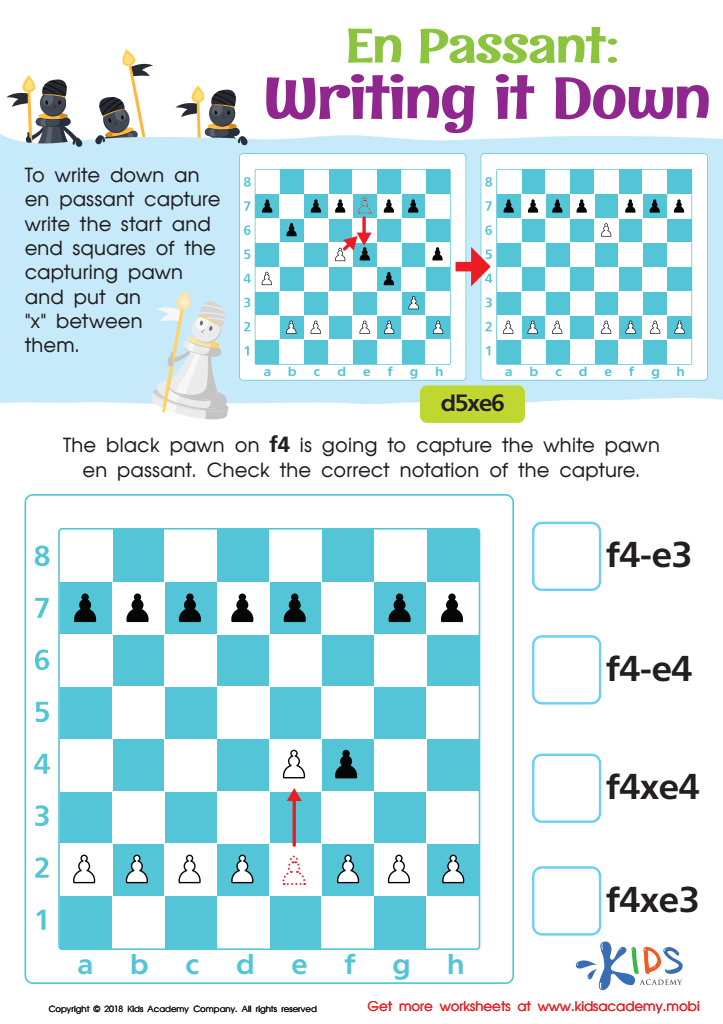
En Passant: Writing it Down Worksheet
 Assign to My Students
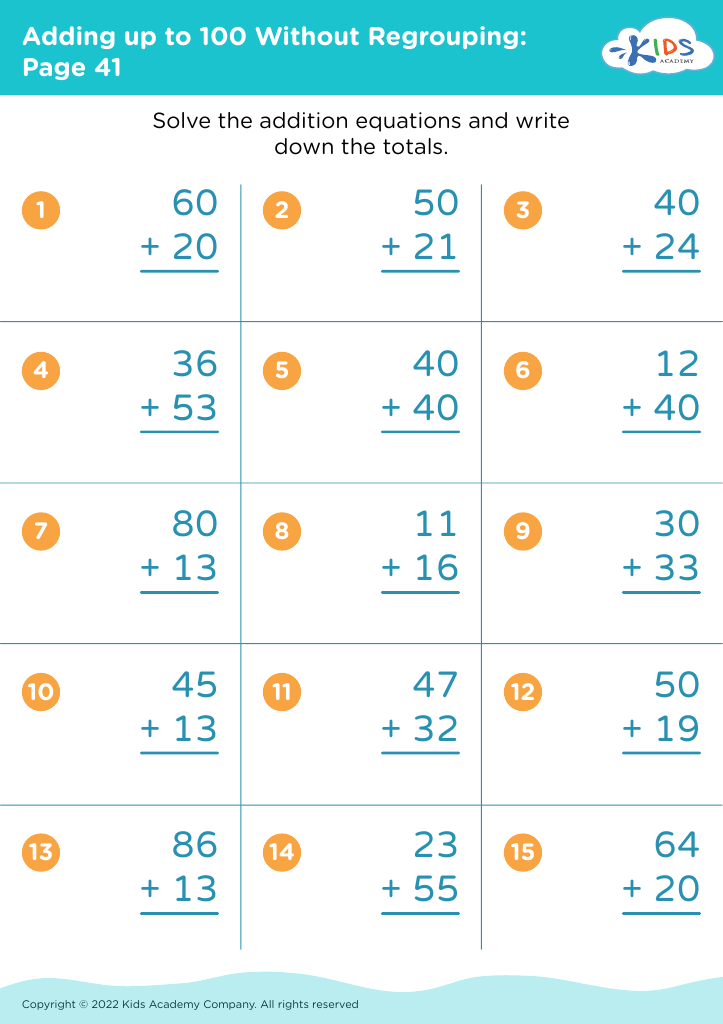

Notation of Checkmate Worksheet







Problem solving enhancement for ages 6-9 is crucial as it lays the foundation for critical thinking and cognitive skills essential for lifelong learning. During these formative years, children's brains are highly adaptable, making it an ideal time to cultivate strong problem-solving abilities. Engaging in problem-solving activities boosts creativity and encourages a growth mindset, which helps children approach challenges positively and persistently.
Moreover, problem-solving skills extend beyond mathematics or puzzles; they improve social skills as children learn to collaborate, communicate, and negotiate with peers. These skills are applicable in various real-world situations, fostering independence and resilience. Teachers and parents can play a significant role by integrating problem-solving tasks into everyday learning, making abstract concepts relatable.
Additionally, promoting problem-solving can enhance students' academic performance. Children learn to approach complex tasks systematically, breaking them down into manageable steps. This mastery not only boosts their confidence but also encourages them to tackle difficult subjects with enthusiasm.
In a rapidly changing world, the ability to solve problems creatively and effectively is more crucial than ever. Supporting problem-solving enhancement in young minds not only prepares them for academic success but also equips them with vital life skills for future challenges.








