Sound Association Worksheets for Ages 6-9 - Page 2
26 filtered results
-
From - To
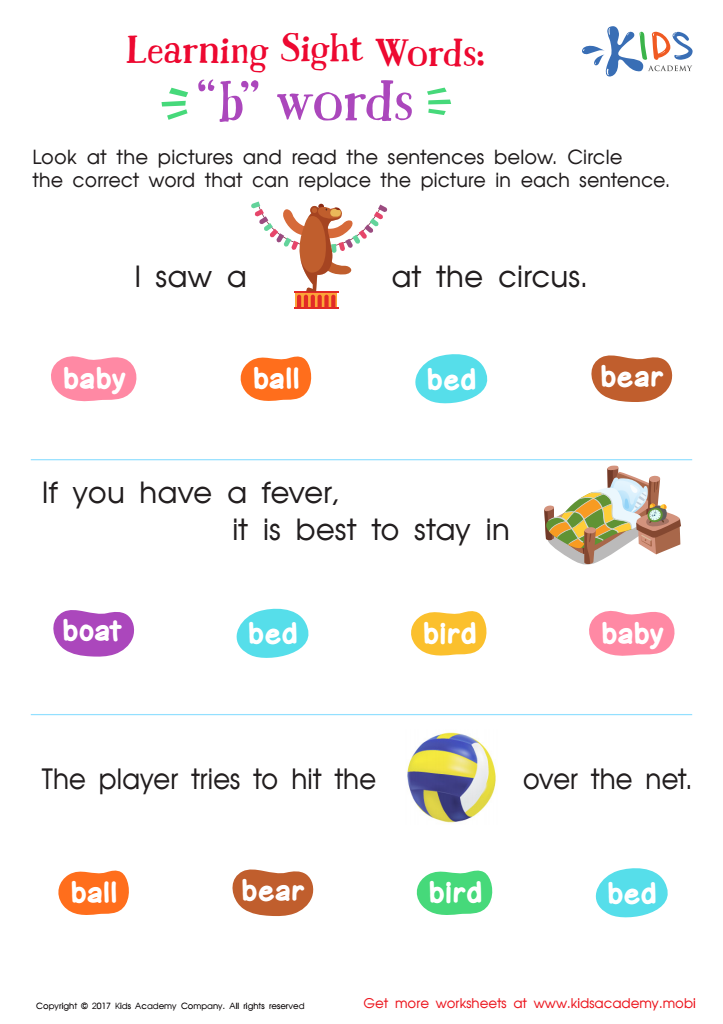
"B" Words Printable Sight Words Worksheet
 Assign to My Students
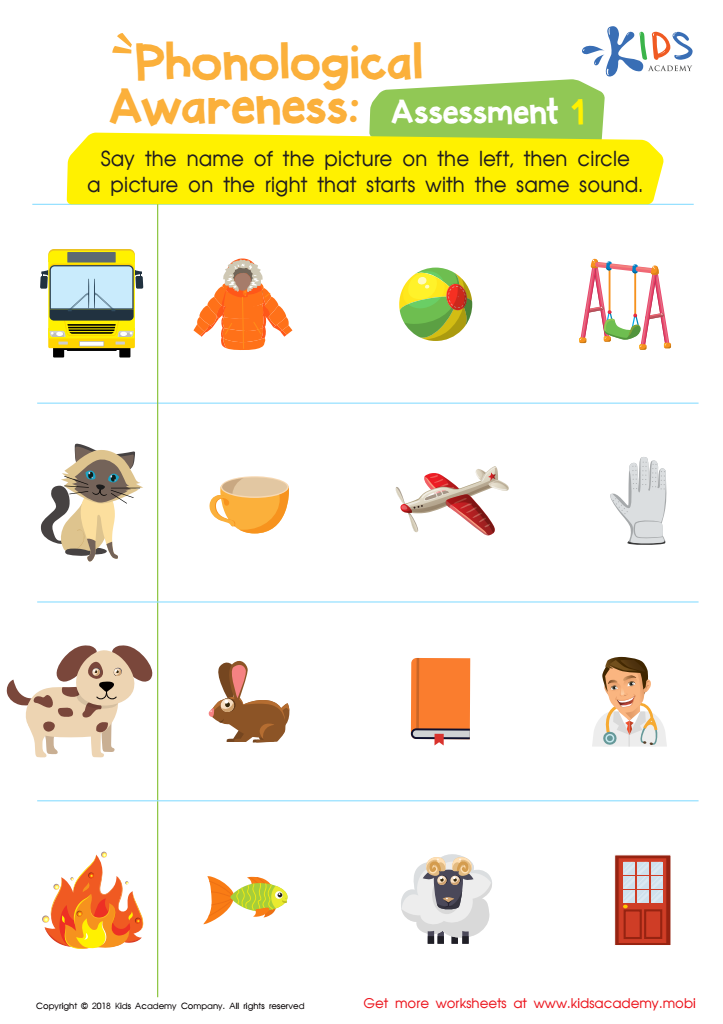
Phonological Awareness: Assessment 1 Worksheet








Sound association is a critical component of early literacy development for children ages 6-9. During these formative years, children are learning to decode words, and the ability to associate sounds with letters and letter combinations lays the foundation for reading proficiency. By focusing on sound association, parents and teachers can enhance a child's ability to blend sounds, recognize phonemes, and develop spelling skills, which are vital for effective communication.
Moreover, strong sound association skills support vocabulary development. As children learn to connect sounds with letters, they become more adept at breaking down unfamiliar words, thereby expanding their vocabulary and reading comprehension. Engaging children in activities that promote sound recognition, such as phonemic awareness games, songs, and interactive stories, can make learning enjoyable and effective.
In addition, fostering sound association contributes to increased confidence in reading, enabling children to approach new texts with a positive mindset. Parents and teachers play a crucial role in nurturing this skill; by being involved in the learning process, they can reinforce its importance and make a lasting impact on a child's educational journey. Overall, sound association is essential for developing an early love for reading, setting the stage for academic success.








