
Sound-letter association Worksheets for Ages 6-9
6 filtered results
Difficulty Level
Grade
Age
-
From - To
Subject
Activity
Standards
Boost your child's reading and spelling skills with our Sound-Letter Association Worksheets designed for ages 6-9. These engaging worksheets help young learners connect sounds to their corresponding letters, fostering essential phonics skills. Featuring colorful images and fun activities, our printables make learning enjoyable and effective. Perfect for both classroom and home use, they support children in identifying sounds, crafting words, and enhancing their literacy foundation. Parents and educators can easily access, print, and incorporate these worksheets into daily practice to ensure young readers achieve phonological awareness and improved language proficiency. Start exploring now!
Favorites
With answer key
Interactive
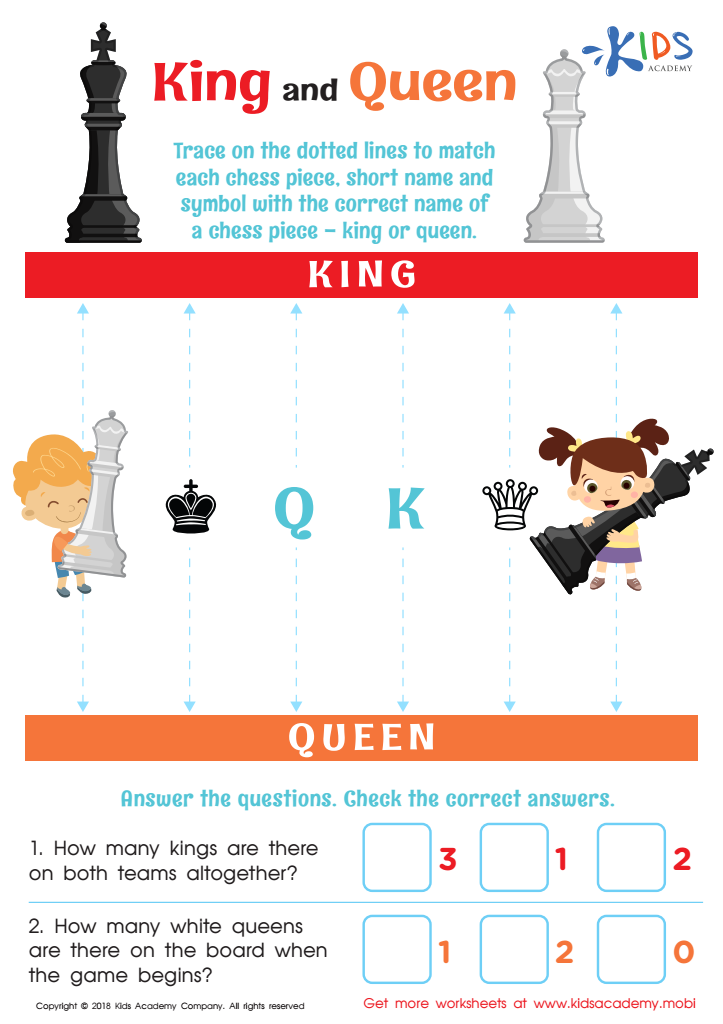
King and Queen Worksheet
Instruct your kids to trace the dotted lines to match each chess piece, short name, and symbol with either king or queen.Answer the questions at the bottom and check the answers. This exercise will help your children to differentiate between a king and queen chess piece and know their symbols.
King and Queen Worksheet
Worksheet
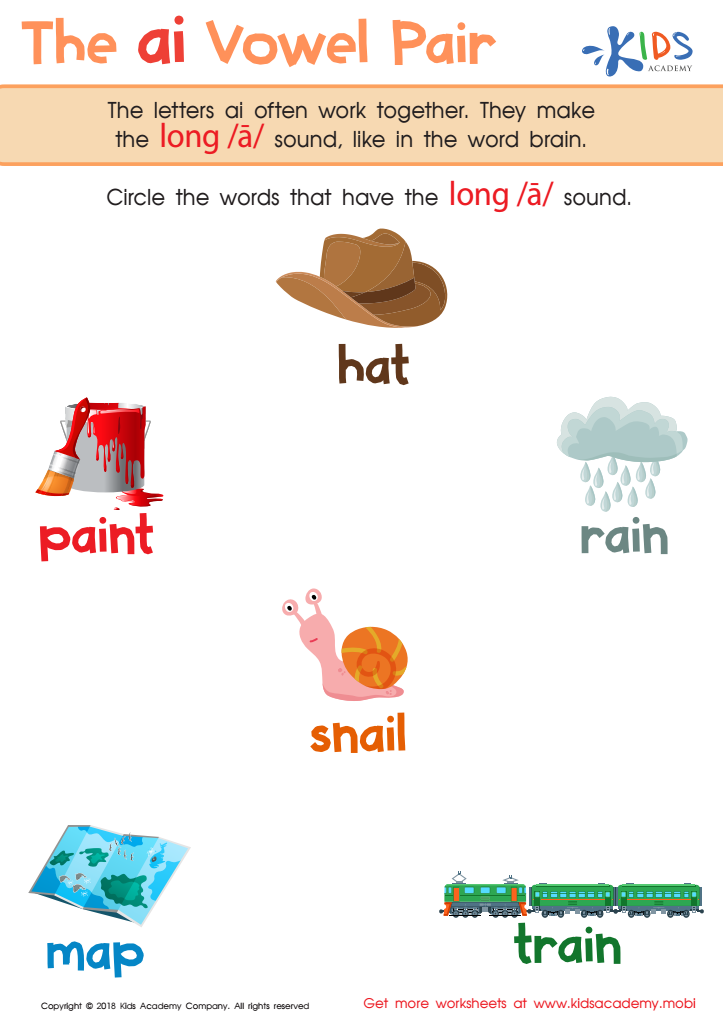
The AI Vowel Pair Worksheet
Vowel pairs make different sounds than individual letters. The 'ai' combination often forms the long /a/ sound, like in 'brain' and 'strain'. Get your kids to look at the pictures in the worksheet, identify each and say the name aloud. Help them circle the words with the long /a/ sound.
The AI Vowel Pair Worksheet
Worksheet
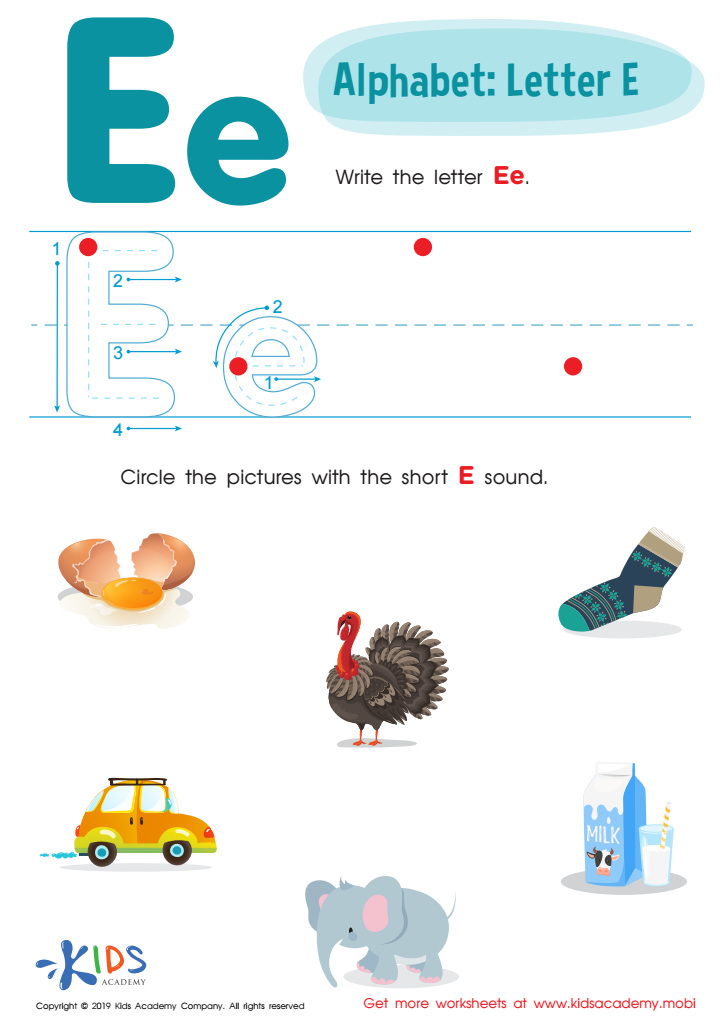
Letter E Tracing Worksheet
Students trace and write uppercase and lowercase letter E. They sound out "E" words, choosing those with short "E" sounds. Preschoolers identify the difference between the 'E' sounds in words like "egg" and "turkey." A tracing sheet helps them to understand.
Letter E Tracing Worksheet
Worksheet
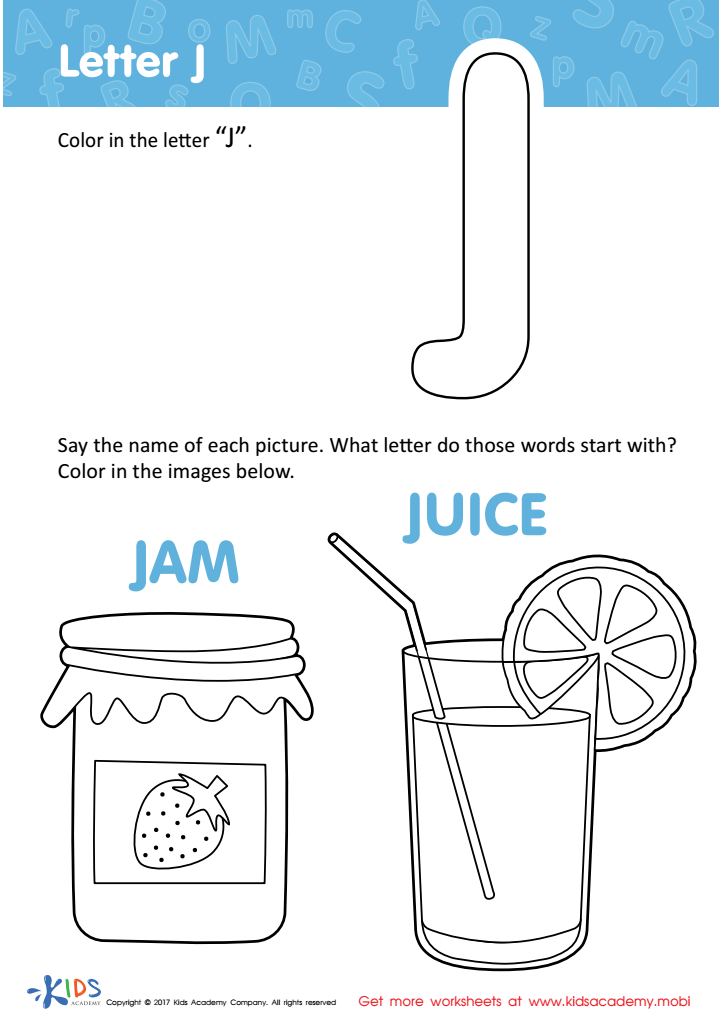
Letter J Coloring Sheet
Practice the letter 'J' with your little one with this fun coloring page! Pictures of jar, juice, jam and jelly make it an enjoyable experience for kids. Learning the letter and coloring is fun for even the youngest learners.
Download (PDF)
 Assign to My Students
Assign to My Students
Letter J Coloring Sheet
Worksheet
Join Kids Academy for Free
Who is primarily going to use this learning content?








Sound-letter association is the cornerstone of early reading and writing skills for children ages 6-9, a critical developmental period. During this stage, young learners begin to connect specific sounds (phonemes) with their corresponding letters or letter combinations (graphemes). Mastery of this concept is crucial for several reasons.
First, sound-letter association enables children to decode words, a fundamental ability for fluent reading. Decoding allows them to sound out and blend letters to form words, facilitating word recognition and comprehension. Without this skill, reading becomes a guessing game, making it difficult for children to progress.
Second, strong sound-letter association skills underpin spelling proficiency. Understanding that sounds map to letters helps children spell words accurately, which is essential for effective written communication. This improves their overall literacy and academic performance as they advance through school.
Additionally, this skill enhances phonemic awareness, allowing children to manipulate sounds within words, an ability pivotal for tasks like rhyming and segmenting. Phonemic awareness is not only a predictor of reading success but also critical for developing more complex literacy skills.
Lastly, fostering this association builds confidence and motivation in young learners. When children can read and write effectively, they are more likely to enjoy learning and develop a lifelong love for reading. Therefore, investing time in teaching sound-letter associations lays a solid foundation for all future literacy endeavors.








