Spatial Orientation Worksheets for Ages 6-9
7 filtered results
-
From - To
Spatial Orientation Worksheets for Ages 6-9 are designed to bolster your child's spatial awareness and cognitive skills through fun, engaging exercises. These expertly crafted worksheets from Kids Academy help young learners master directions, shapes, and object positioning. Suitable for home or classroom use, they incorporate vibrant visuals and activities that challenge students to think critically and solve puzzles. Ideal for children ages 6-9, these worksheets not only enhance spatial orientation but also improve problem-solving and fine motor skills, making foundational learning enjoyable and effective. Start nurturing your child's spatial intelligence and confidence today!
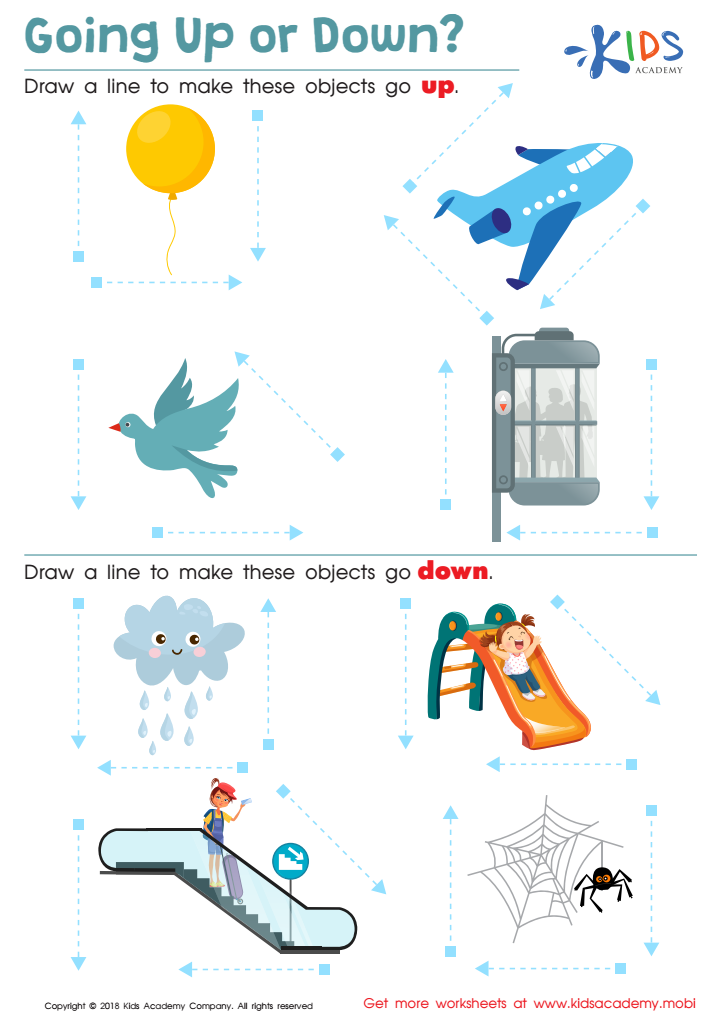
Going up or Down? Worksheet
 Assign to My Students
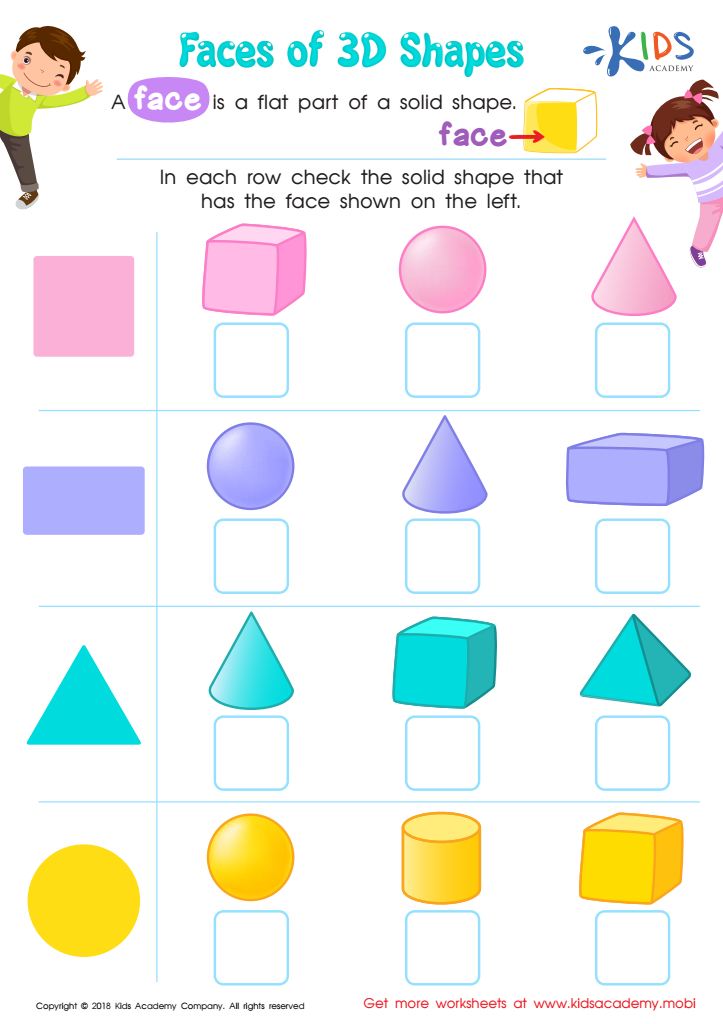
Faces of 3D Shapes Worksheet
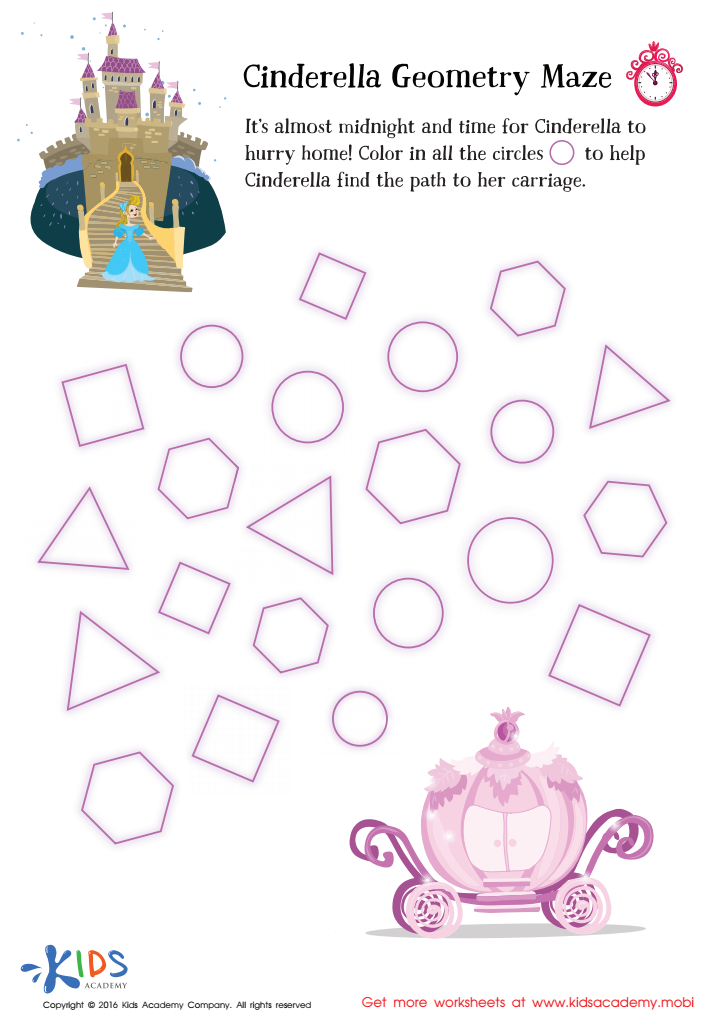
Cinderella Geometry Maze Worksheet
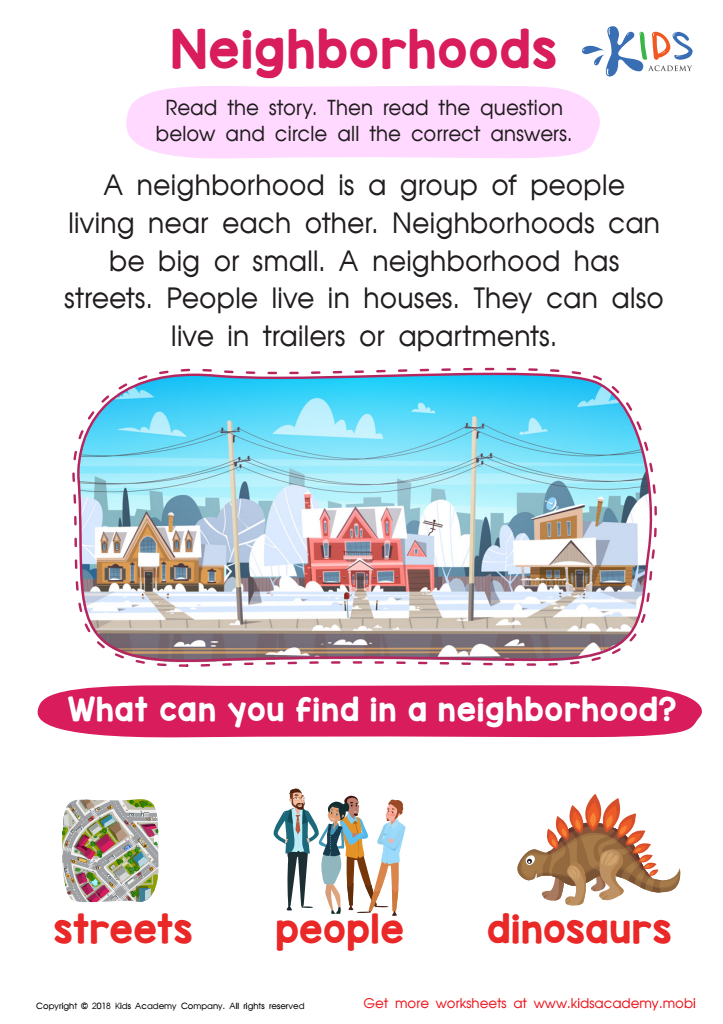
Neighborhoods Worksheet
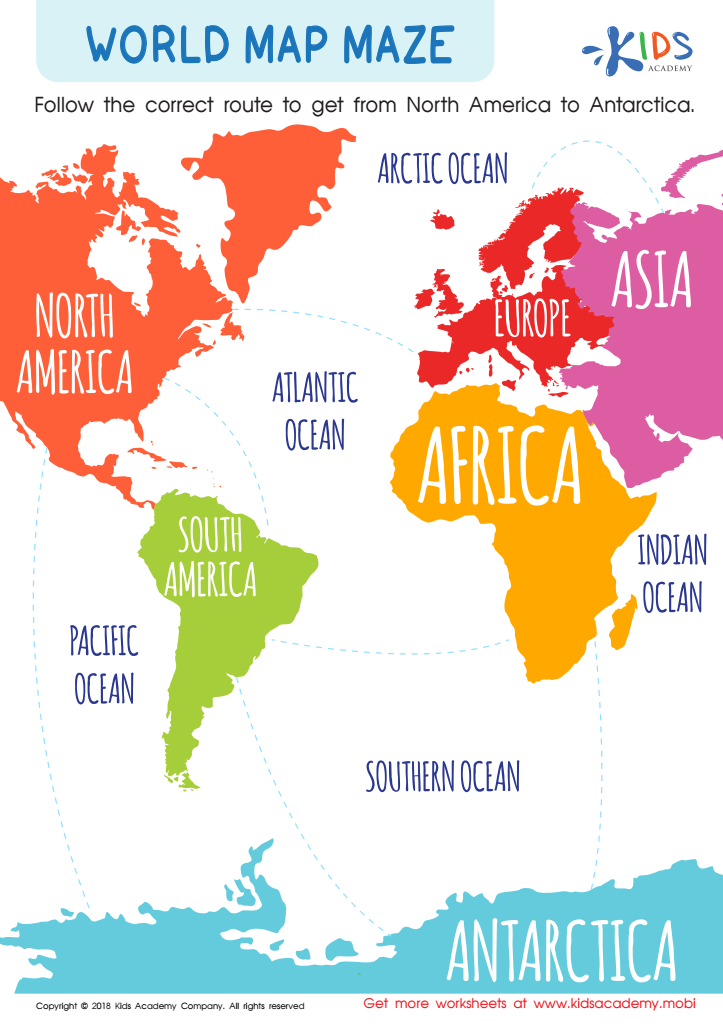
World Map Maze Worksheet
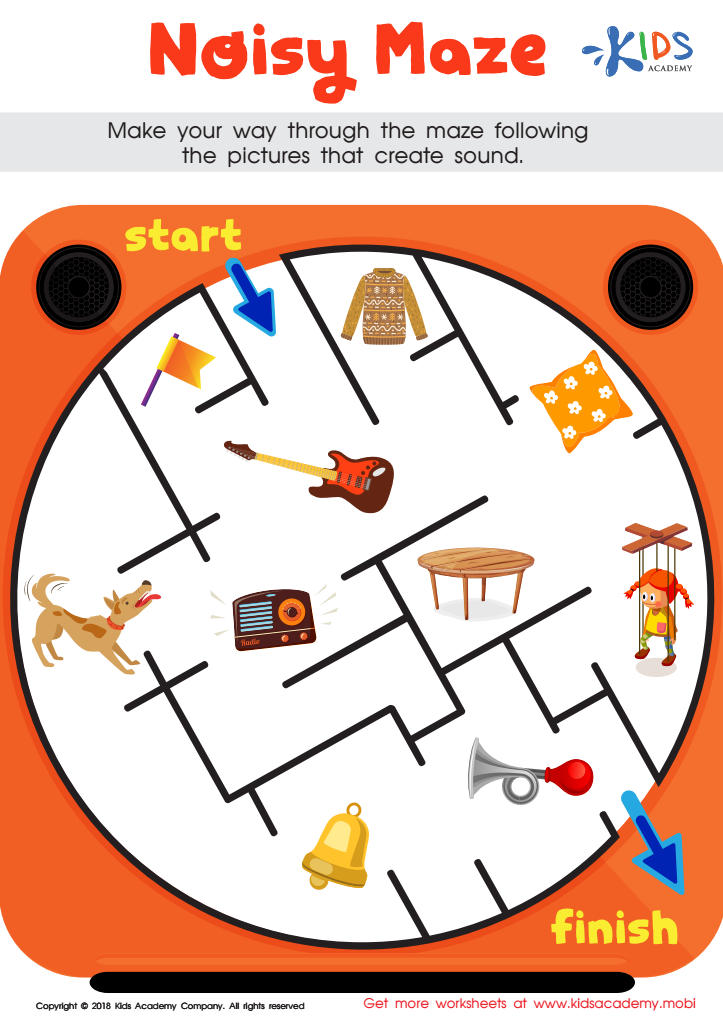
Noisy Maze Worksheet








Spatial orientation is a crucial developmental skill for children ages 6-9, as it profoundly influences their cognitive and daily functioning. Parents and teachers should prioritize this aspect of development for several compelling reasons.
Firstly, spatial orientation underpins mathematical understanding. Children who develop strong spatial skills can better grasp basic math concepts, crucial for subjects like geometry, measurement, and problem-solving. This early familiarity lays a foundation that can enhance overall academic performance.
Secondly, spatial skills enhance everyday practical abilities. With strong spatial orientation, children manage daily tasks more effectively, such as reading maps, following directions, and organizing their personal spaces. These abilities contribute to their independence and self-confidence.
Moreover, improved spatial orientation benefits physical activities. Children with good spatial awareness navigate their environments more safely and confidently, whether during play, sports, or everyday movements. This helps promote an active and healthy lifestyle from an early age.
Lastly, fostering spatial orientation supports STEM (Science, Technology, Engineering, Mathematics) readiness. Many careers in these growing fields require robust spatial skills. Encouraging development in this area from a young age can help children adapt to future educational and career opportunities.
In summary, prioritizing spatial orientation in early education equips children with essential life skills, aids academic growth, fosters practical independence, and prepares them for future STEM endeavors, making it an invaluable focus for parents and teachers alike.








