Synonym identification Worksheets for Ages 6-9
3 filtered results
-
From - To
Discover our engaging Synonym Identification Worksheets designed for children aged 6 to 9! These interactive resources help young learners develop their vocabulary and language skills by identifying synonyms through fun activities. Each worksheet features age-appropriate exercises that encourage critical thinking and expand word understanding. Perfect for home or classroom use, our worksheets promote self-paced learning while fostering creativity and confidence in language arts. Watch your child thrive as they explore the world of words, enhance their communication skills, and build a strong foundation for future reading and writing success. Download your worksheets today and inspire a love for language!
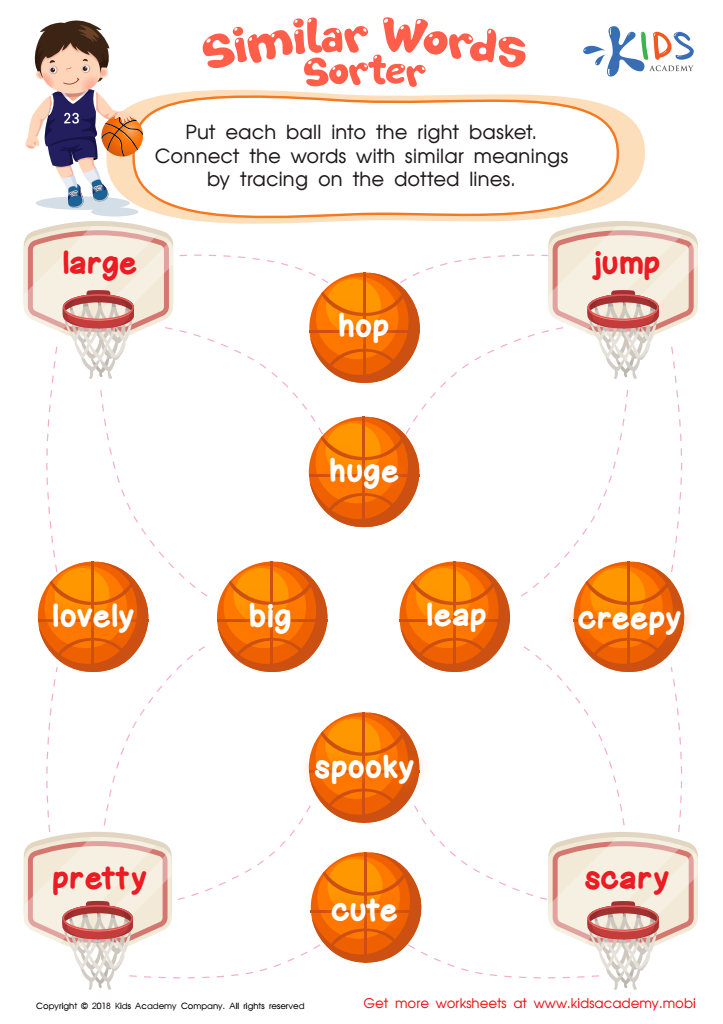
Similar Words Worksheet
 Assign to My Students
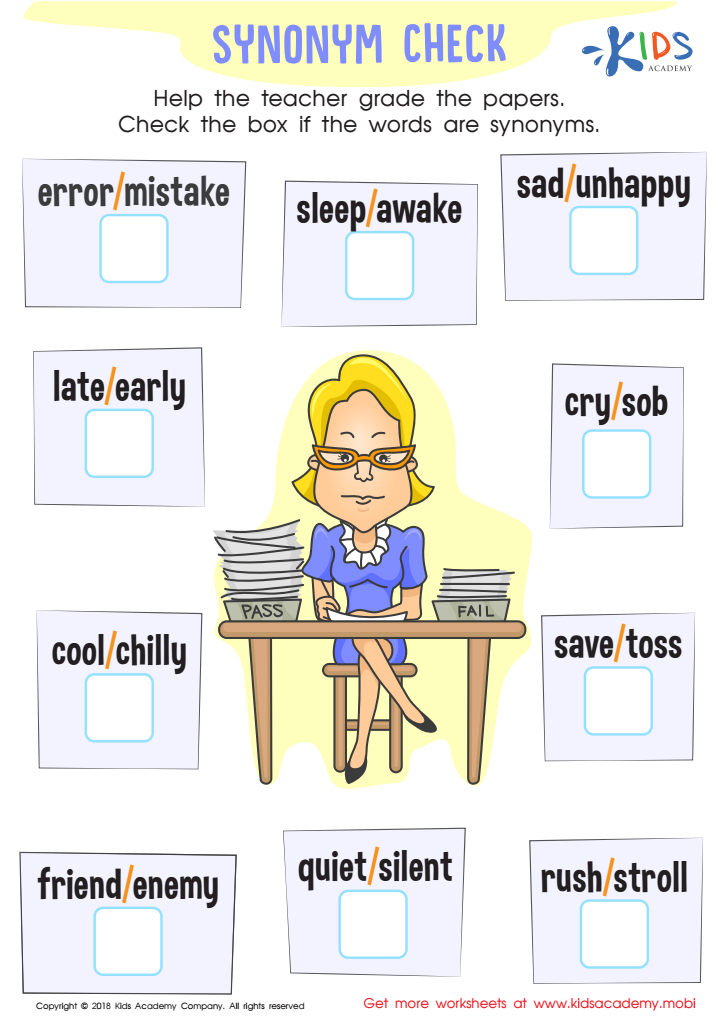
Synonym Check Worksheet
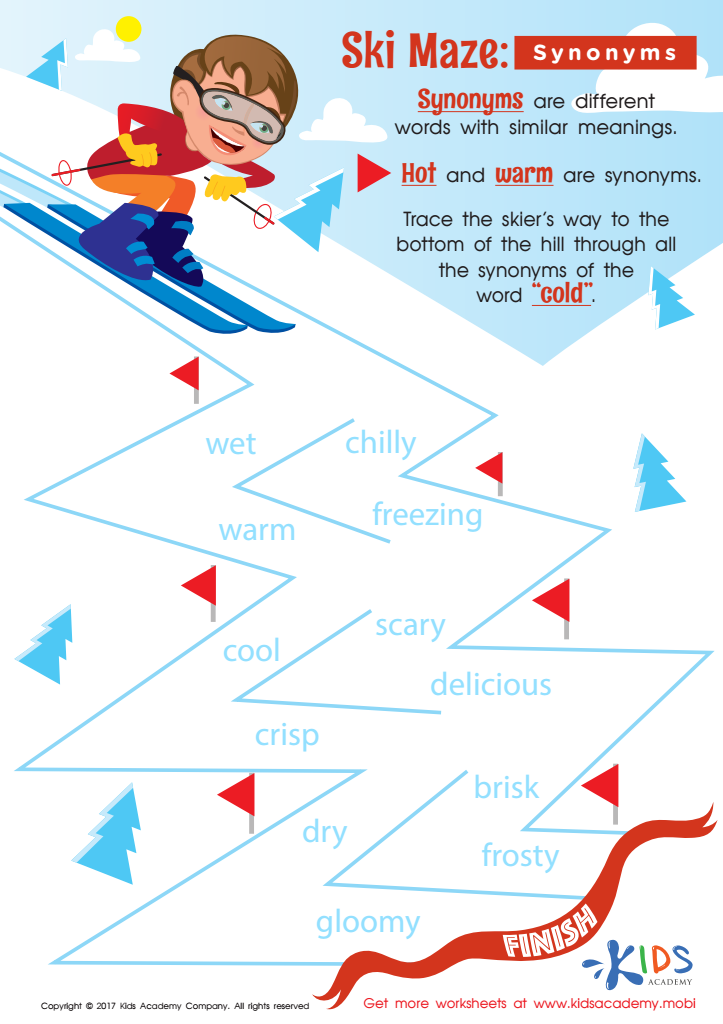
Free Printable Synonym Worksheet







Synonym identification is a vital skill for children aged 6-9 as it enhances their vocabulary development and improves reading comprehension. By understanding synonyms—words that have similar meanings—children can express themselves more effectively and enhance their communication skills. This knowledge encourages them to explore diverse language formats, fostering creativity in their writing.
Furthermore, synonym recognition contributes to cognitive development. It challenges students to differentiate subtle meanings between words, strengthening their analytical skills. As they engage with varied synonyms, their ability to understand context improves, allowing them to interpret texts more deeply.
For parents and teachers, fostering synonym identification can enrich language learning experiences at home and in the classroom. It provides an interactive way to support literacy, often through games and discussions that make the learning process enjoyable. This skill also lays a strong foundation for future language arts lessons, making more complex vocabulary and grammar easier to understand down the line.
Incorporating synonym identification into daily activities builds a culture of reading and learning. Ultimately, it empowers children, broadening their communicative capabilities and boosting their confidence in using language effectively. Therefore, emphasizing this skill is essential for nurturing well-rounded language proficiency in young learners.








