Time calculation skills Worksheets for Ages 6-9
3 filtered results
-
From - To
Discover our engaging Time Calculation Skills Worksheets designed specifically for children ages 6-9! Our collection aims to enhance young learners' understanding of time concepts through interactive exercises and fun activities. Each worksheet focuses on key skills such as telling time, understanding hours and minutes, and solving time-based problems. By practicing these essential mathematical skills, children will develop confidence in using time in their daily lives. Perfect for classroom use or at-home learning, our worksheets are made to foster critical thinking and improve time management abilities. Download today and help your child master the art of time calculation in an enjoyable way!
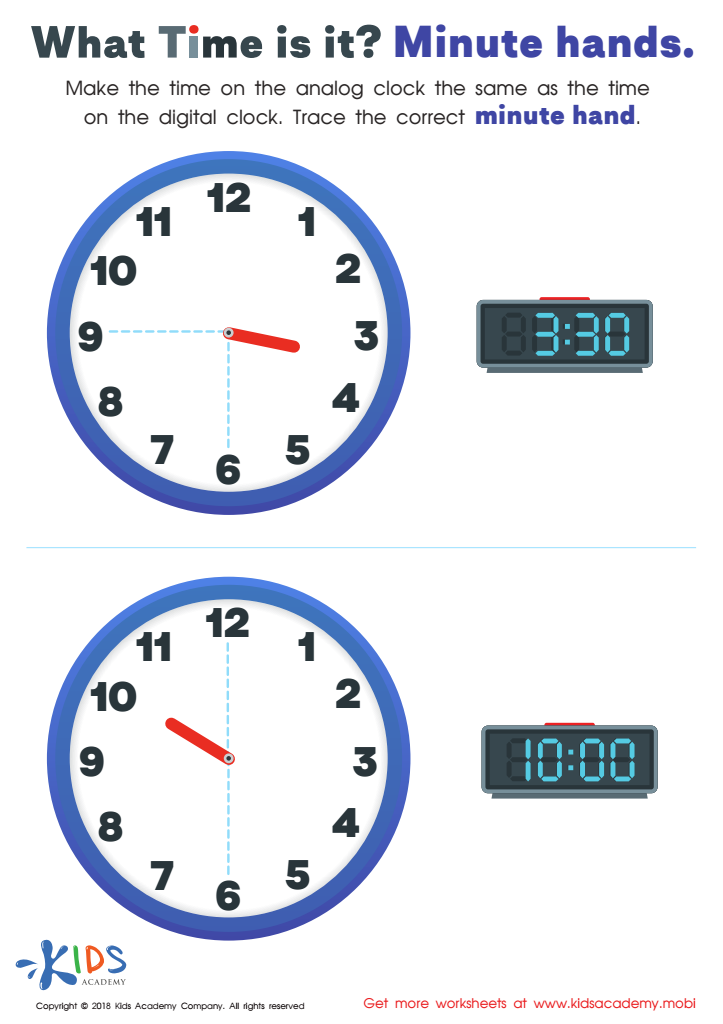
What Time Is it? Minute Hands Worksheet
 Assign to My Students
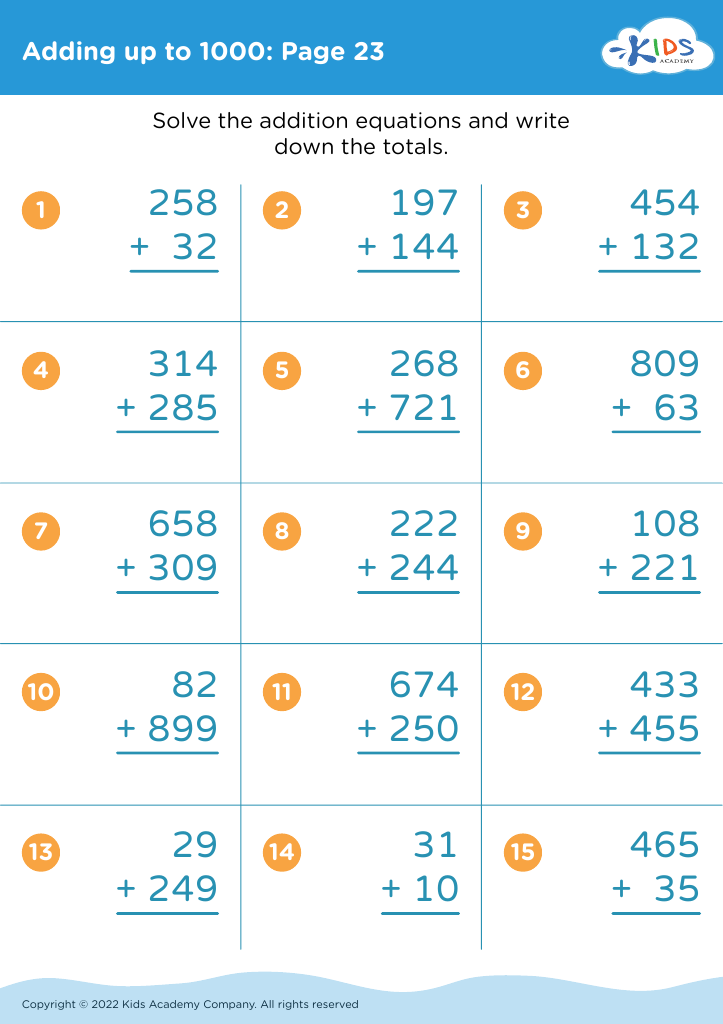
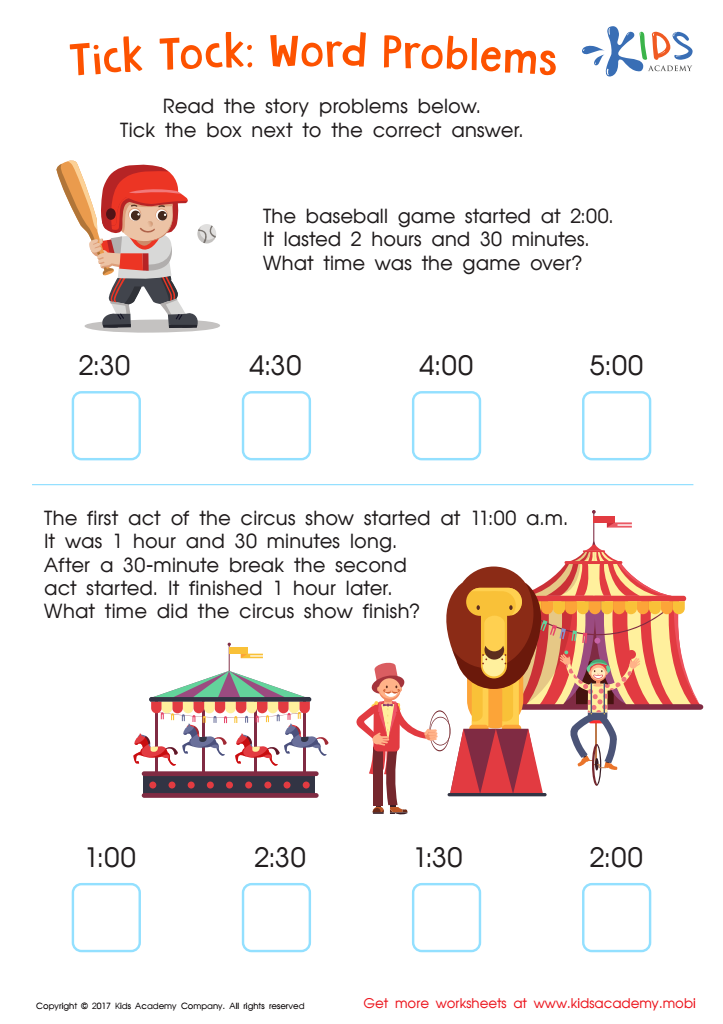
Tick Tock Word Problems Time Worksheet







Time calculation skills are essential for children ages 6-9, as they lay the foundation for everyday life and academic success. At this age, children are starting to grasp concepts of time, which influences their ability to manage daily routines, understand schedules, and develop responsibility. Being adept at reading both digital and analog clocks helps children appreciate punctuality and the concept of time management.
These skills also foster independence; when children can determine when to start and finish tasks, they build self-reliance and decision-making abilities. Beyond practical applications, time calculation enhances cognitive development. It involves critical thinking and helps children practice addition and subtraction, as they predict how long activities last or what time they need to leave for an event.
Furthermore, with regular exposure and practice, children improve their focus, attention to detail, and spatial awareness. Parents and teachers play a crucial role in reinforcing these skills through fun activities like time-tracking games, daily discussions about schedules, and integrating time concepts into storytelling. Understanding time allows children not just to function effectively in society but also to develop a sense of accomplishment and mastery, which are vital for future learning and self-esteem.








