Time recognition Worksheets for Ages 6-9
6 filtered results
-
From - To
Our Time Recognition Worksheets for Ages 6-9 are designed to make learning to tell time fun and engaging! Tailored specifically for early learners, these worksheets help children practice reading clocks, understanding hours and minutes, and differentiating between AM and PM. Through a variety of activities and exercises, kids will develop essential time-telling skills in a hands-on way that encourages retention and confidence. Perfect for both classroom use and homeschooling, these printables will support your child’s educational journey, making time recognition an enjoyable activity. Set your young learner on the path to time-telling mastery with our expertly crafted worksheets!
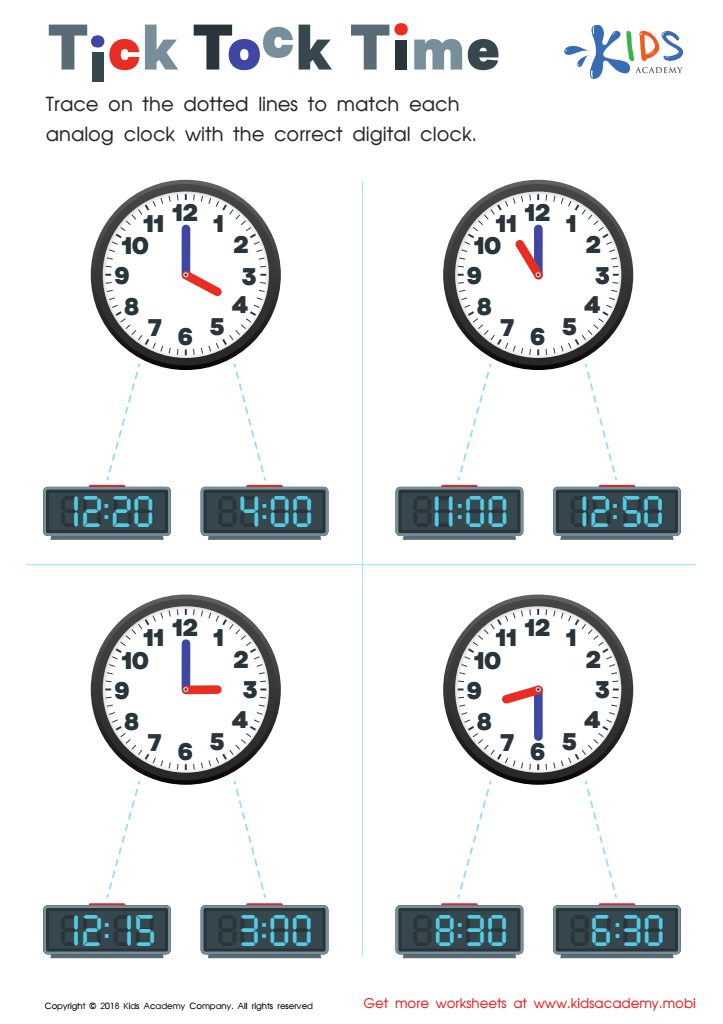
Tick Tock Time Worksheet
 Assign to My Students
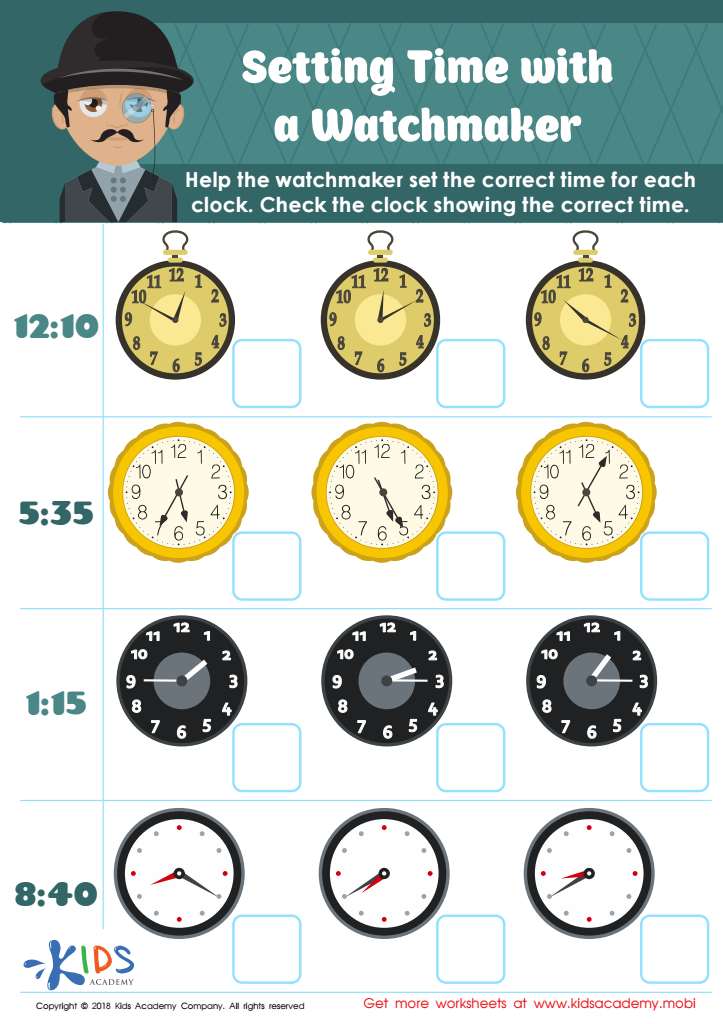
Setting Time with Watchmaker Worksheet
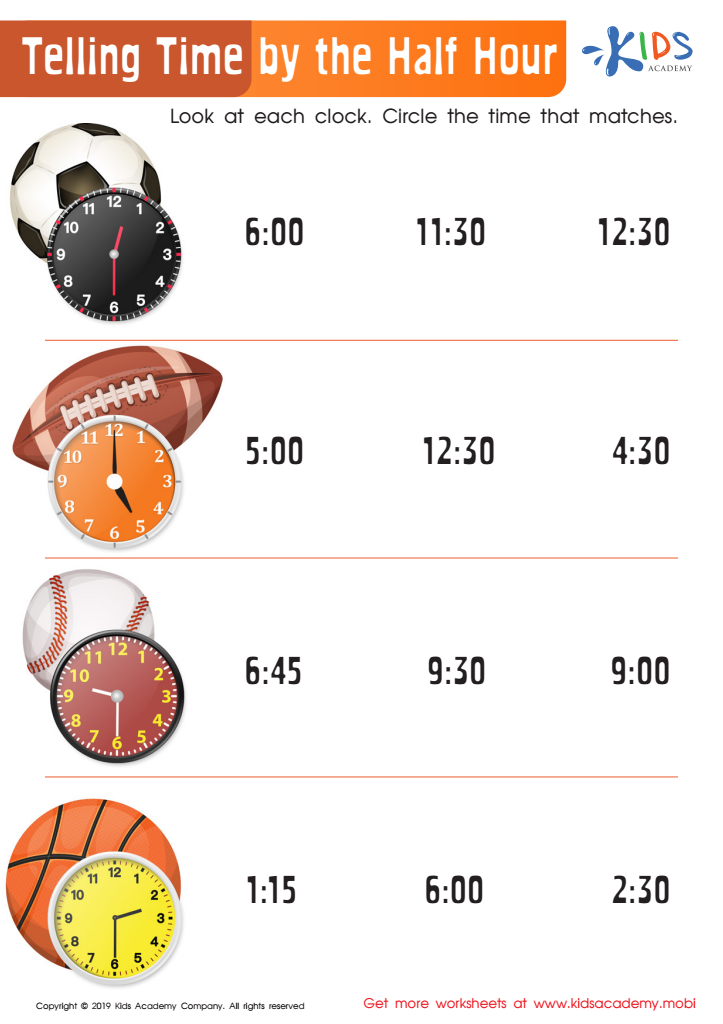
Telling Time by the Half Hour Worksheet
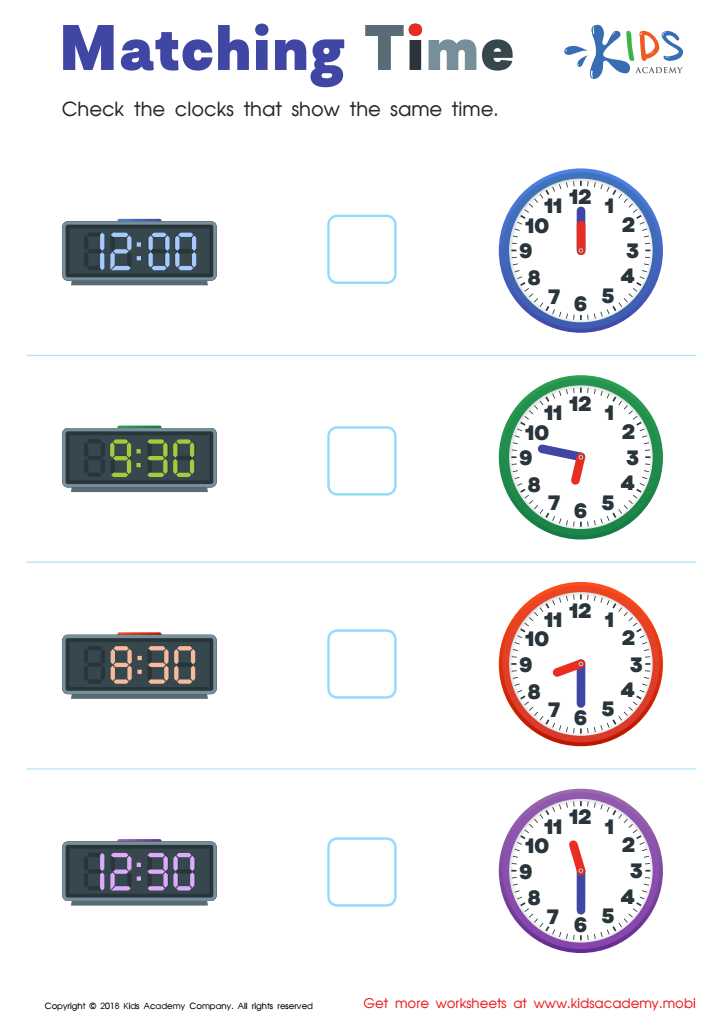
Matching Time Worksheet
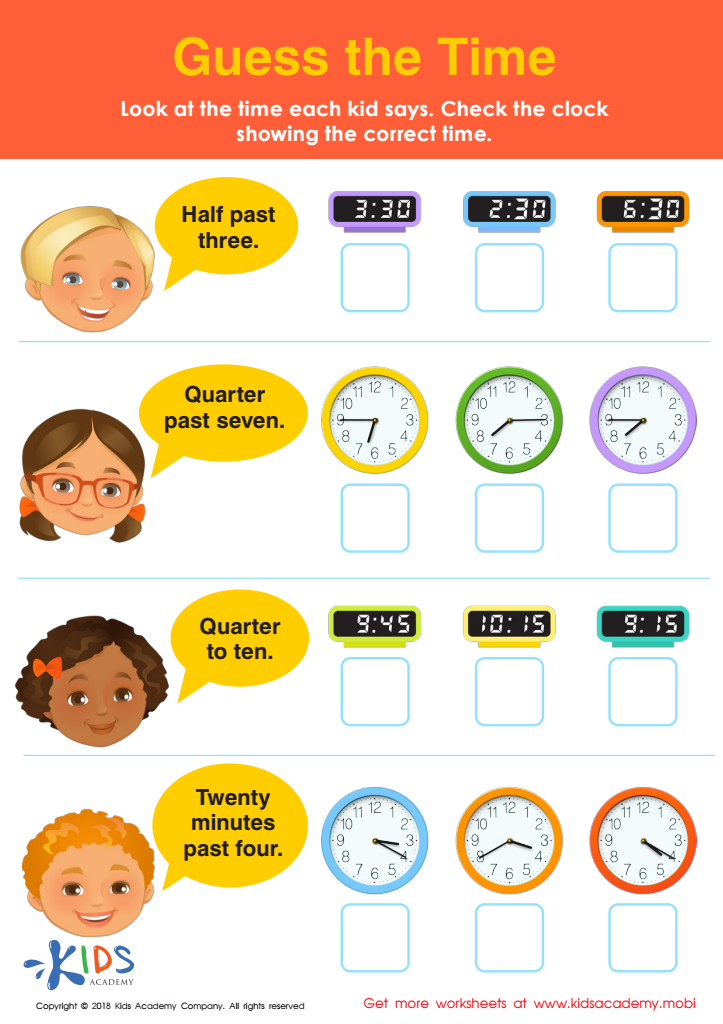
Guess the Time Worksheet
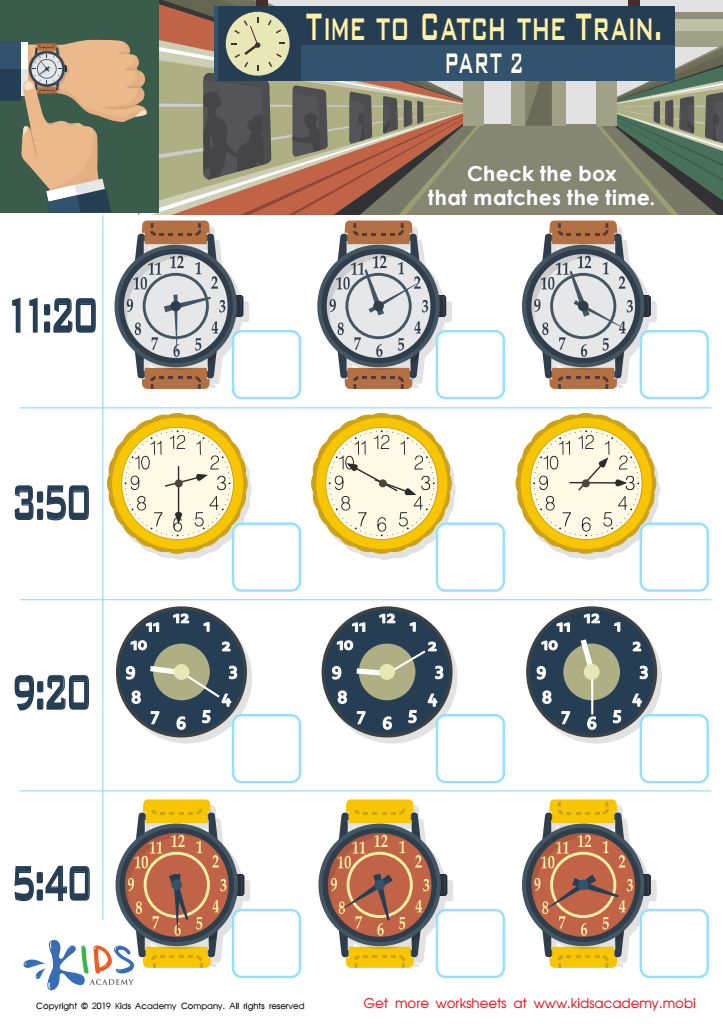
Time to Catch the Train Part 2 Worksheet








Parents and teachers should prioritize time recognition for children aged 6-9 because it plays a pivotal role in developing crucial life skills that contribute to their overall academic and personal success. First, learning to tell time fosters mathematical abilities as children engage with numbers, understand the concept of minutes and hours, and practice sequencing and pattern recognition. These foundational math skills are essential for more advanced mathematical concepts they will encounter later.
Secondly, time recognition helps children develop a sense of responsibility and time management. Knowing how to read a clock enables them to understand daily routines, meet deadlines, and develop habits critical for their future educational and professional lives. It teaches them the importance of punctuality, aiding in smoother transitions between daily activities and reducing stress for both children and caregivers.
Moreover, familiarizing children with concepts of time enhances their cognitive skills, specifically in building critical thinking and problem-solving abilities. By having a grasp of the temporal world, children learn cause and effect, sequencing events, and predicting outcomes.
Lastly, understanding time is essential for fostering independence. When children can read clocks and understand schedules, they can independently manage tasks like getting ready for school or bed, helping build confidence and self-reliance. Thus, early emphasis on time recognition sets a foundation for a child's academic performance and personal growth.








