Explore our "Understand Fractions Worksheets" designed for children aged 6-9. These engaging resources help young learners grasp essential fraction concepts through colorful visuals and interactive activities. Our worksheets cover key topics such as identifying fractions, comparing sizes, and simple addition and subtraction with fractions, catering to various learning styles. Perfect for classroom use or at-home practice, these printable materials foster mathematical proficiency and confidence in foundational skills. Each worksheet is structured to encourage critical thinking and problem-solving, making fractions fun and accessible! Join us in building strong math abilities for your child today!

Check out this FREE "Understand fractions" Trial Lesson for age 6-9!

Short and Long Vowel Sort

Favorites
With answer key
Interactive
  • 6-9
  • Understand fractions
Shared Food Worksheet

Shared Food Worksheet

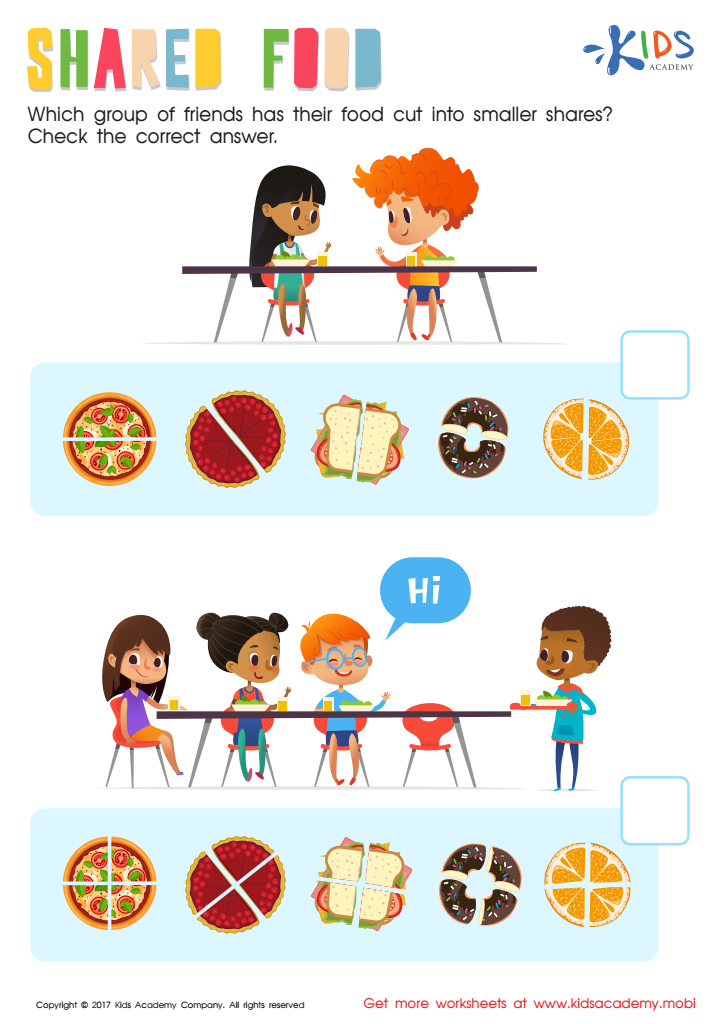
In this worksheet, kids learn about sharing and cutting shapes into equal parts. There are two groups of friends: one with two, the other with four. Ask your child which group has their food cut into smaller shares, and help them find the right answer.
Shared Food Worksheet
Worksheet
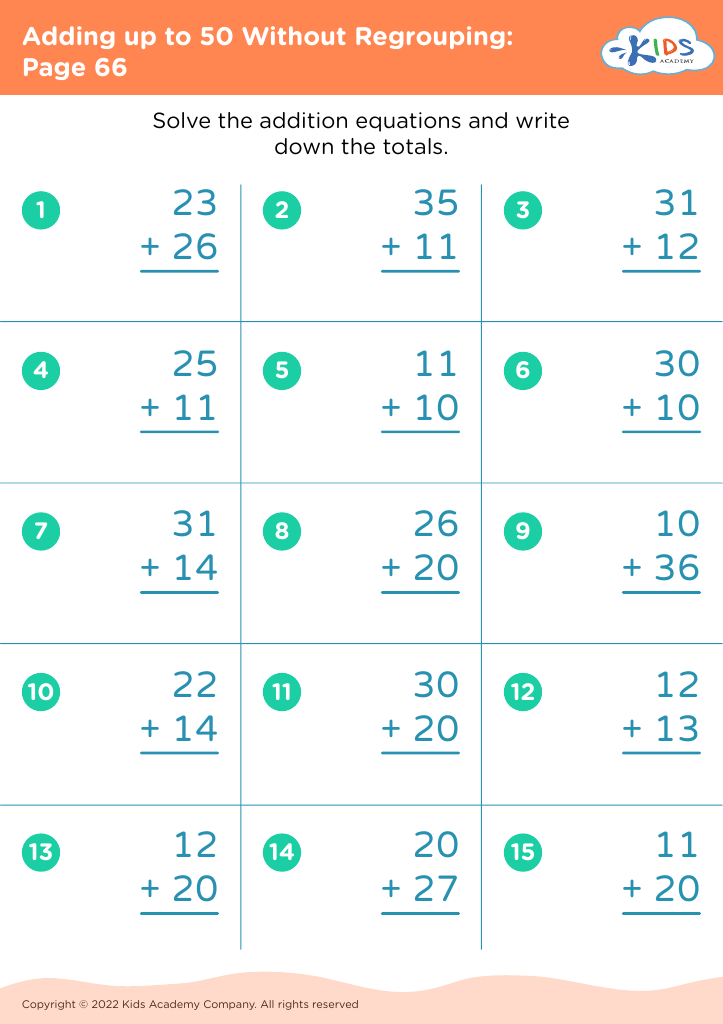
Adding up to 50 Without Regrouping: Page 66
Worksheet
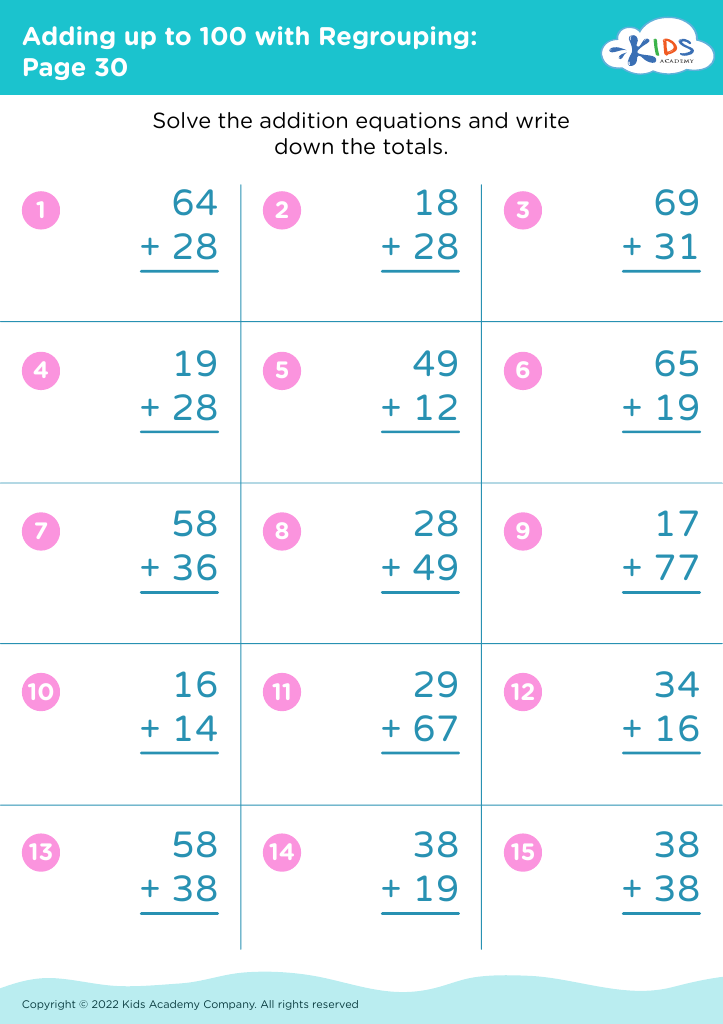
Adding up to 100 with Regrouping: Page 30
Worksheet
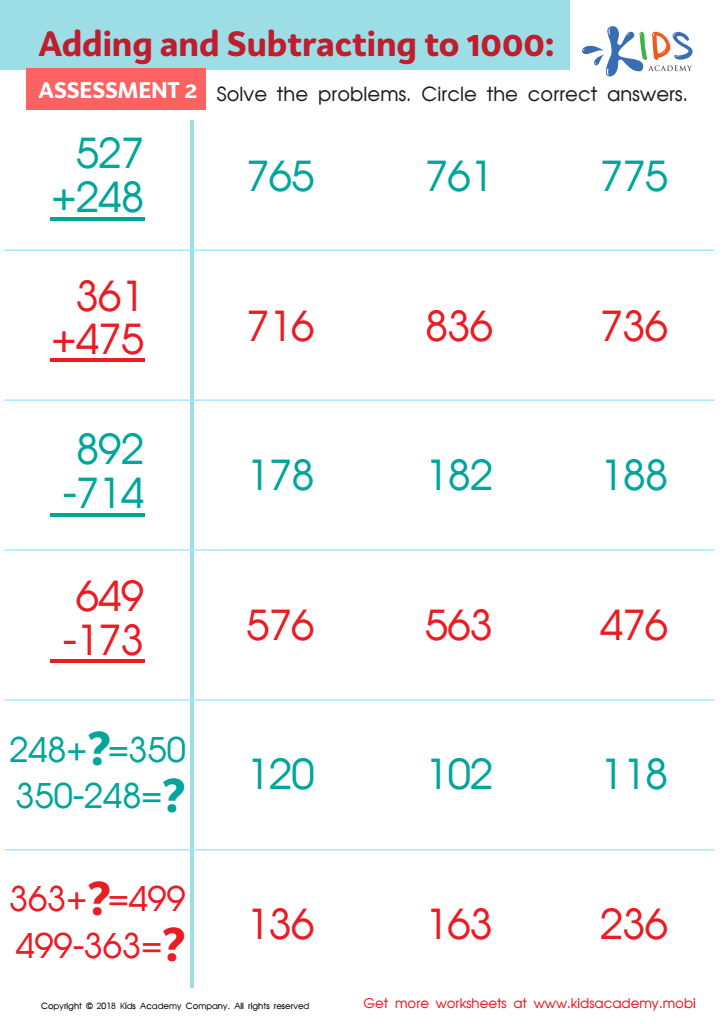
Adding and Subtracting to 1 Worksheet: Assessment 2
Adding and Subtracting to 1 Worksheet: Assessment 2
Test your child's addition and subtraction of 3-digit numbers with this assessment worksheet! They'll practice regrouping and pre-algebra skills to show their expertise. Have them work through the page and circle their answers, then see how many they got right to check their understanding and progress.
Adding and Subtracting to 1 Worksheet: Assessment 2
Worksheet
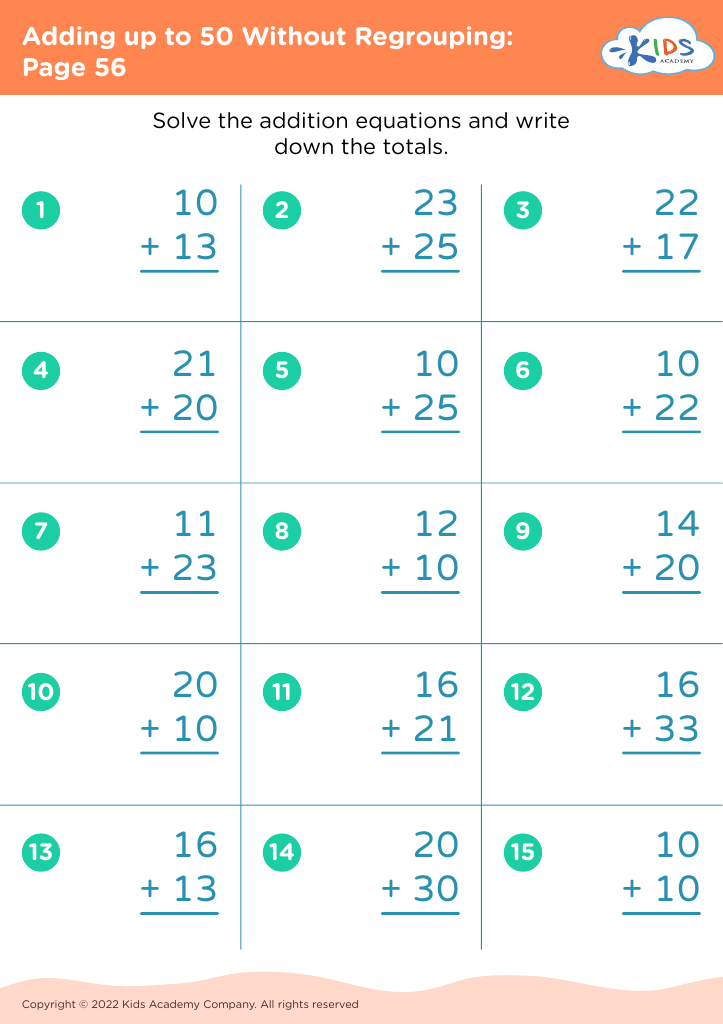
Adding up to 50 Without Regrouping: Page 56
Worksheet
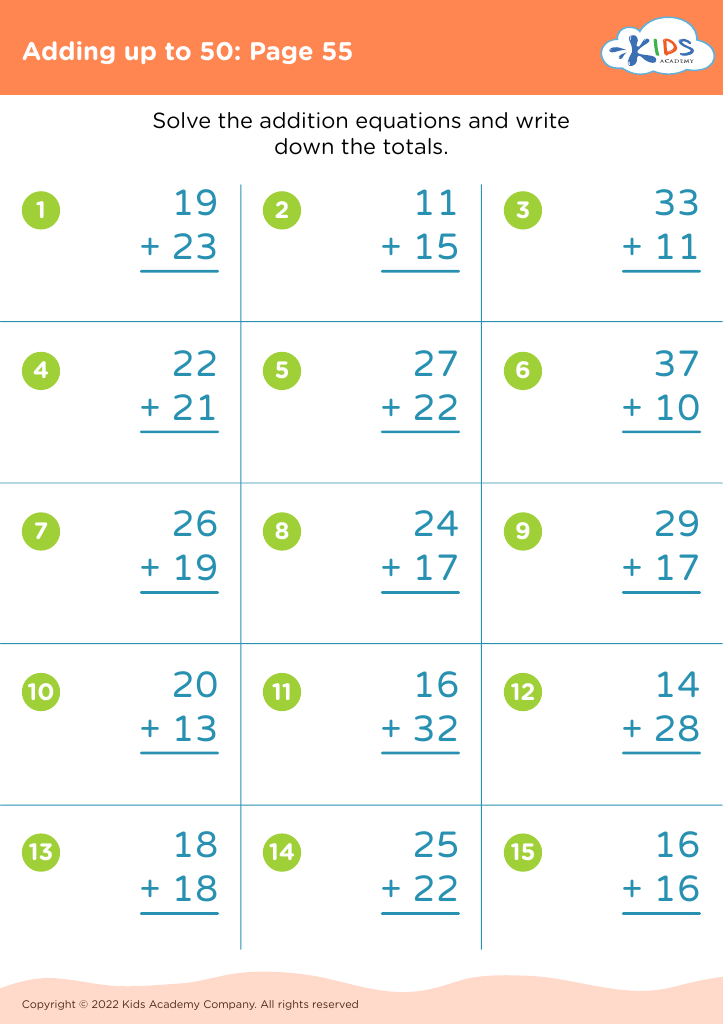
Adding up to 50: Page 55

Adding up to 50: Page 55

Adding up to 50: Page 55
Worksheet
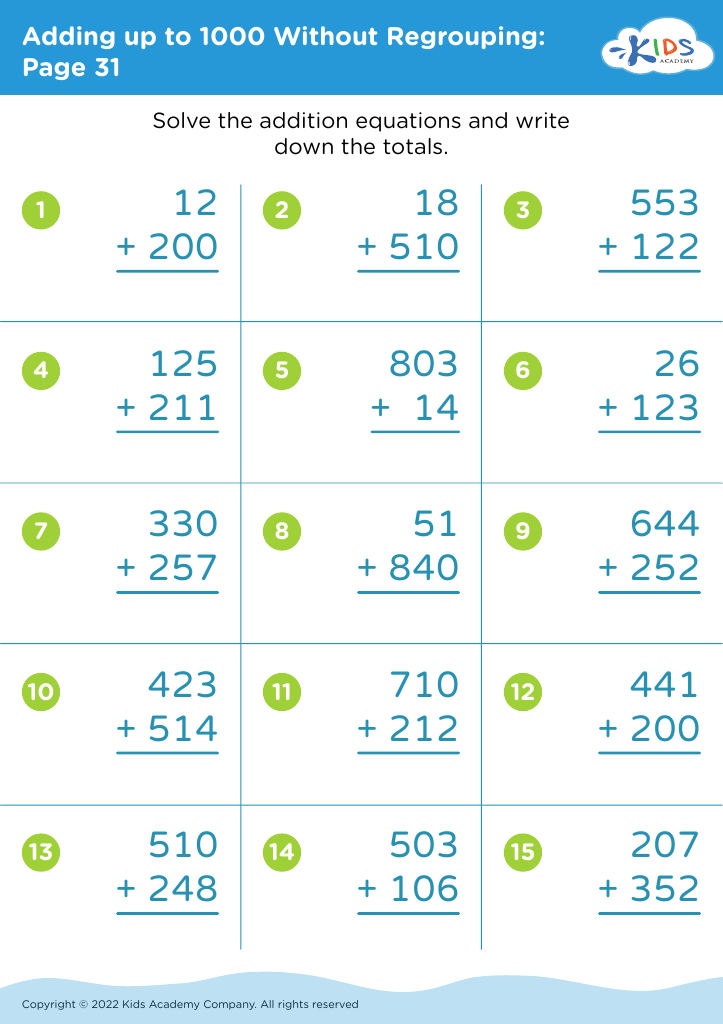
Adding up to 1000 Without Regrouping: Page 31
Worksheet
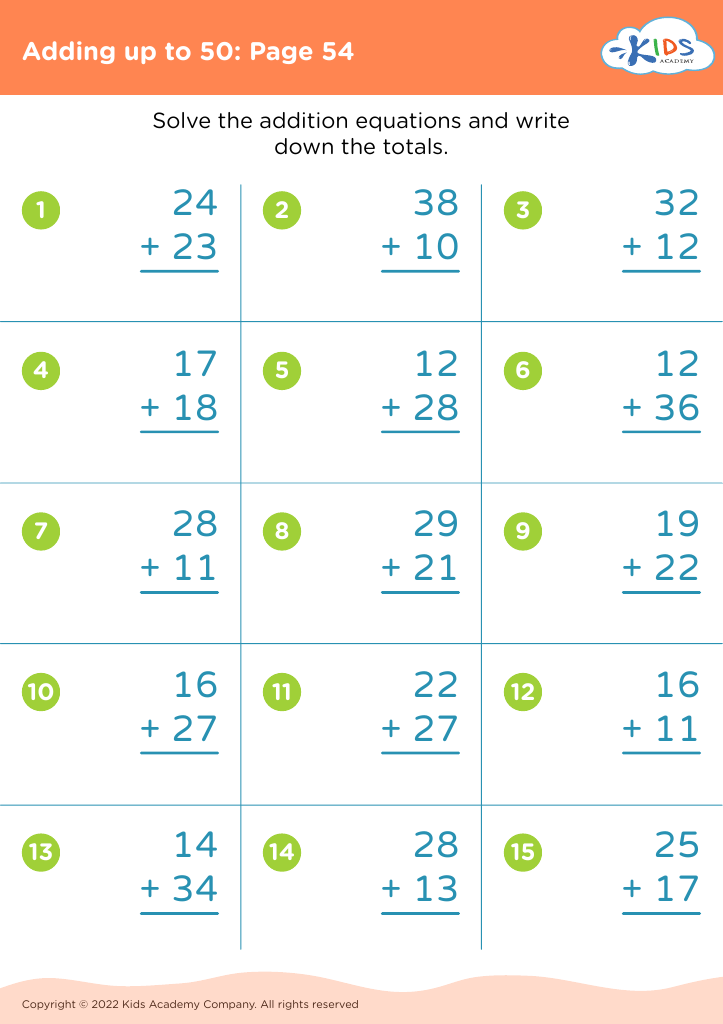
Adding up to 50: Page 54

Adding up to 50: Page 54

Adding up to 50: Page 54
Worksheet
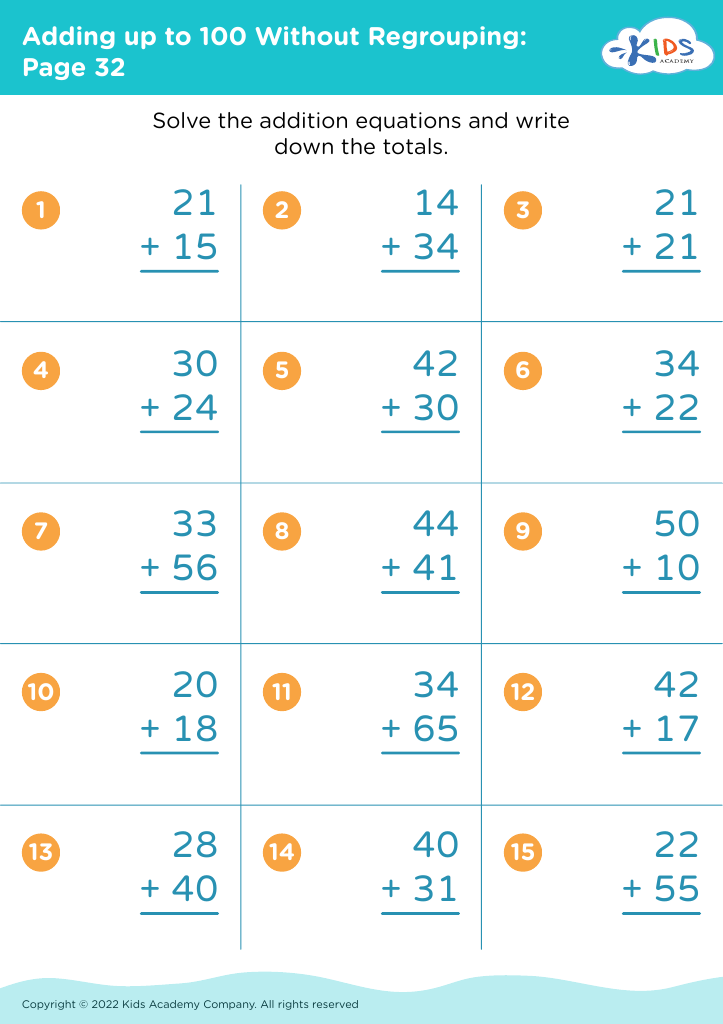
Adding up to 100 Without Regrouping: Page 32
Worksheet
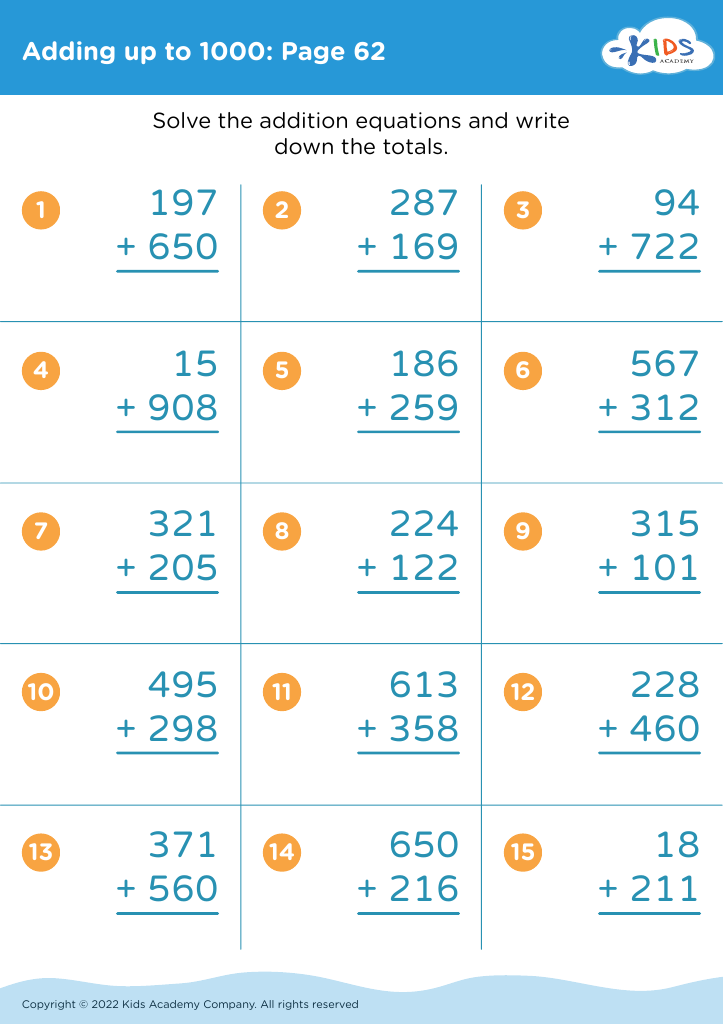
Adding up to 1000: Page 62

Adding up to 1000: Page 62

Adding up to 1000: Page 62
Worksheet
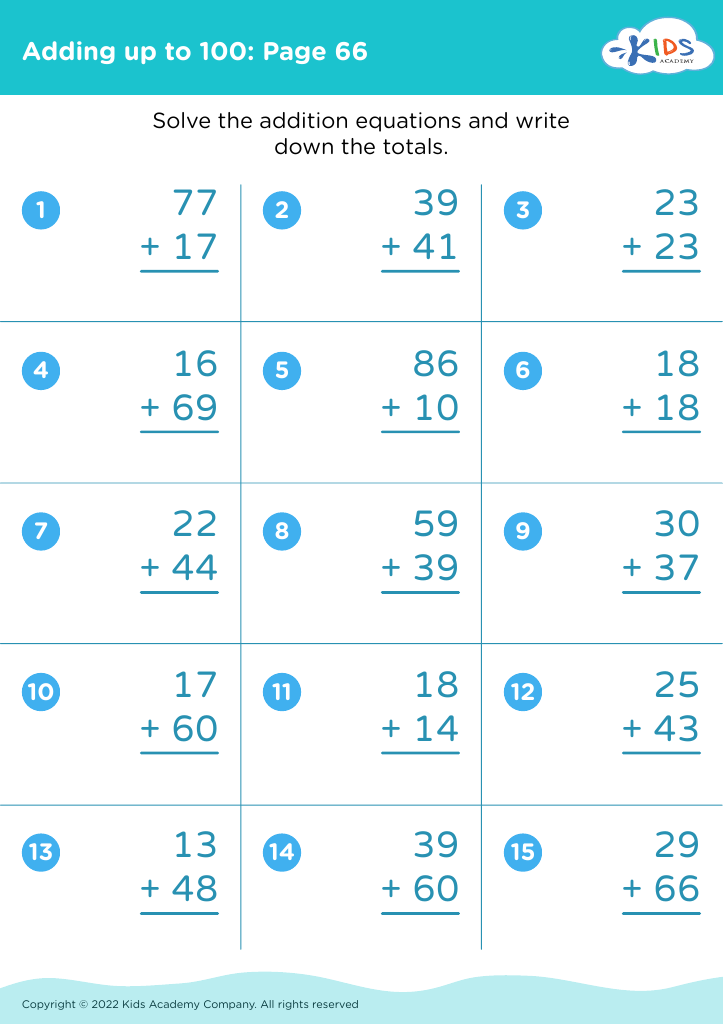
Adding up to 100: Page 66

Adding up to 100: Page 66

Adding up to 100: Page 66
Worksheet
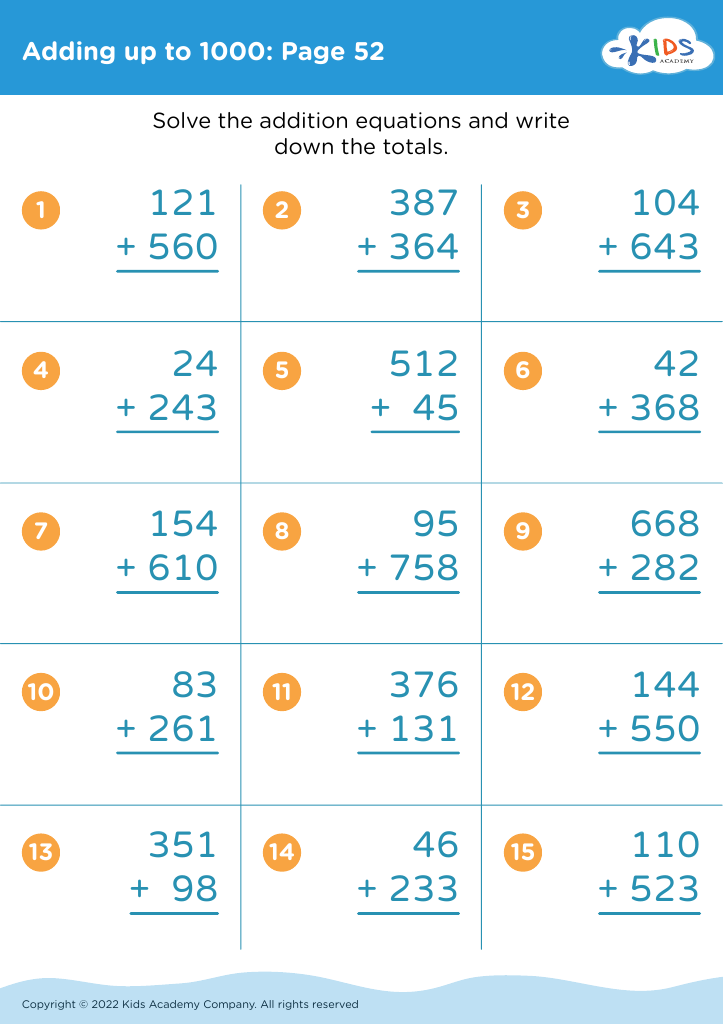
Adding up to 1000: Page 52

Adding up to 1000: Page 52

Adding up to 1000: Page 52
Worksheet
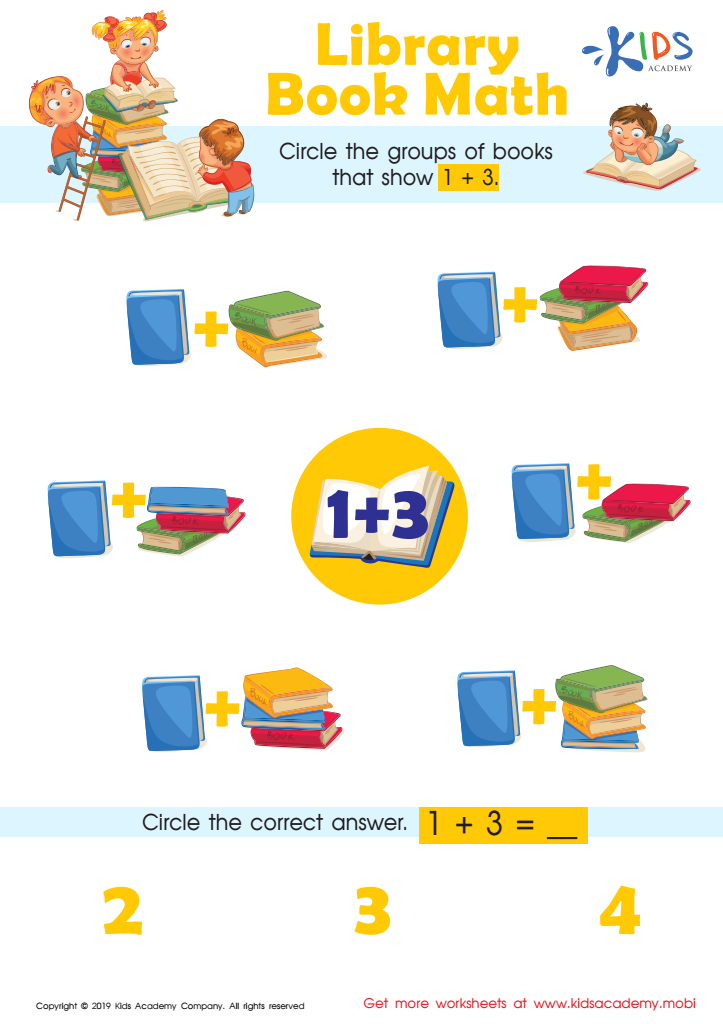
Library Book Math Worksheet
Library Book Math Worksheet
=4. It's essential for your child's growth to know how to count and add. Help them by giving simple tasks and encouraging them. This worksheet is a great tool to use. Ask your kids to name the objects in the picture and help them circle the groups of books that show 1+3=4.
Library Book Math Worksheet
Worksheet
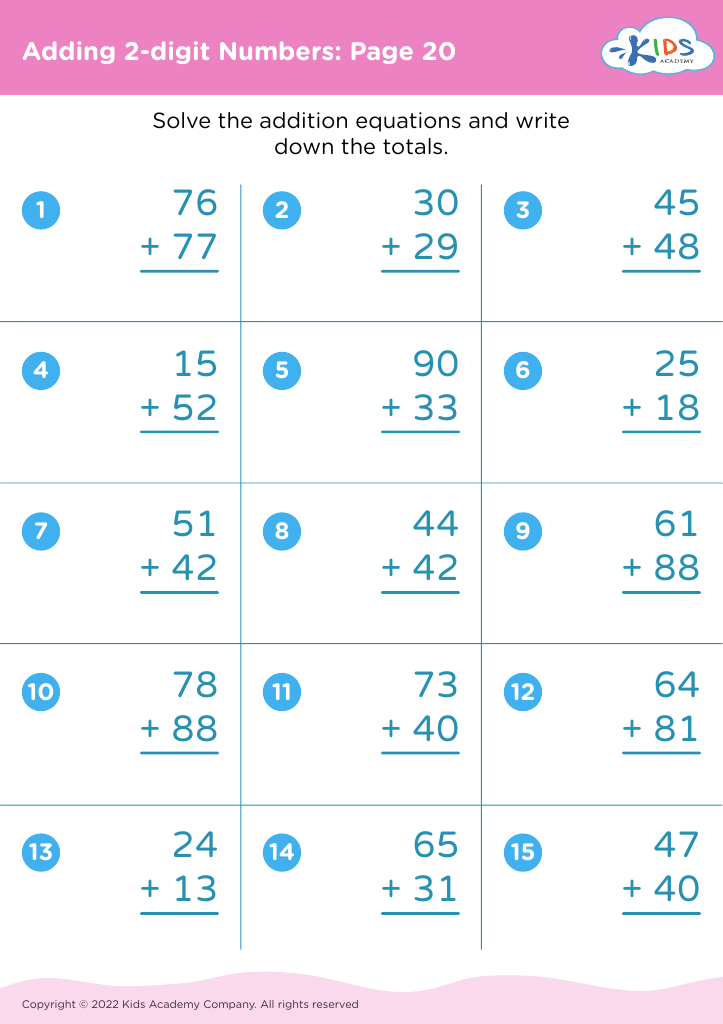
Adding 2-digit Numbers: Page 20

Adding 2-digit Numbers: Page 20

Adding 2-digit Numbers: Page 20
Worksheet
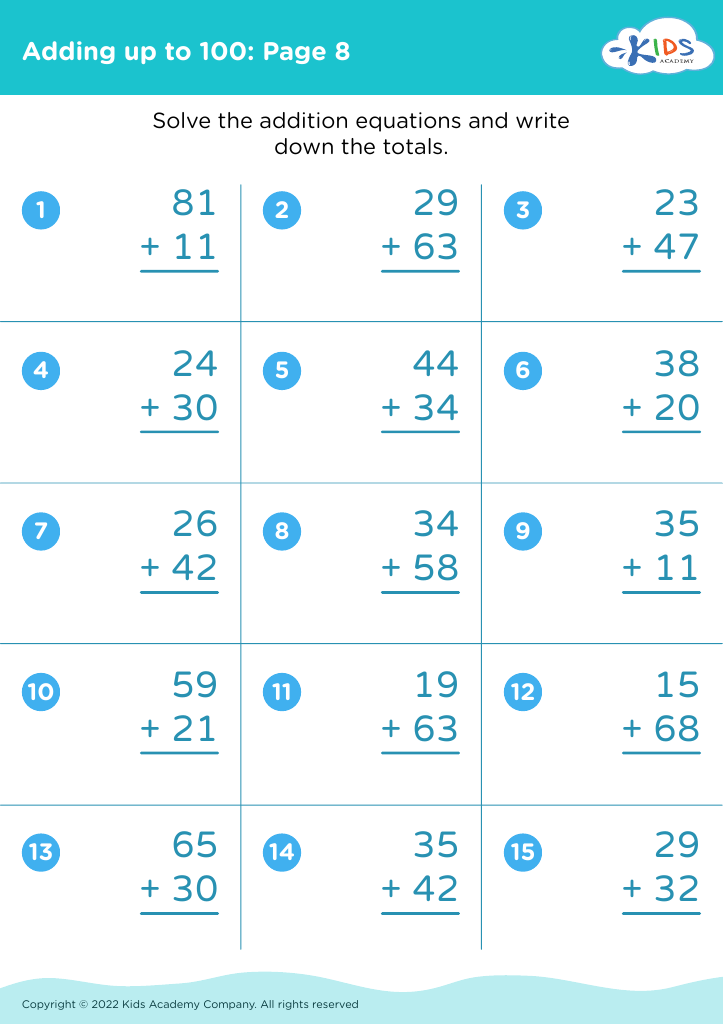
Adding up to 100: Page 8

Adding up to 100: Page 8

Adding up to 100: Page 8
Worksheet
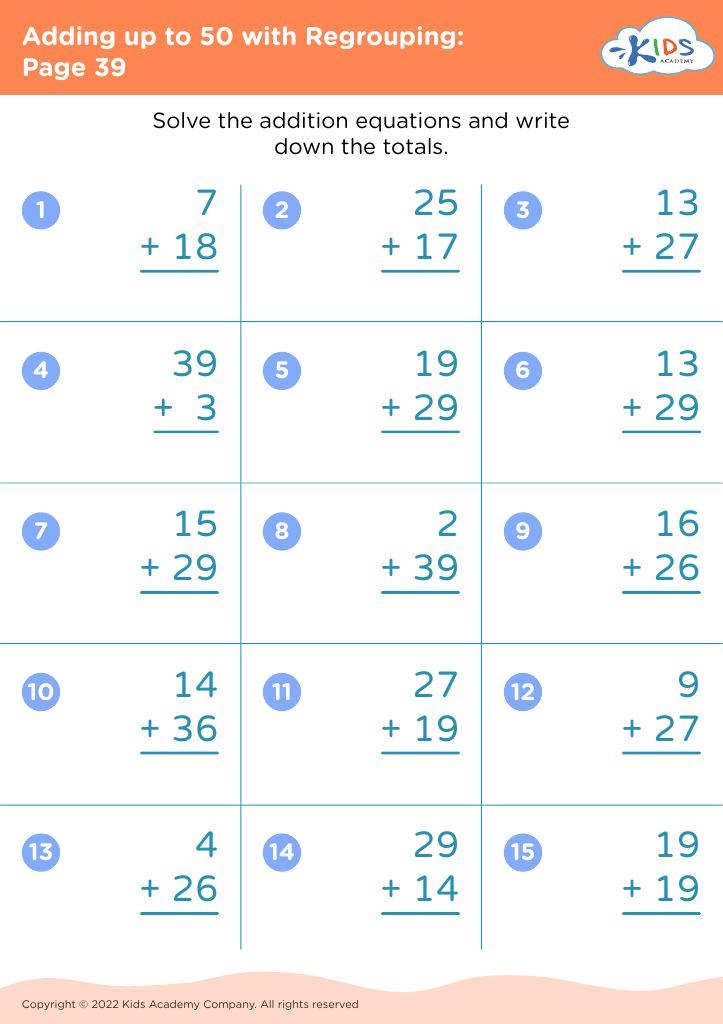
Adding up to 50 with Regrouping: Page 39
Worksheet
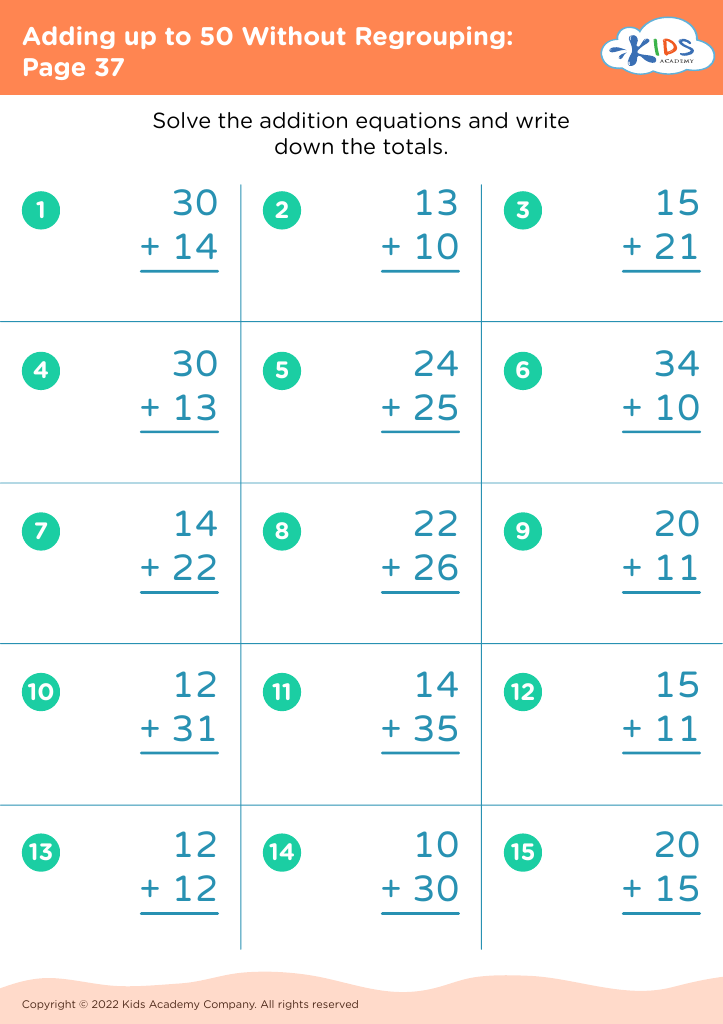
Adding up to 50 Without Regrouping: Page 37
Worksheet
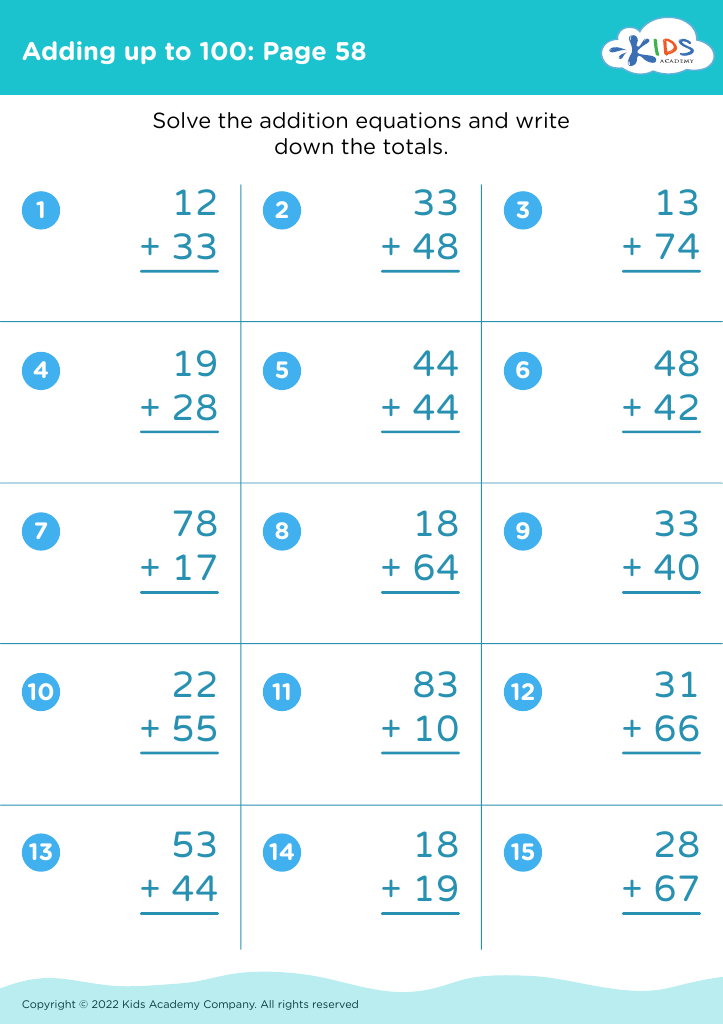
Adding up to 100: Page 58

Adding up to 100: Page 58

Adding up to 100: Page 58
Worksheet
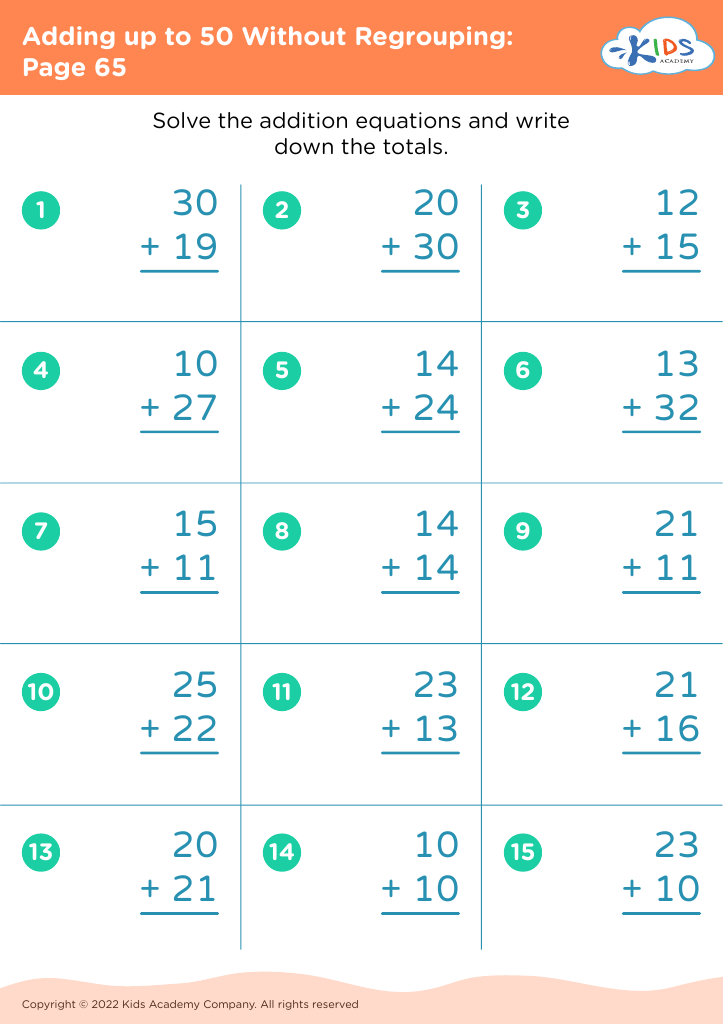
Adding up to 50 Without Regrouping: Page 65
Worksheet
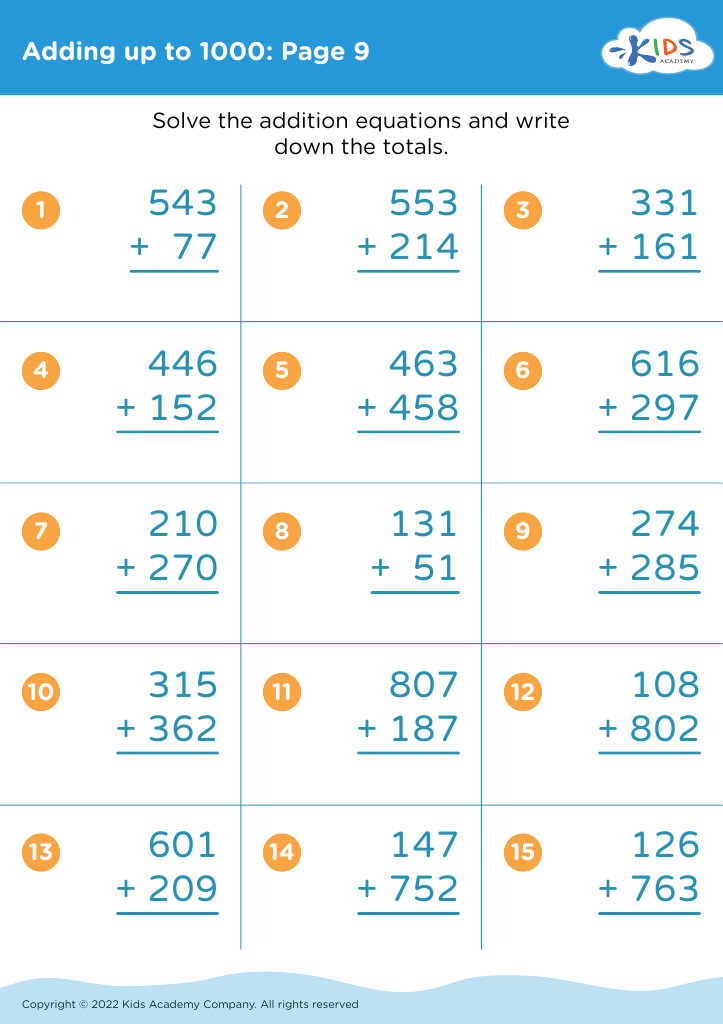
Adding up to 1000: Page 9

Adding up to 1000: Page 9

Adding up to 1000: Page 9
Worksheet
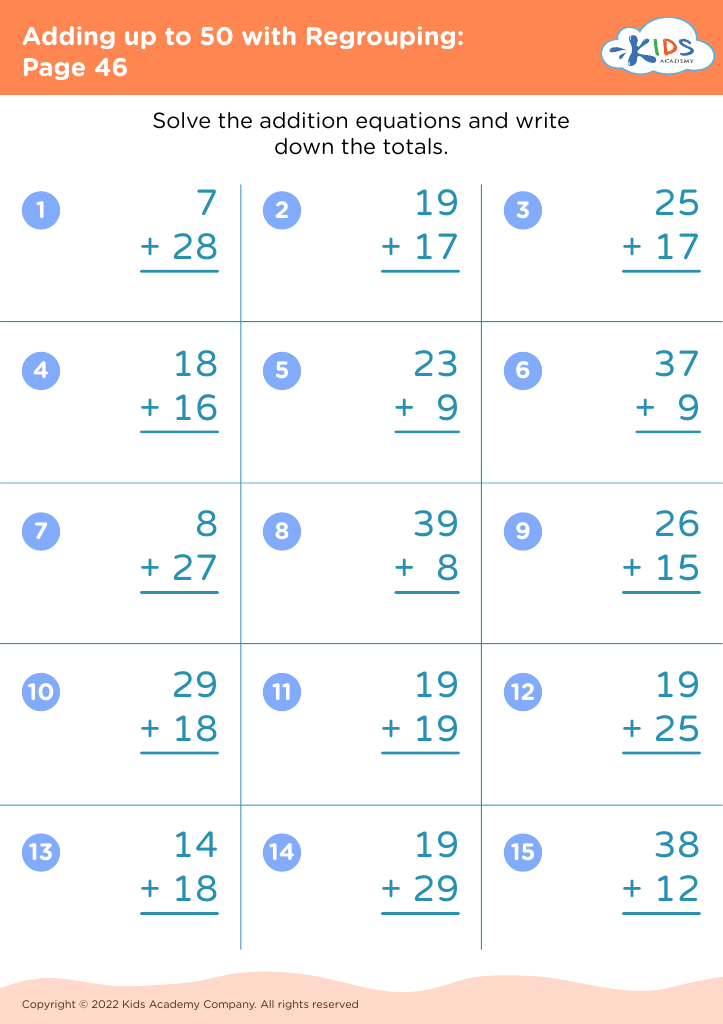
Adding up to 50 with Regrouping: Page 46
Worksheet
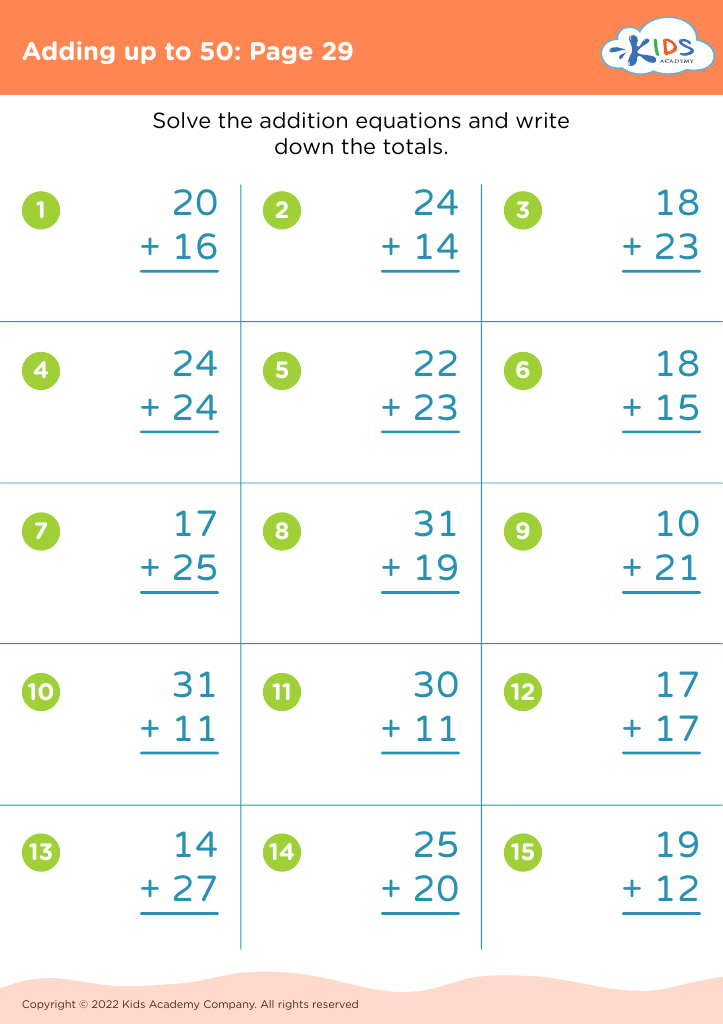
Adding up to 50: Page 29

Adding up to 50: Page 29

Adding up to 50: Page 29
Worksheet
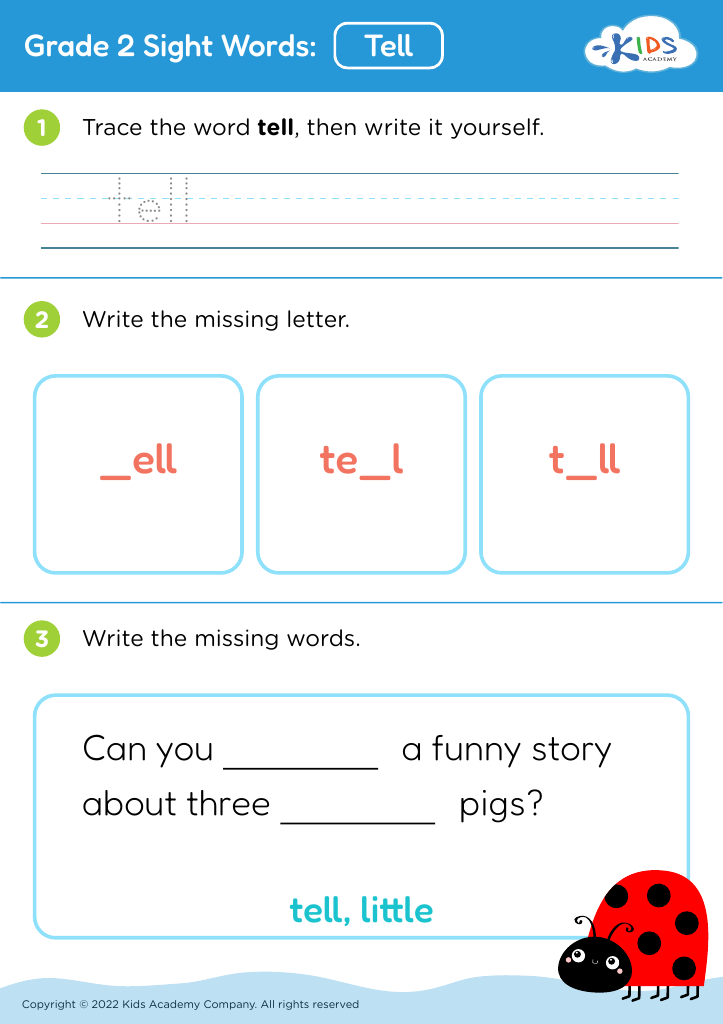
Grade 2 Sight Words: Tell

Grade 2 Sight Words: Tell

Grade 2 Sight Words: Tell
Worksheet
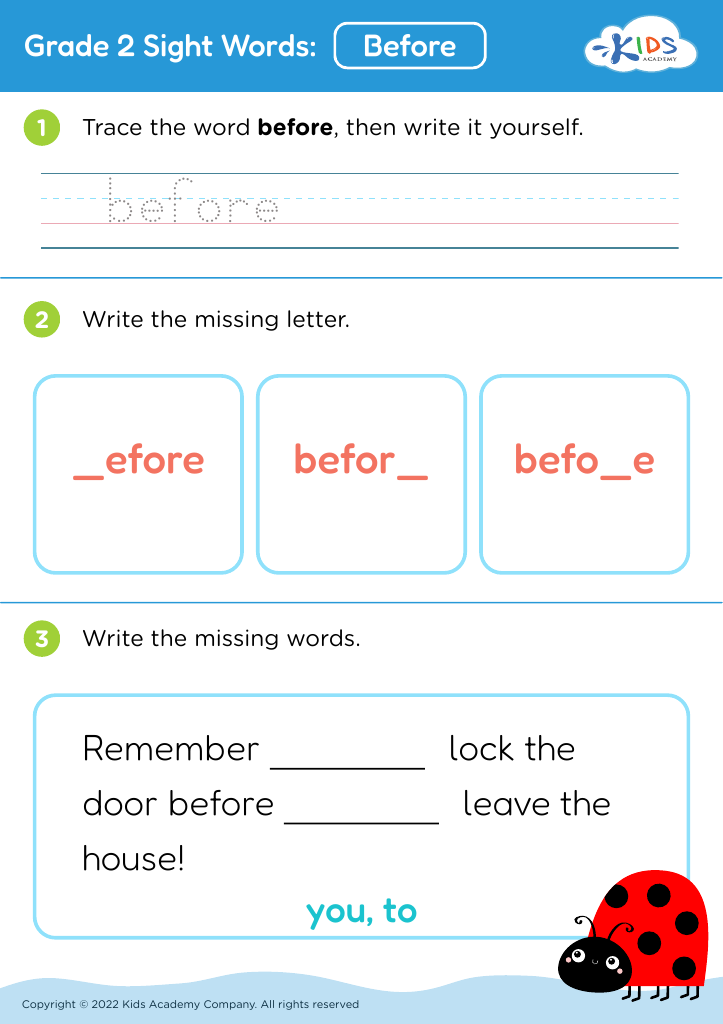
Grade 2 Sight Words: Before

Grade 2 Sight Words: Before

Grade 2 Sight Words: Before
Worksheet


Understanding fractions is a critical foundational skill for children ages 6-9, as it lays the groundwork for future mathematical concepts and problem-solving abilities. At this age, children are beginning to develop their numeric sense and the ability to relate whole numbers to parts of a whole, which is essential for grasping more complex concepts later on, such as division, ratios, and percentages.

Parents and teachers should care because a solid grasp of fractions enhances children's critical thinking and cognitive skills. Learning fractions helps children make sense of everyday situations, like sharing food or dividing objects, making math relevant and tangible in their lives. Moreover, a strong understanding of fractions promotes confidence in math, encouraging a positive attitude about the subject as they progress further in their education.

Additionally, recognizing that students have diverse learning styles means that educators can employ various methods to teach fractions, ensuring that each child finds their own way to relate to the material. When fractions are mastered early, children are more likely to find success in advanced mathematics and related subjects in later years, fostering lifelong learners equipped with essential skills. Thus, supporting fraction understanding is an investment in their academic and personal futures.