Understanding biodiversity Worksheets for Ages 6-9
4 filtered results
-
From - To
Explore the importance of biodiversity with our engaging worksheets designed for children ages 6-9. These fun, educational resources invite young learners to discover the variety of life on Earth through interactive activities tailored to spark curiosity. Our worksheets include colorful illustrations, easy-to-understand concepts, and hands-on tasks that help children identify different species, understand ecosystems, and recognize the importance of protecting our planet's diverse living organisms. By incorporating critical thinking and creativity, these materials aim to foster a love for nature and environmental stewardship in children. Perfect for classroom or home use, these worksheets make learning about biodiversity enjoyable and impactful!
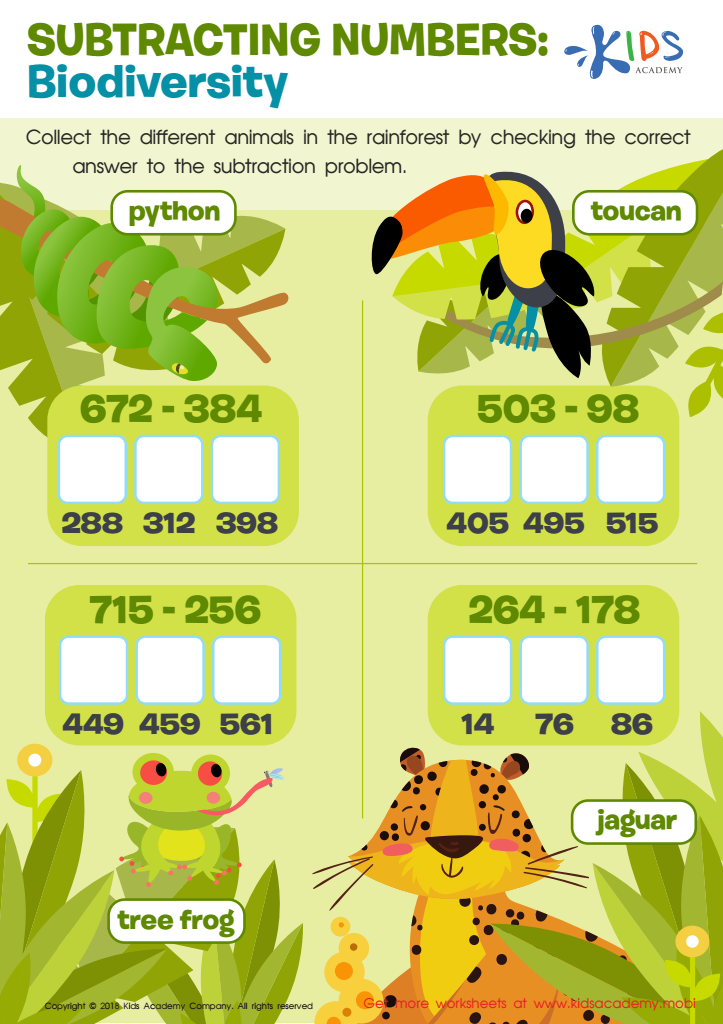
Subtracting Numbers: Biodiversity Worksheet
 Assign to My Students
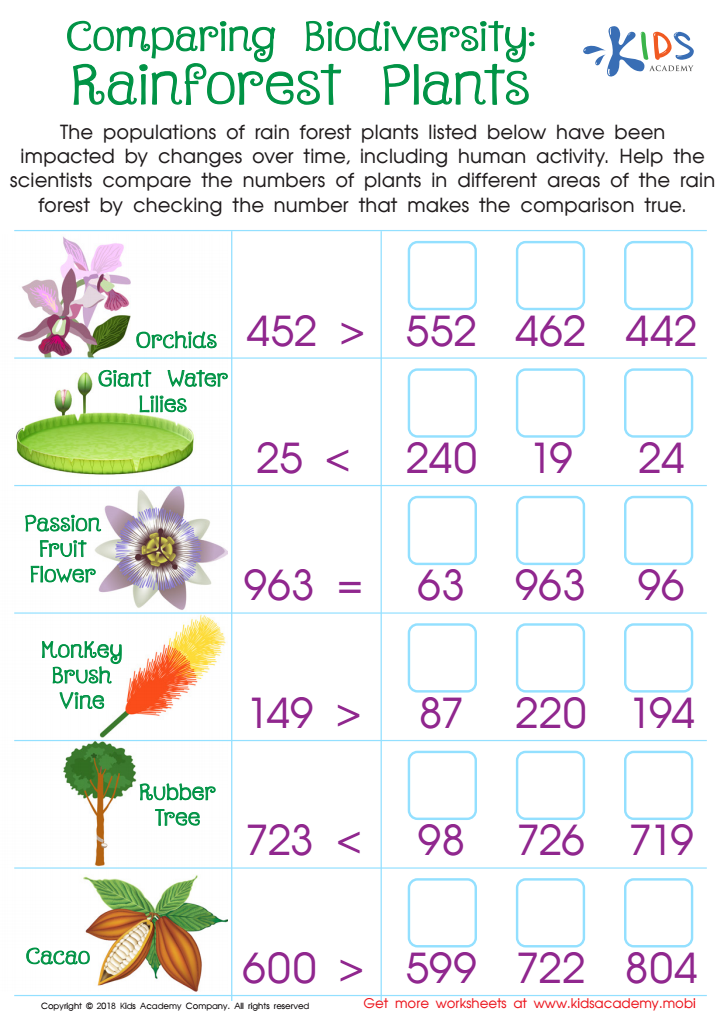
Comparing Biodiversity: Rainforest Plants Worksheet
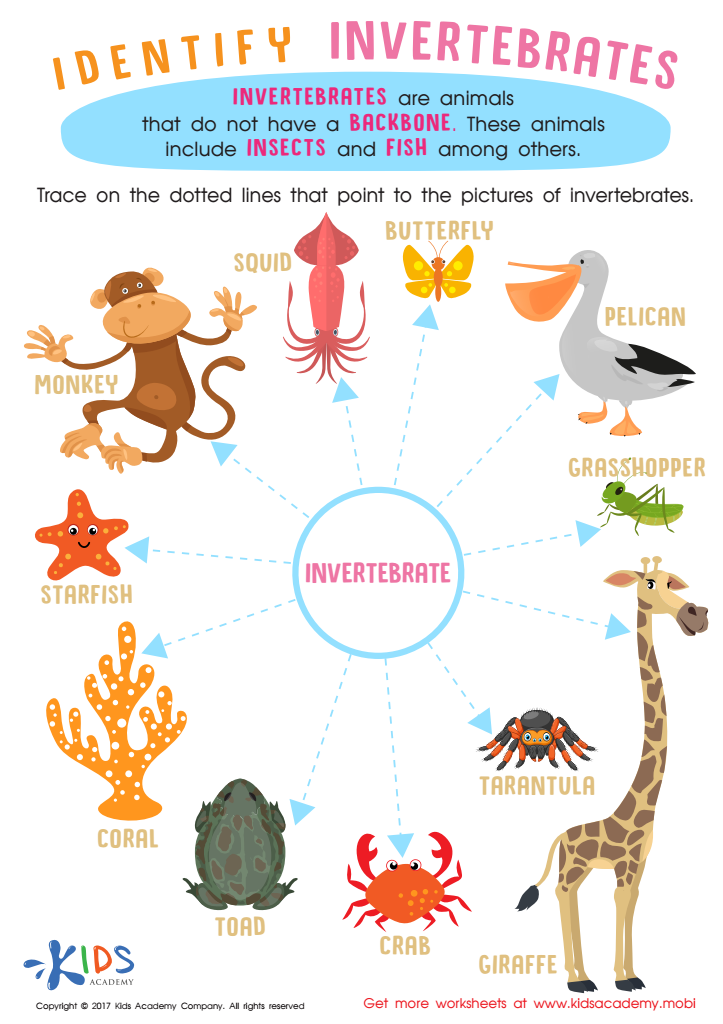
Invertebrates Worksheet for Grade 3
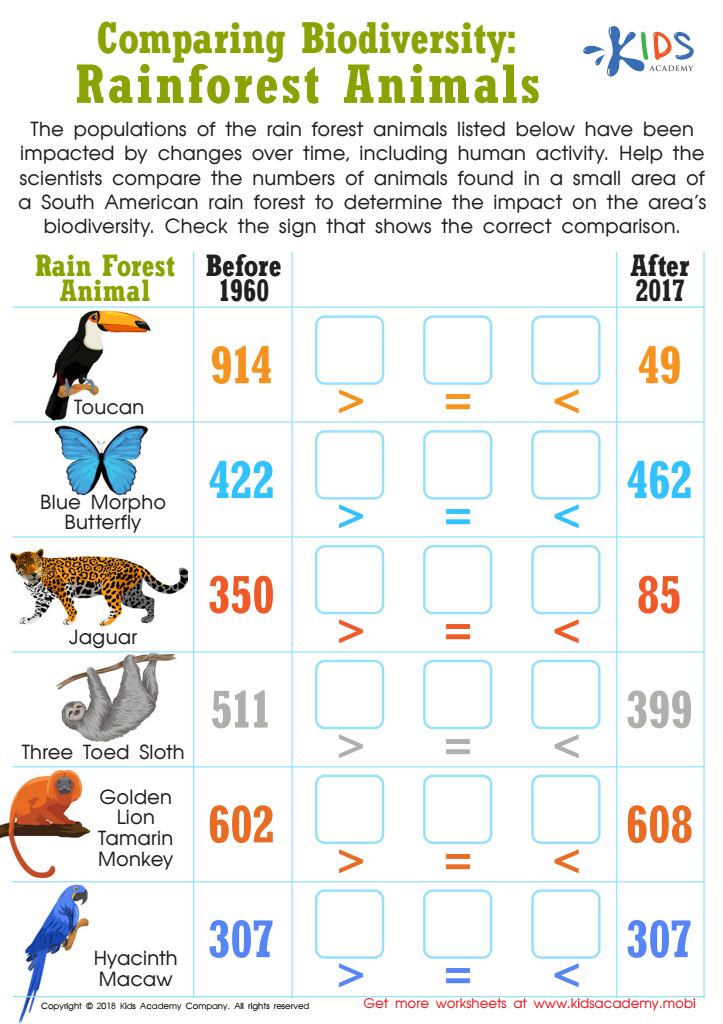
Comparing Biodiversity: Rainforest Animals Worksheet








Understanding biodiversity is crucial for children ages 6-9, and parents or teachers should prioritize it for several reasons. First, biodiversity encompasses the variety of life on Earth, including different species of plants, animals, and microorganisms. Teaching children about this variety fosters an appreciation for nature, encouraging curiosity and connection with the environment. When children learn to recognize different species, they develop observational skills and a sense of stewardship for the living world.
Moreover, understanding biodiversity helps children grasp essential ecological concepts, such as ecosystems and interdependence. By exploring how organisms rely on each other and their habitats, children can better understand the importance of conservation and sustainable practices. This foundational knowledge can foster environmentally responsible behaviors as they grow.
Biodiversity education also promotes critical thinking and problem-solving skills. As children engage with real-world examples, they learn to address challenges related to species loss and habitat destruction. Lastly, instilling a love for nature at an early age lays the groundwork for future environmental advocates, ensuring that upcoming generations are equipped to protect our planet. Therefore, caring about and engaging children in the richness of biodiversity helps nurture informed and responsible stewards of the Earth.








