Understanding division Worksheets for Ages 6-9
9 filtered results
-
From - To
Discover our engaging Understanding Division worksheets designed specifically for children ages 6-9. These resources provide a fun and interactive way to help young learners grasp the concepts of division. Featuring colorful designs and age-appropriate exercises, our worksheets encourage practical problem-solving skills and improve number sense. With various levels of difficulty, children can progress at their own pace while building confidence in their math abilities. Whether used at home or in the classroom, our thoughtful materials support educators and parents alike in creating a strong foundation for future math success. Start your child’s division journey today with our effective learning tools!
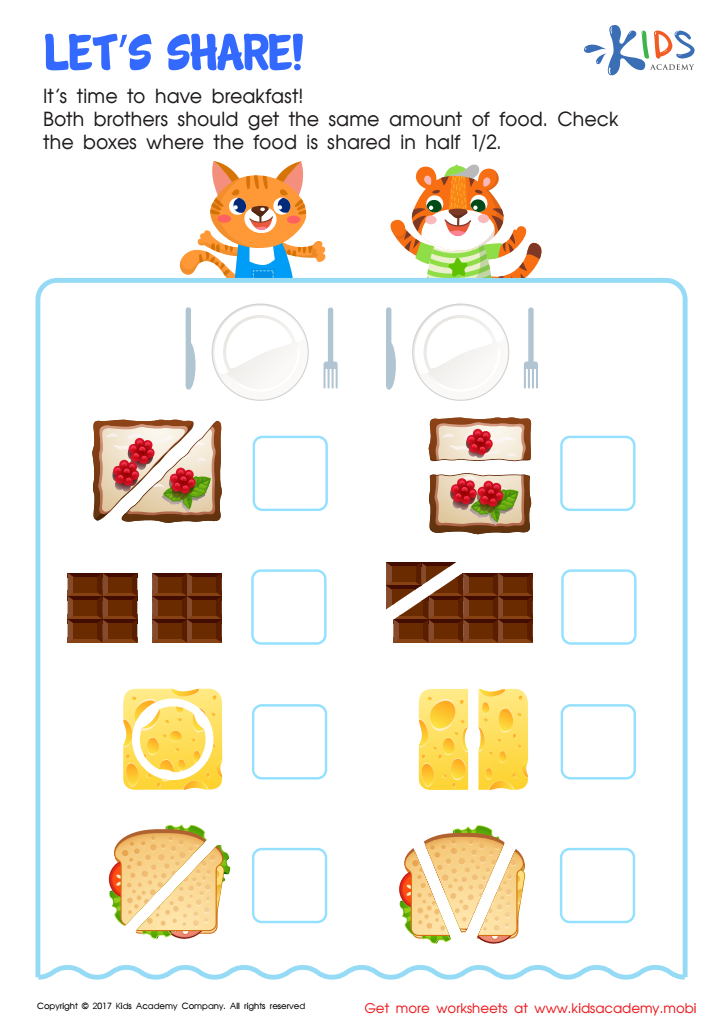
Let's Share Worksheet
 Assign to My Students
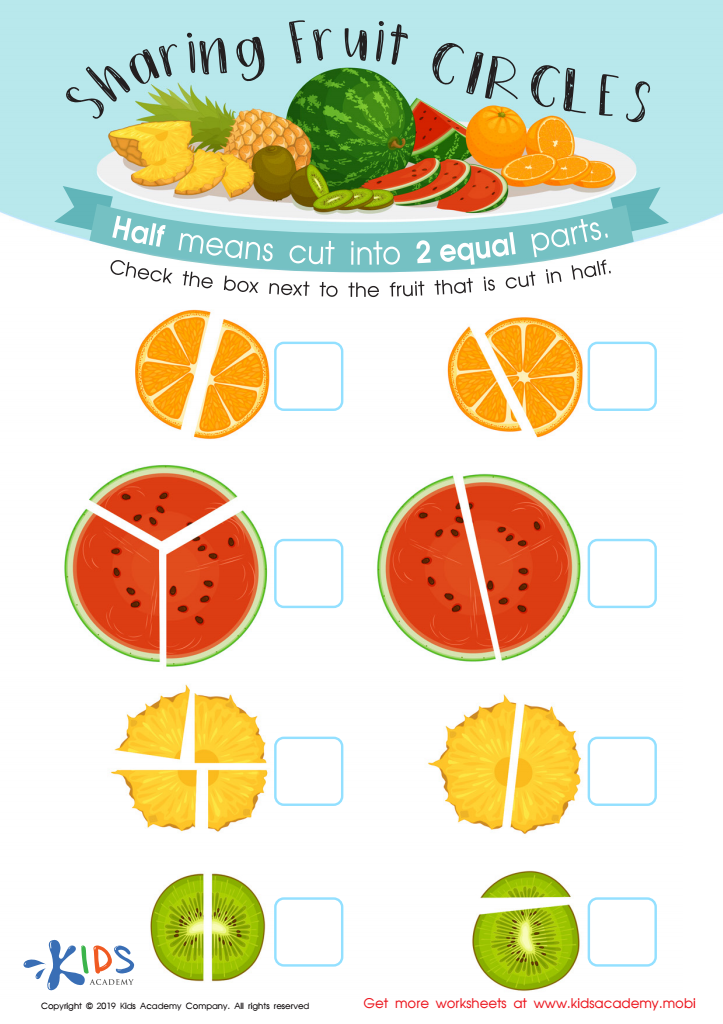
Sharing Fruit Circles Worksheet
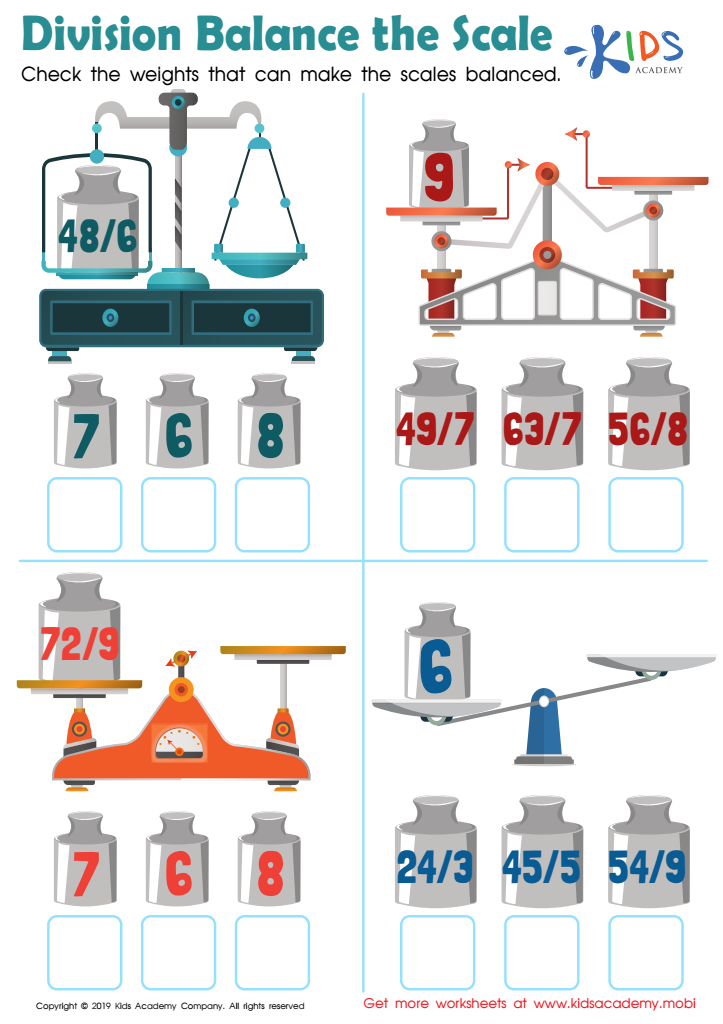
Division Balance the Scale Worksheet






Understanding division is crucial for children aged 6-9 as it lays the foundation for their future mathematical skills. At this developmental stage, students are transitioning from concrete to more abstract thinking, making it the perfect time to introduce concepts like division, which can be seen as sharing or grouping. Grasping division helps children develop critical thinking abilities and problem-solving skills as they learn to break down larger numbers into manageable parts.
Moreover, division is often seen as one of the cornerstones of arithmetic, linking closely with multiplication, addition, and subtraction. By mastering division, children can tackle more complex math concepts later on, such as fractions, decimals, and even algebra in higher grades. It also fosters resilience, as students learn to approach challenges methodically and see errors as learning opportunities.
Parents and teachers play a vital role in creating supportive learning environments that encourage curiosity and exploration in math. Understanding division allows educators to offer targeted practices that cater to individual learning styles. When children see division as an essential life skill, they become more engaged and confident in their abilities, setting them up for long-term academic success. Thus, enriching their understanding of division is beneficial for their educational journey and personal growth.








