Understanding economics Worksheets for Ages 6-9
3 filtered results
-
From - To
Explore our interactive worksheets designed for children aged 6-9 to introduce them to the fundamentals of economics! Our "Understanding Economics" worksheets provide engaging activities that simplify concepts like needs vs. wants, money management, and the basics of trade and value. Each worksheet encourages critical thinking and real-world applications while making learning fun. With colorful illustrations and straightforward instructions, these resources are perfect for classrooms or at-home learning. Foster your child's financial literacy and economic understanding early on, setting them up for future success. Enhance their learning experience today with our tailored materials at Kids Academy!
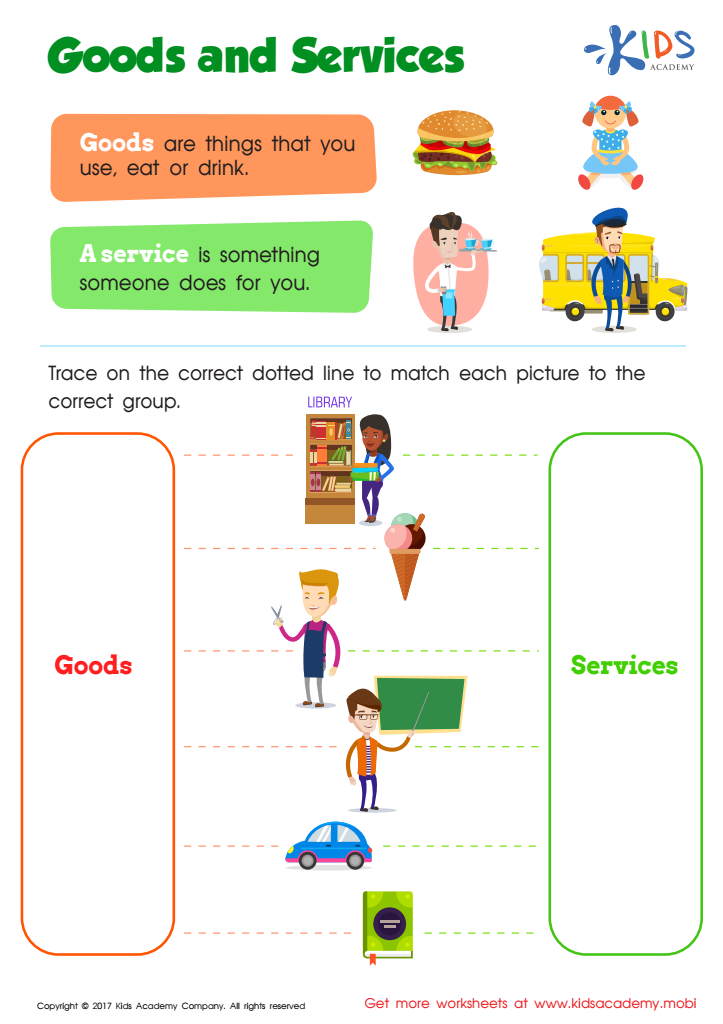
 Assign to My Students
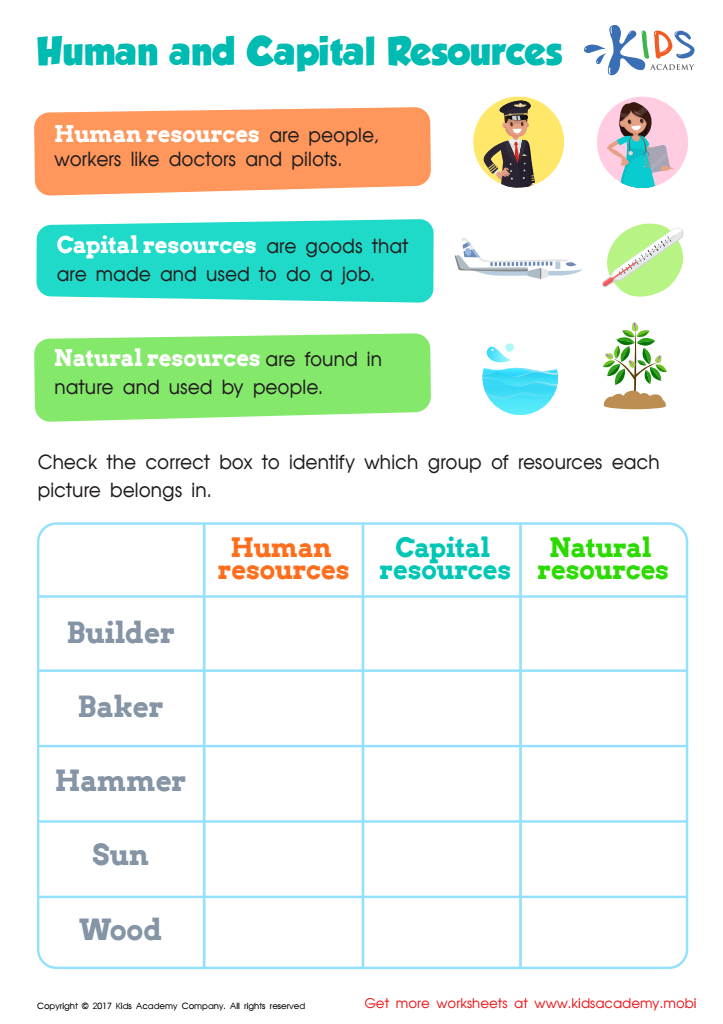
Human and Capital Resources Worksheet
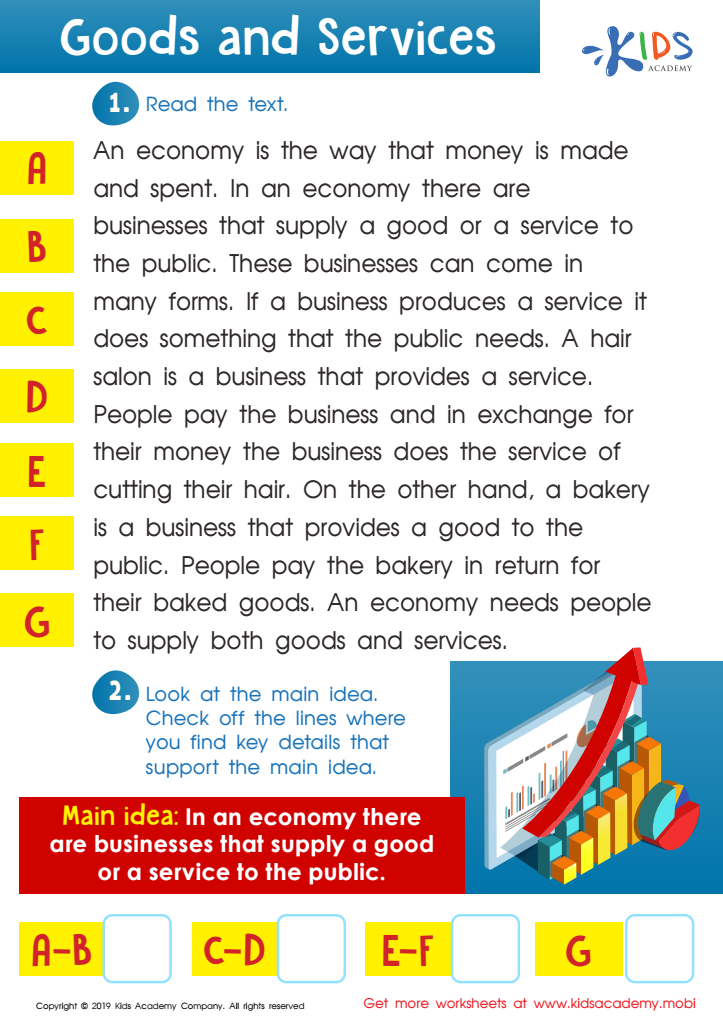
Goods and Services Worksheet






Understanding economics at an early age is vital for children aged 6-9, as it lays the foundation for lifelong financial literacy and critical thinking skills. Parents and teachers should care because introducing basic economic concepts will help children grasp fundamental ideas such as supply and demand, money management, and the value of trade in an accessible and engaging way.
At this age, children are naturally curious and eager to learn about the world around them. By integrating economics into their education, adults can encourage analytical thinking and problem-solving abilities. Concepts like budgeting can teach them about making choices and planning for the future, while lessons on entrepreneurship can spark creativity and innovation.
Moreover, a foundational understanding of economics fosters responsible citizenship and enhances awareness of social issues, such as resources and poverty. Children will develop empathy and responsibility as they learn how decisions affect individuals and communities.
Ultimately, nurturing an understanding of economics helps cultivate informed citizens who can navigate adult life successfully, advocate for themselves, and contribute positively to society. Engaging children in these discussions now will prepare them for the complexities of the world, empowering them to make thoughtful economic choices as they grow.








