Understanding number patterns Worksheets for Ages 6-9
6 filtered results
-
From - To
Unlock your child's mathematical potential with our "Understanding Number Patterns Worksheets for Ages 6-9". These engaging worksheets help young learners recognize, predict, and create number patterns through fun and interactive activities. Designed specifically for ages 6-9, each worksheet builds pivotal math skills by encouraging logical thinking and problem-solving abilities. Perfect for both classroom and home use, these printable resources are tailored to align with educational standards. Help your child gain confidence and proficiency in math by exploring our diverse collection of number pattern worksheets. Foster a love for math and boost their academic success today!
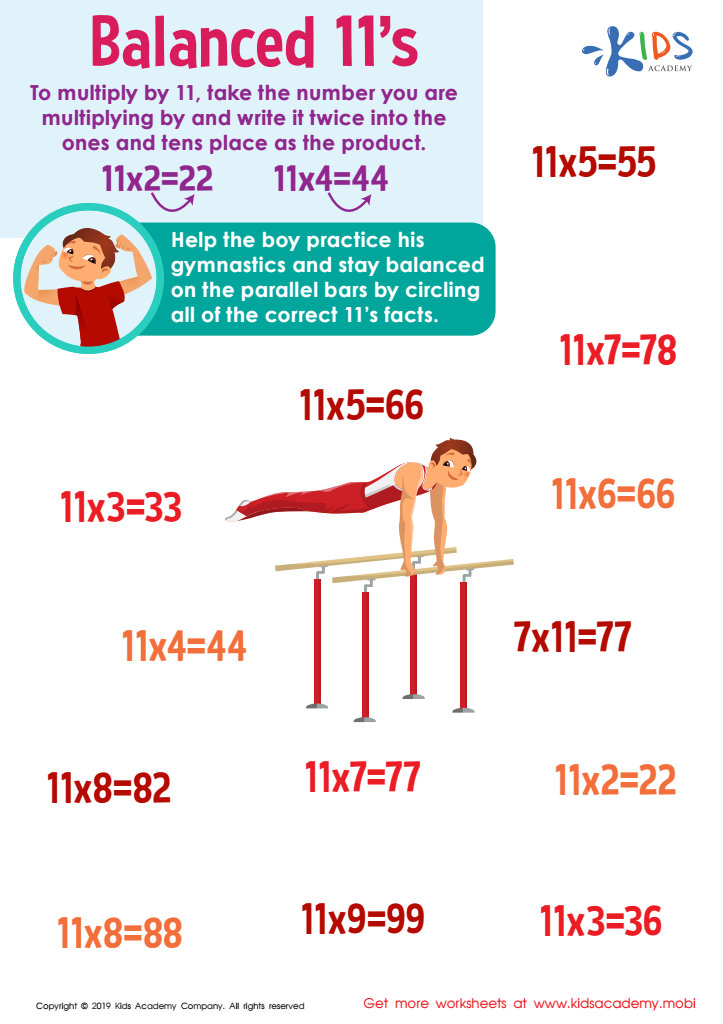
Balanced 11s Worksheet
 Assign to My Students
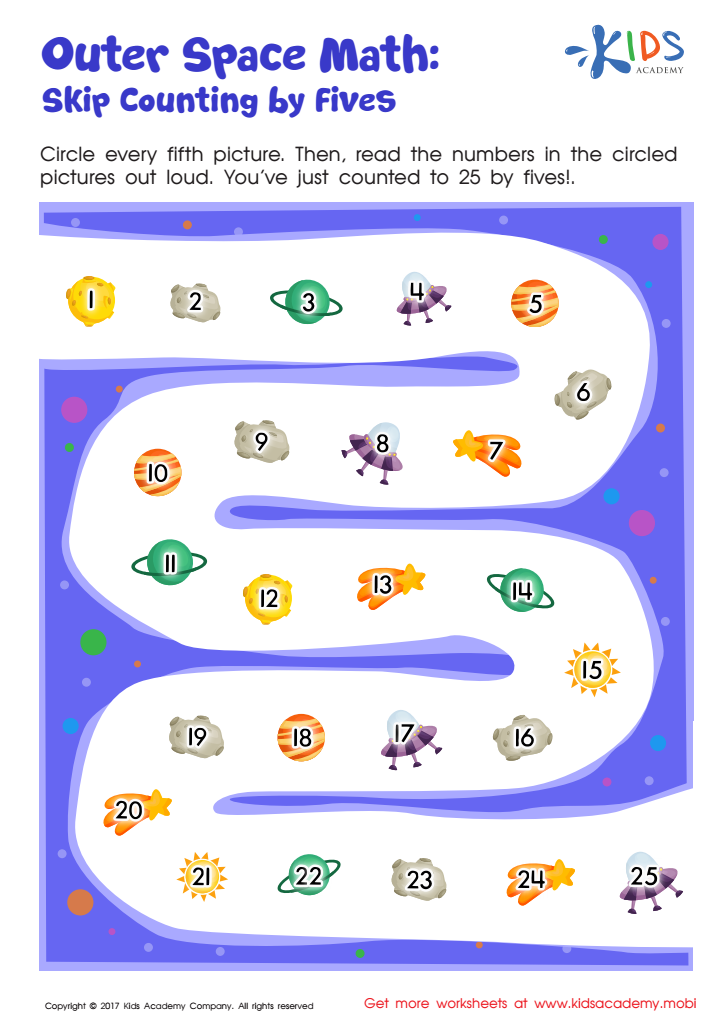
Skip Counting by 5s: Outer Space Math Printable
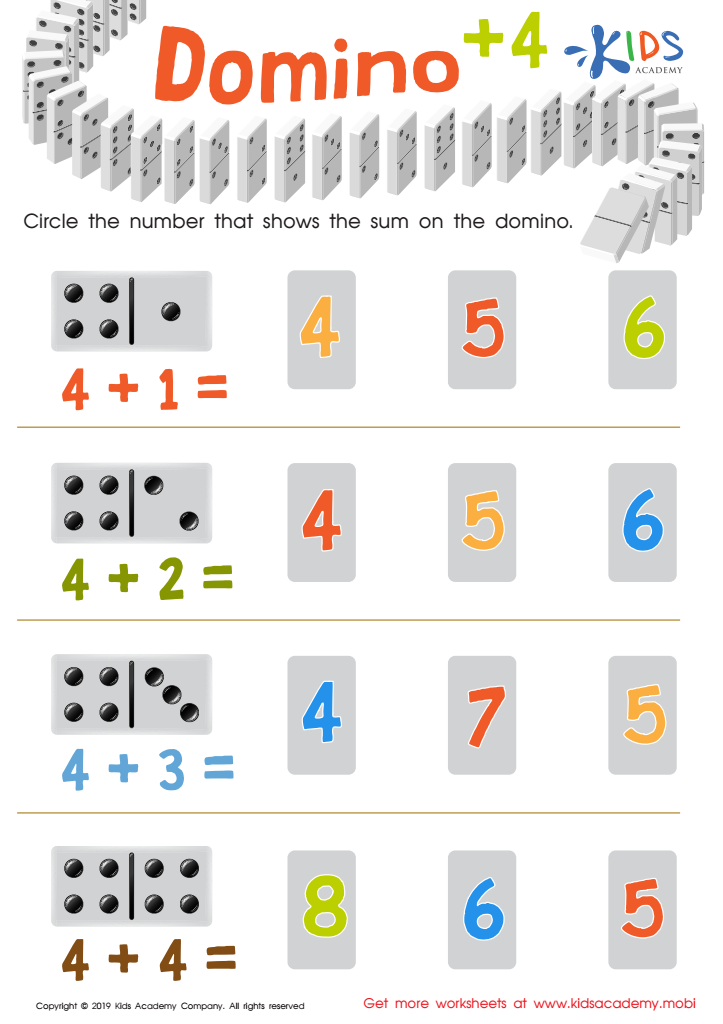
Domino +4 Worksheet
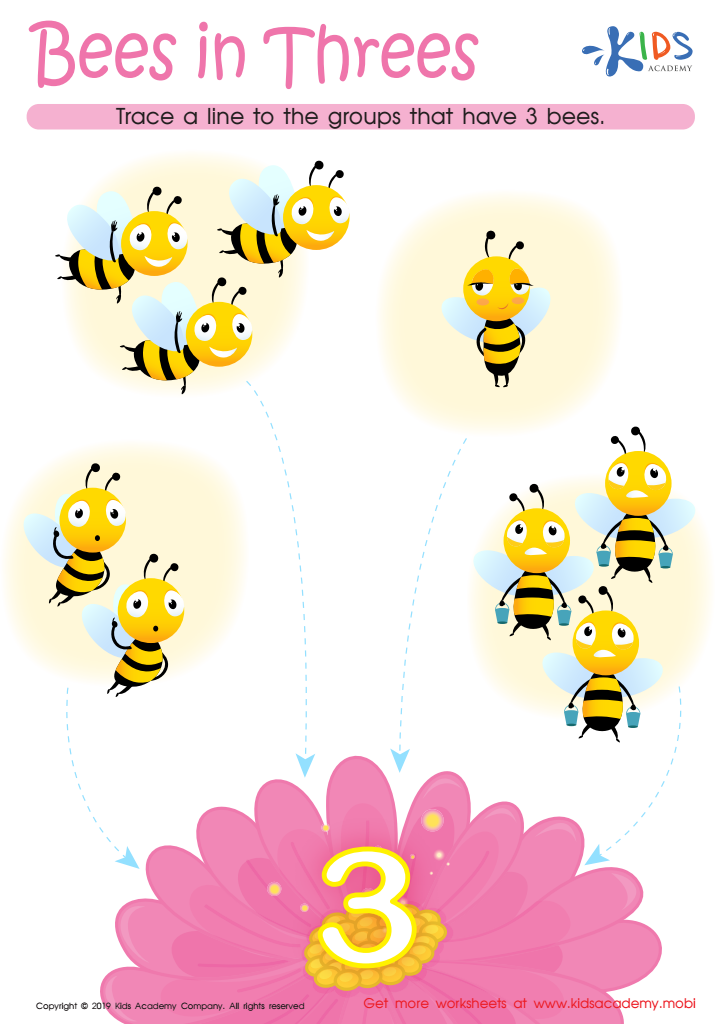
Bees in Threes Worksheet




.jpg)


Understanding number patterns is crucial for children aged 6-9 as it lays the foundation for mathematical thinking and problem-solving. Number patterns help children recognize relationships between numbers, fostering a deeper comprehension of mathematic concepts such as addition, subtraction, multiplication, and division. It enhances logical reasoning and critical thinking skills by encouraging kids to observe sequences and deduce rules, aiding in prediction and decision-making.
For parents and teachers, promoting an understanding of number patterns supports cognitive development in areas like sequencing and spatial awareness. This knowledge can boost confidence, making mathematics feel more accessible and enjoyable, which in turn fosters a positive learning attitude. Watching for patterns also improves their abilities in other academic subjects, such as reading and science, where multiple-step processes and forward-thinking are necessary.
Furthermore, familiarizing children with patterns at an early age can ease the transition to more complex math topics they will encounter later, like algebra and geometry. Early mastery instills perseverance and adaptability in approaching problems. Therefore, spending time on number patterns is an investment in a child's comprehensive intellectual growth, laying a strong groundwork for their future education and everyday life problem-solving skills.








