Understanding plurals Worksheets for Ages 6-9
7 filtered results
-
From - To
Boost your child’s language skills with our "Understanding Plurals Worksheets" designed for ages 6-9. These engaging and educational worksheets help young learners master the concept of plurals through fun activities and exercises. By exploring real-life examples and easy-to-follow instructions, kids will enhance their grammar skills, improve their spelling, and expand their vocabulary. With colorful visuals and varied tasks that cater to different learning styles, our worksheets make learning about plurals enjoyable and effective. Ideal for both classroom and home use, give your child the tools they need to become confident in their grammar abilities!
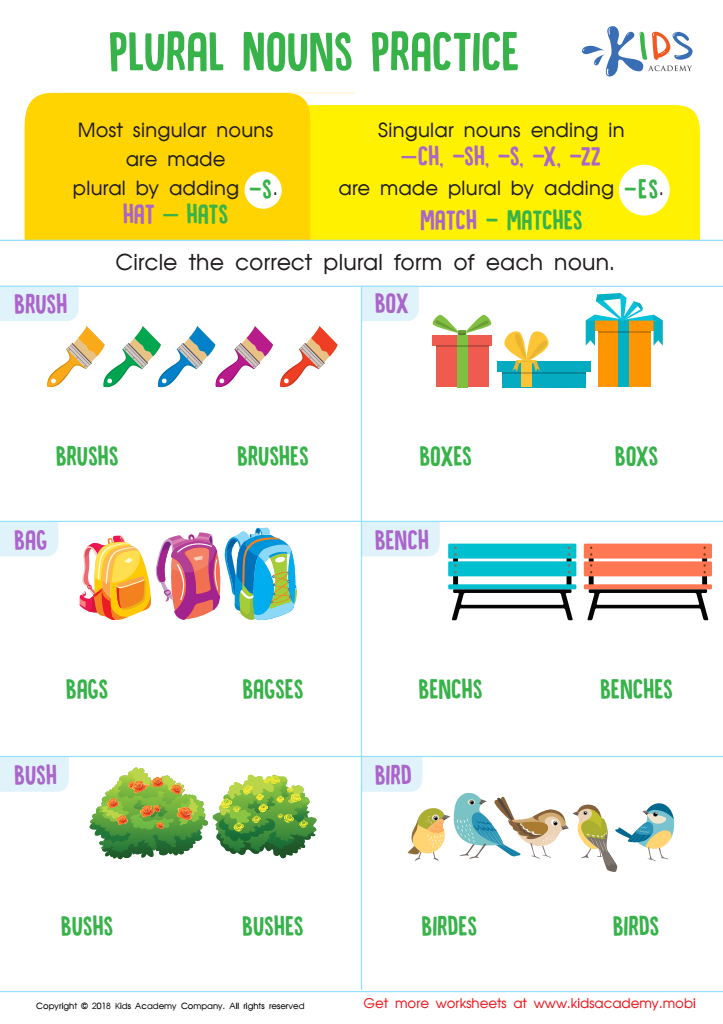
Plural Nouns Practice Worksheet
 Assign to My Students
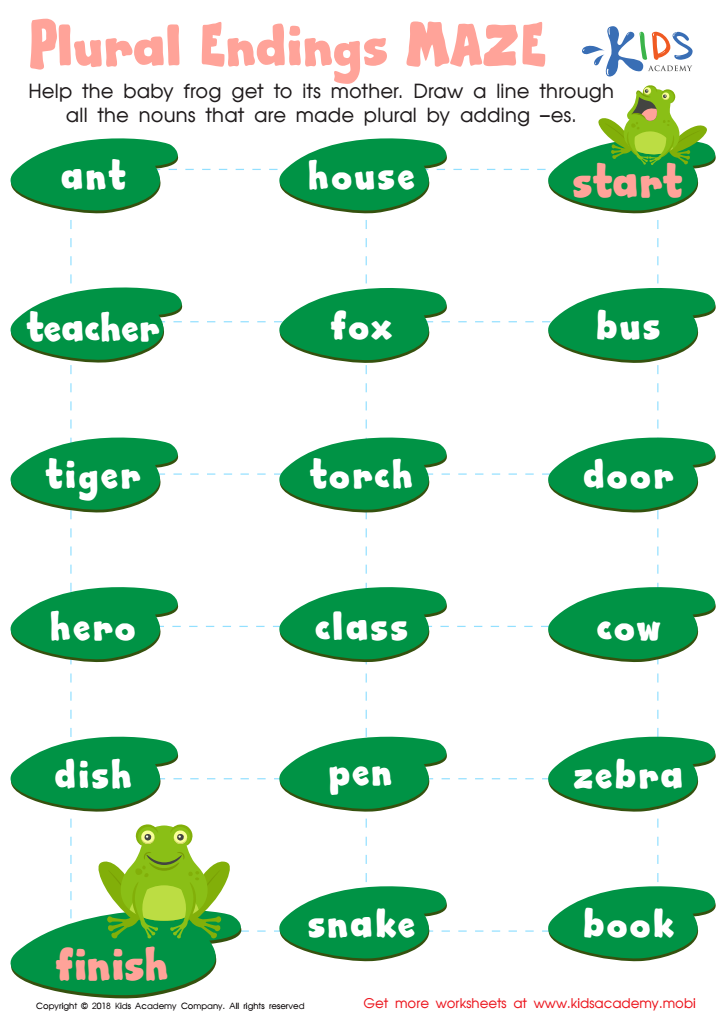
Plural Endings Maze Worksheet
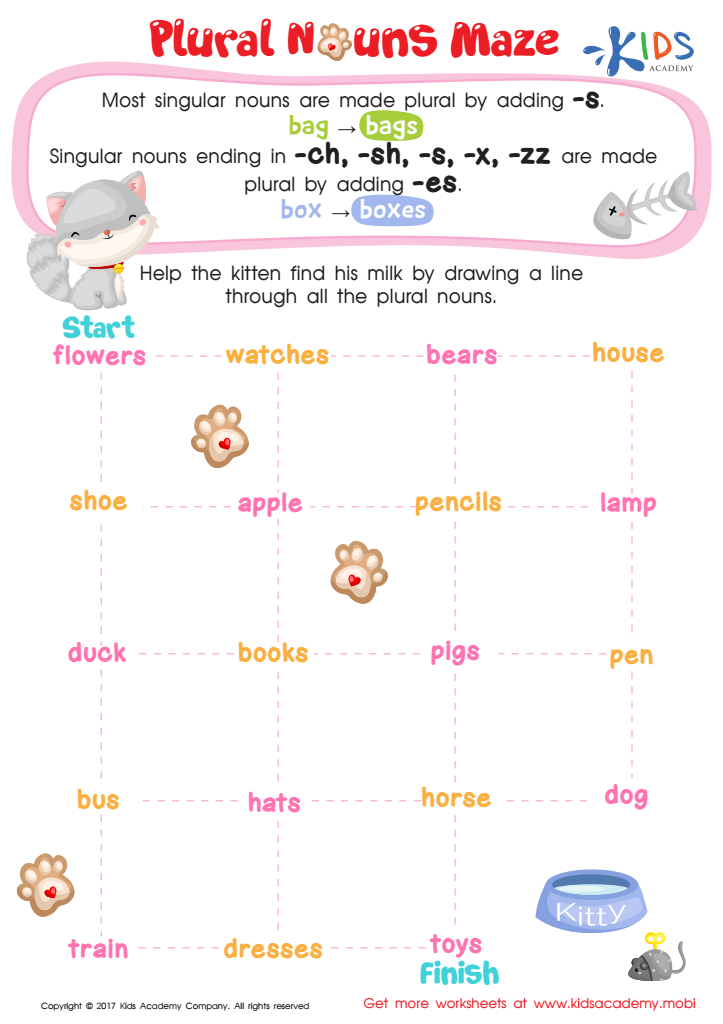
Plural Nouns Maze Worksheet
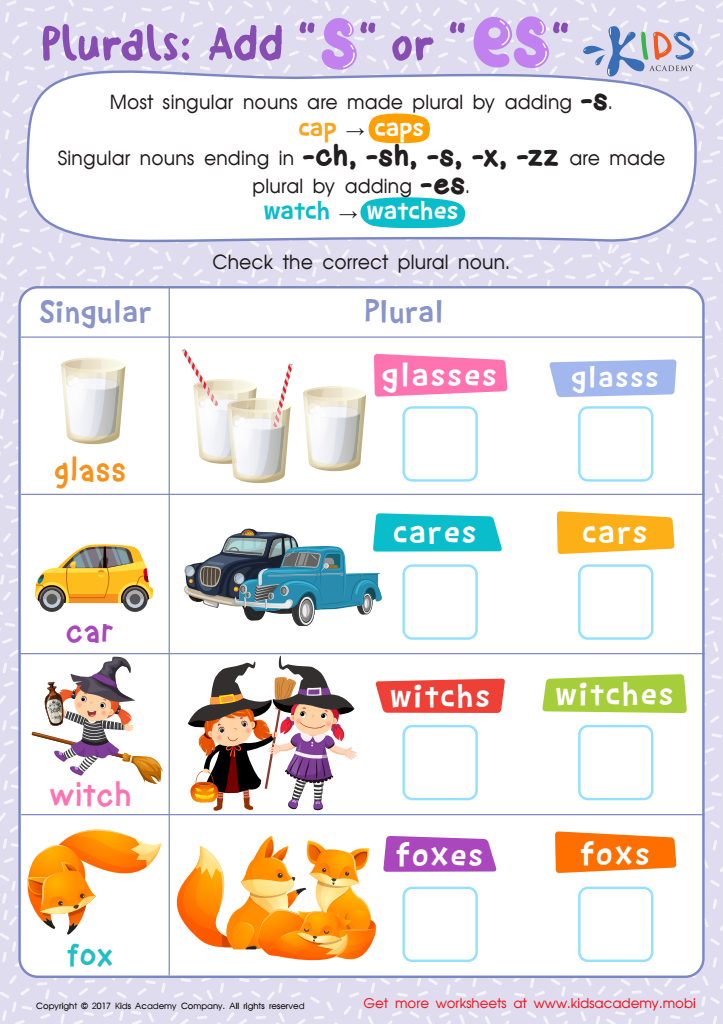
Plurals: "–es" or "–es"? Worksheet
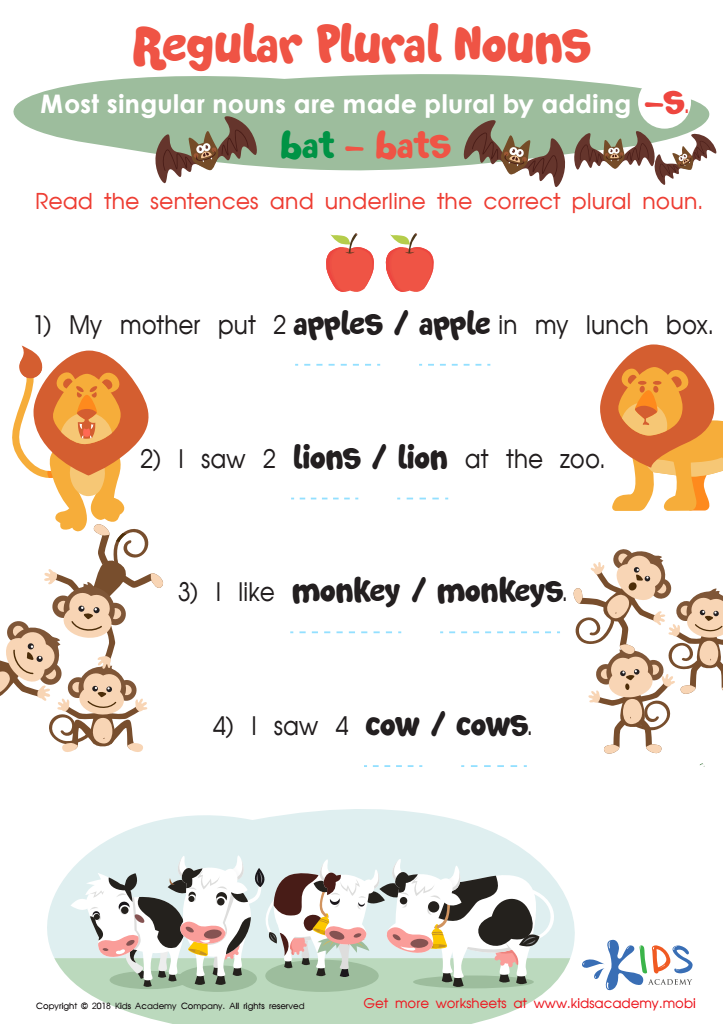
Regular Plural Nouns Worksheet
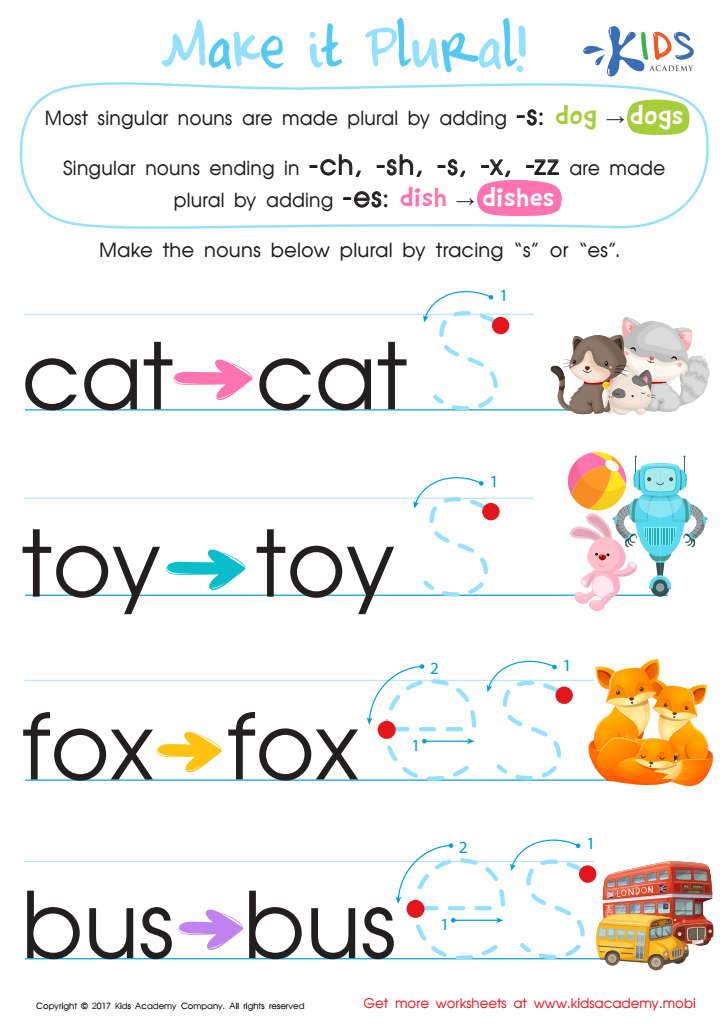
Make it Plural Worksheet








Understanding plurals is crucial for children aged 6-9 because it lays the foundation for effective communication and literacy development. At this stage, kids are expanding their vocabulary and learning the rules of grammar that will serve as the framework for their future language skills. Grasping plurals helps them comprehend and structure sentences correctly, a fundamental aspect of speaking and writing clearly.
When children understand plurals, they can better follow and convey meaning in conversations and texts. For instance, distinguishing between "apple" and "apples" helps them understand whether one item or multiple items are being referred to. This skill is essential not only for clear communication but also for reading comprehension, an area that becomes increasingly important as they progress through school.
Moreover, learning plurals enhances a child's cognitive development by teaching patterns and rules, encouraging logical thinking. It also aids in spelling, as children begin to recognize and use common suffixes like "-s" and "-es."
For teachers and parents, supporting kids in mastering plurals involves creating a rich linguistic environment, offering plenty of reading opportunities, and engaging in exercises that reinforce these concepts. By doing so, they equip children with the tools needed for academic success and effective everyday communication.








