Understanding punctuation Worksheets for Ages 6-9
5 filtered results
-
From - To
Explore our engaging "Understanding Punctuation Worksheets" designed specifically for children ages 6 to 9. These fun and interactive activities help young learners grasp the basics of punctuation, including periods, commas, question marks, and exclamation points. Our worksheets encourage practice through a variety of exercises such as fill-in-the-blanks, matching games, and sentence creation. Perfect for home or classroom use, these resources support literacy development by making punctuation enjoyable and accessible. Help your child enhance their writing skills and comprehension with our colorful and thoughtfully designed worksheets. Start their punctuation journey today and watch their confidence soar!
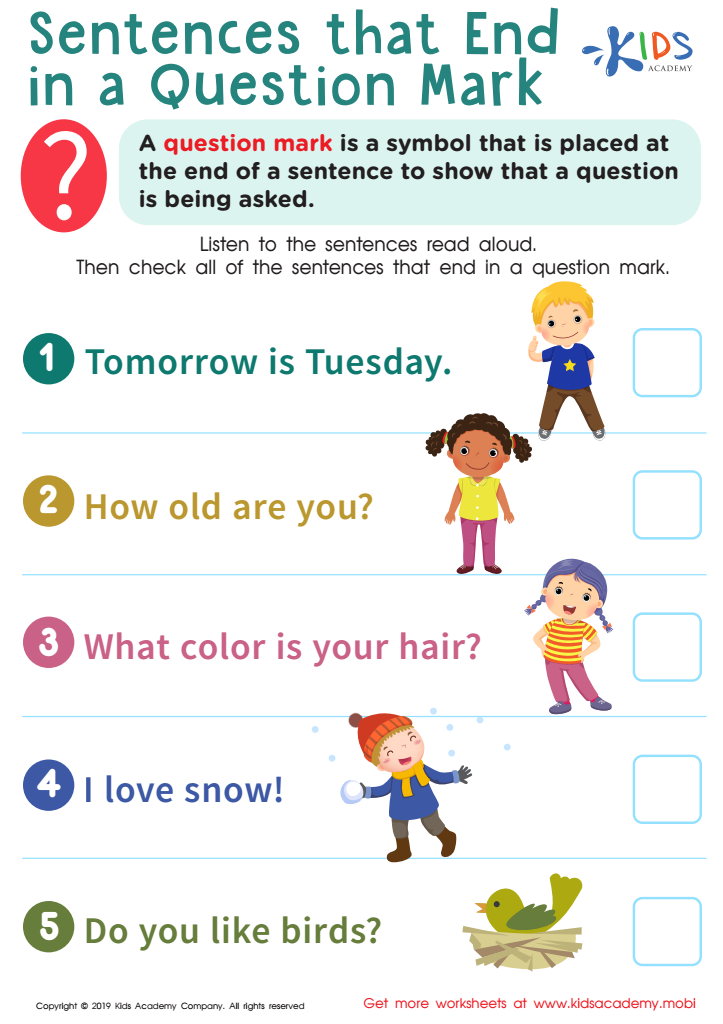
Sentences That End in an Question Mark Worksheet
 Assign to My Students
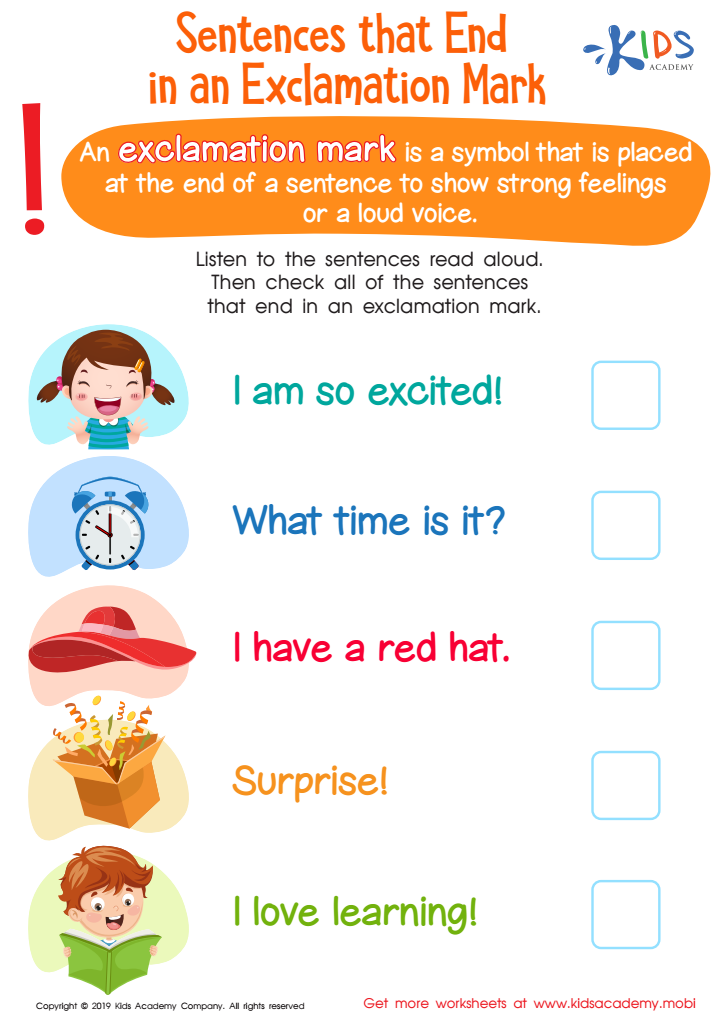
Sentences That End in an Exclamation Mark Worksheet
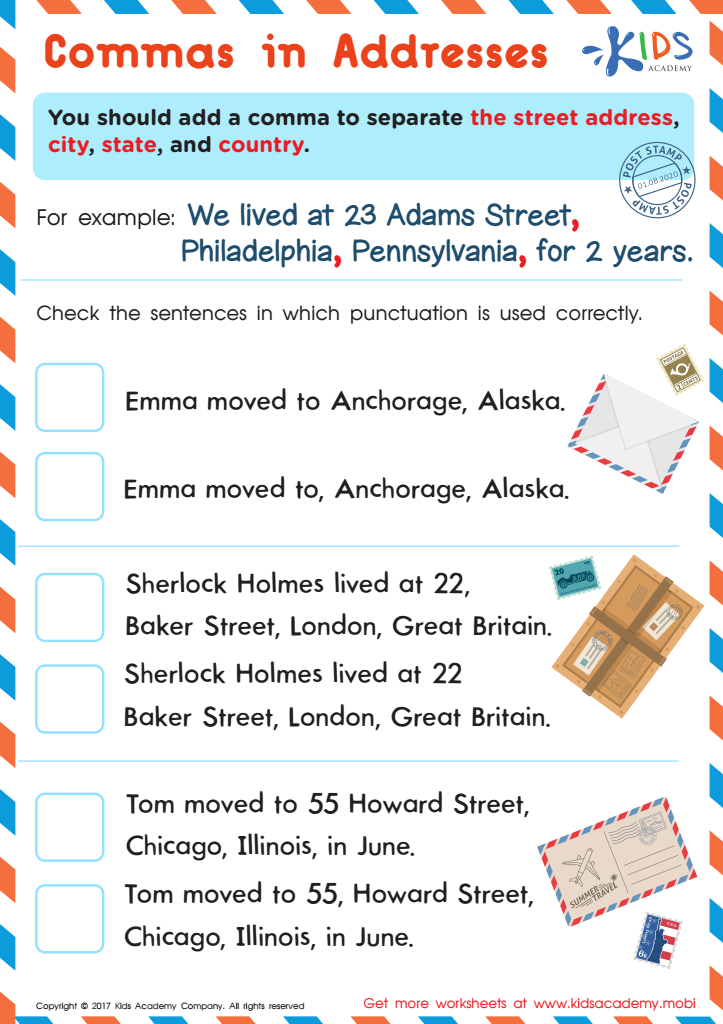
Commas in Addresses Worksheet
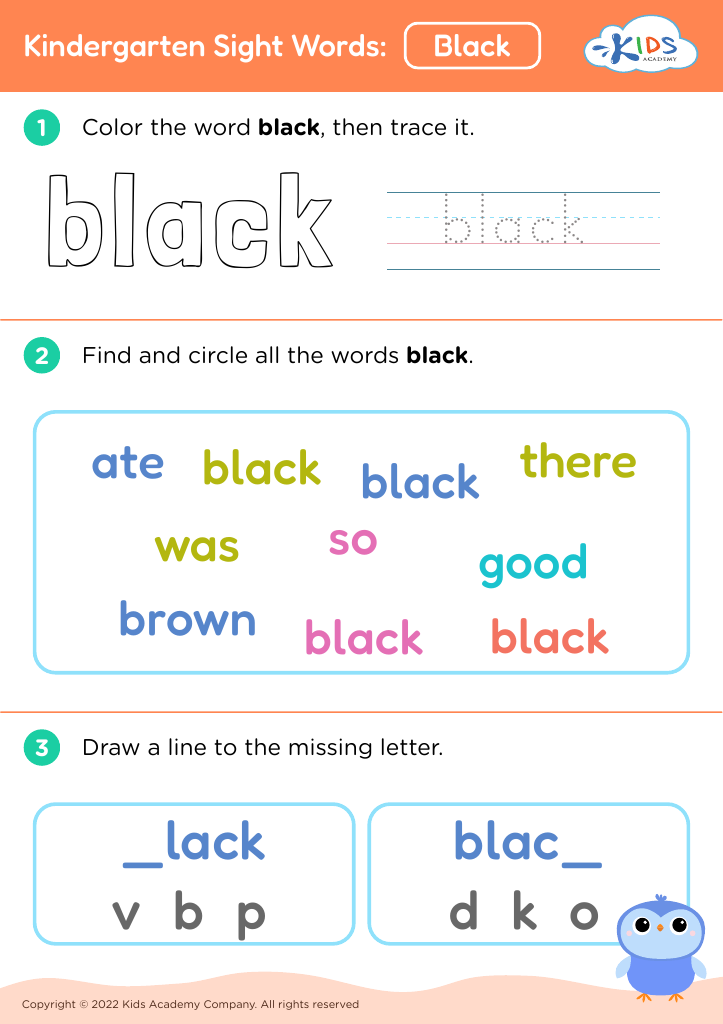






Understanding punctuation is vital for children aged 6-9, as it lays the foundation for effective communication and literacy skills. During this developmental stage, children begin to read and write independently, making punctuation not just a set of rules, but crucial tools that enhance clarity and expression.
Punctuation marks, such as periods, commas, and question marks, serve to organize thoughts and convey meaning. When children grasp the function of punctuation, they improve their reading comprehension, allowing them to interpret texts accurately and recognize the mood or intent behind sentences. Moreover, effective punctuation contributes to writing fluency; children learn to structure their sentences coherently, making their writing more engaging and understandable.
Parents and teachers play a significant role as facilitators of this learning process. By encouraging the use of punctuation in everyday activities—like writing letters, journal entries, or even text messages—adults can help children practice these skills in fun and relevant ways. Additionally, reinforcing how punctuation affects tone and meaning helps children appreciate the nuances of language. As children develop these critical skills early on, they foster a lifelong love for reading and writing, setting them up for success in their academic journeys and beyond.








