Understanding Simple Machines Worksheets for Ages 6-9
4 filtered results
-
From - To
Unlock the fascination of science for young learners with our "Understanding Simple Machines Worksheets for Ages 6-9"! Specifically designed to nurture curiosity and critical thinking, these fun and educational printables cover the basics of levers, pulleys, wheels and axles, inclined planes, screws, and wedges. Through engaging activities and colorful illustrations, children will gain hands-on experience and foundational knowledge about the machinery that powers our world. Perfect for enhancing classroom lessons or exploring at home, our worksheets are tailored to make complex concepts accessible and enjoyable for young minds. Let’s turn everyday learning into an extraordinary adventure!
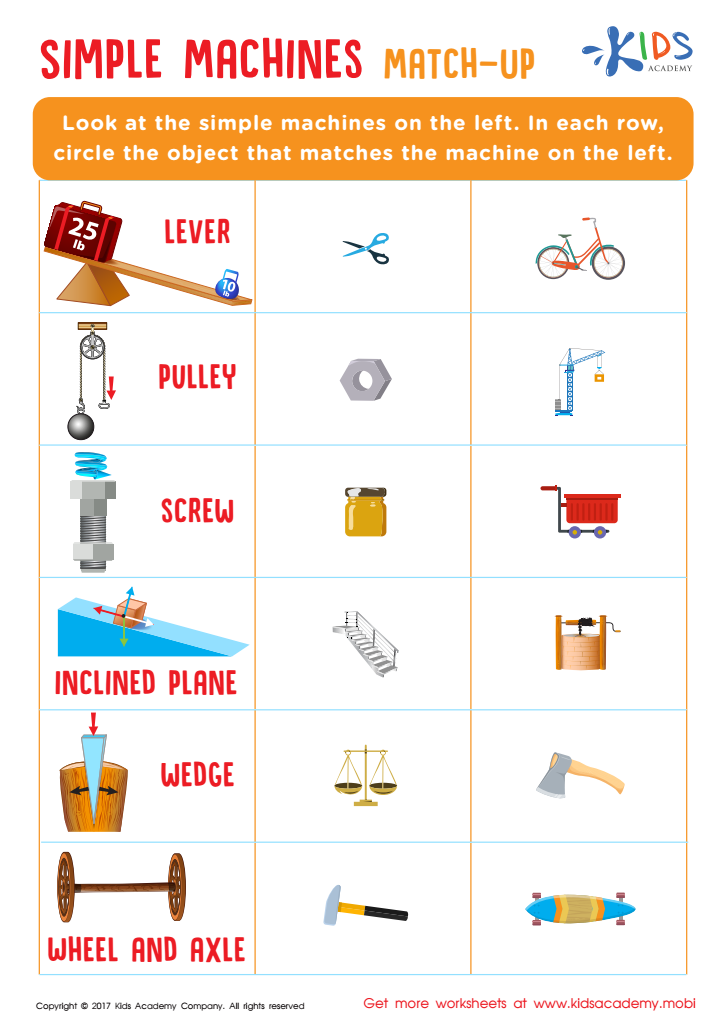
Simple Machines Worksheet
 Assign to My Students
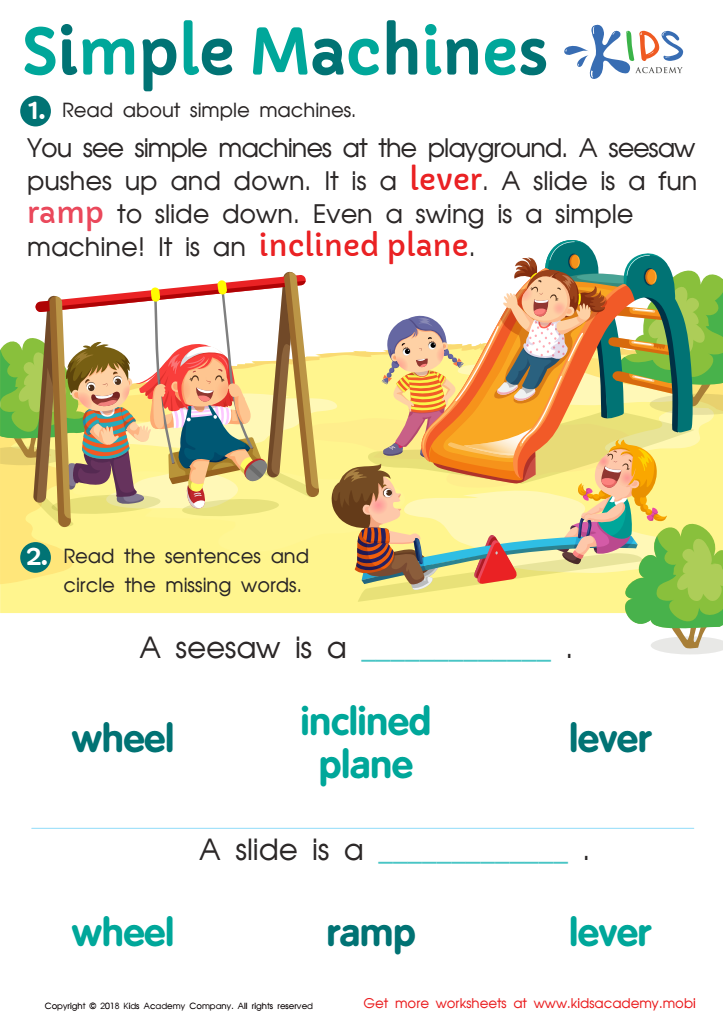
Simple Machines Worksheet
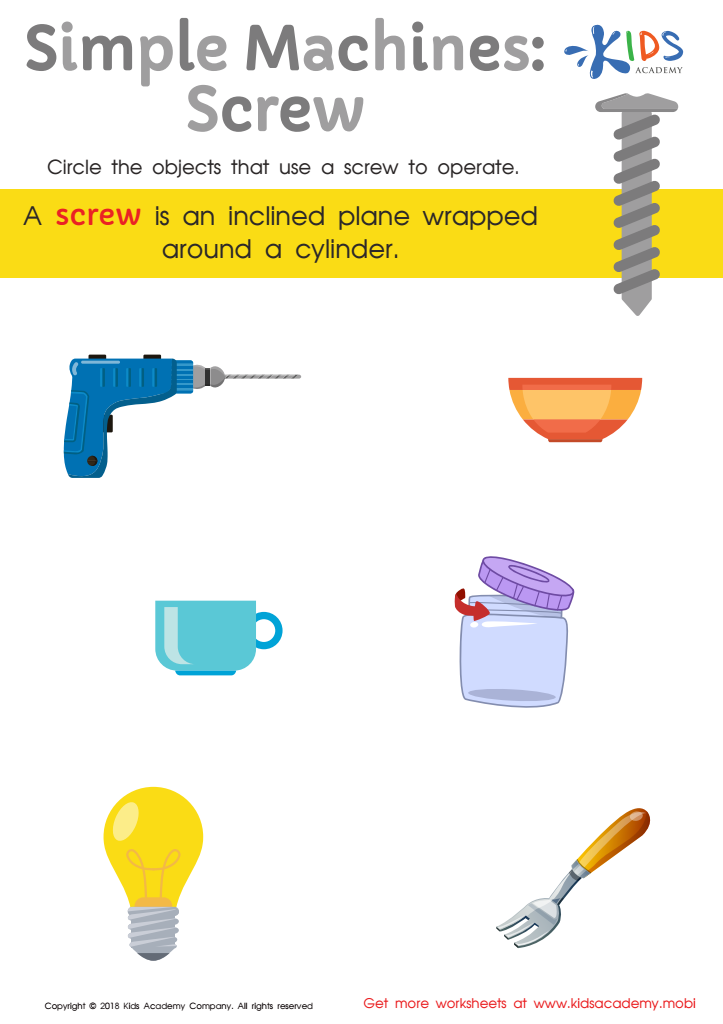
Simple Machines: Screw Worksheet







Understanding simple machines is vital for young learners, ages 6-9, as it cultivates foundational STEM skills in a fun and engaging way. At this impressionable age, children are naturally curious and eager to explore the world around them. Simple machines—like levers, pulleys, wheels, and inclined planes—are perfect educational tools because they make abstract principles tangible and comprehensible.
Firstly, simple machine concepts align well with basic physics and mechanics, which help children grasp how things work in the real world. When students understand how a seesaw lever functions or why a ramp makes lifting easier, they develop critical thinking, problem-solving, and analytical skills. These cognitive abilities are not just vital for success in STEM fields but are also practical life skills.
Secondly, hands-on activities with simple machines promote active learning. Building a basic pulley system or experimenting with inclined planes fosters creativity while enhancing fine motor skills. Children gain confidence as they apply theoretical knowledge to practical tasks, often working collaboratively, which also boosts social skills.
Moreover, an introduction to simple machines can spark a lifelong interest in science and engineering. By making complex concepts accessible and entertaining, educators help nurture an inquisitive mindset. This foundational understanding prepares children for more advanced scientific learning, building blocks that are essential for their future academic success and technological literacy.








