Visual representation of fractions Worksheets for Ages 6-9
7 filtered results
-
From - To
Discover engaging "Visual Representation of Fractions Worksheets for Ages 6-9" from Kids Academy, tailored to make learning fractions fun and intuitive! These worksheets utilize vibrant pictures and interactive activities to help young learners grasp the concept of fractions easily. By using visual aids like pie charts, bar models, and number lines, children can develop a solid understanding of fractions, making math less intimidating. Perfect for home or classroom use, these printable resources enhance your child’s problem-solving skills and boost their confidence in math. Bring fractions to life and spark a love for numbers today!
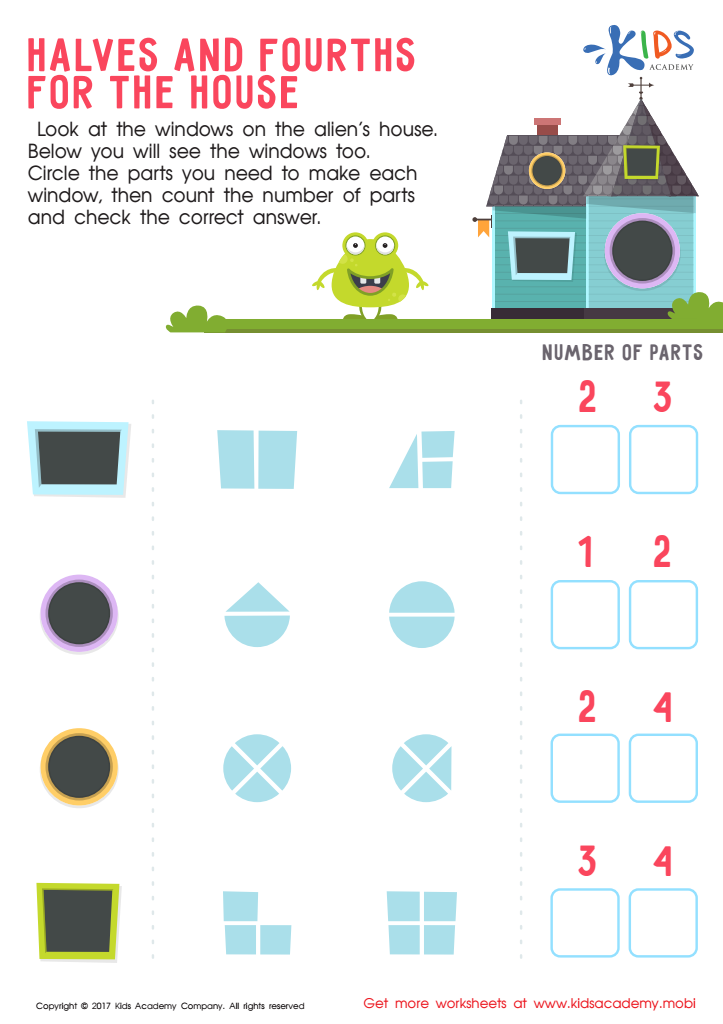
Halves and Fourths for the House Worksheet
 Assign to My Students
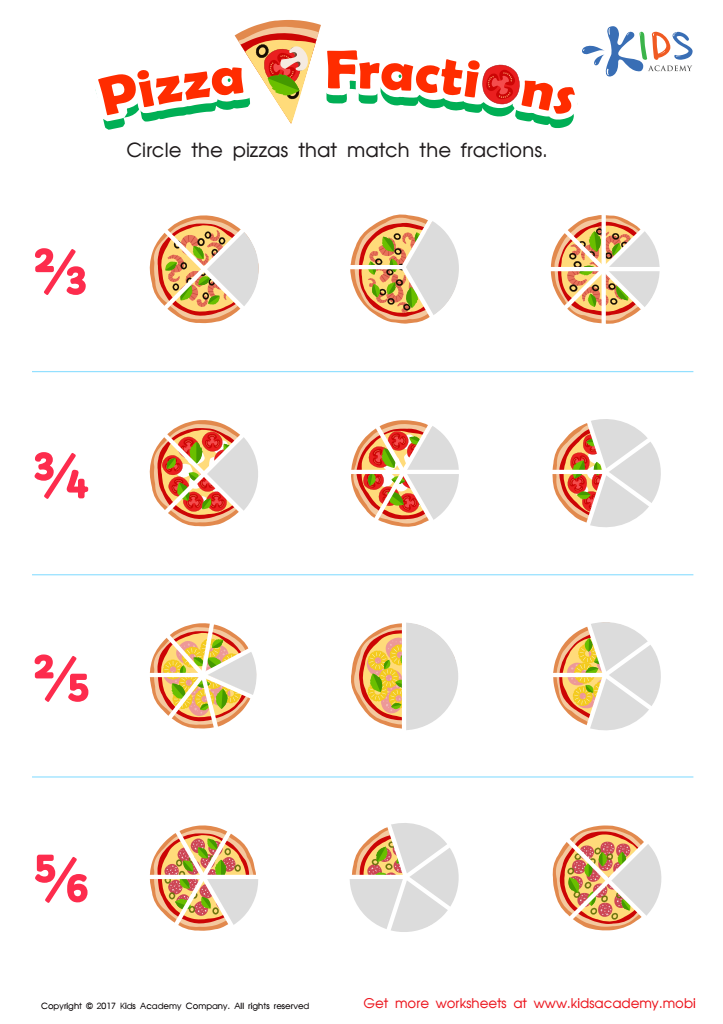
Fractions: Pizza Printable
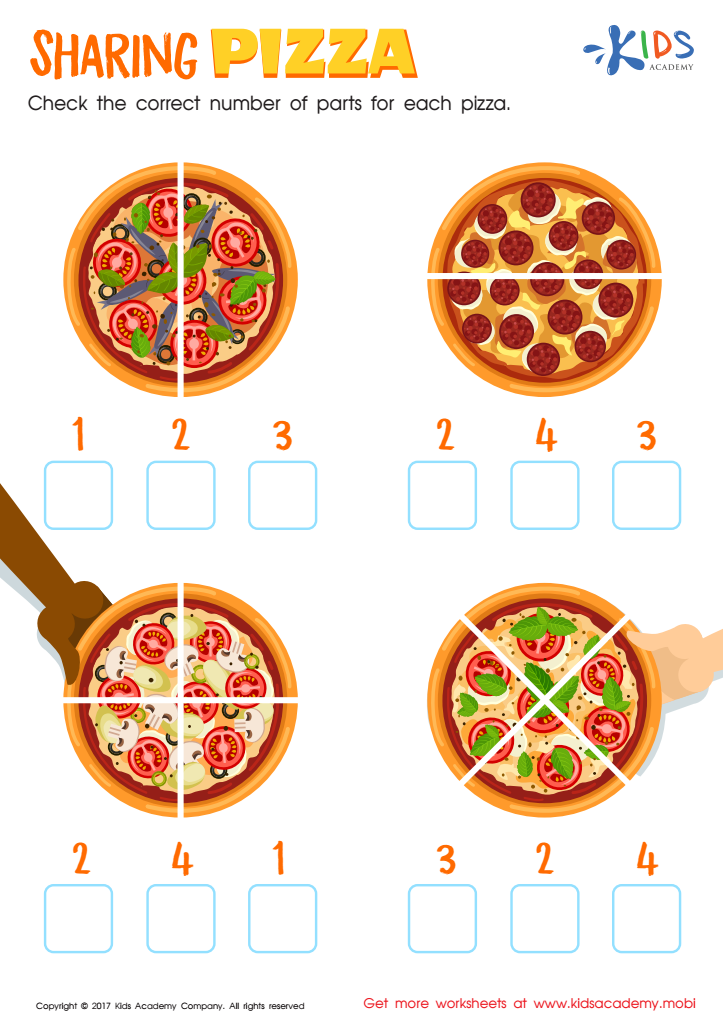
Sharing Pizza Worksheet
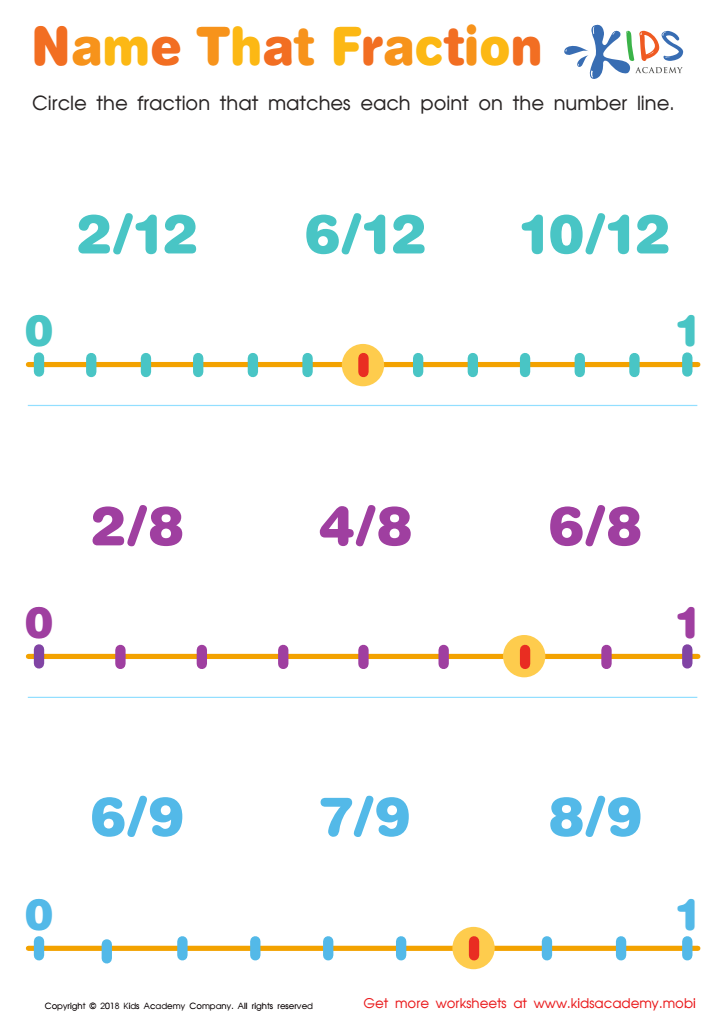
Name That Fraction Worksheet







Visual representation of fractions is an essential educational tool for children aged 6-9 for several key reasons. At this age, students are developing basic math skills and conceptual understanding, and visual aids can significantly enhance their ability to grasp abstract concepts.
First, young learners often find it challenging to comprehend fractions as numbers distinct from whole numbers. Visual representations—such as pie charts, number lines, or shaded regions of a shape—make these abstract ideas concrete. Seeing a fraction as part of a whole helps children understand proportions and the relationship between the numerator and the denominator.
Second, visual aids support different learning styles. Some children are visual learners and can more easily grasp concepts when they see them rather than hear them explained. For these students, diagrams and pictures can bridge the gap between confusion and comprehension.
Third, using visual representations helps build a strong mathematical foundation for future learning. As students progress to more advanced topics involving fractions, such as algebra or calculus, a solid understanding of basic fraction concepts will be crucial.
Finally, engaging visuals can make learning math more enjoyable and less intimidating, fostering a positive attitude towards mathematics. By making fractions relatable and easier to understand, teachers and parents lay the groundwork for a lifetime of confident math learning.








