Vowel differentiation Worksheets for Ages 6-9
3 filtered results
-
From - To
Enhance your child’s reading and pronunciation skills with our Vowel Differentiation Worksheets for Ages 6-9. Specially designed by education professionals, these engaging worksheets help young learners distinguish between long and short vowel sounds in a fun and interactive way. Each activity focuses on recognizing and correctly using vowels, ensuring children improve their phonological awareness and spelling abilities. Perfect for use at home or in the classroom, our worksheets are an invaluable resource for building a solid foundation in reading. Explore a variety of exercises that make learning vowels enjoyable and effective for your developing reader!
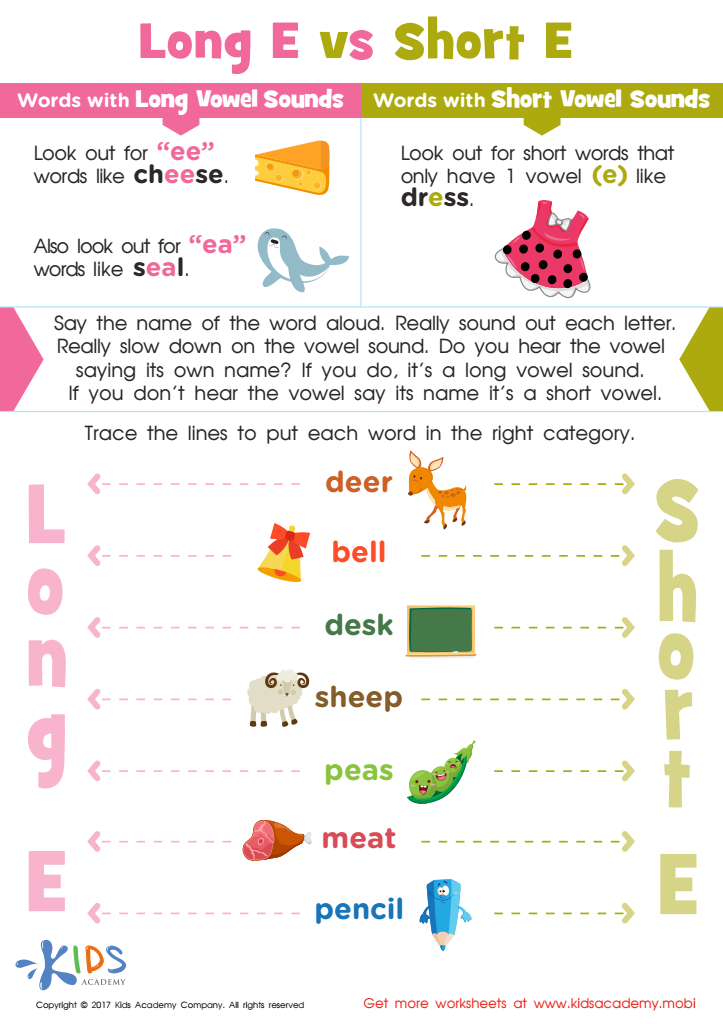
Long and Short Vowel E Spelling Worksheet
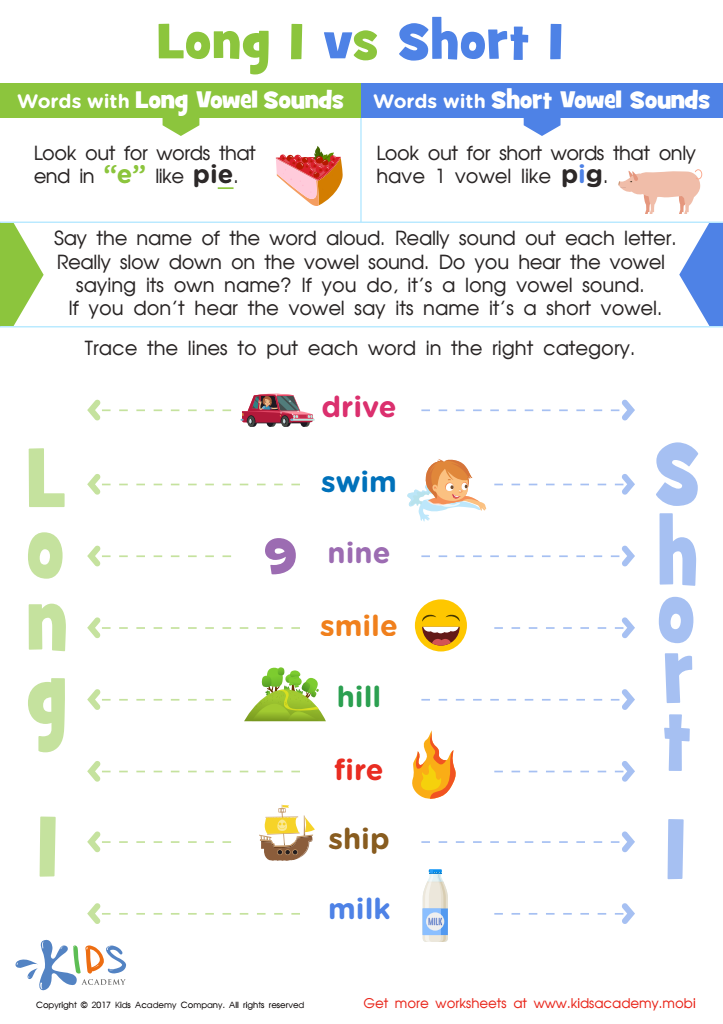
Long and Short Vowel I Spelling Worksheet

Long and Short E Worksheet
 Assign to My Students







Vowel differentiation is crucial for children aged 6-9 because it forms the foundation for proficient reading, writing, and effective communication. At this developmental stage, children are typically transitioning from learning phonics to becoming more fluent readers. Differentiating vowels helps them decode words correctly, which is essential for reading comprehension and overall literacy.
Phonemic awareness, including the ability to distinguish between long and short vowels, allows children to spell accurately, facilitating clearer written communication. By understanding vowel sounds, children can better comprehend word meanings and context, enhancing their vocabulary and cognitive development. This skill also aids in understanding complex grammatical structures as they progress academically.
Moreover, strong vowel differentiation boosts children's confidence in their reading abilities, motivating them to read more frequently and enjoyably. For English Language Learners (ELLs), mastering vowel sounds is particularly important because it aids in pronunciation and ensures they can communicate more clearly.
Teachers and parents play a pivotal role in supporting this learning by engaging in activities like reading aloud, phonics games, and practice sheets. By prioritizing vowel differentiation, they equip children with the linguistic tools required for academic success and effective everyday communication.








