Discover our engaging Word Identification Worksheets designed specifically for kids aged 6 to 9! These fun and interactive resources help young learners develop essential reading skills by enhancing their ability to recognize and understand words in various contexts. With colorful activities, matching games, and practice exercises, children will enjoy honing their vocabulary while building confidence in their reading abilities. Tailored to suit diverse learning styles, our worksheets promote not only word recognition but also critical thinking and comprehension skills. Perfect for both classroom use and at-home learning, our Word Identification Worksheets are an invaluable tool for fostering a love for reading in young learners!

Check out this FREE "Word identification" Trial Lesson for age 6-9!

Identify Individual Words

Favorites
With answer key
Interactive
  • 6-9
  • Word identification
Learn to Spell Worksheet

Learn to Spell Worksheet

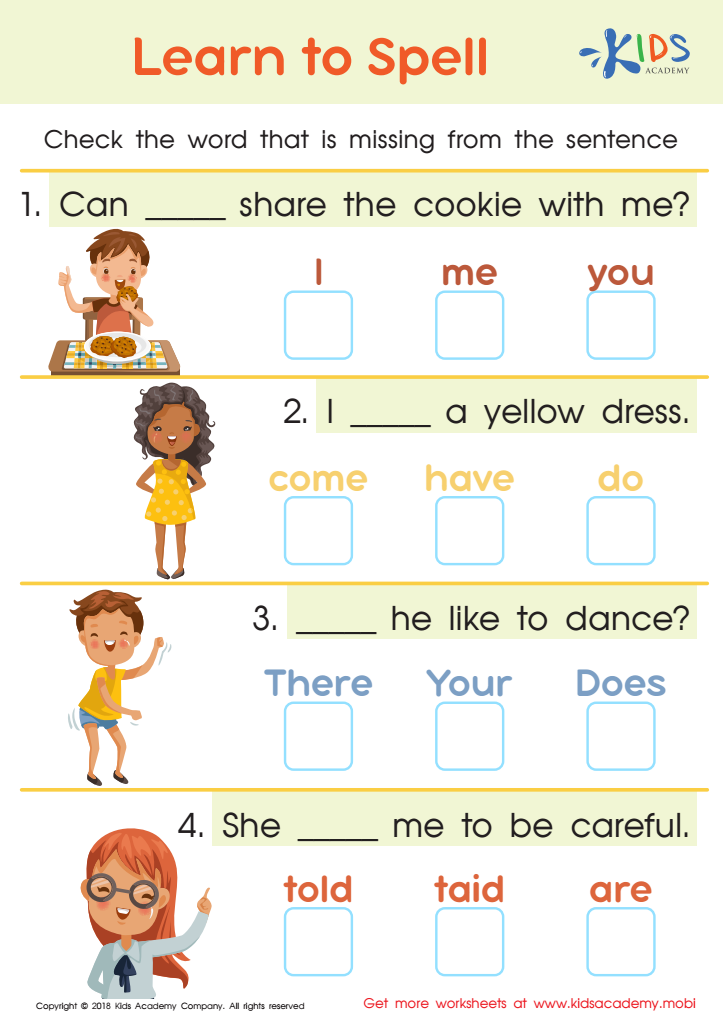
Help sharpen spelling skills with a simple worksheet. Read sentences aloud and show which word is missing. Ask students to pick the correct word from the options. Ensure they check the missing word for accuracy.
Learn to Spell Worksheet
Worksheet
Adjective Maze Worksheet

Adjective Maze Worksheet

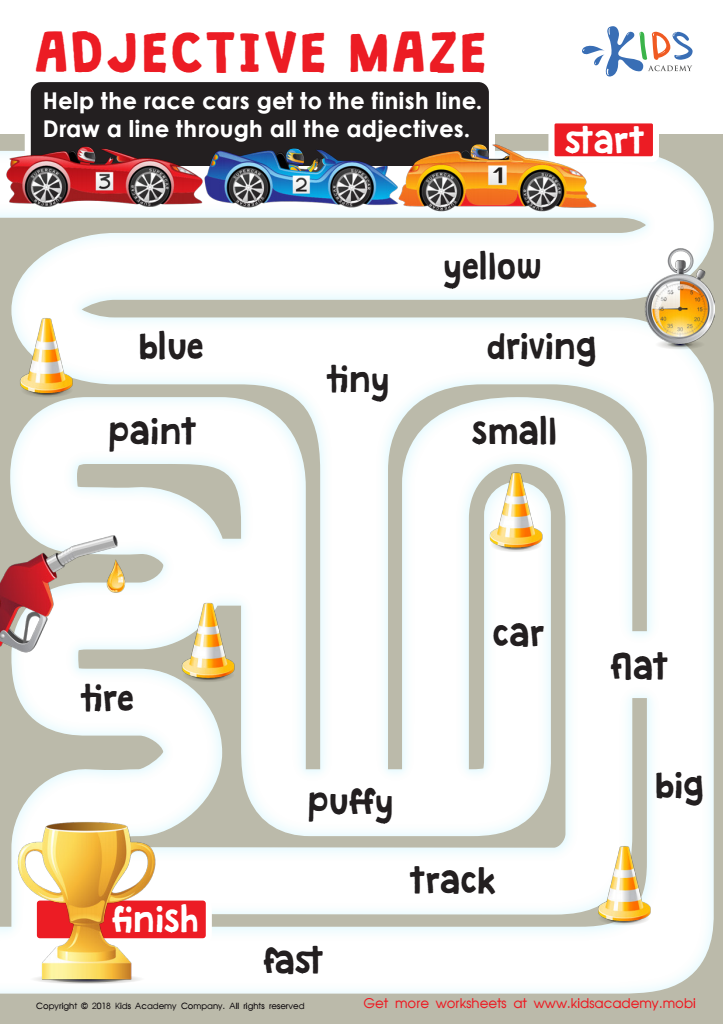
Race your pencil to the finish line with Kids Academy's exciting maze worksheet! Remind your little racer that adjectives describe nouns - looks, sounds, and more. On your mark, get ready - zoom through the track and circle each adjective you see!
Adjective Maze Worksheet
Worksheet
Phonics for Kids | Long Vowel Sound A | PDF Worksheet 1

Long Vowel Sound A Worksheet

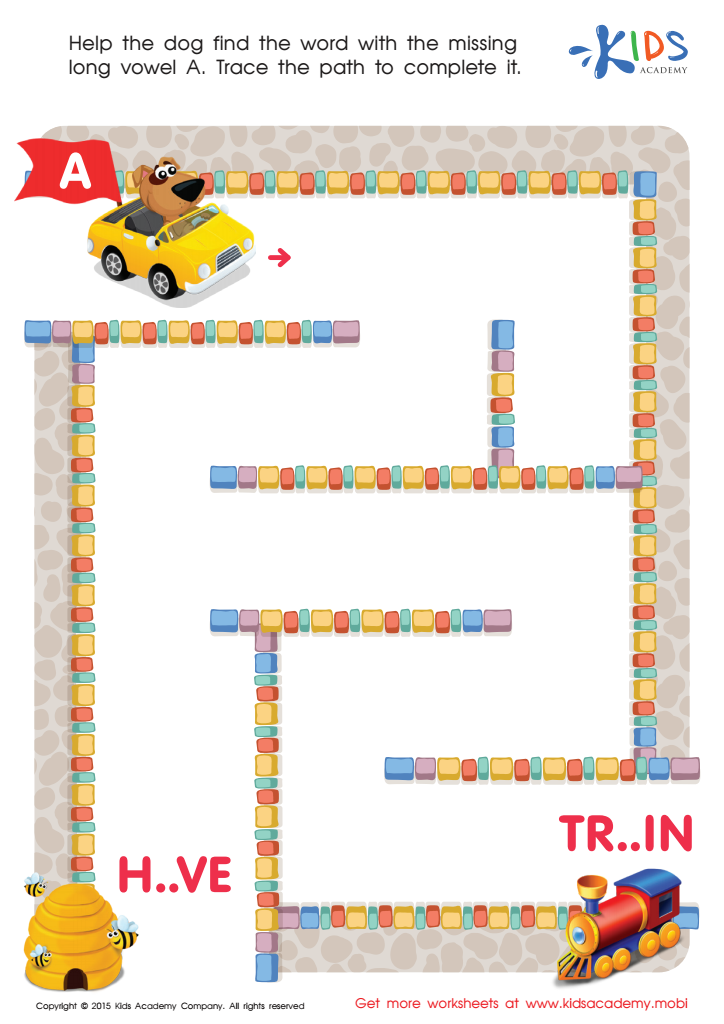
Teach your young learner about the long vowel A with this colorful free printable phonics worksheet. The long vowel A says its name while the short vowel A does not. Complete the worksheet by tracing the root to the toy train and helping the dog by filling in the missing letter A. Have them practice writing and spelling with phonics while having fun!
Long Vowel Sound A Worksheet
Worksheet
Identify Individual Words Worksheet

Identify Individual Words Worksheet

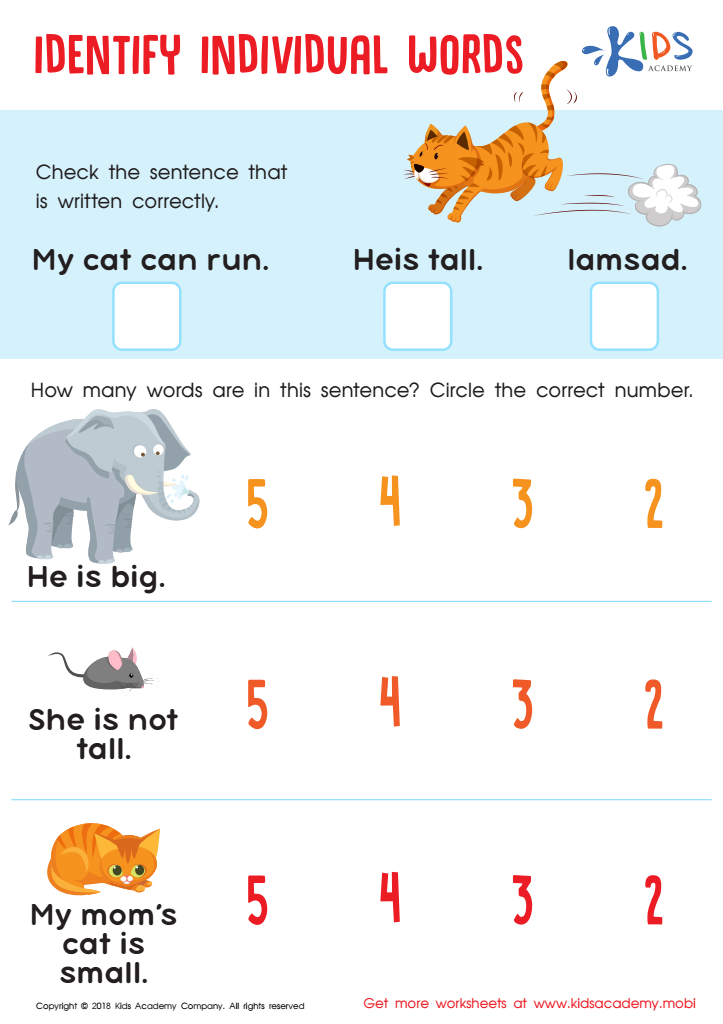
Does your child have trouble constructing sentences? Check out this worksheet! It will help them identify words that make up sentences and assess how well they can read and answer questions. The first part tests how well they can recognize a written sentence. The second part has them read questions and circle the correct number of words. Give it a try!
Identify Individual Words Worksheet
Worksheet
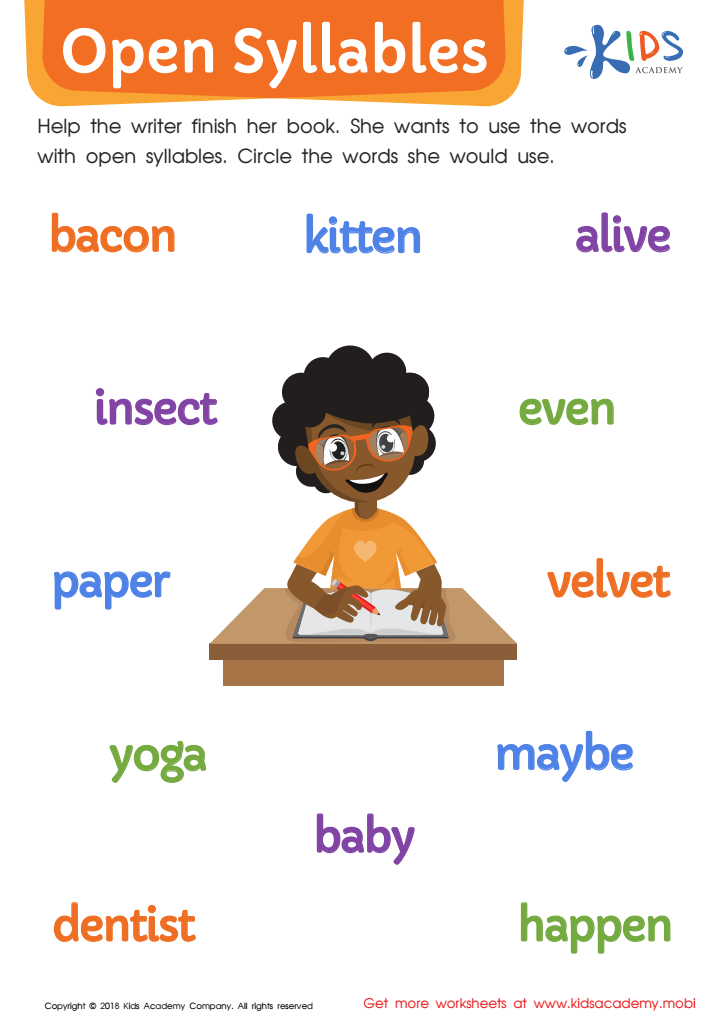
Open Syllables Worksheet

Open Syllables Worksheet

Before beginning this worksheet, make sure your child knows what open syllables are. If not, take time to teach them with examples. Then, help the writer finish her book by circling words with open syllables. She needs your child's help!
Open Syllables Worksheet
Worksheet
Adding up to 1000: Page 73

Adding up to 1000: Page 73

Adding up to 1000: Page 73
Worksheet
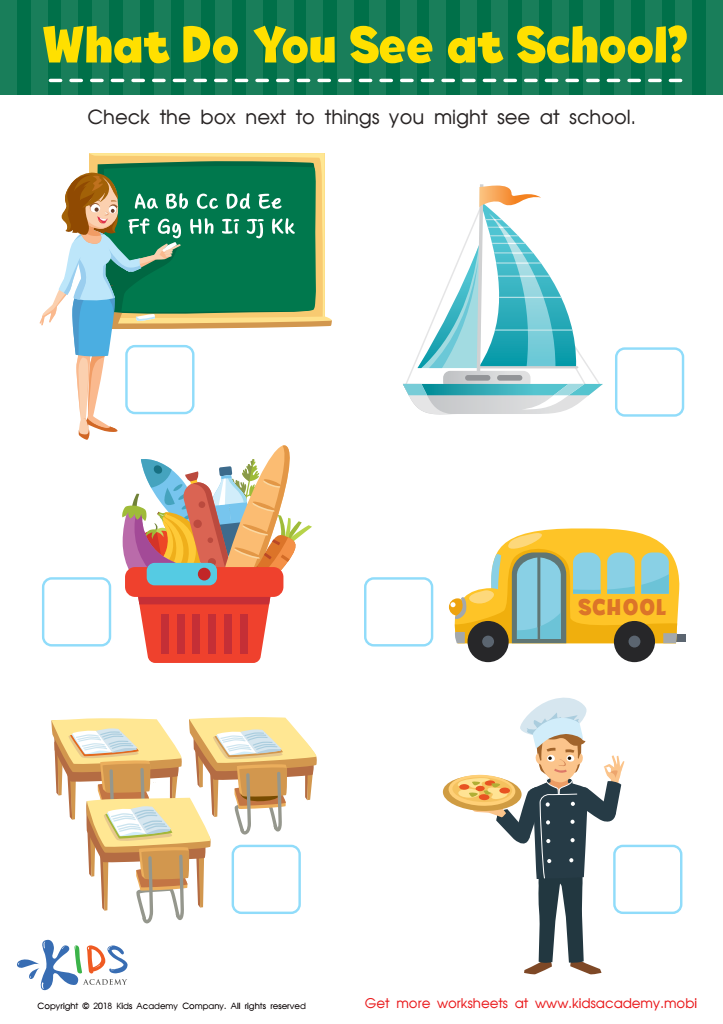
What Do you See at School? Worksheet

What Do you See at School? Worksheet

Have your kids give you a list of things they see at school. Then, view the worksheet together. Ask them to check the boxes next to the school items. Look for objects that can be found at school and those that don't belong. This is a great way to check their knowledge of what they see at school daily, except on weekends and holidays.
What Do you See at School? Worksheet
Worksheet
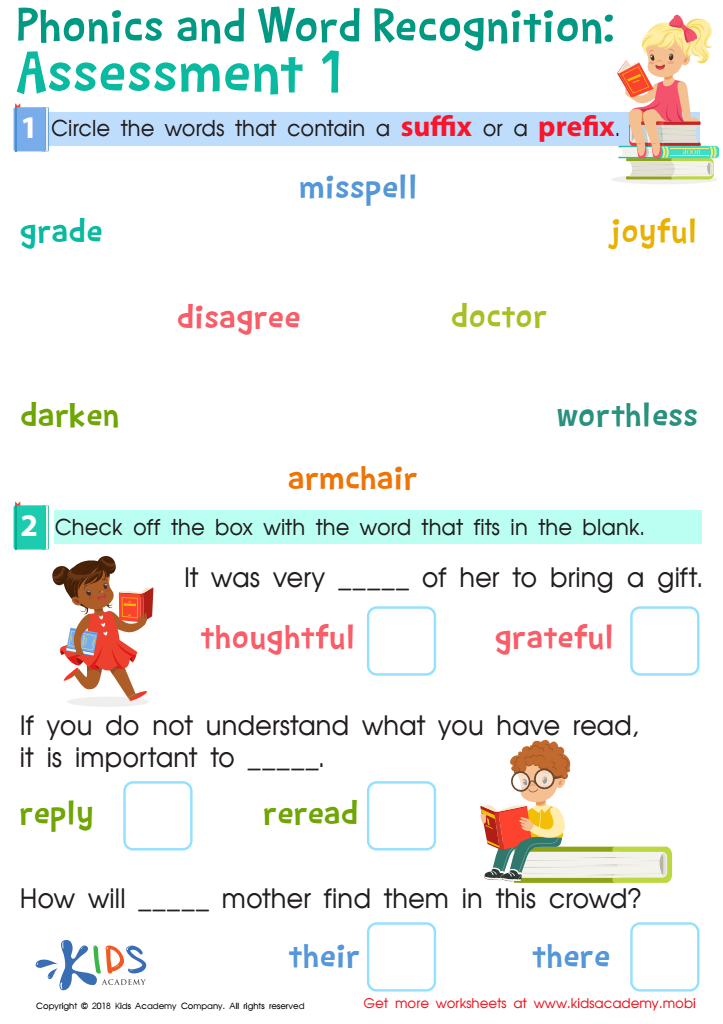
Phonics and Word Recognition: Assessment 1 Worksheet

Phonics and Word Recognition: Assessment 1 Worksheet

Explain prefixes (words added to start of another word to give it a new meaning) and suffixes (added to end of word to change its meaning) to your kids with examples like 'unhappy' (prefix) and 'forgetful' (suffix). Now, help your child complete this worksheet, including circling words and checking boxes.
Phonics and Word Recognition: Assessment 1 Worksheet
Worksheet
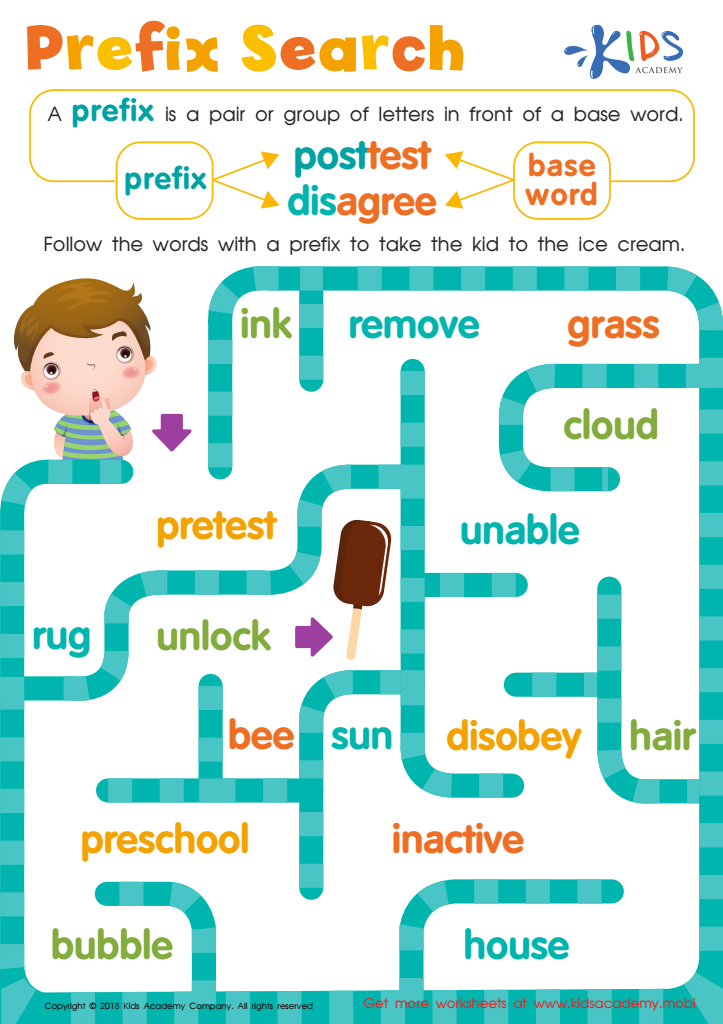
Reading: Prefix Search Worksheet

Reading: Prefix Search Worksheet

Maze your way through prefixes! This worksheet helps students practice reading new words with a prefix and figuring out the base word. An understanding of prefixes gives students the skills to comprehend new words. A fun and useful activity for the reading classroom!
Reading: Prefix Search Worksheet
Worksheet
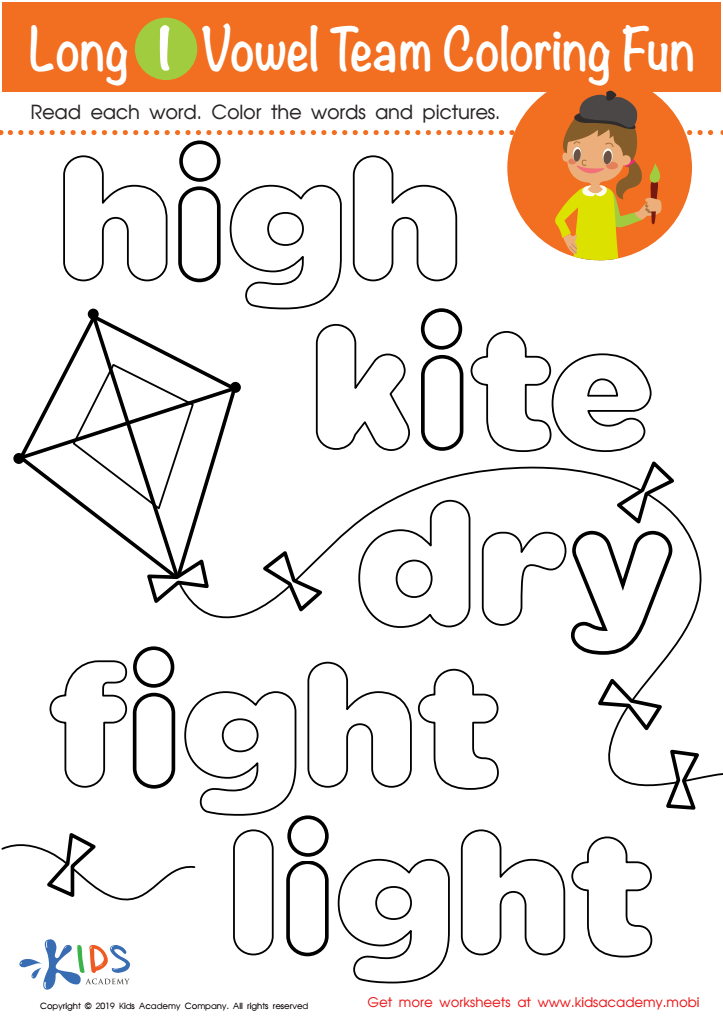
Long I Vowel Team Coloring Worksheet

Long I Vowel Team Coloring Worksheet

This worksheet provides practice with letter combinations that make the long "i" sound while enhancing creativity and motor skills with a fun coloring activity. Unknowingly, new readers learn key phonics skills while having fun!
Download (PDF)
Assign to My Students
Long I Vowel Team Coloring Worksheet
Worksheet
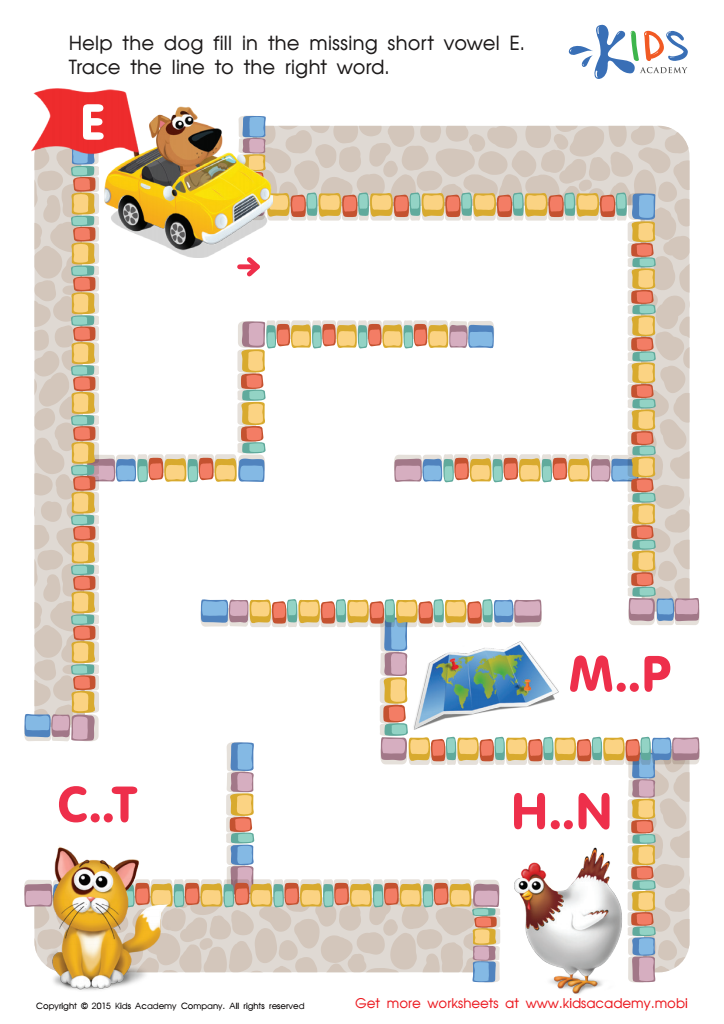
Phonics for Kids | Short Vowel Sound E | PDF Worksheet 1

Short Vowel Sound E Worksheet

This free printable phonics worksheet helps kids learn the short vowel sound E. Kids need to help the dog complete the word “hen” by finding their way through a maze. It teaches kids to see the connection between letters and sounds and also strengthens their writing and spelling skills. Fun and educational, this phonics worksheet is great for kids. Want more? Check out here.
Short Vowel Sound E Worksheet
Worksheet
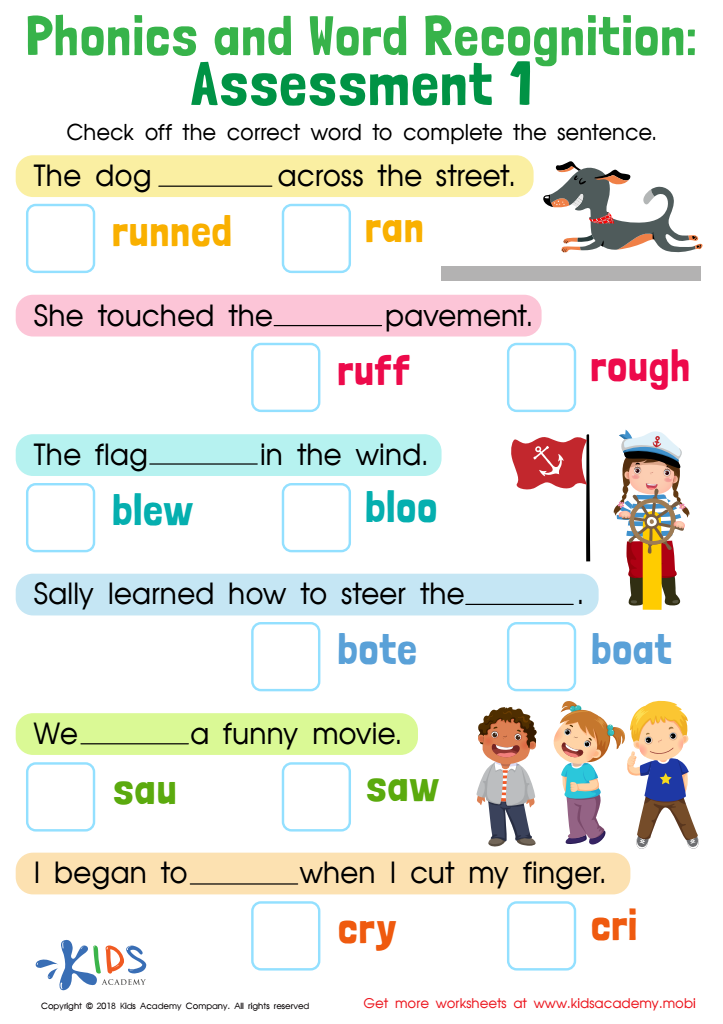
Phonics and Word Recognition: Assessment 1 Worksheet

Phonics and Word Recognition: Assessment 1 Worksheet

This worksheet tests phonetics and word recognition. Students should be familiar with past tense verbs. Read incomplete sentences, then read multiple options and help students select the correct one.
Phonics and Word Recognition: Assessment 1 Worksheet
Worksheet
Phonics and Word Recognition: Assessment 2 Worksheet

Phonics and Word Recognition: Assessment 2 Worksheet

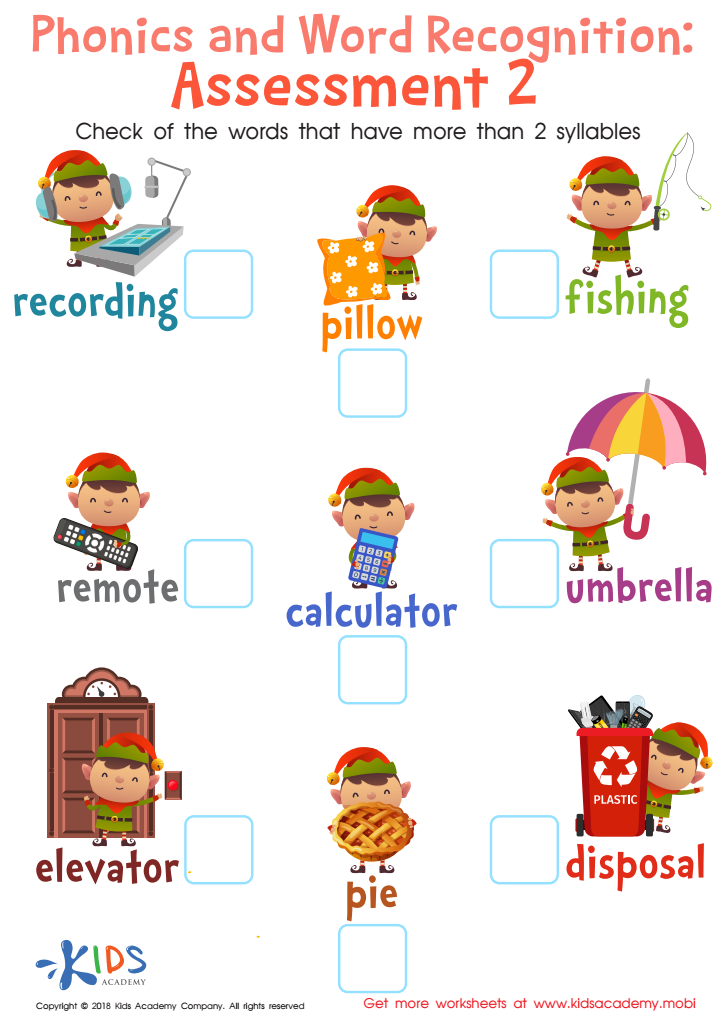
Help your kids learn proper pronunciation by counting syllables. Most words they'll encounter have 1-3 syllables, making them simple to say. Have them repeat the words in your worksheet after you. Focus on longer words with more than two syllables.
Phonics and Word Recognition: Assessment 2 Worksheet
Worksheet
Phonics and Word Recognition: Assessment 2


Phonics and Word Recognition: Assessment 2

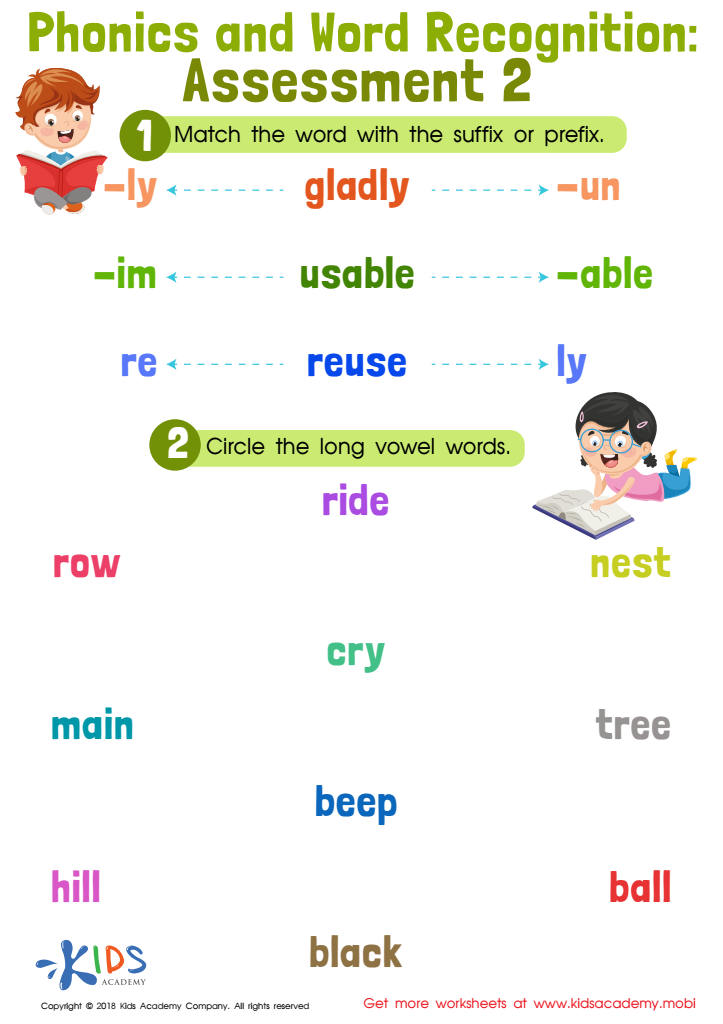
Give kids common examples of suffixes and prefixes, such as "un-," "unhappy," "ness," "happyness." Ask them to match each word in the word recognition exercise to the correct suffix or prefix. Test phonetic understanding by having them circle the long vowel sounds.
Phonics and Word Recognition: Assessment 2

Worksheet


Word identification is a critical skill for children ages 6-9, as it lays the foundation for literacy development. For parents and teachers, understanding its importance can significantly impact a child's academic journey. At this age, children transition from learning to read to reading to learn. Effective word identification enables children to decode unfamiliar words, which fosters confidence and engagement in reading activities.

When children can quickly recognize words, they develop stronger reading fluency, allowing them to concentrate on comprehension rather than struggling with basic decoding. This skill supports their ability to engage with more complex texts, enhancing their vocabulary and overall linguistic skills. Moreover, early proficiency in word identification can prevent future reading difficulties, setting children on a path to success in all subject areas.

Moreover, parents and teachers play vital roles in cultivating this ability. By providing opportunities for practice through games, reading aloud, and other engaging activities, adults can motivate children to explore and enjoy the reading process. Investing time and resources in word identification not only aids immediate learning experiences but also contributes to long-term academic excellence and a lifelong love of reading. Ultimately, fostering strong word identification skills equips children with the tools they need for future learning and critical thinking.