Problem-Solving Skills Adding up to 1000 Misc Worksheets for Ages 6-9
14 filtered results
-
From - To
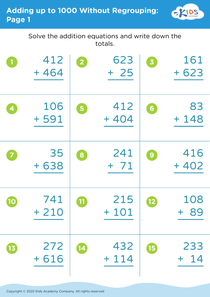
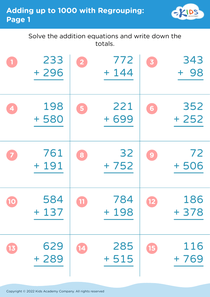
Boost your child's problem-solving skills with our engaging "Adding up to 1000 Misc Worksheets." Designed for ages 6-9, these worksheets make learning math both fun and educational. Each sheet features a variety of exercises that help young learners practice adding numbers up to 1000 while enhancing their critical thinking abilities. With colorful images, intuitive layouts, and step-by-step problems, kids will gain confidence and proficiency in math. Perfect for classroom and home learning, these resources support key developmental milestones and align with common educational standards. Give your child the head start they deserve with these enriching worksheets!
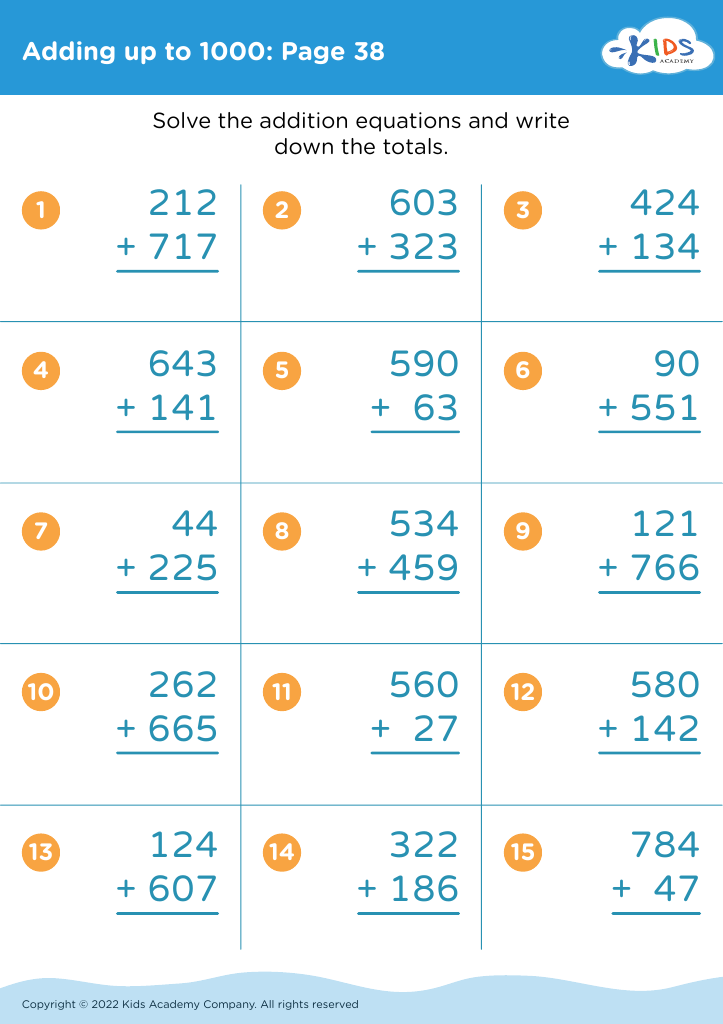
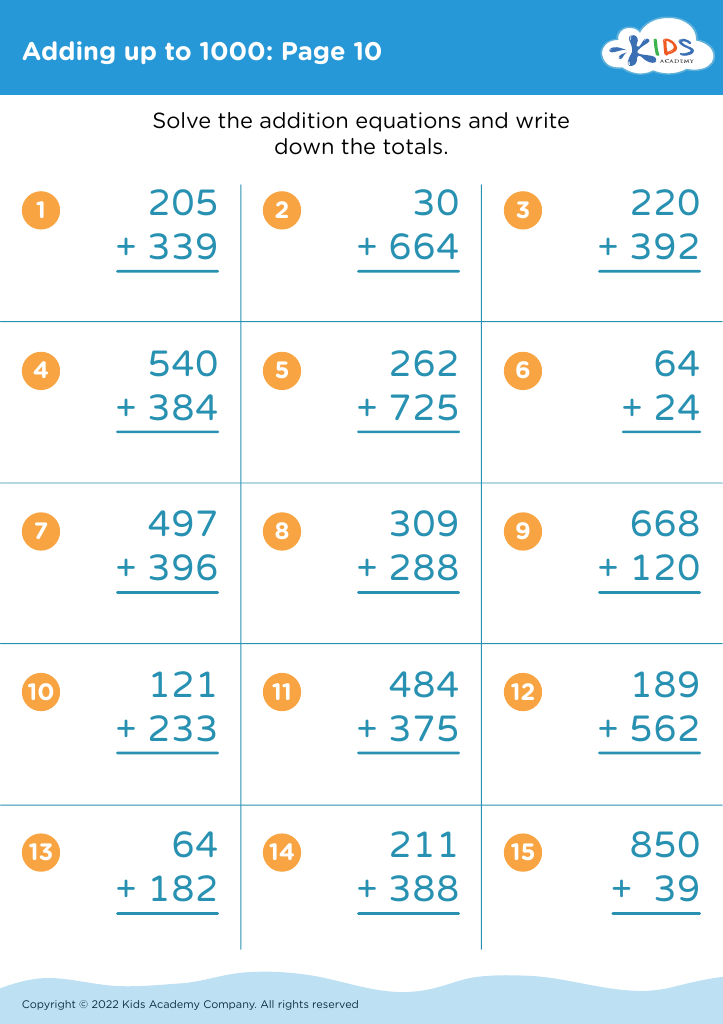
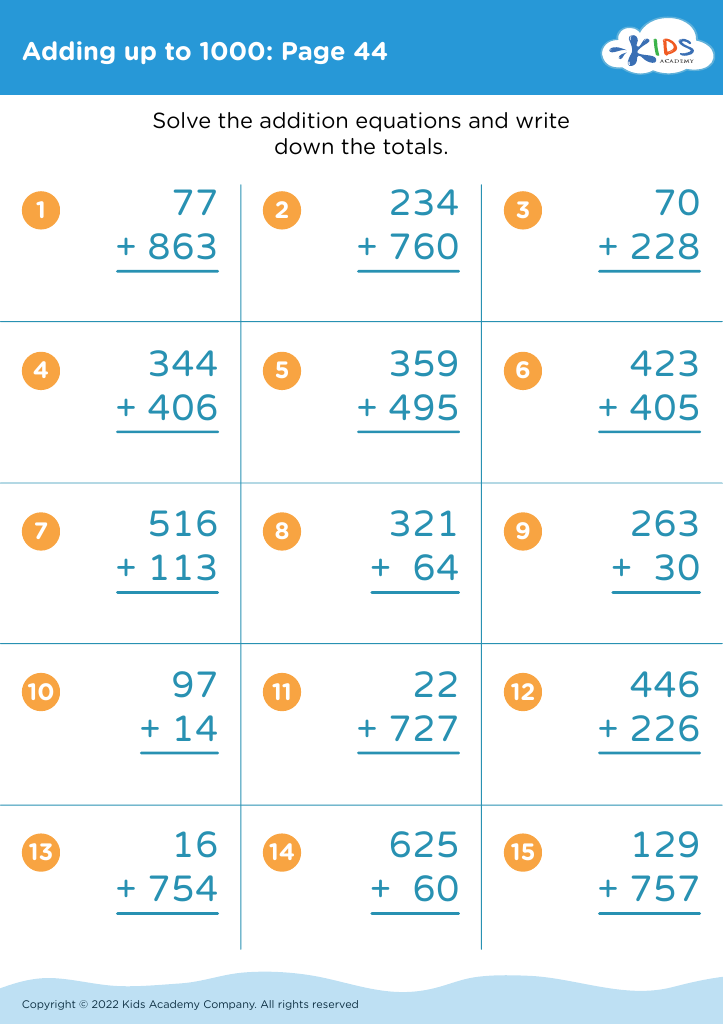
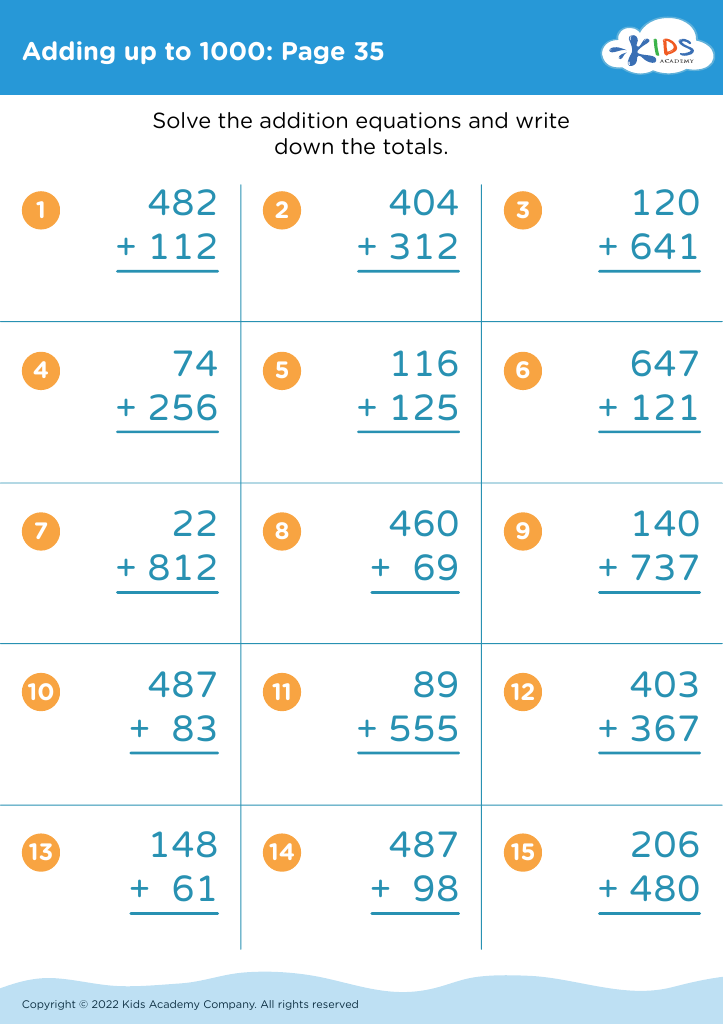
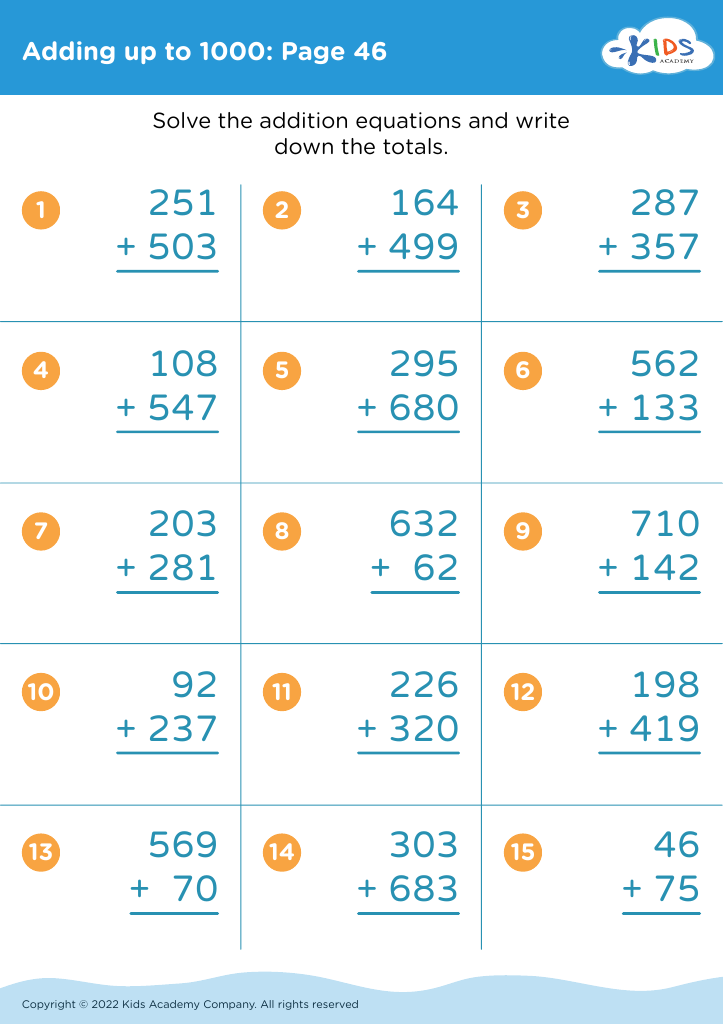
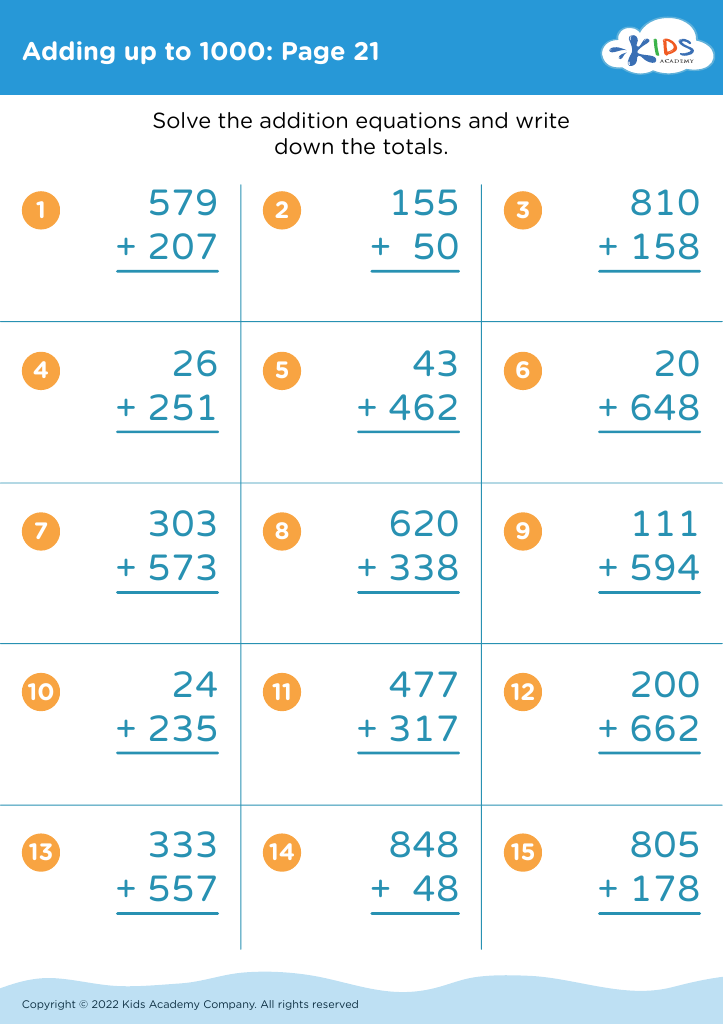
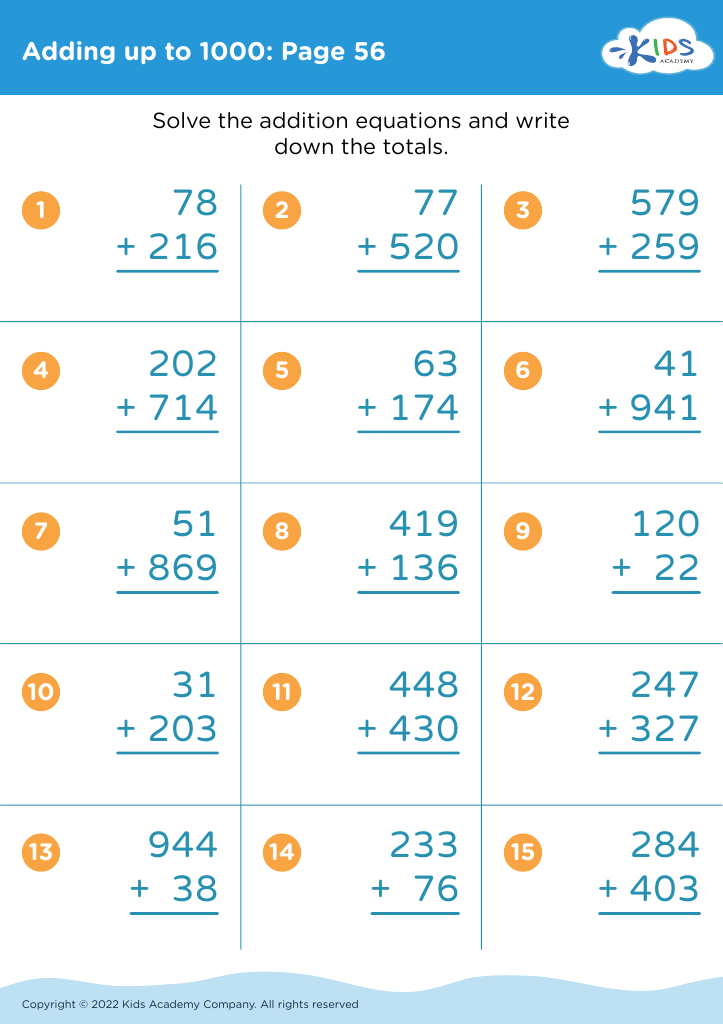
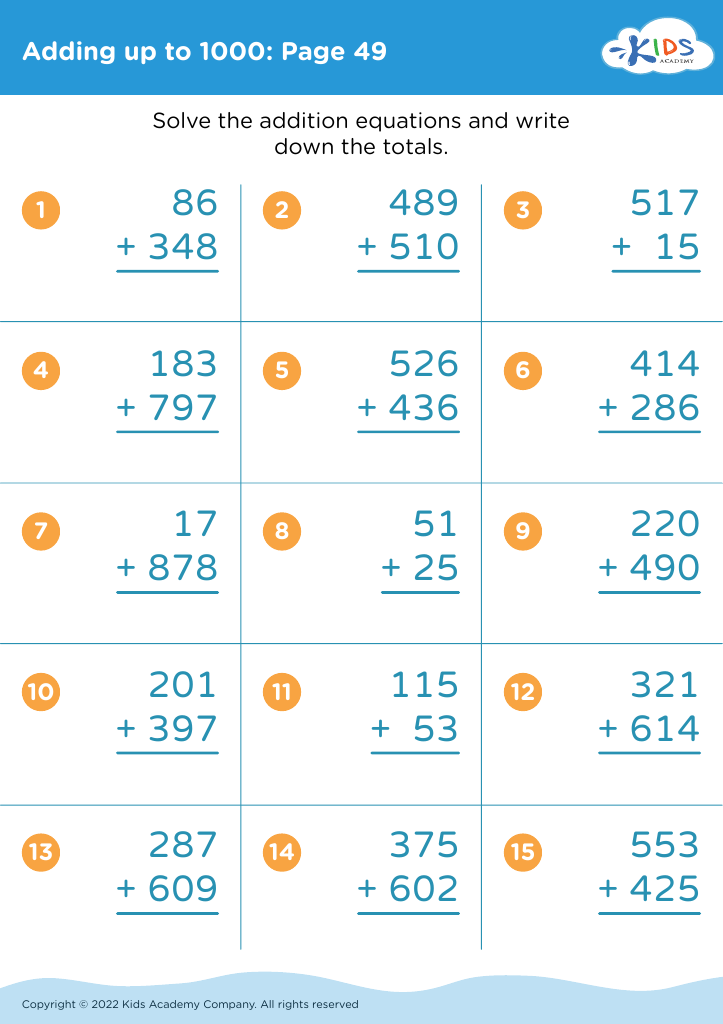
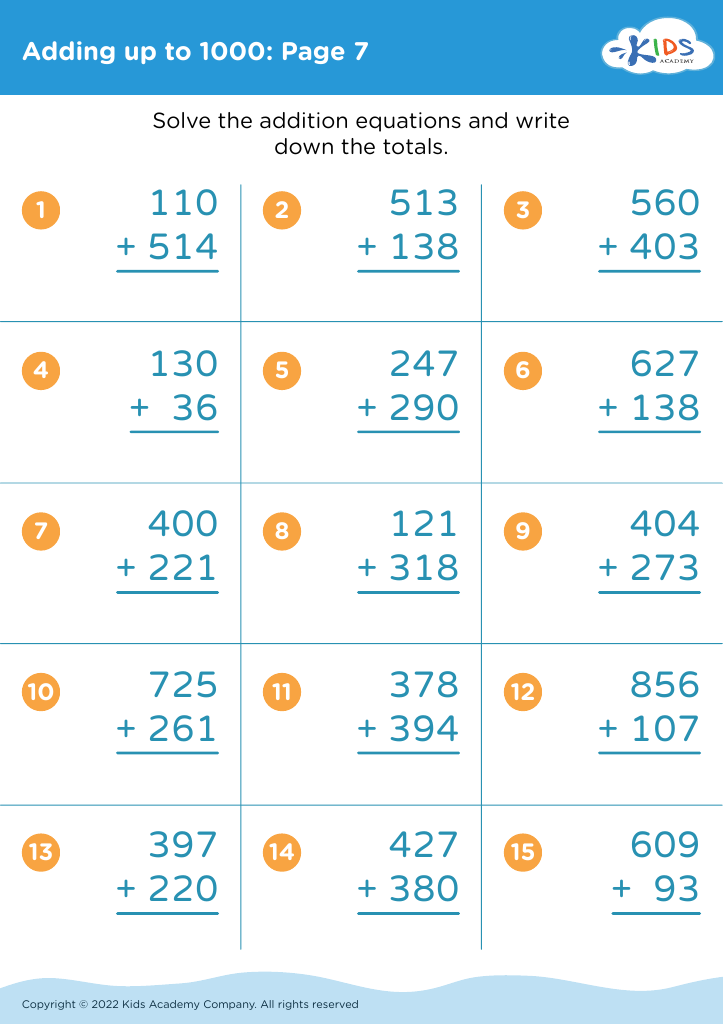
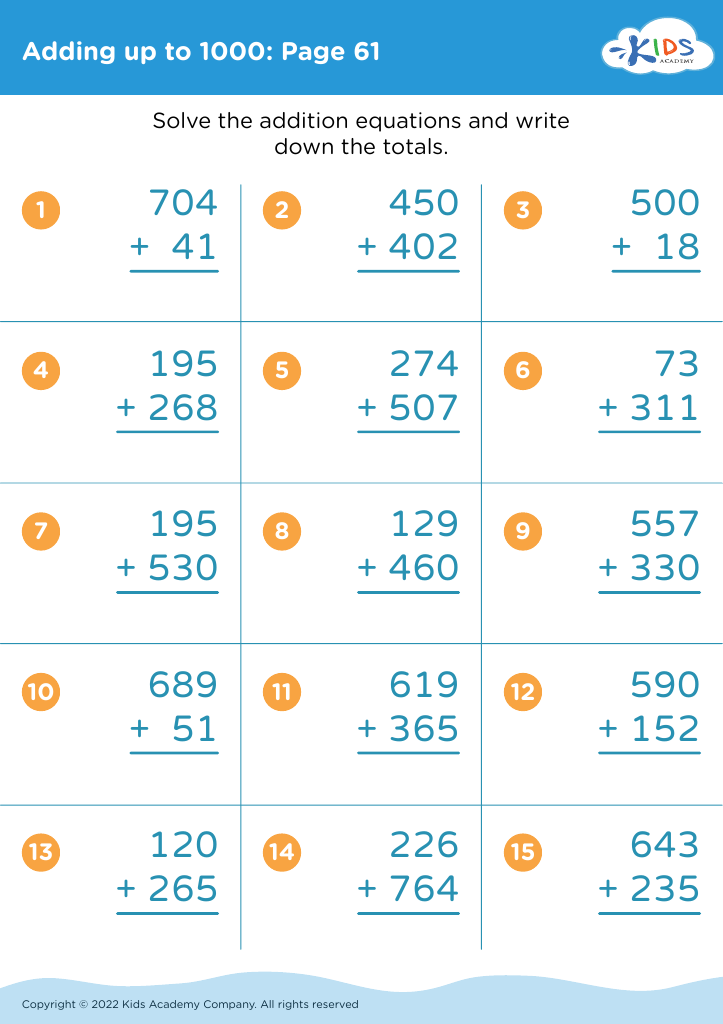
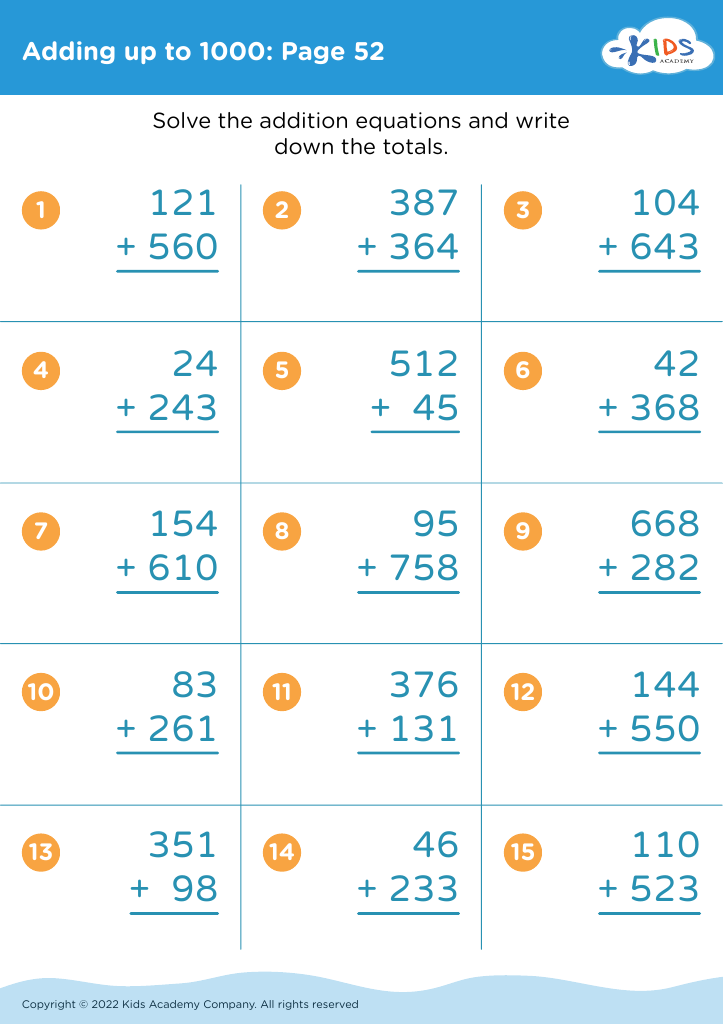
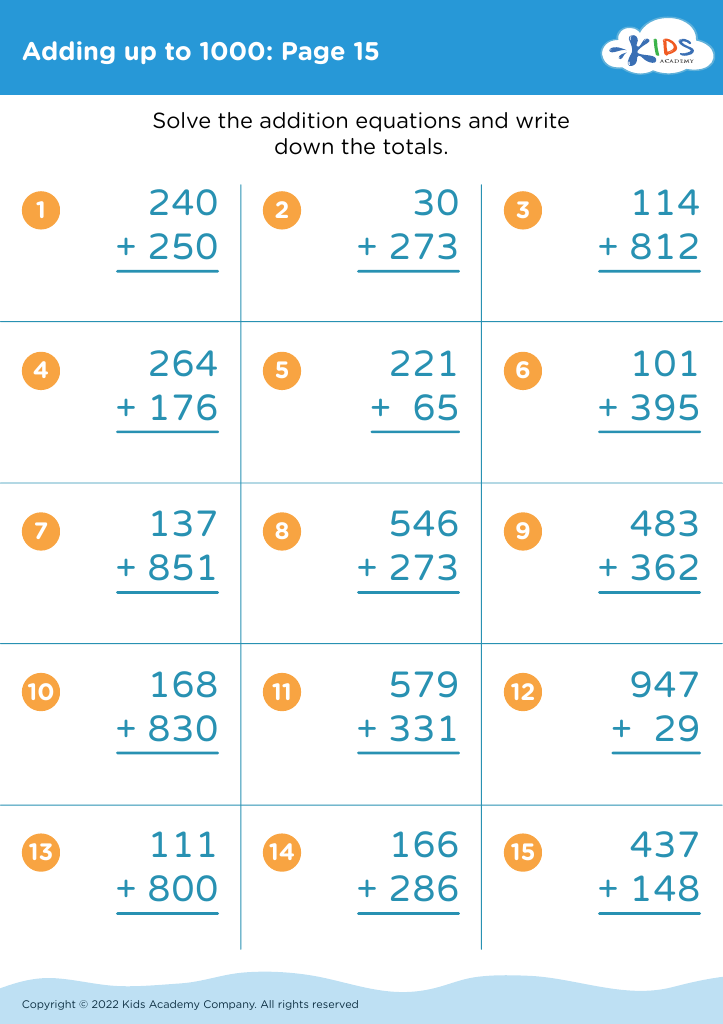
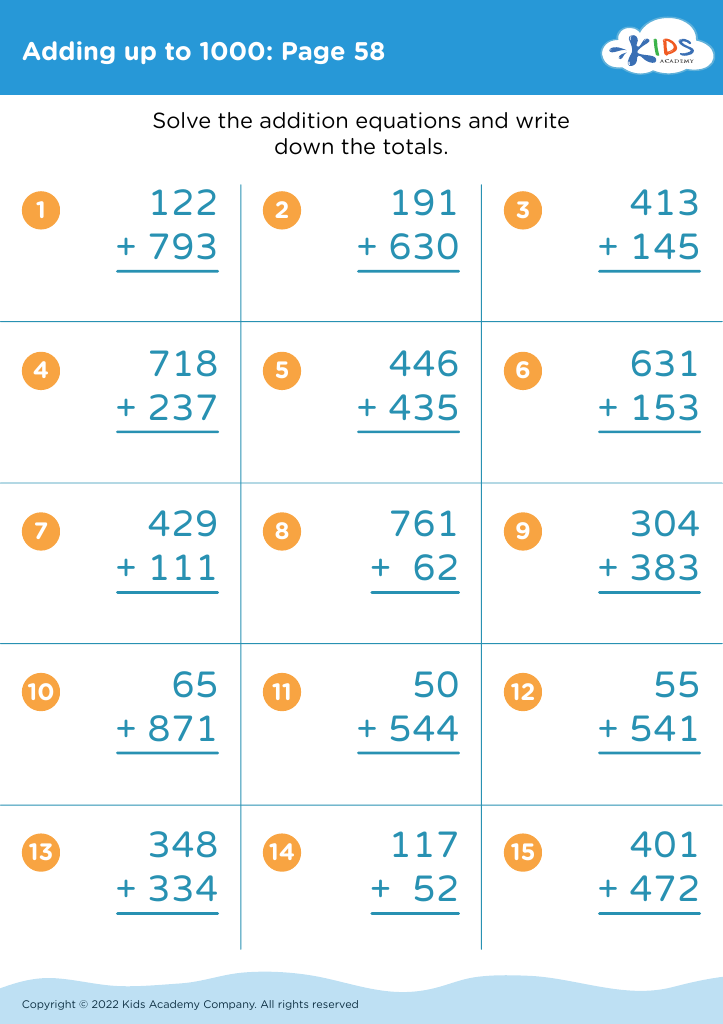
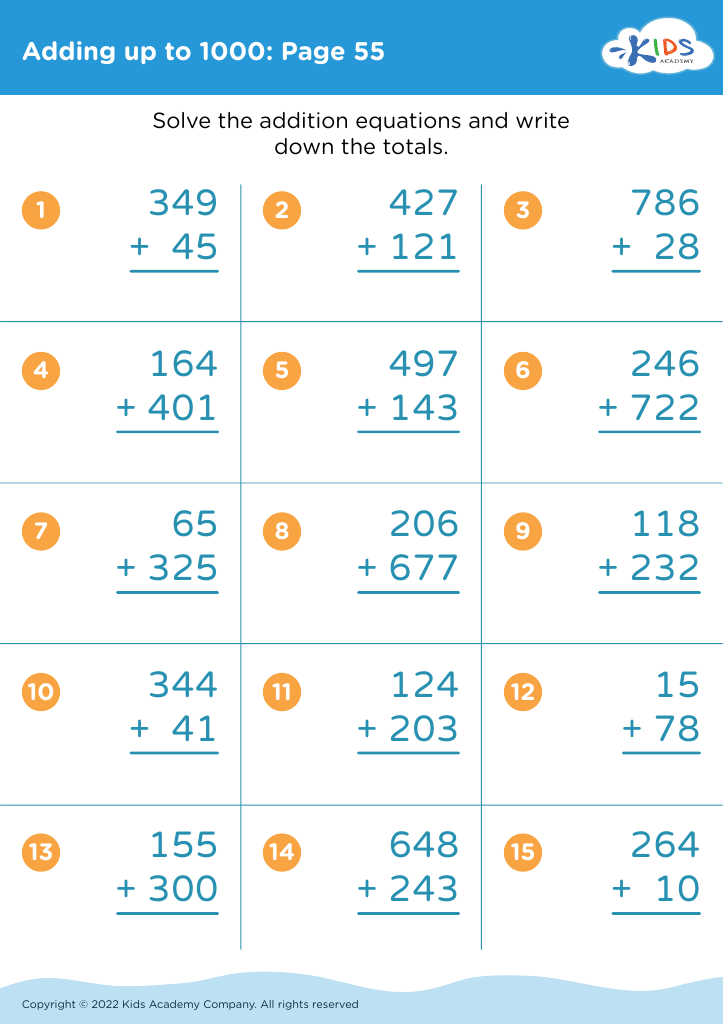


Problem-solving skills are fundamental for children aged 6-9, and exercises like Adding up to 1000 Miscellaneous (Misc) can significantly boost their development in these areas. When children engage in such tasks, they don’t just learn to add numbers; they strengthen their logical thinking, enhance their concentration, and improve their ability to follow multi-step processes.
Firstly, working with numbers up to 1000 builds a strong foundation in basic arithmetic, preparing children for more complex math in future. It hones their ability to carry over numbers and understand place value, which are essential for mastering mathematics.
Secondly, problem-solving tasks encourage critical thinking. When children face unique or more complex problems, they learn to analyze situations, seek solutions, and test different methods to find the most effective answer. This nurtures creativity and resilience, valuable traits in all walks of life.
Moreover, problem-solving promotes perseverance and confidence. Successfully solving problems gives children a sense of achievement and boosts their self-esteem. Regular practice in problem-solving helps them become more independent learners who are not afraid to tackle challenges.
Therefore, by fostering problem-solving skills through exercises like Adding up to 1000 Miscellaneous, parents and teachers are not only improving children’s math abilities but also setting them up for success in academic and everyday problem-solving situations.