Addition of fractions Addition & Subtraction Worksheets for Ages 6-9
3 filtered results
-
From - To
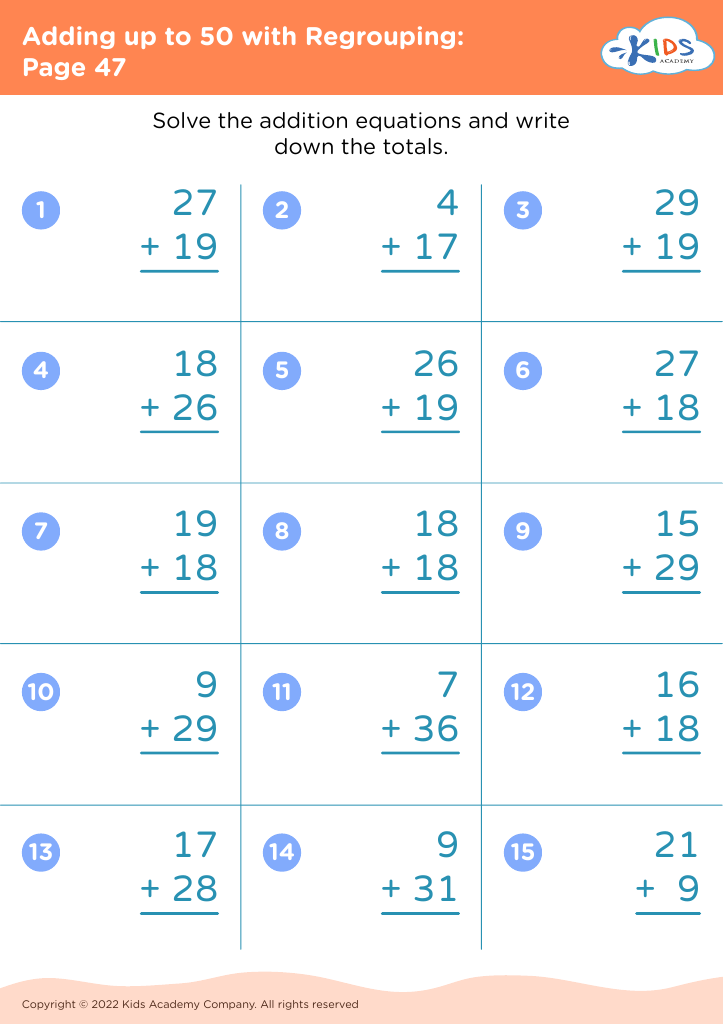
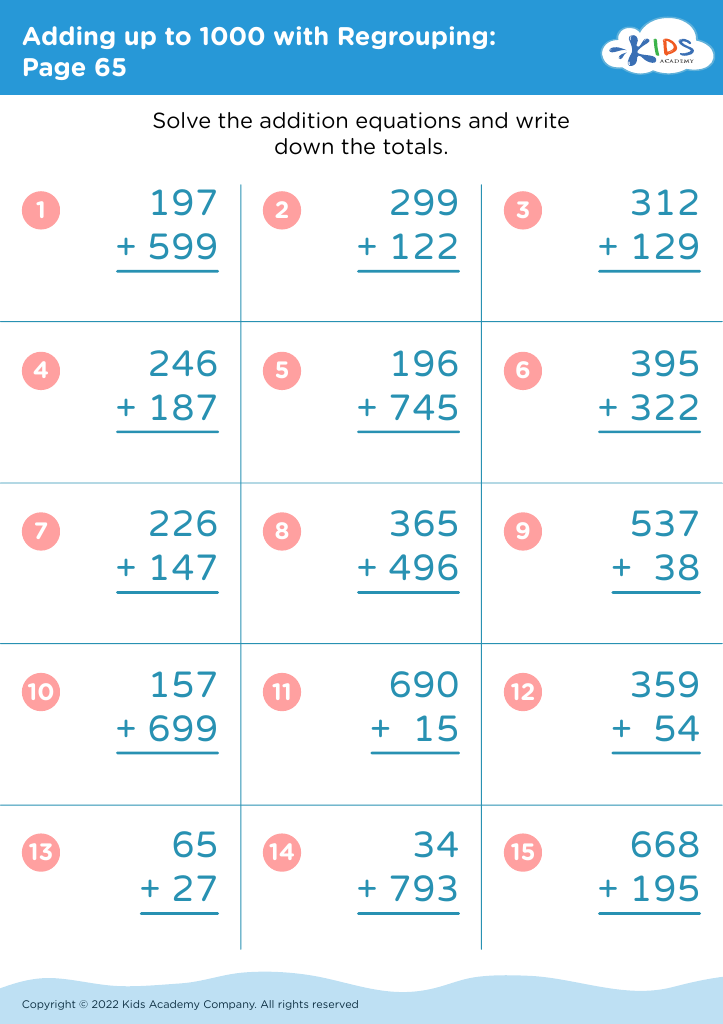
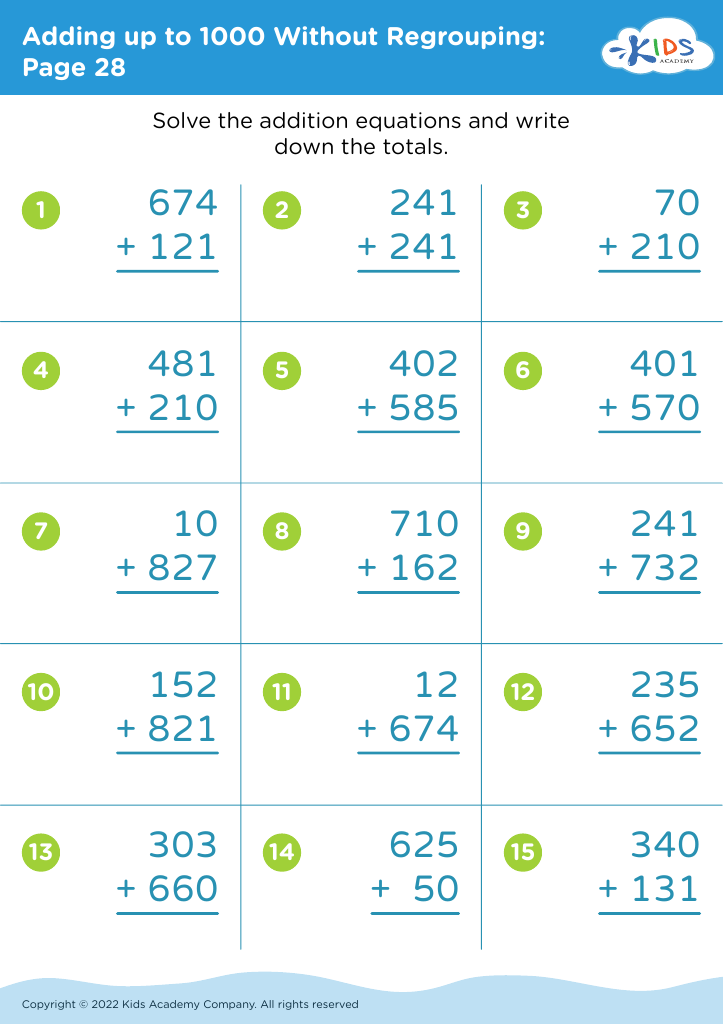
Enhance your child's math skills with our engaging Addition and Subtraction of Fractions Worksheets, specially designed for ages 6-9. These printable worksheets provide interactive and fun activities that make learning fractions accessible and enjoyable. Your young learners will grasp essential concepts as they practice adding and subtracting fractions with like denominators, building a solid foundation in mathematical operations. Perfect for classroom use or at-home learning, our worksheets foster independent problem-solving skills and boost confidence in young mathematicians. Download and explore a variety of exercises that support your child's educational journey while making learning fractions an exciting adventure!








Understanding addition and subtraction of fractions is crucial for children aged 6-9, as it lays the groundwork for their mathematical literacy and critical thinking skills. During these formative years, students are transitioning from simple arithmetic to more complex concepts. Grasping fractions not only enhances their number sense, but it also develops their problem-solving abilities through real-world applications, such as cooking and measuring.
Parents and teachers should recognize that mastery of fraction addition and subtraction fosters logical reasoning. It encourages children to visualize parts of a whole and understand that different fractions can represent the same value, enhancing their conceptual understanding of equivalencies. This foundational skill supports later learning in mathematics, including mixed numbers and algebra, ensuring that children are prepared for advanced topics.
Additionally, proficiency in fractions can boost a child's confidence in their mathematical abilities, promoting a positive attitude towards learning. Engaging with these concepts also provides opportunities for interactive activities, such as games and teamwork, which can make learning enjoyable. Ultimately, by prioritizing the teaching of fraction addition and subtraction, parents and teachers empower children to become enthusiastic, competent learners in mathematics and beyond.








