Welcome to our Basic Arithmetic Practice worksheets designed specifically for children ages 6-9! These engaging, interactive addition and subtraction worksheets will help reinforce foundational math skills and boost confidence in young learners. Each worksheet features visually appealing graphics and a variety of problems that cater to different skill levels, ensuring that every child can practice effectively. Whether at home or in the classroom, these printables are ideal for reinforcing classroom learning and offering extra practice. Encourage your child’s love for math and watch them excel with our thoughtfully designed activities that make learning fun! Explore our collection today!
Check out this FREE Trial Lesson on Addition & Subtraction for age 6-9!

Picture Graphs Word Problems

Favorites
With answer key
Interactive
  • 6-9
  • Basic arithmetic practice
  • Addition & Subtraction
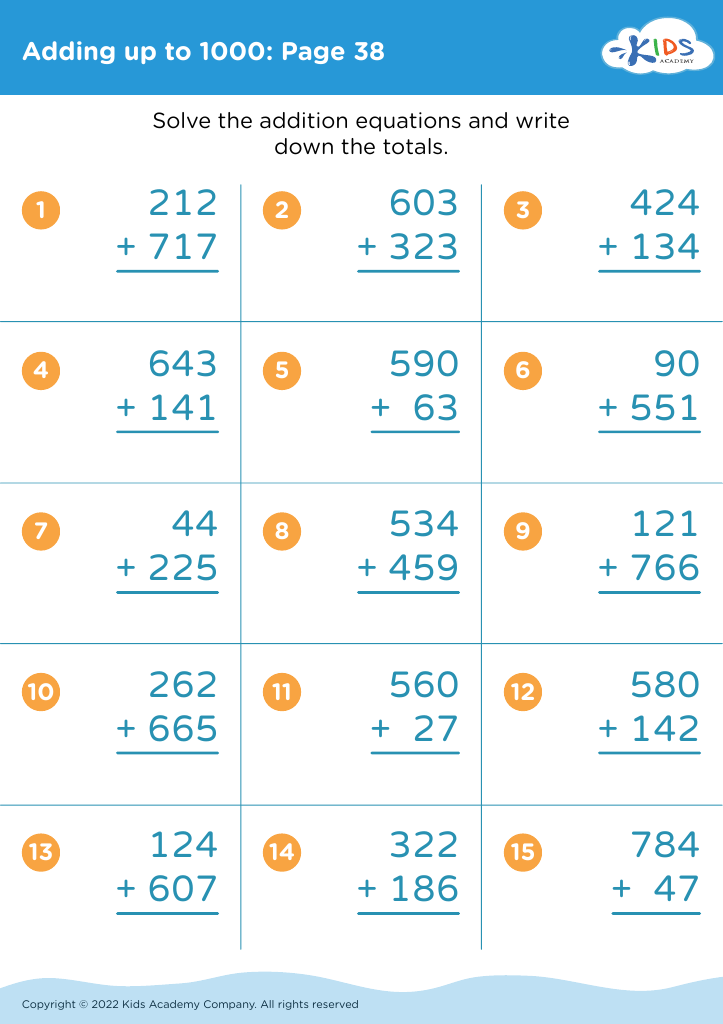
Adding up to 1000: Page 38

Adding up to 1000: Page 38

Adding up to 1000: Page 38
Worksheet
Plant the Seeds Addition Worksheet

Plant the Seeds Addition Worksheet

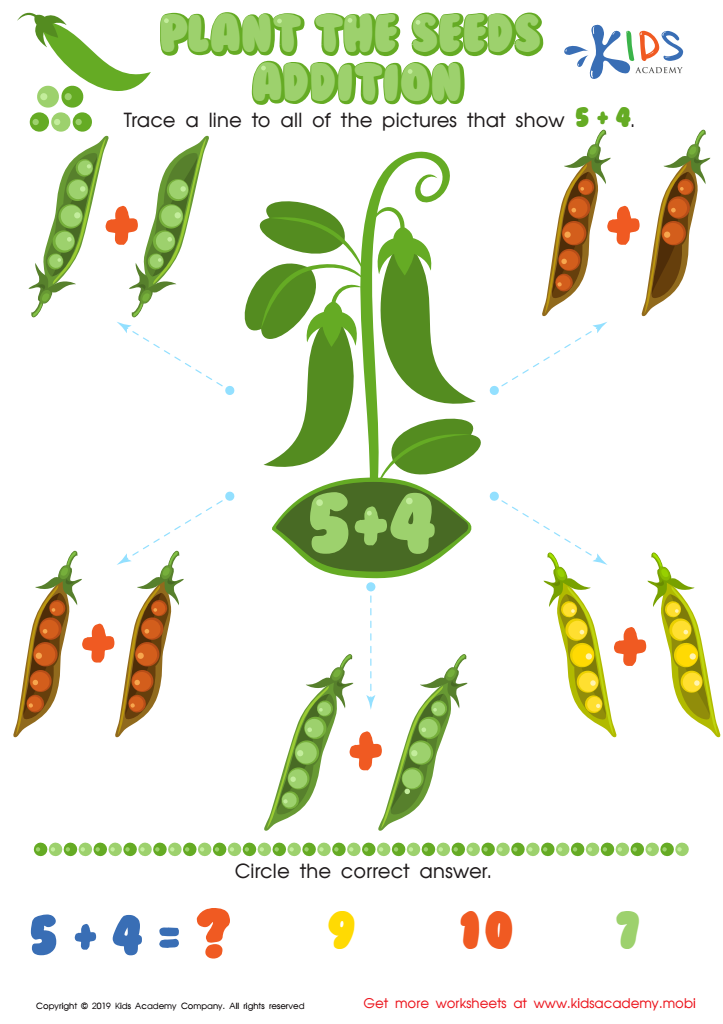
This worksheet combines math and learning about plants. Ask kids to name their favorite plants and which ones they see the most. Have them trace a line to all pictures in the middle which show the equation 5+4. Enjoy the beauty of plants while introducing math skills!
Plant the Seeds Addition Worksheet
Worksheet
Making Bracelets to Sell Worksheet

Making Bracelets to Sell Worksheet

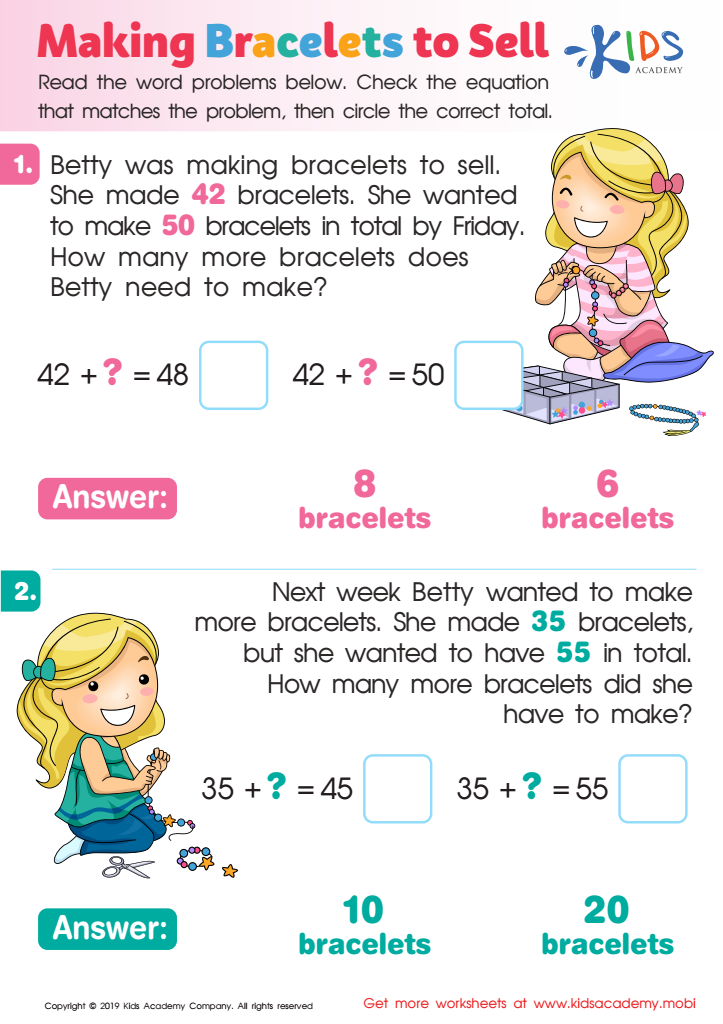
Got kids who love crafting? This worksheet will be right up their alley! Let them use their creative and problem-solving skills to check equations and decide the correct total. It's just like making beads into a bracelet but on paper! Print out this downloadable PDF and get ready for a fun craft session.
Making Bracelets to Sell Worksheet
Worksheet
Second Grade Math Worksheets

Addition: Space Math Worksheet

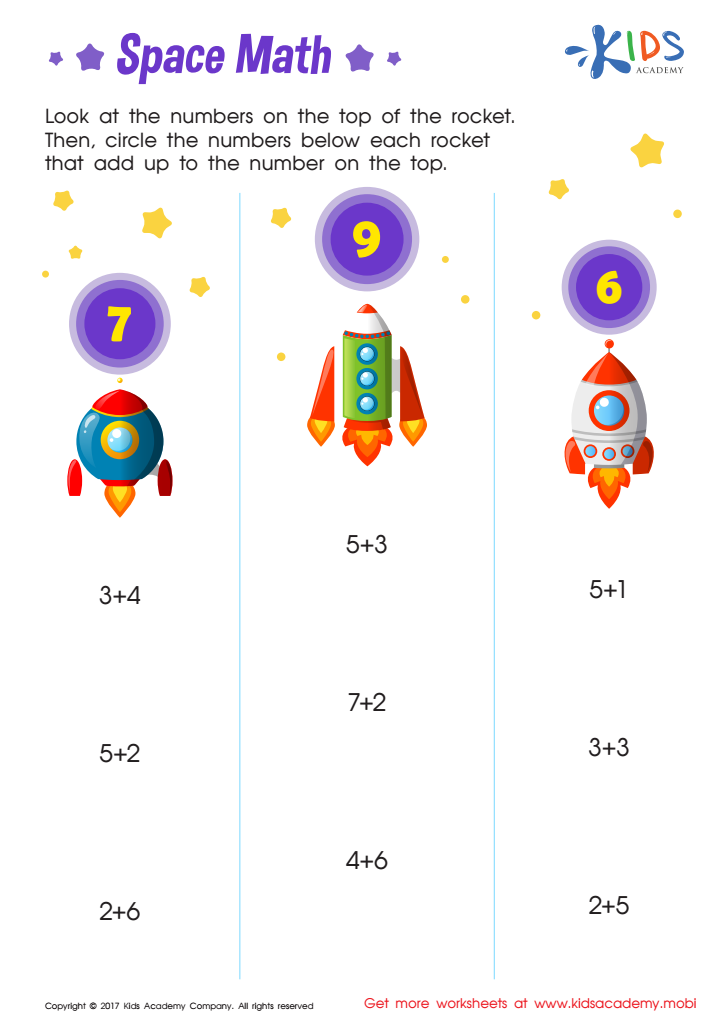
Fun and engaging space-themed practice with vivid pictures and matching numbers will make learning more meaningful. Take their math skills out of this galaxy today with Kids Academy!
Addition: Space Math Worksheet
Worksheet
Ticket for the Train Worksheet
Ticket for the Train Worksheet

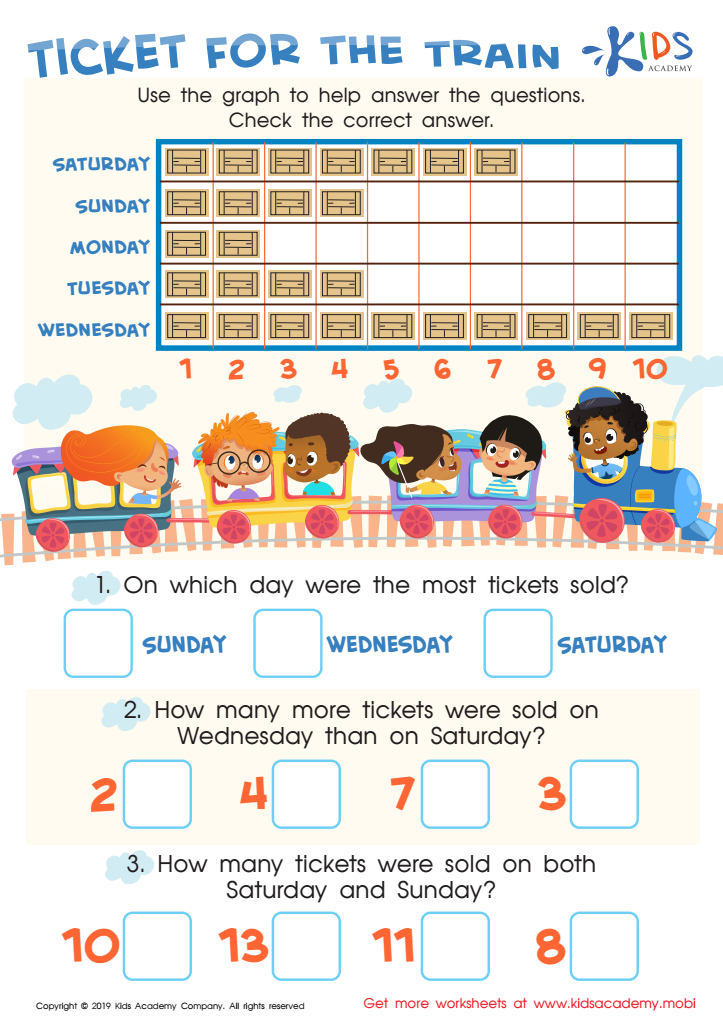
It's important to use fun scenarios with familiar objects when teaching kids. Try discussing train rides and the accompanying picture graph. Ask questions about it, then help kids check the correct answers. Let them enjoy the learning process!
Ticket for the Train Worksheet
Worksheet
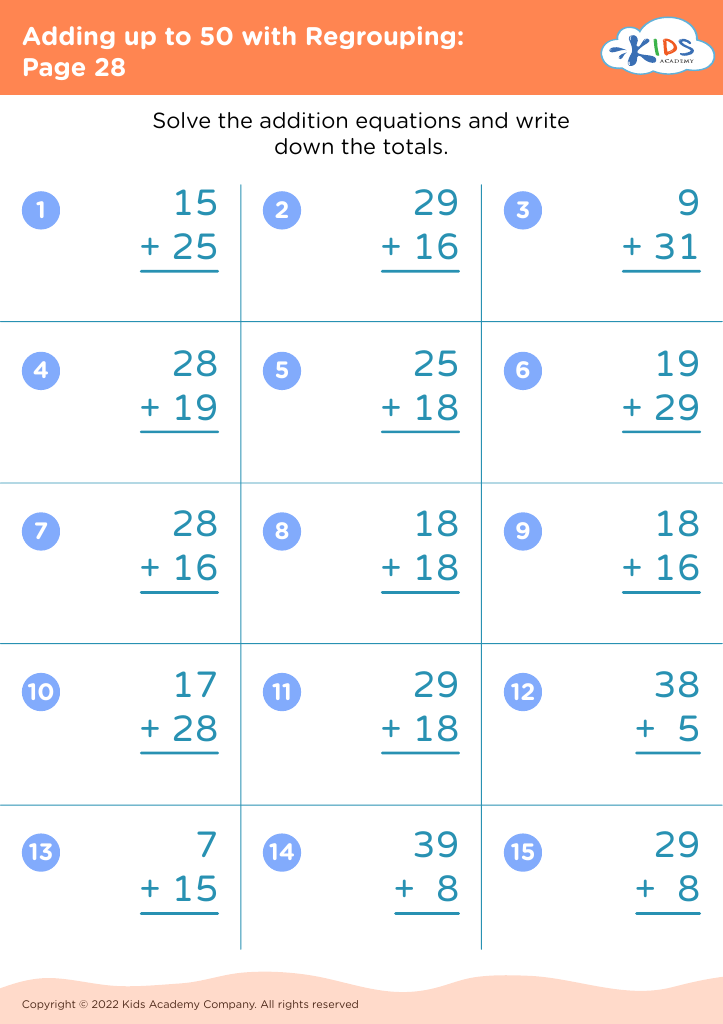
Adding up to 50 with Regrouping: Page 28
Worksheet
The Levels of Equal Matter Worksheet

The Levels of Equal Matter Worksheet

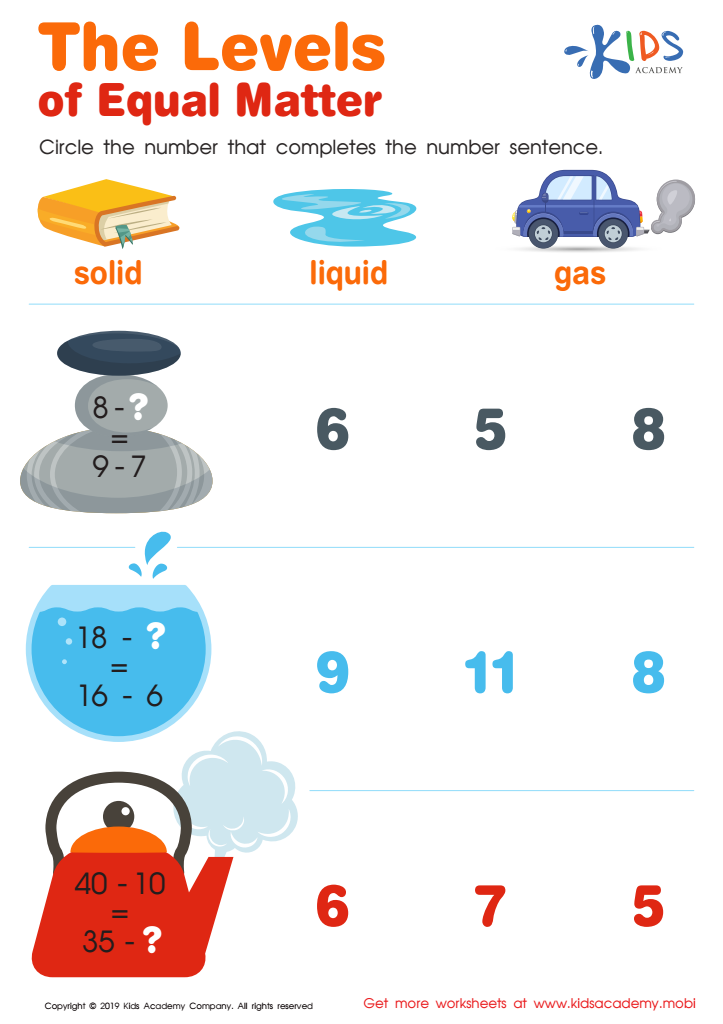
Matter is anything that has weight and occupies space. Common examples include people, animals, objects and liquids. Have your kids understand this concept by looking at the levels of matter in this worksheet and completing the number sentence mathematical problems beneath.
The Levels of Equal Matter Worksheet
Worksheet
One Less: Assessment 1 Worksheet


One Less: Assessment 1 Worksheet

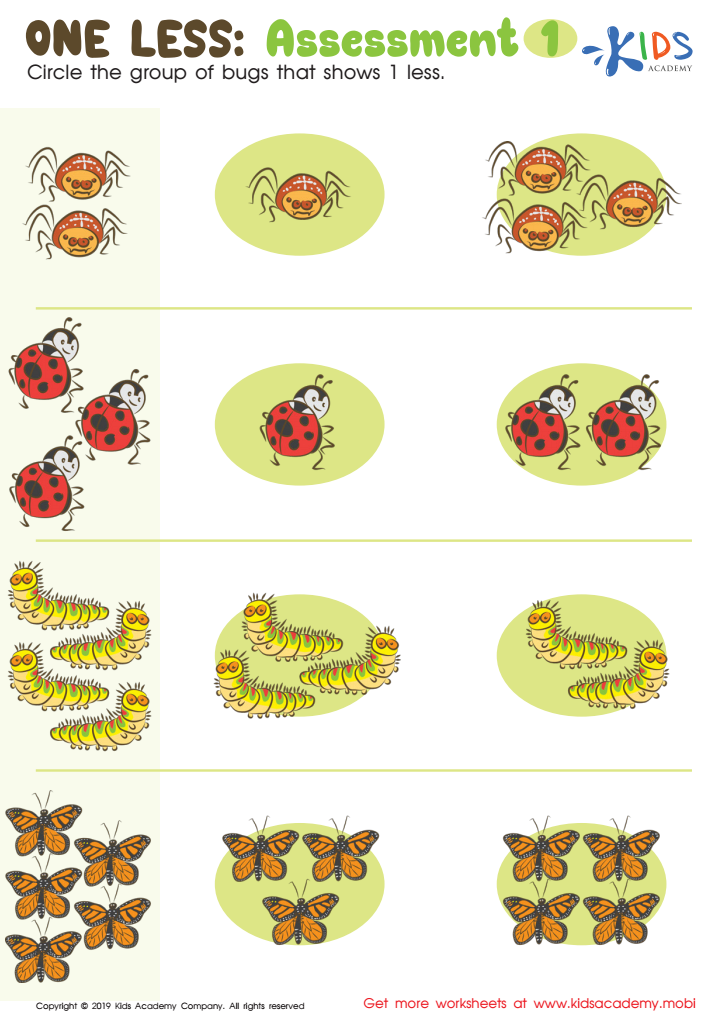
Help your kids with counting using this worksheet that has pictures of bugs! There are four different bugs and insects. Show them each one and ask them to count, then circle the group that has 1 less than the previous group. Don't worry if your kids don't like bugs - it's just a picture!
One Less: Assessment 1 Worksheet

Worksheet


Parents and teachers should prioritize basic arithmetic practice in addition and subtraction for children aged 6 to 9, as these foundational skills are crucial for their overall cognitive development and academic success. Mastering these operations fosters critical thinking, enhances problem-solving abilities, and builds confidence in young learners.

At this stage, children are developing their number sense, which lays the groundwork for more complex mathematical concepts encountered later in their education. When children practice addition and subtraction, they learn to grasp patterns and relationships between numbers, improving their ability to function effectively in daily life.

Additionally, these skills support other subjects, including science and economics, where quantitative reasoning is essential. Early mastery of arithmetic promotes a positive attitude toward math, countering common anxieties and resistance that can hinder future learning.

Moreover, regular practice creates opportunities for families to engage with their children, making learning enjoyable and enriching. This collaborative effort reinforces relationships and instills a lifelong appreciation for education. By caring about basic arithmetic practice, parents and teachers not only empower children to succeed academically but also equip them with essential tools they need to navigate the world around them.