Basic Math Skills Addition & Subtraction Worksheets for Ages 6-9 - Page 4
76 filtered results
-
From - To
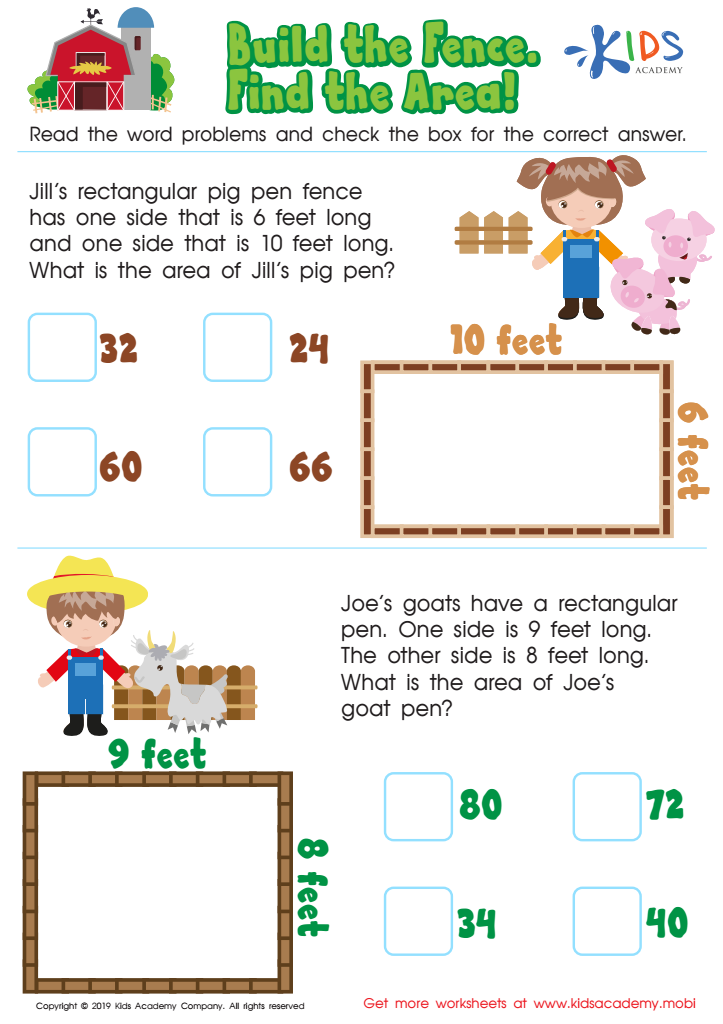
Build the Fence, Find the Area Worksheet
 Assign to My Students








Parents and teachers should deeply care about building strong basic math skills, particularly addition and subtraction, in children ages 6-9. These foundational skills are crucial because they underpin nearly all future mathematical learning and everyday problem-solving. During these formative school years, children are especially receptive to learning, and grasping basic arithmetic sets the stage for more complex math concepts like multiplication, division, and fractions as they progress.
Proficiency in addition and subtraction fosters a sense of confidence and competence in young learners, which is essential for their overall academic success. When children master these skills, they are better prepared to tackle problem-solving questions and real-life scenarios, such as counting money or understanding time. Early struggles in basic math can lead to math anxiety, which may impede their willingness to engage with the subject later on.
Furthermore, early math skills are linked to cognitive development and critical thinking. They help children develop logical reasoning, pattern recognition, and analytical thinking. Parents and educators aiming for balanced development and lifelong success in children’s personal, academic, and professional lives should prioritize and celebrate the mastery of these fundamental arithmetic operations. Engaging in fun, consistent practice can make learning addition and subtraction a rewarding and enjoyable experience for young minds.








