Welcome to our "Comparing Fractions Addition & Subtraction Worksheets" page, designed specifically for ages 6-9! These engaging worksheets are crafted to help young learners grasp the essential concepts of comparing fractions while mastering addition and subtraction skills. With colorful visuals and fun exercises, children will enjoy tackling various fraction problems that will boost their confidence in math. Our worksheets support hands-on learning, allowing students to practice equivalently and enhance their problem-solving abilities. Perfect for classroom activities or home practice, these resources cultivate a love for math through interactive and effective methods. Start your child’s mathematical journey today!
Check out this FREE Trial Lesson on Addition & Subtraction for age 6-9!

Match Objects that Fit Together

Favorites
With answer key
Interactive
  • 6-9
  • Comparing Fractions
  • Addition & Subtraction
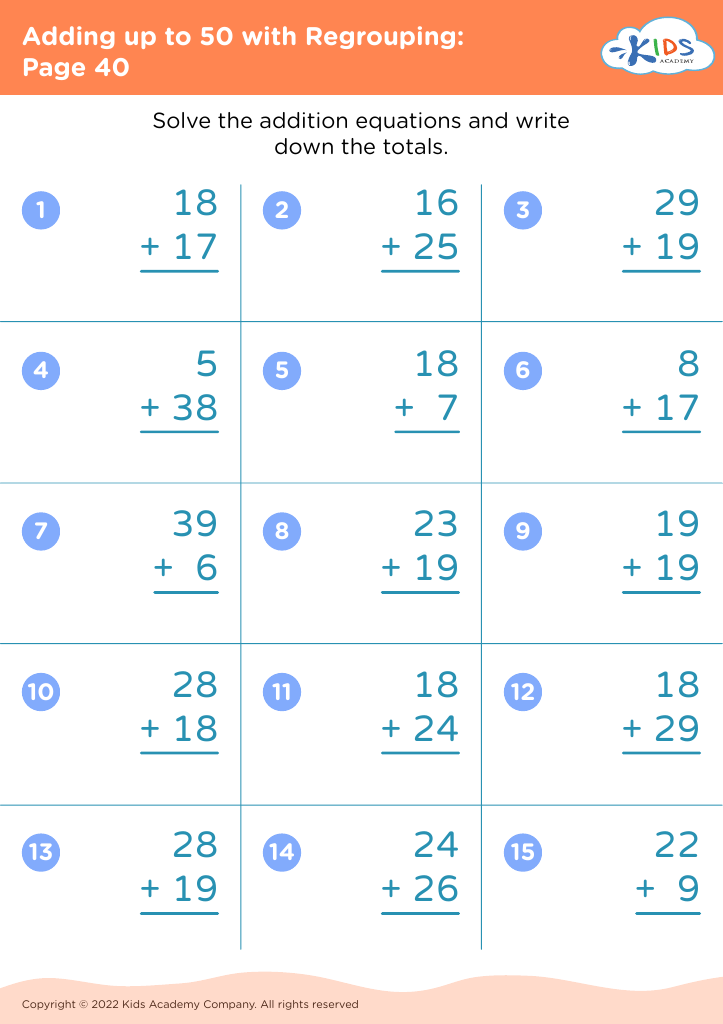
Adding up to 50 with Regrouping: Page 40
Worksheet
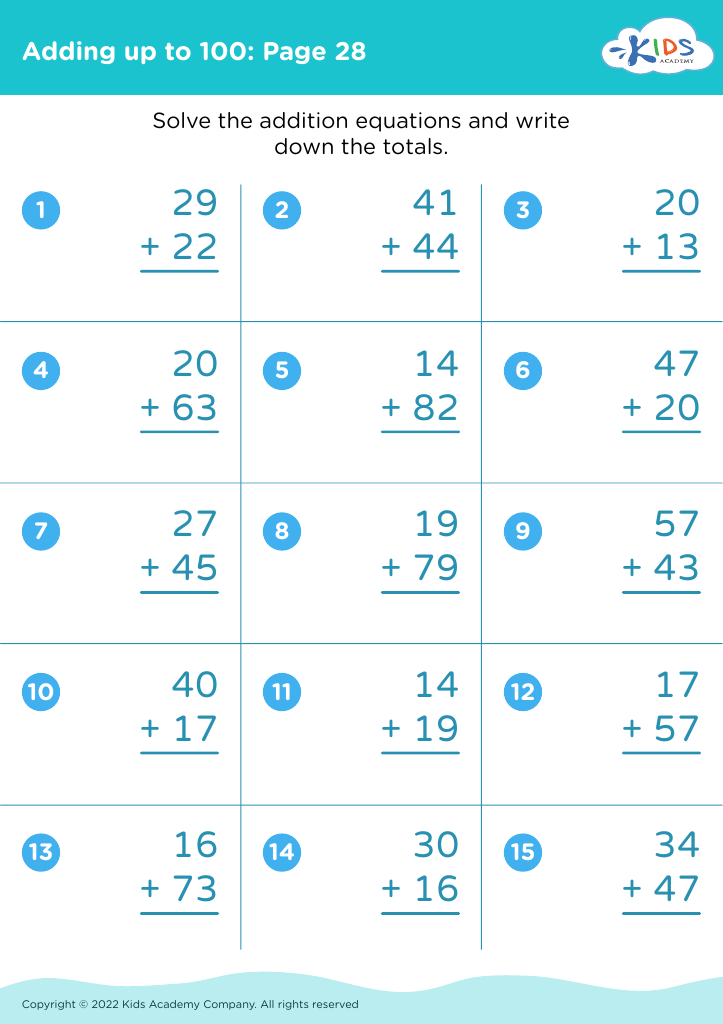
Adding up to 100: Page 28

Adding up to 100: Page 28

Adding up to 100: Page 28
Worksheet
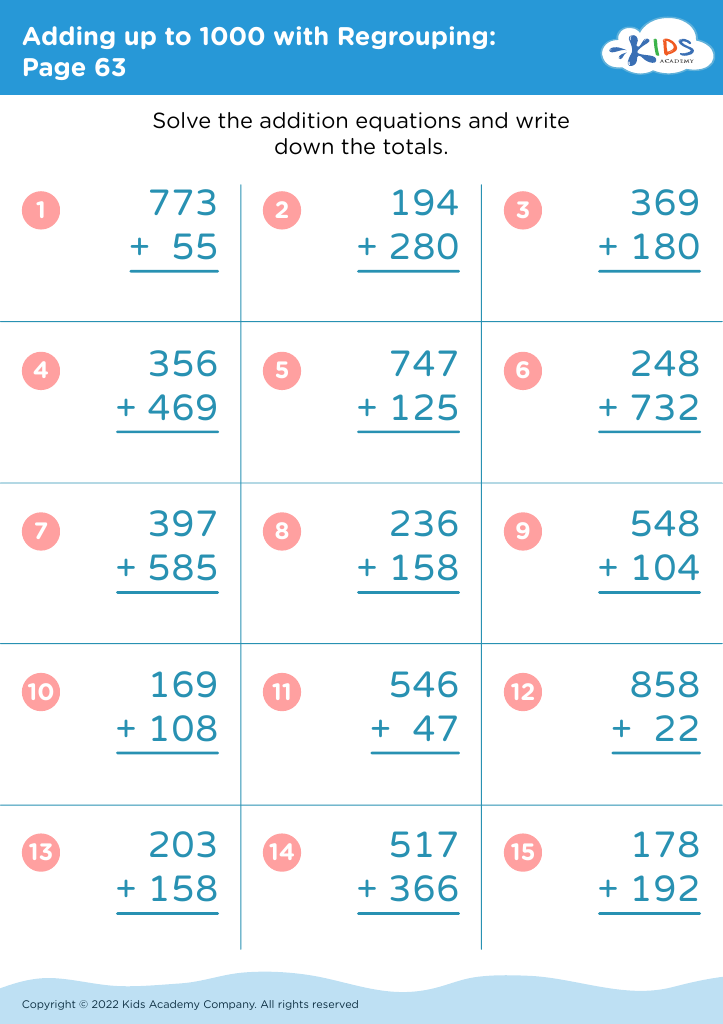
Adding up to 1000 with Regrouping: Page 63
Worksheet
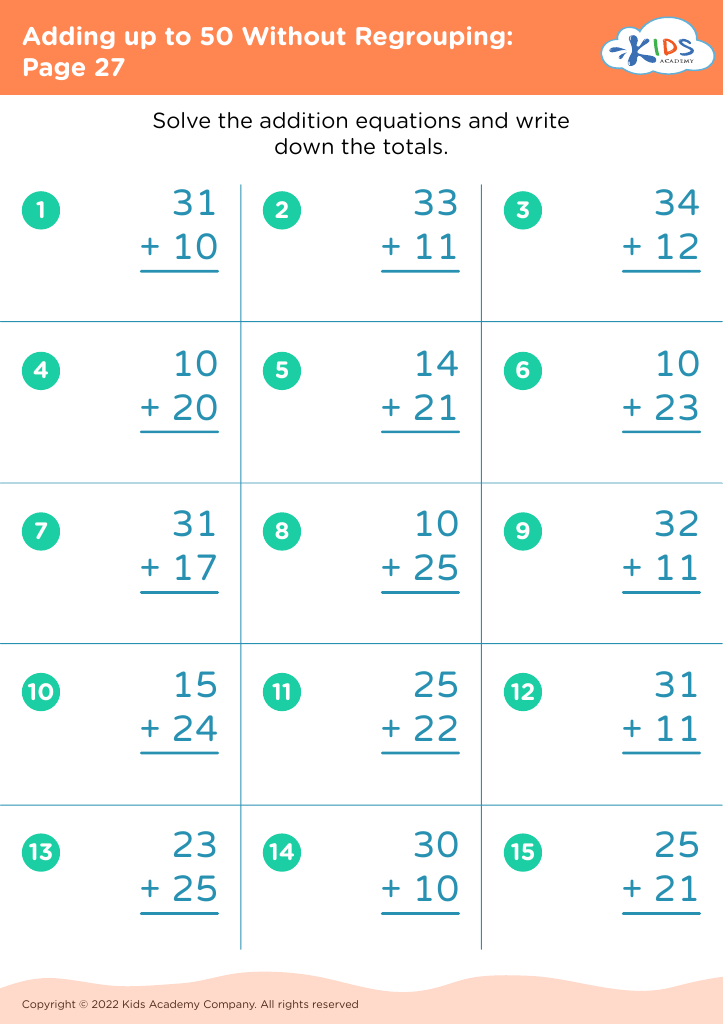
Adding up to 50 Without Regrouping: Page 27
Worksheet
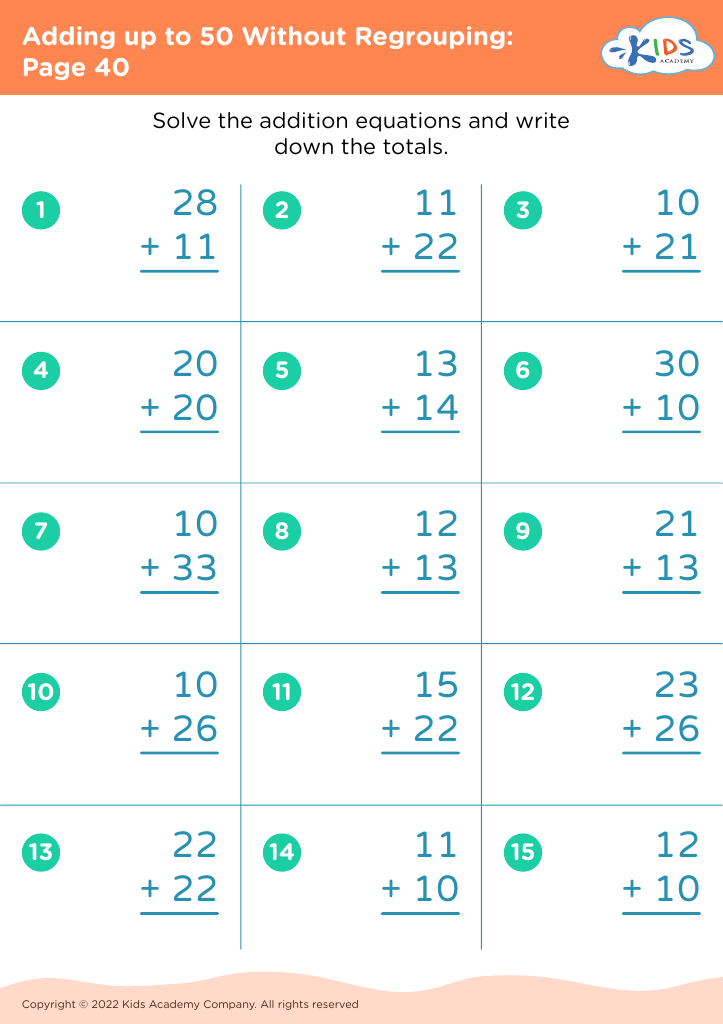
Adding up to 50 Without Regrouping: Page 40
Worksheet
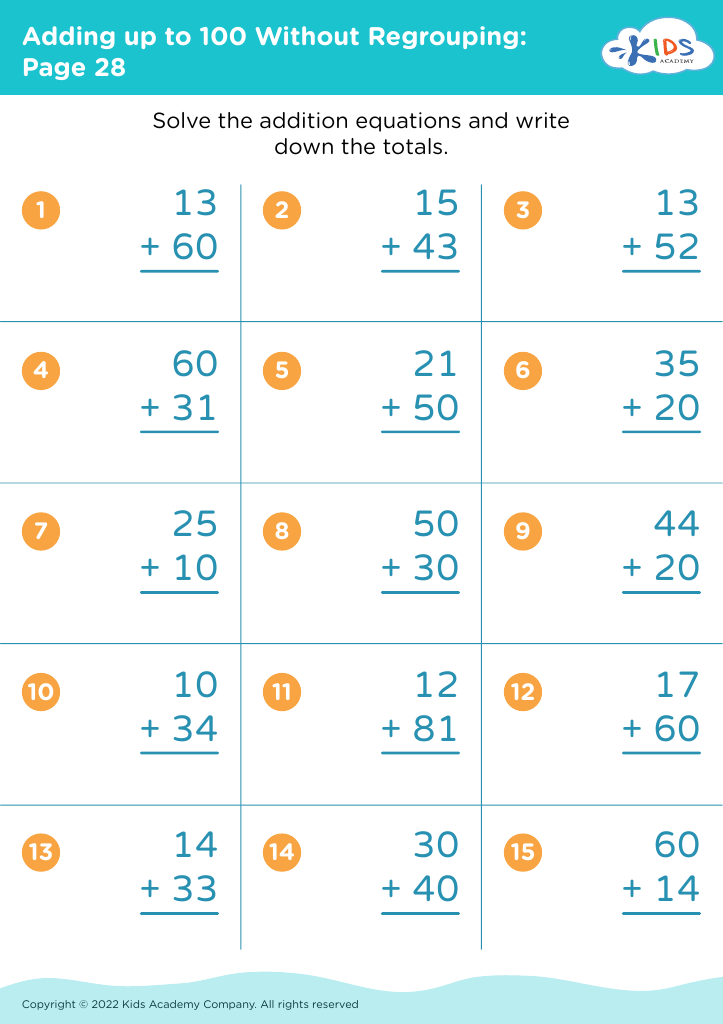
Adding up to 100 Without Regrouping: Page 28
Worksheet
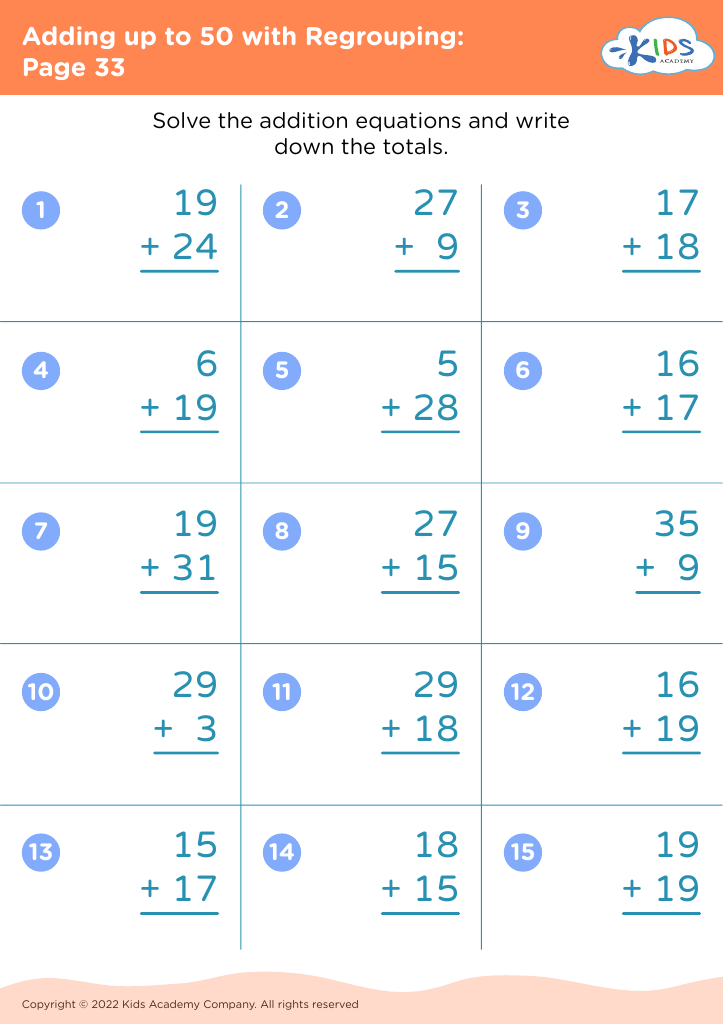
Adding up to 50 with Regrouping: Page 33
Worksheet
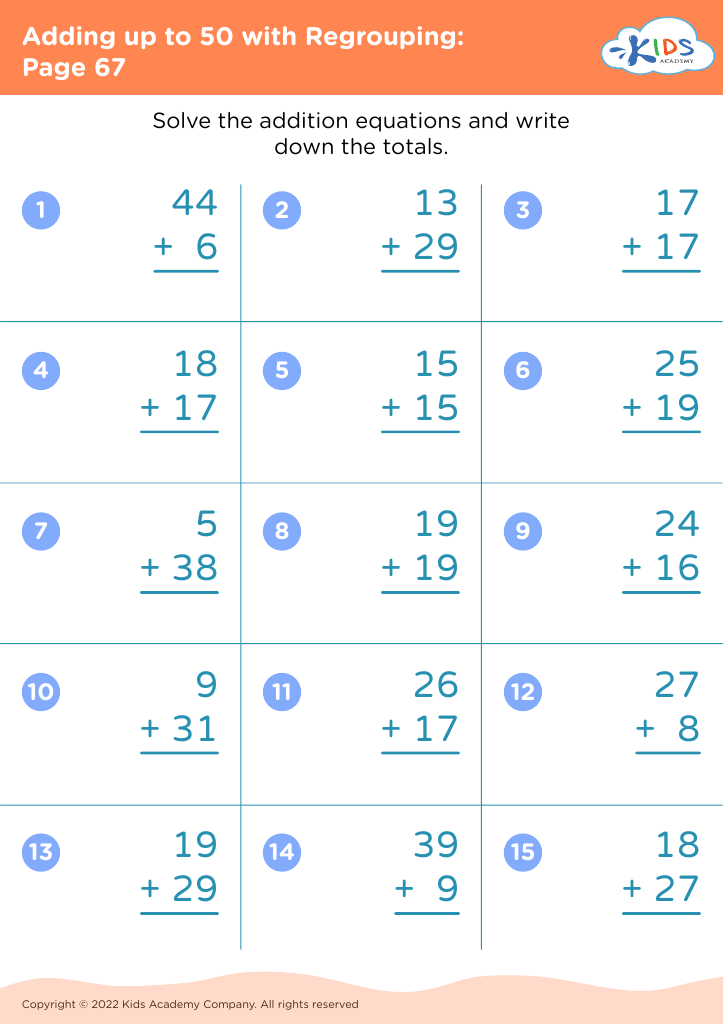
Adding up to 50 with Regrouping: Page 67
Worksheet
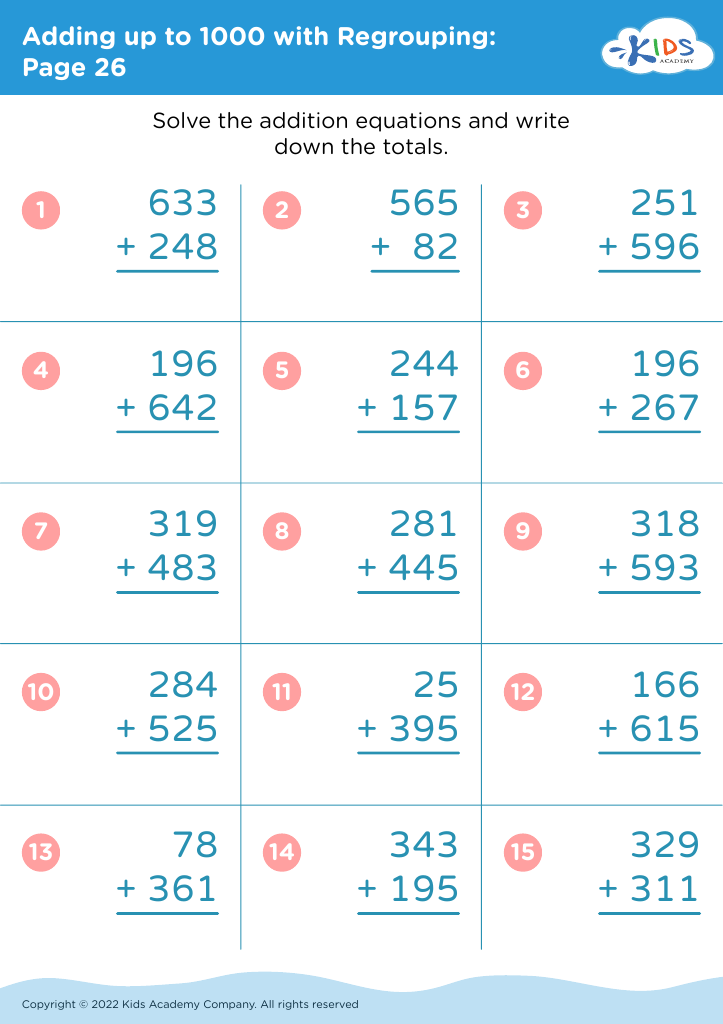
Adding up to 1000 with Regrouping: Page 26
Worksheet
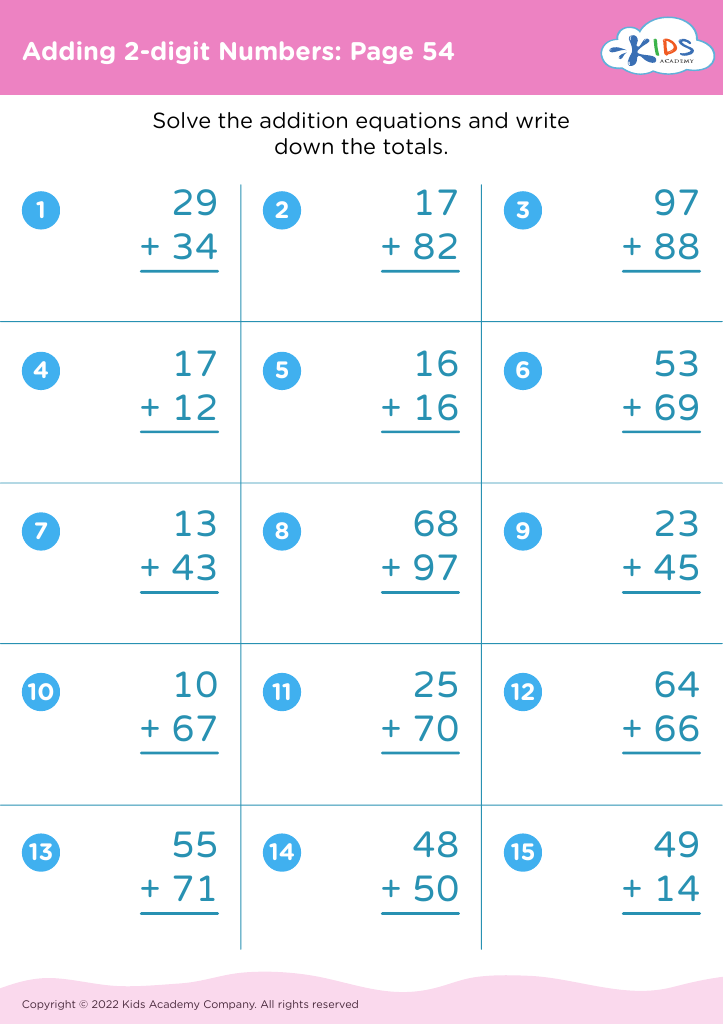
Adding 2-digit Numbers: Page 54

Adding 2-digit Numbers: Page 54

Adding 2-digit Numbers: Page 54
Worksheet
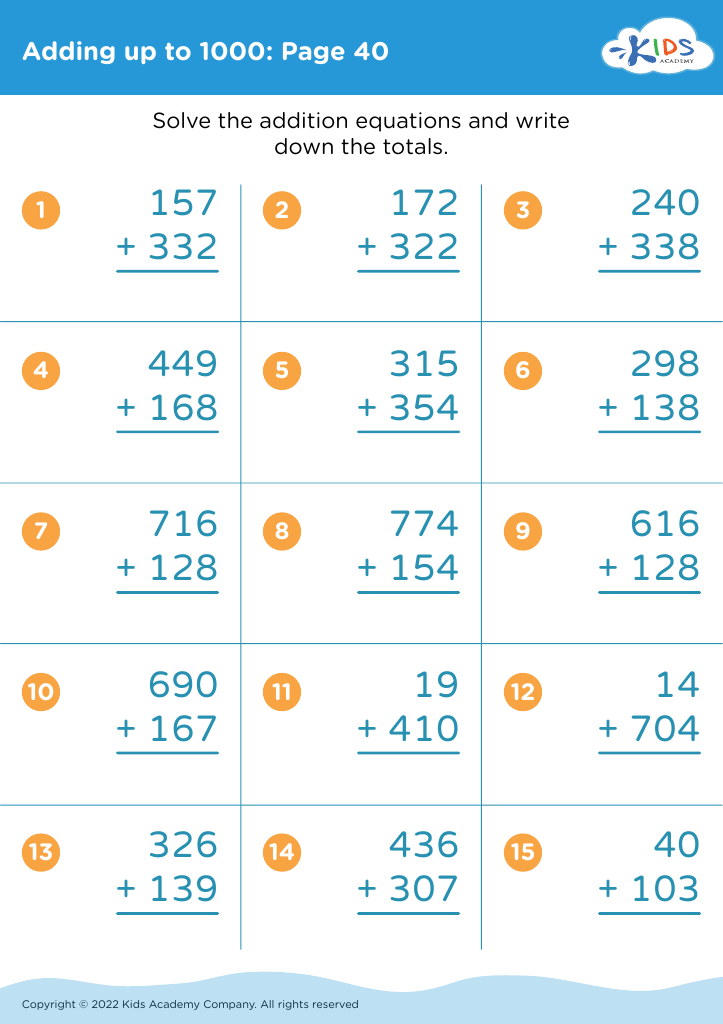
Adding up to 1000: Page 40

Adding up to 1000: Page 40

Adding up to 1000: Page 40
Worksheet
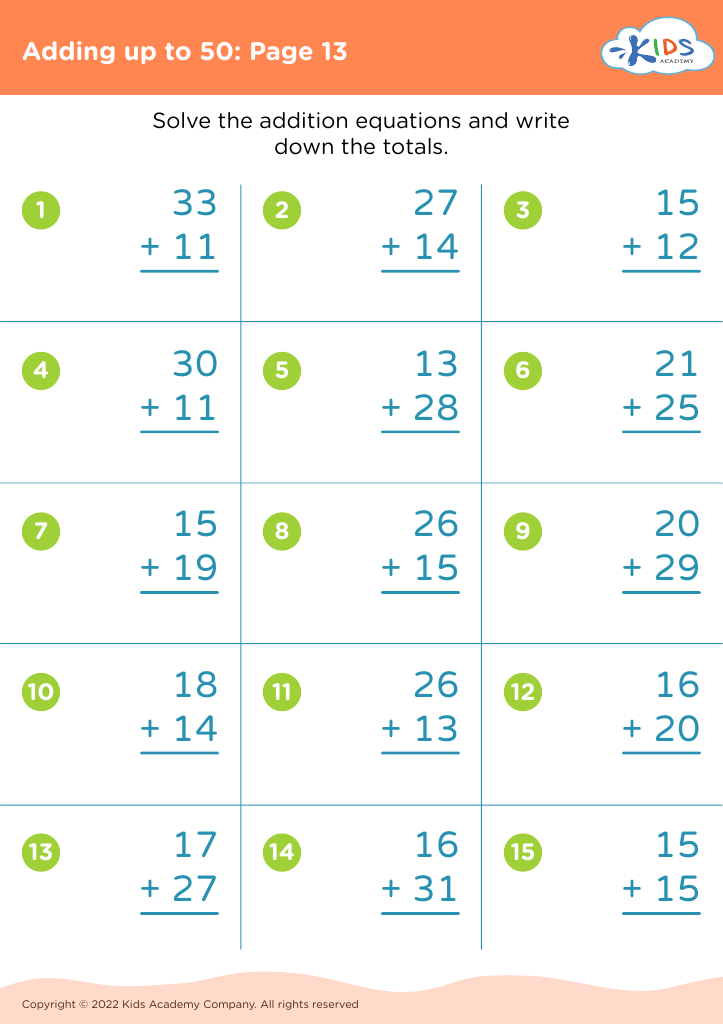
Adding up to 50: Page 13

Adding up to 50: Page 13

Adding up to 50: Page 13
Worksheet
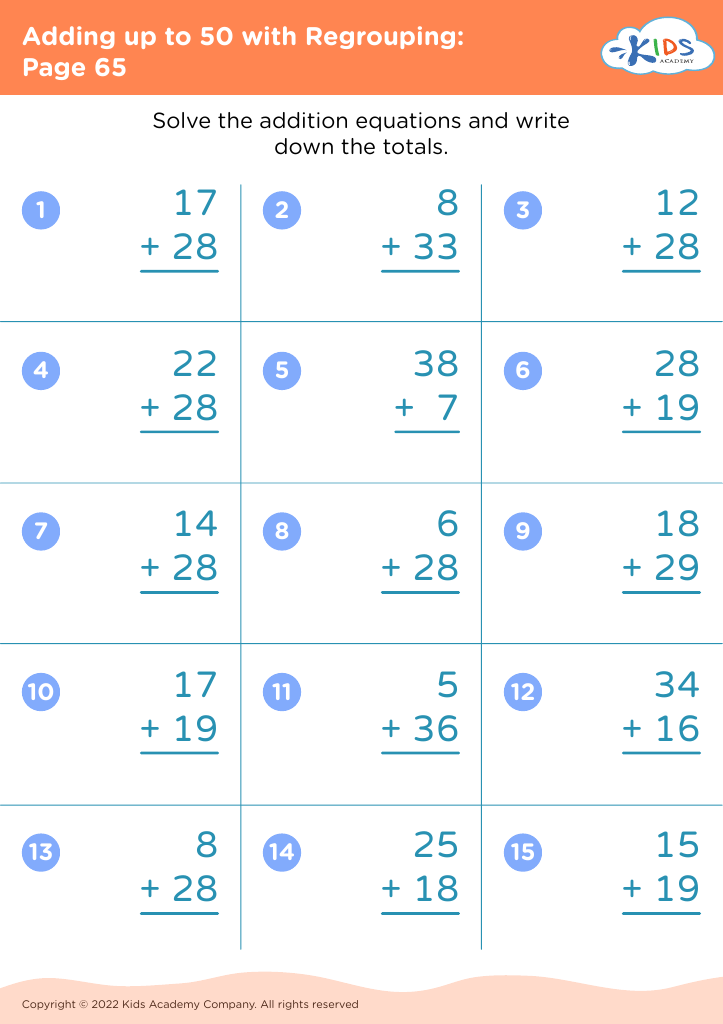
Adding up to 50 with Regrouping: Page 65
Worksheet
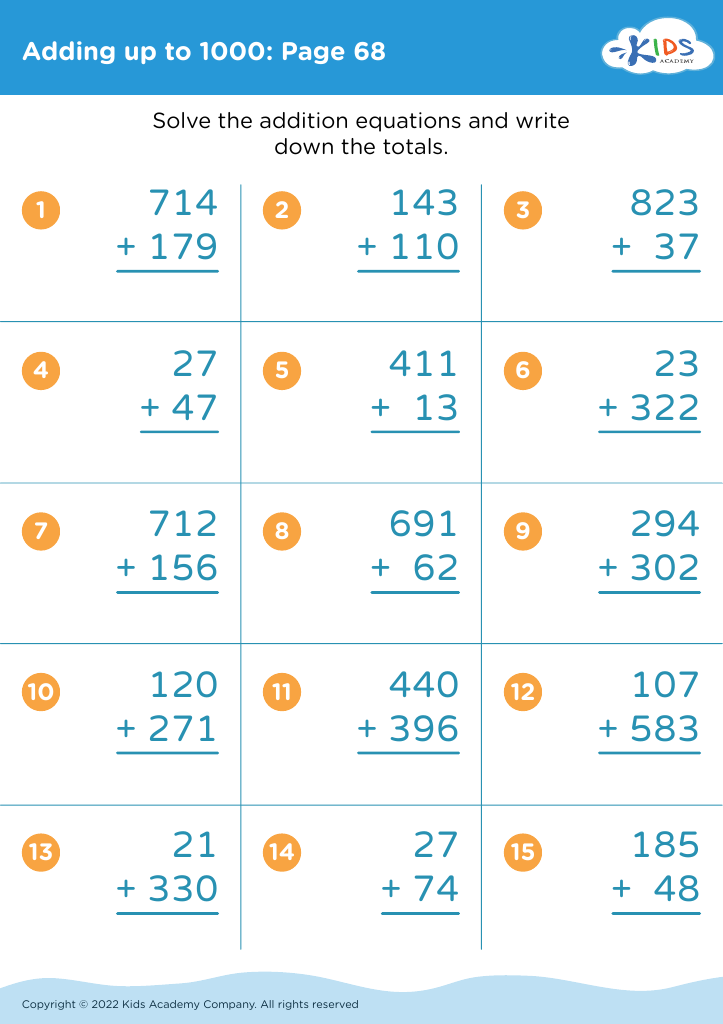
Adding up to 1000: Page 68

Adding up to 1000: Page 68

Adding up to 1000: Page 68
Worksheet
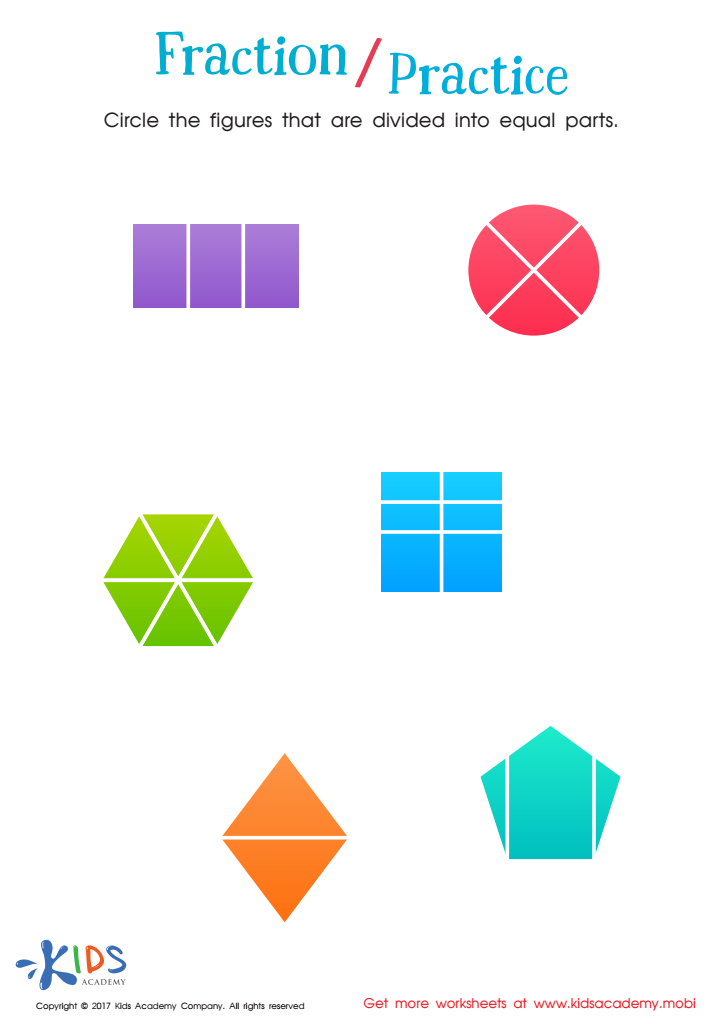
Fraction Practice Printable

Fractions: Shapes Worksheet

Get your printable now. Kids learn math differently today than you did in school; understanding concepts rather than memorizing facts. Help your child understand fractions with this printable worksheet. It'll help your child recognize parts of a whole, identify equal parts and build a foundation for numeracy. A better understanding sets kids up for math success! Get your printable now.
Fractions: Shapes Worksheet
Worksheet
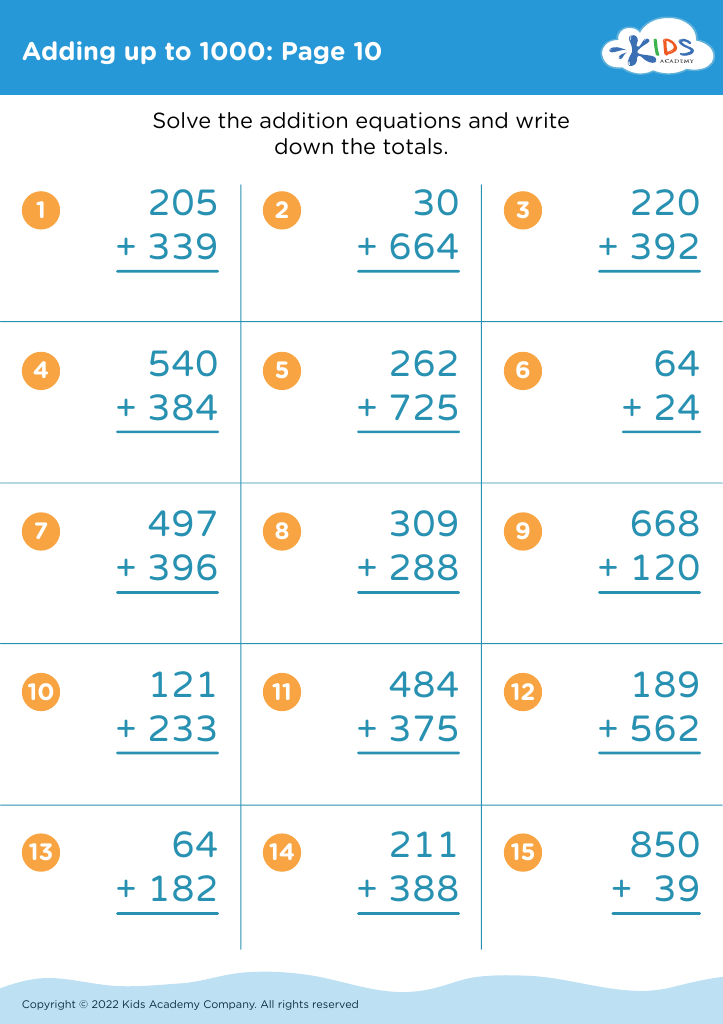
Adding up to 1000: Page 10

Adding up to 1000: Page 10

Adding up to 1000: Page 10
Worksheet
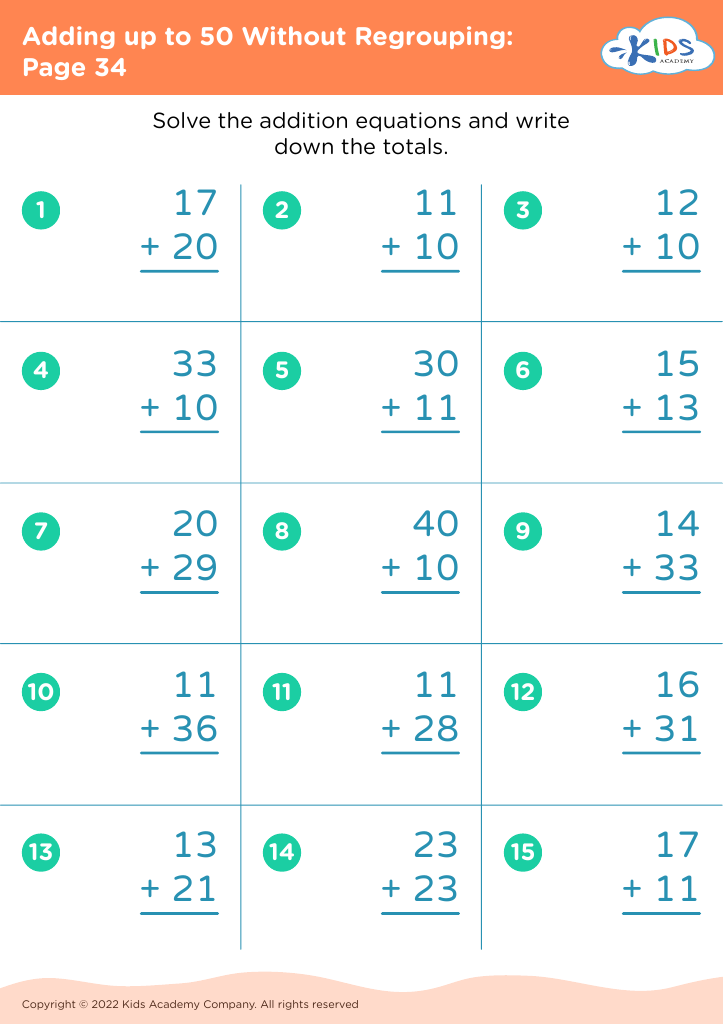
Adding up to 50 Without Regrouping: Page 34
Worksheet
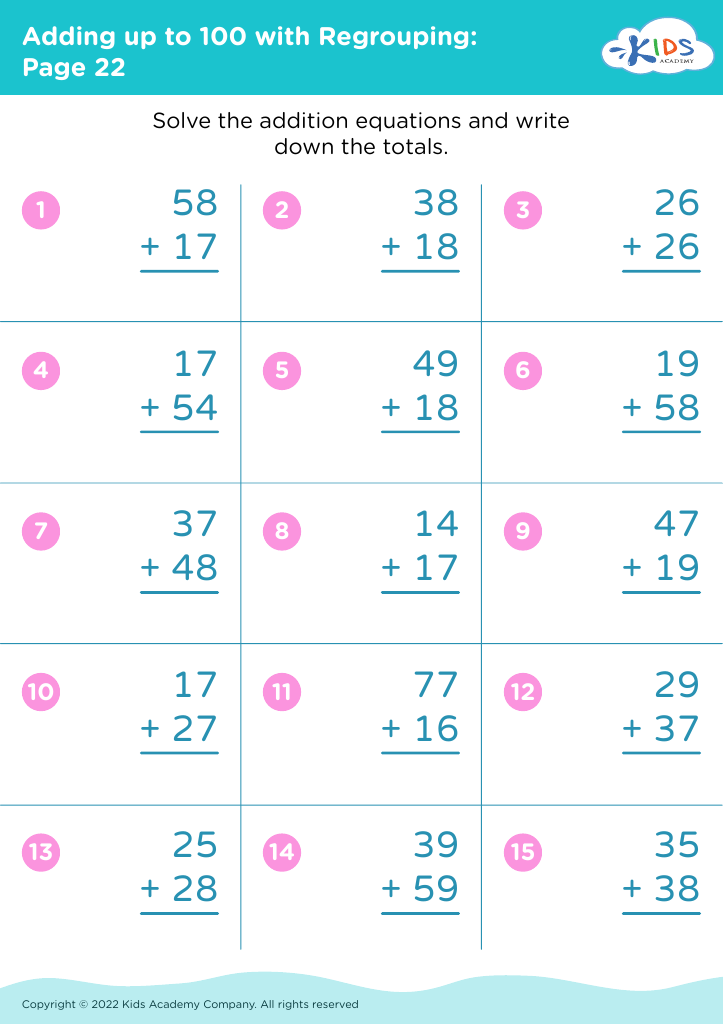
Adding up to 100 with Regrouping: Page 22
Worksheet
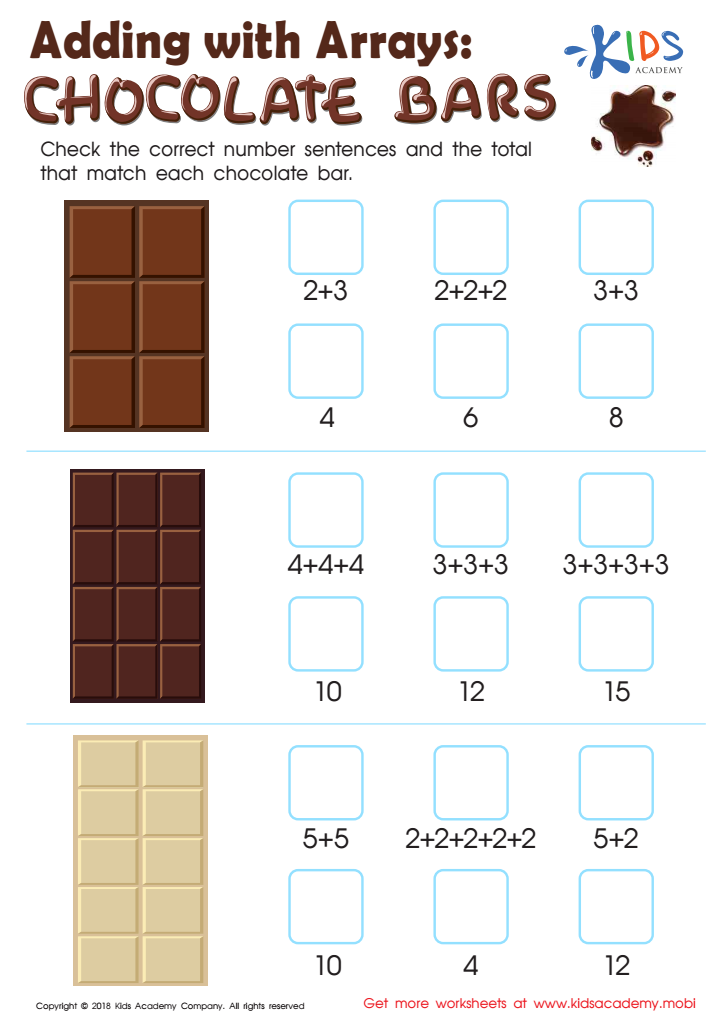
Adding with Arrays: Chocolate Bars Worksheet
Adding with Arrays: Chocolate Bars Worksheet
Kids love chocolates! Gauge how enthused your kids get when you mention them. This worksheet is a fun exercise about chocolates - get your kids to check the correct number sentences and totals for each chocolate bar. Reward their hard work with some chocolates - extra incentive for a job well done!
Adding with Arrays: Chocolate Bars Worksheet
Worksheet
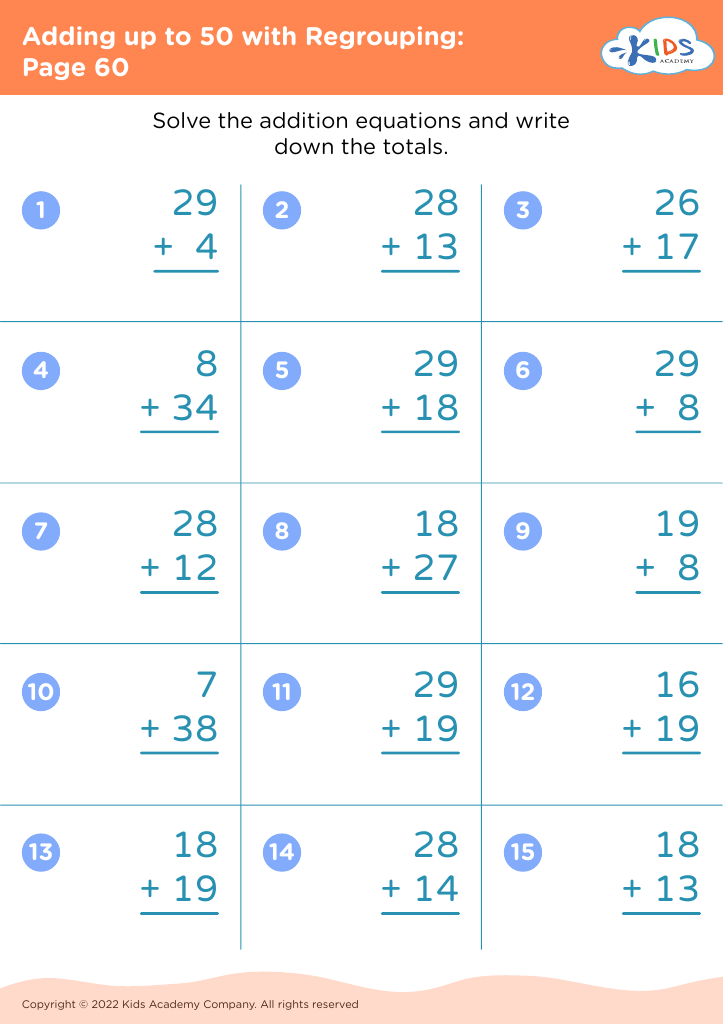
Adding up to 50 with Regrouping: Page 60
Worksheet
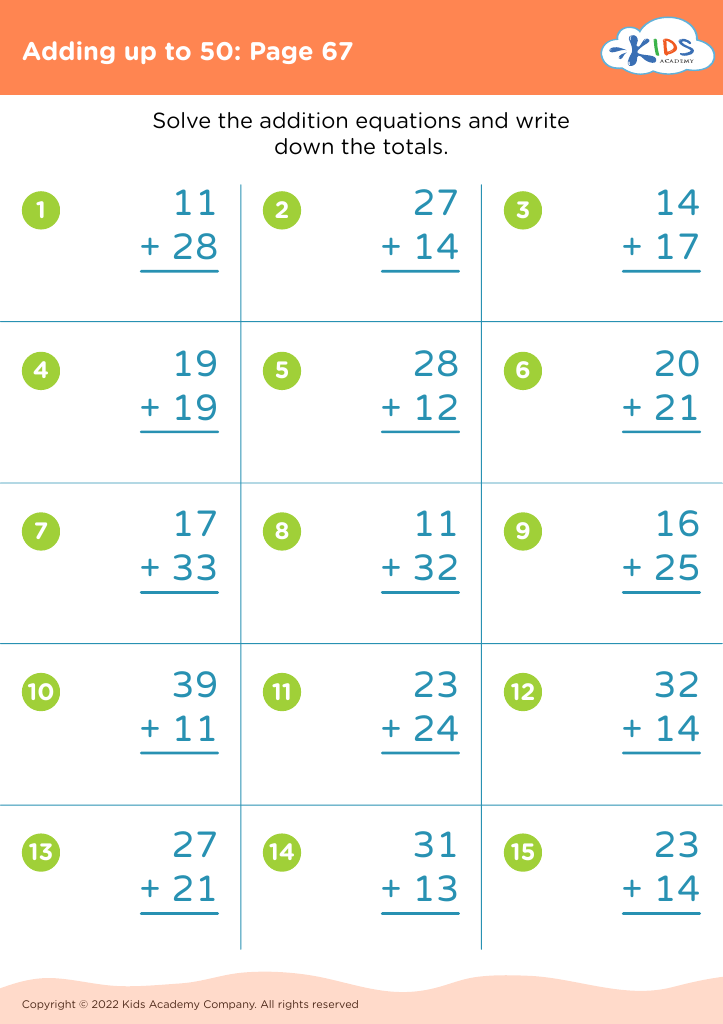
Adding up to 50: Page 67

Adding up to 50: Page 67

Adding up to 50: Page 67
Worksheet
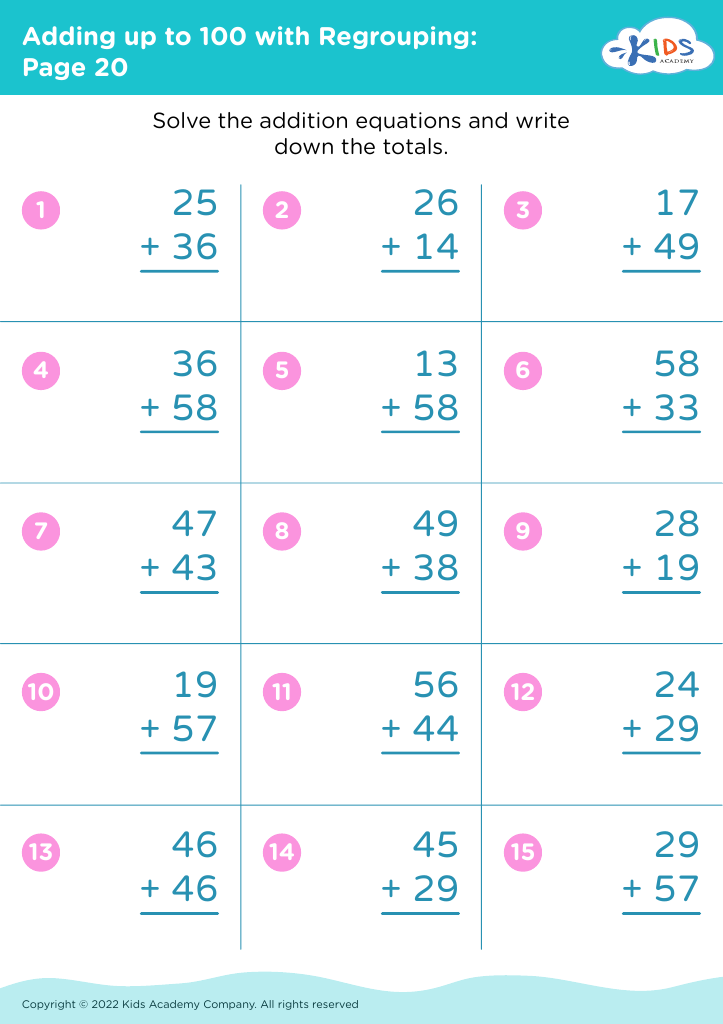
Adding up to 100 with Regrouping: Page 20
Worksheet
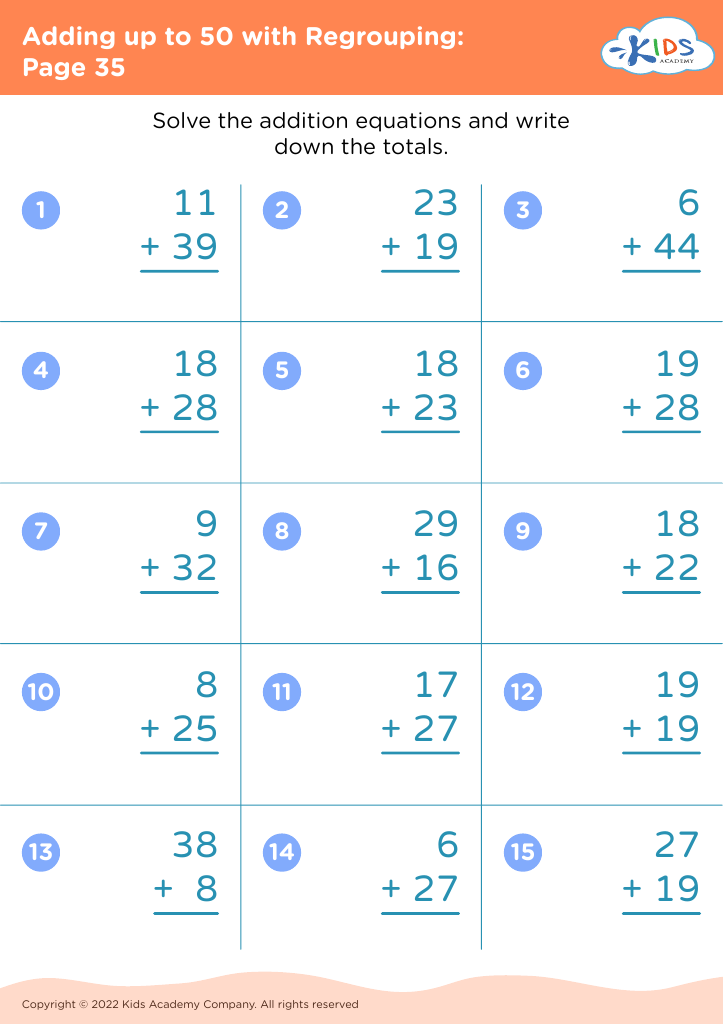
Adding up to 50 with Regrouping: Page 35
Worksheet
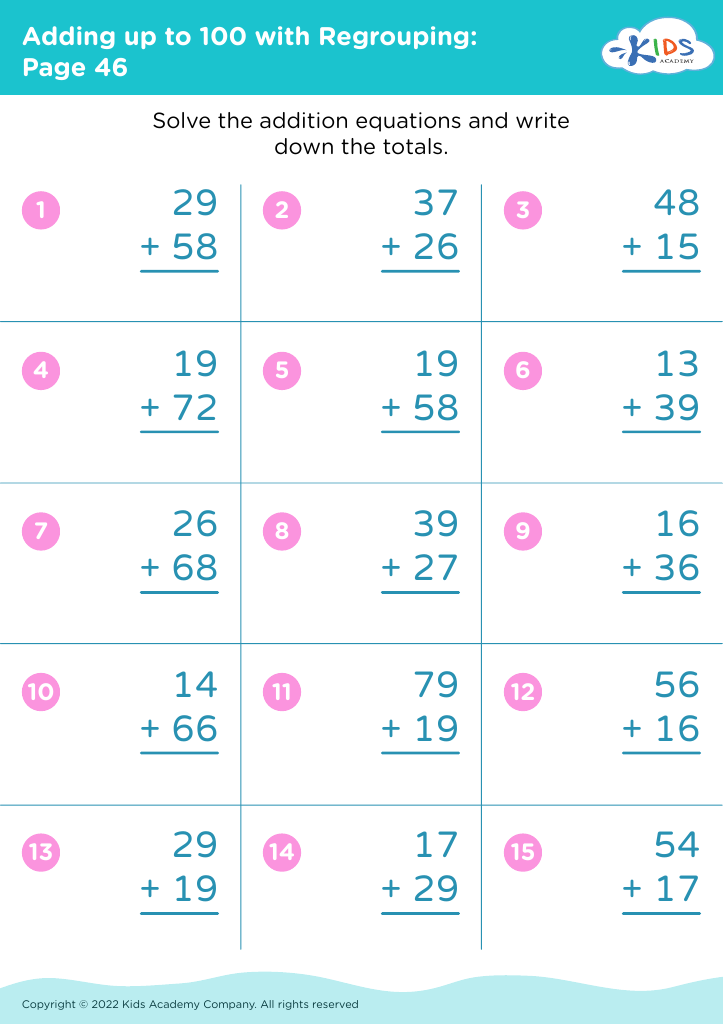
Adding up to 100 with Regrouping: Page 46
Worksheet


Parents and teachers play a crucial role in a child's mathematical development, particularly when it comes to understanding fractional concepts during ages 6-9. Comparing fractions through addition and subtraction is essential for several reasons. Firstly, it sets the groundwork for more advanced mathematical concepts. At this stage, children are developing their number sense and reasoning abilities; comparing fractions reinforces the understanding of relationships between numbers, such as "greater than" or "less than."

Secondly, engaging with fractions fosters critical thinking skills. By evaluating which fractions are larger or how they can be combined or separated, students learn to analyze problems and come up with solutions. This skill not only applies to mathematics but also translates into real-life situations, such as sharing food or dividing resources.

Furthermore, understanding fractions is pivotal in developing persistence and confidence in math. When children work collaboratively with parents or teachers on these concepts, they strengthen their communication skills and learn to approach challenges with a positive mindset. Ultimately, fostering a solid grasp of comparing fractions forms a bridge to future success in mathematics and enhances overall cognitive development, making it vital for educators and parents to prioritize this area in a child's learning journey.