Fraction representation Addition & Subtraction Worksheets for Ages 6-9
3 filtered results
-
From - To
Discover our engaging Fraction Representation Addition and Subtraction Worksheets designed for children ages 6-9! These interactive resources help young learners grasp the concepts of fractions while honing their addition and subtraction skills. Each worksheet offers a variety of exercises that encourage critical thinking, promote visual understanding of fractions, and make math fun and approachable. Whether practicing identifying fractions, adding fractional values, or subtracting them, these worksheets are tailored to suit diverse learning styles. Perfect for at-home practice or classroom activities, our worksheets are a great way to build a solid math foundation and boost confidence in young mathematicians. Explore today!
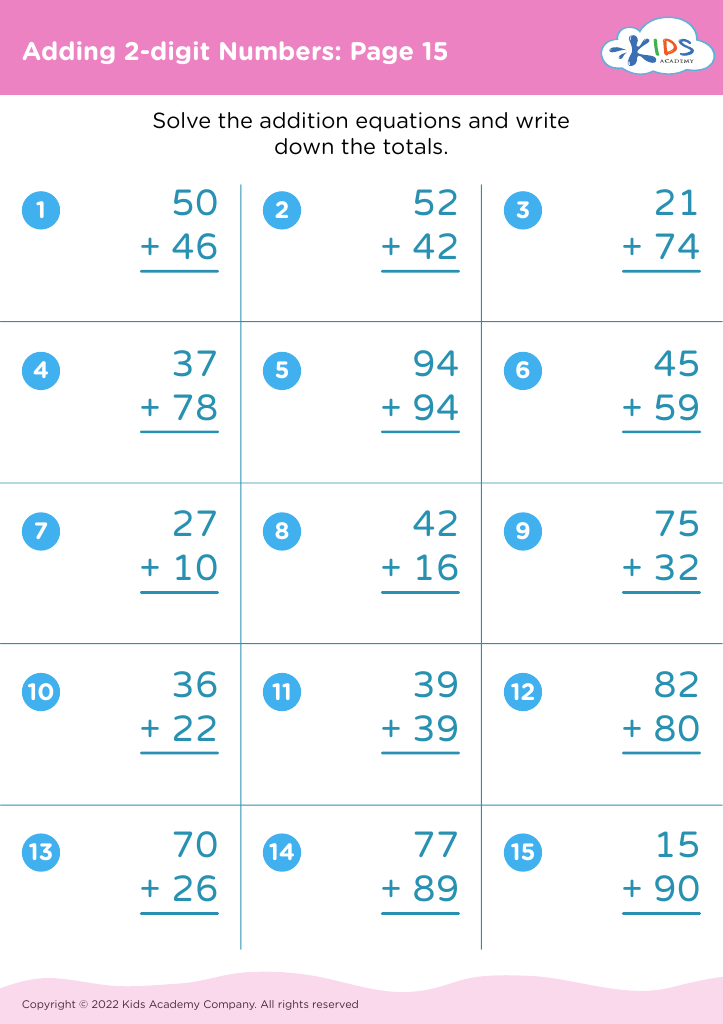
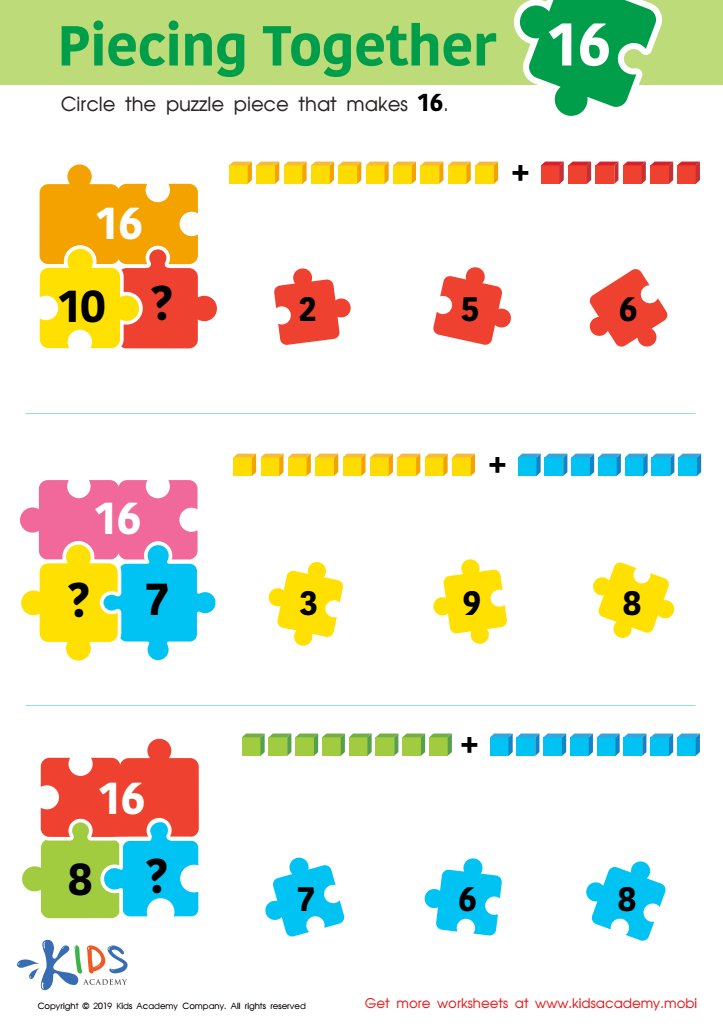
Piecing Together 16 Worksheet
 Assign to My Students
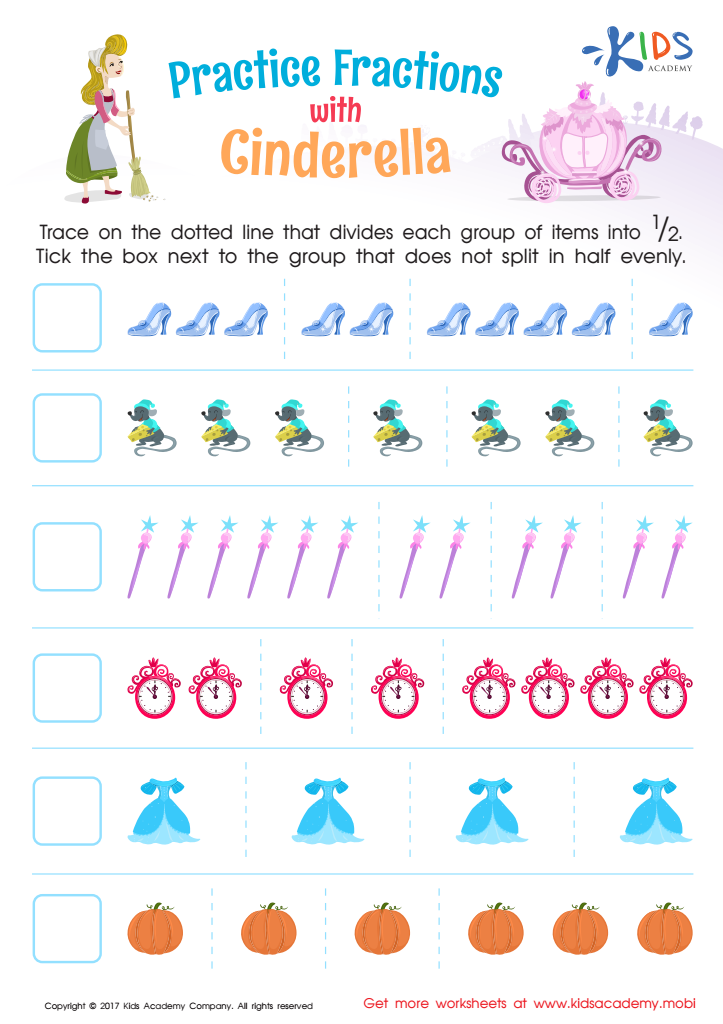
Fractions: Cinderella Printable








Understanding fraction representation, addition, and subtraction is crucial for children ages 6-9 as it lays the groundwork for their mathematical understanding and everyday problem-solving skills. At this age, students are transitioning from concrete to more abstract thinking. Introducing fractions through visual models such as pie charts or fraction bars helps make the concept tangible. This visual representation allows young learners to grasp how parts relate to a whole, reinforcing their comprehension of equivalencies, which is essential for later mathematical concepts.
Importance also lies in building a strong foundation in arithmetic operations using fractions. Mastery in adding and subtracting fractions with like denominators aids a child’s confidence and readiness to tackle more complex math problems in future grades, such as finding common denominators or dealing with mixed numbers.
Moreover, understanding fractions helps in real-life situations, such as cooking, sharing, and budgeting, allowing children to see the practicality of what they learn. This fosters critical thinking and promotes a positive attitude toward mathematics. Engaging parents and teachers in a collaborative approach to make sense of fractions can significantly enhance a child's learning experience, laying a robust foundation essential for future academic success.








