Identify shapes Addition & Subtraction Worksheets for Ages 6-9
10 filtered results
-
From - To
Discover engaging "Identify Shapes Addition & Subtraction Worksheets" crafted for kids aged 6-9! Our expertly designed worksheets merge basic math operations with shape identification, creating a fun and educational experience. Perfect for young learners, these activities help develop essential skills in addition, subtraction, and geometric recognition, boosting both their confidence and proficiency in math. By providing a blend of visual and numerical challenges, we ensure an interactive learning journey that keeps kids enthralled. Ideal for use at home or in the classroom, our worksheets offer a delightful path to mastering fundamental math concepts easily and enjoyably.
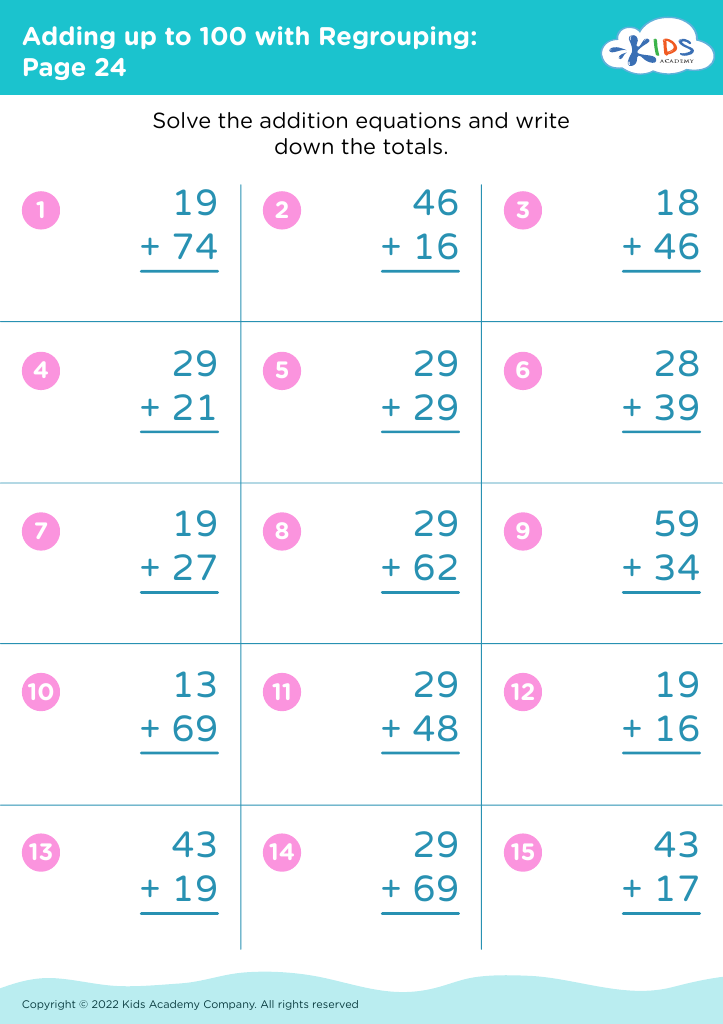
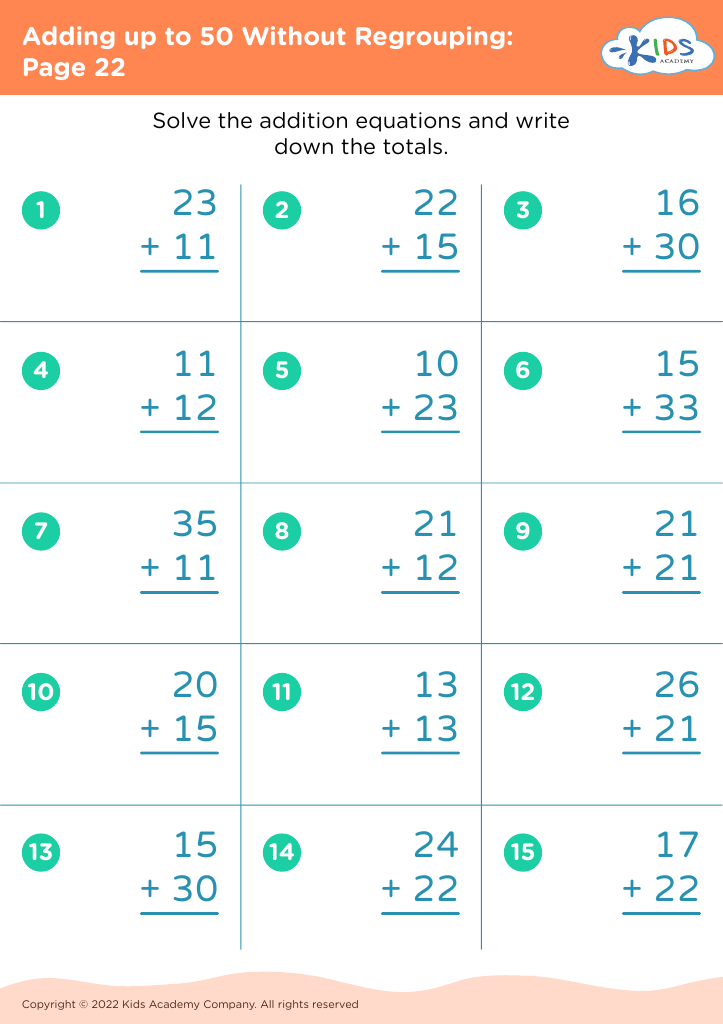
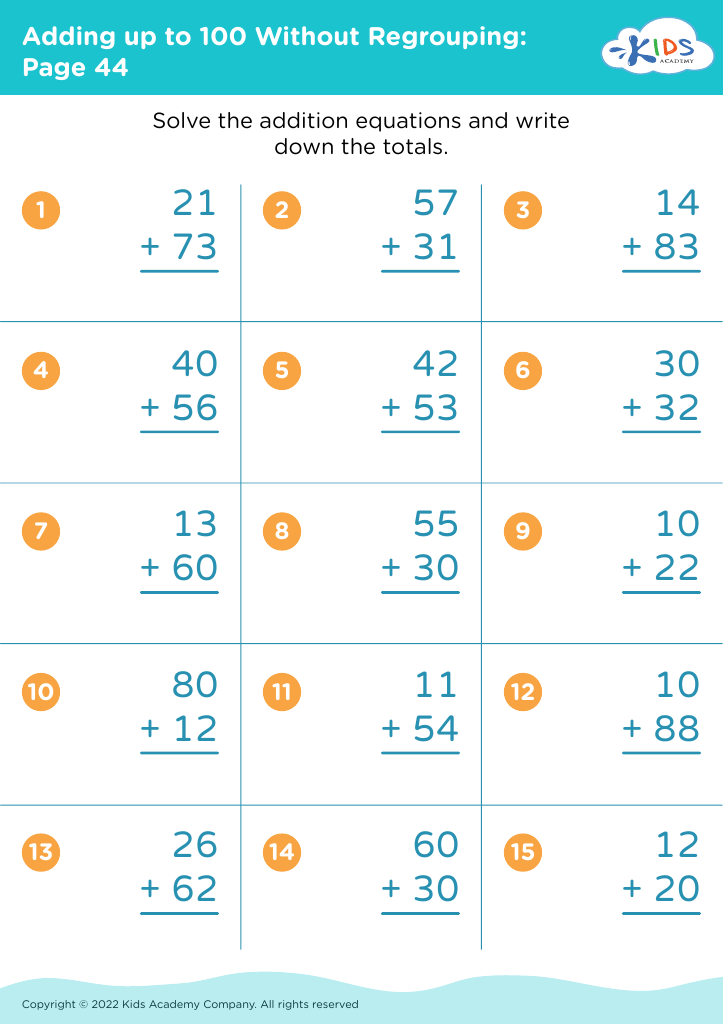
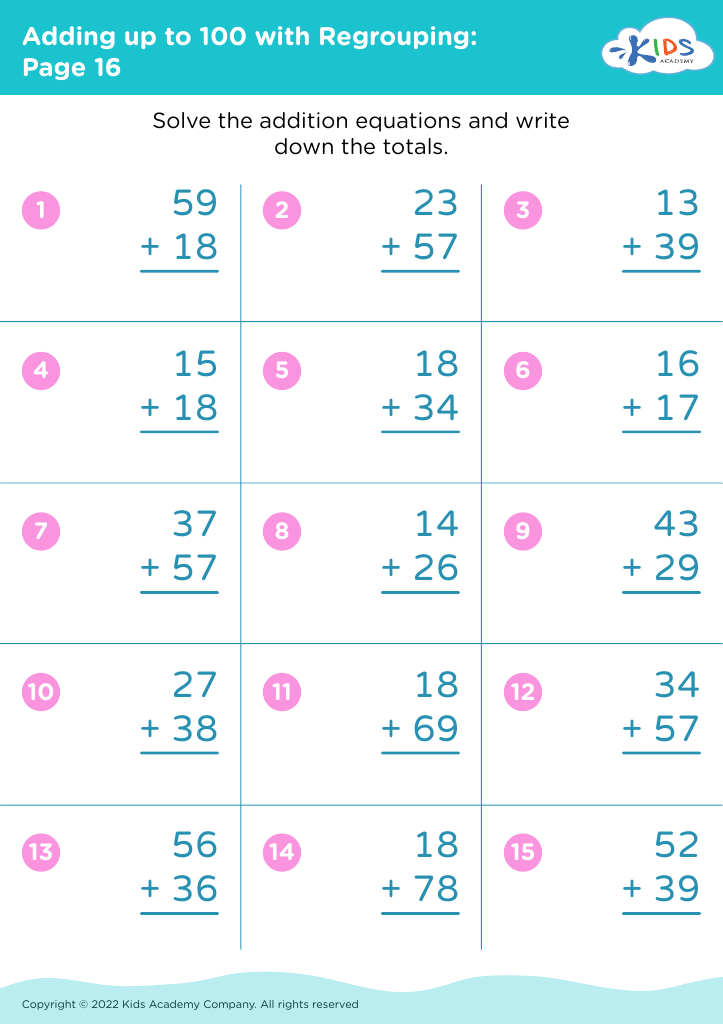








Understanding shapes, addition, and subtraction is crucial for children aged 6-9 as these foundational skills form the bedrock of broader mathematical competence and cognitive development. For parents and teachers, emphasizing these areas paves the way for a strong educational journey.
Identifying shapes enables children to categorize and differentiate objects in their environment, which is a vital spatial awareness skill. Recognizing shapes is also linked to understanding more advanced geometric concepts. For example, perceiving how shapes fit together lays the groundwork for more complicated tasks involving spatial reasoning and engineering.
Addition and subtraction are the basic building blocks of arithmetic and essential life skills. Mastery in these operations allows children to perform everyday tasks like counting money, telling time, and managing resources. Moreover, early proficiency in addition and subtraction helps students tackle more challenging mathematical concepts such as multiplication, division, fractions, and algebra later on.
Instilling these skills at an early age also cultivates problem-solving abilities, critical thinking, and logical reasoning. It boosts children’s confidence and enjoyment in learning, reducing math anxiety in later years. By focusing attention on these key areas, parents and teachers ensure that children not only succeed academically but are also well-equipped for real-world situations.








