Logical thinking Addition & Subtraction Worksheets for Ages 6-9
10 filtered results
-
From - To
Enhance your child's mathematical skills with our "Logical Thinking Addition & Subtraction Worksheets" for ages 6-9. These engaging worksheets are designed to build foundational arithmetic skills while promoting critical logical thinking. Children will embark on fun, interactive exercises that not only focus on solving addition and subtraction problems but also require them to identify patterns, make reasoned decisions, and tackle challenges creatively. Perfect for young learners, these worksheets will boost their confidence and prepare them for more advanced mathematical concepts. Ignite your child's love for math and foster their analytical abilities with our expertly crafted resources.
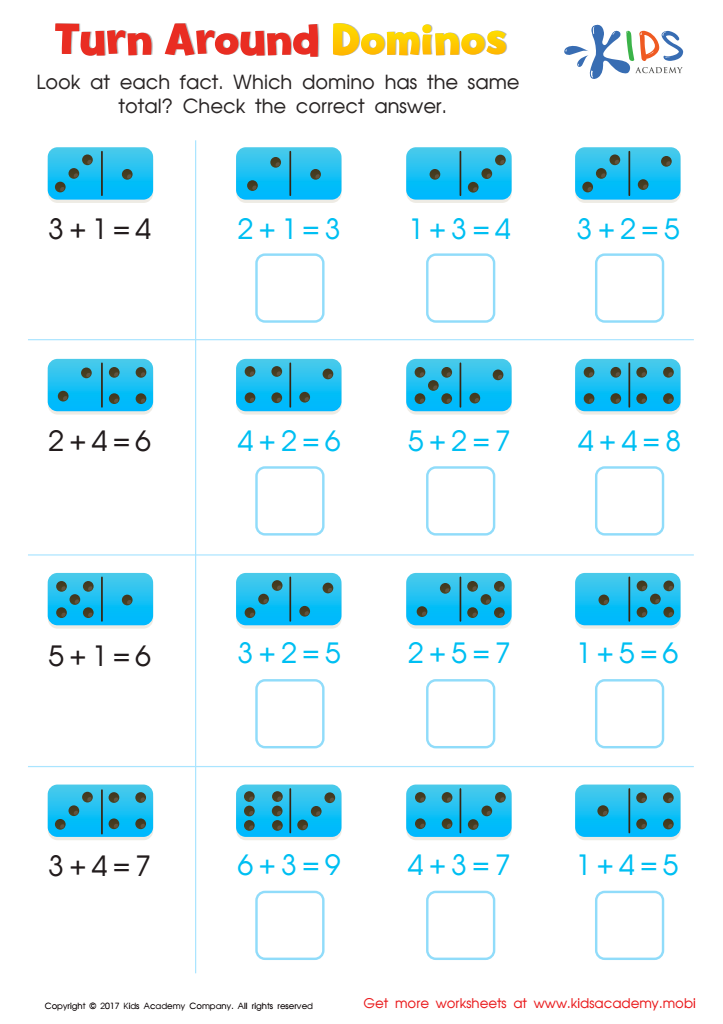
Turn Around Dominos Worksheet
 Assign to My Students
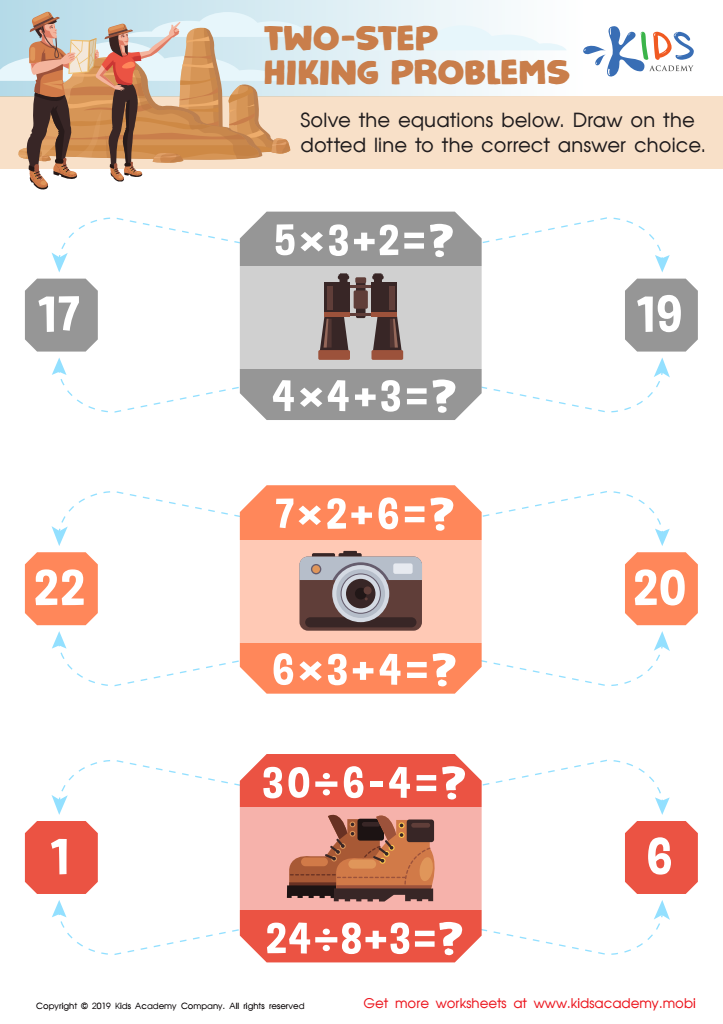
Two-Step Hiking Problems Worksheet
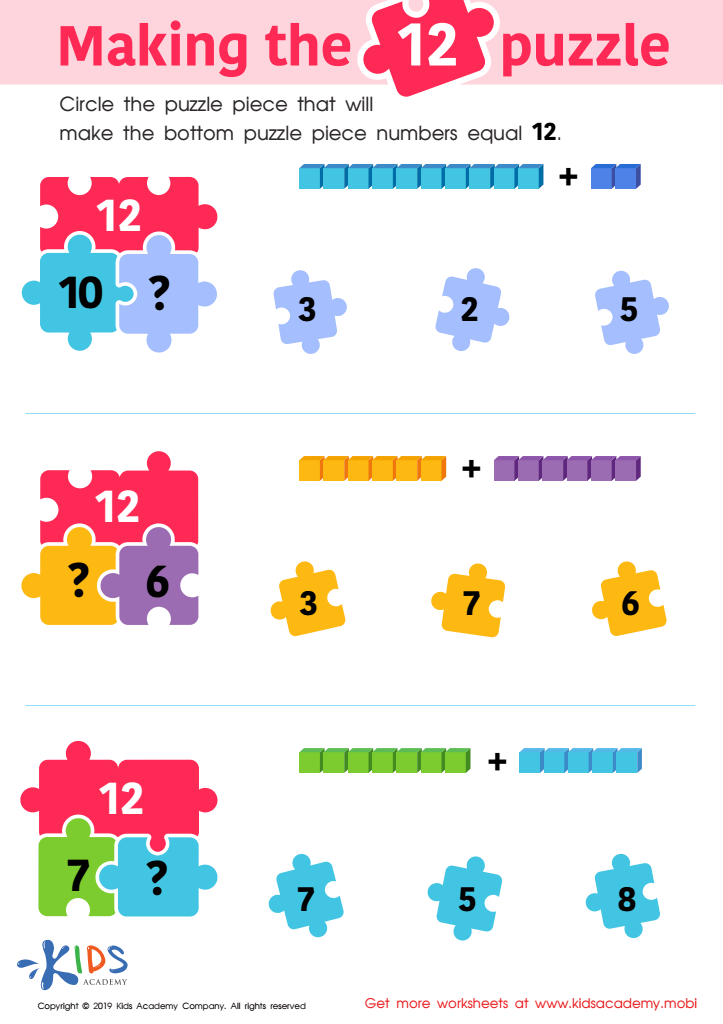
Making the 12 Puzzle Worksheet








Parents and teachers should focus on developing logical thinking and arithmetic skills like addition and subtraction for children aged 6-9, as these are foundational for future academic success and everyday problem-solving. At this age, children's brains are highly receptive to learning new concepts, and mastering basic math skills promotes cognitive development.
Logical thinking encourages children to approach problems methodically, think critically, and understand the underlying principles—not just rote memorization. This foundational logic prepares them for more complex math and science subjects, as well as enhances their decision-making and reasoning abilities in daily life.
Addition and subtraction are cornerstones of mathematics. Proficiency in these areas paves the way for more advanced topics such as multiplication, division, and fractions, which are essential for higher-level math and practical applications like budgeting and time management. Early competence in these skills boosts confidence, encourages a positive attitude towards math, and reduces math-related anxiety later in life.
Moreover, skills learned through logical thinking and basic arithmetic foster perseverance, attention to detail, and a structured approach to tasks—qualities that are beneficial beyond the realms of math. Making these learning experiences engaging can stimulate curiosity, a love for learning, and critical thought processes essential for academic and personal growth.








