Recognizing numbers Addition & Subtraction Worksheets for Ages 6-9
5 filtered results
-
From - To
Unlock your child's math potential with our "Recognizing Numbers Addition & Subtraction Worksheets" tailored for ages 6-9. These engaging and educational worksheets are expertly designed to help young learners master basic addition and subtraction while enhancing number recognition skills. Our resources offer a perfect blend of fun and learning, featuring colorful visuals and interactive exercises to keep your child motivated. Perfect for both classroom and at-home practice, these worksheets build a solid math foundation, boosting confidence and academic performance. Start your child's math journey today with our dynamic, skill-building worksheets!
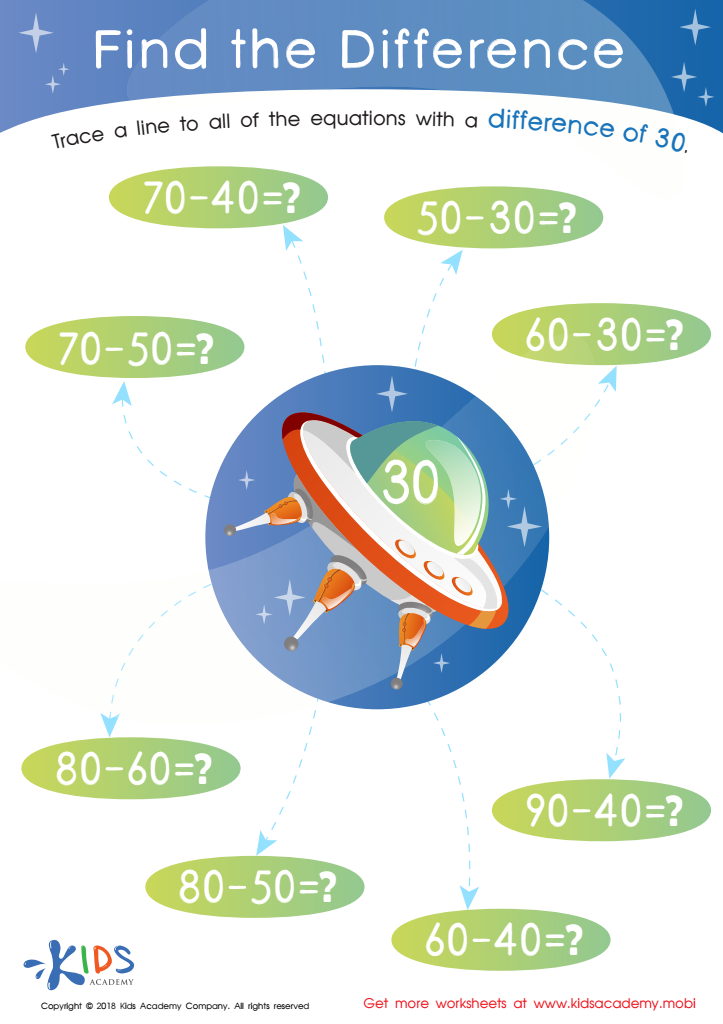
Find The Difference Worksheet
 Assign to My Students
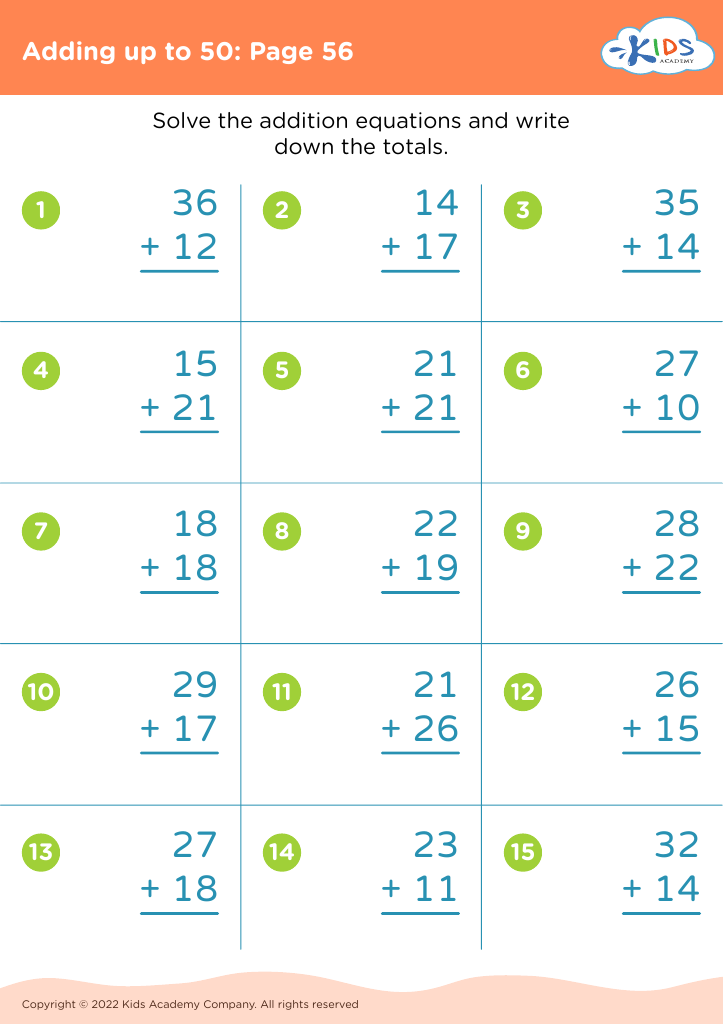
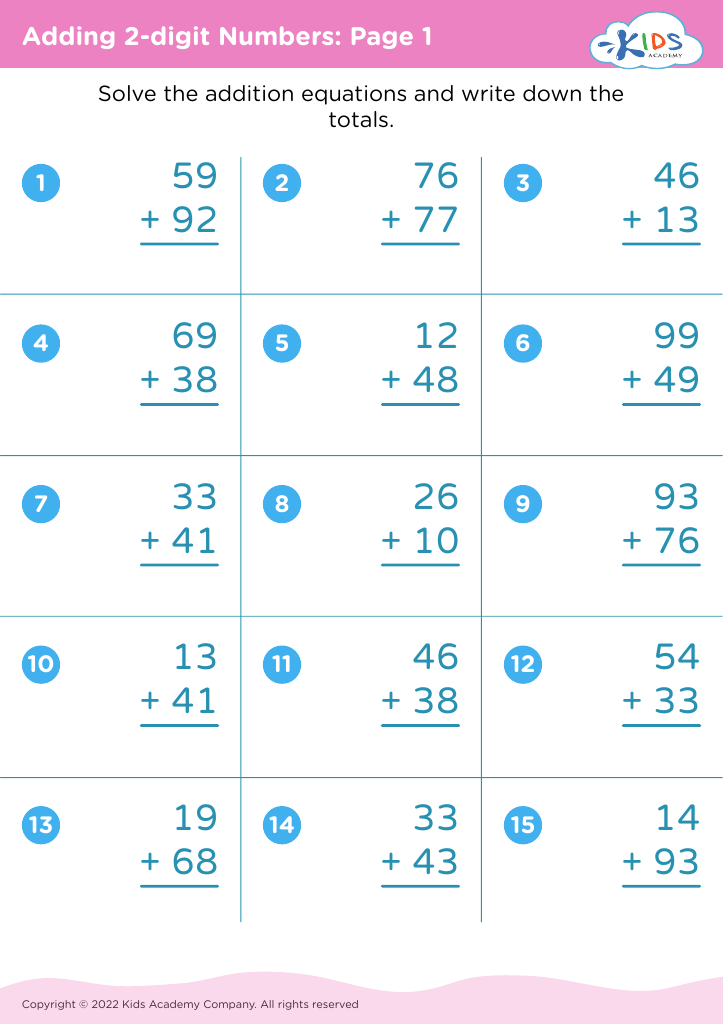
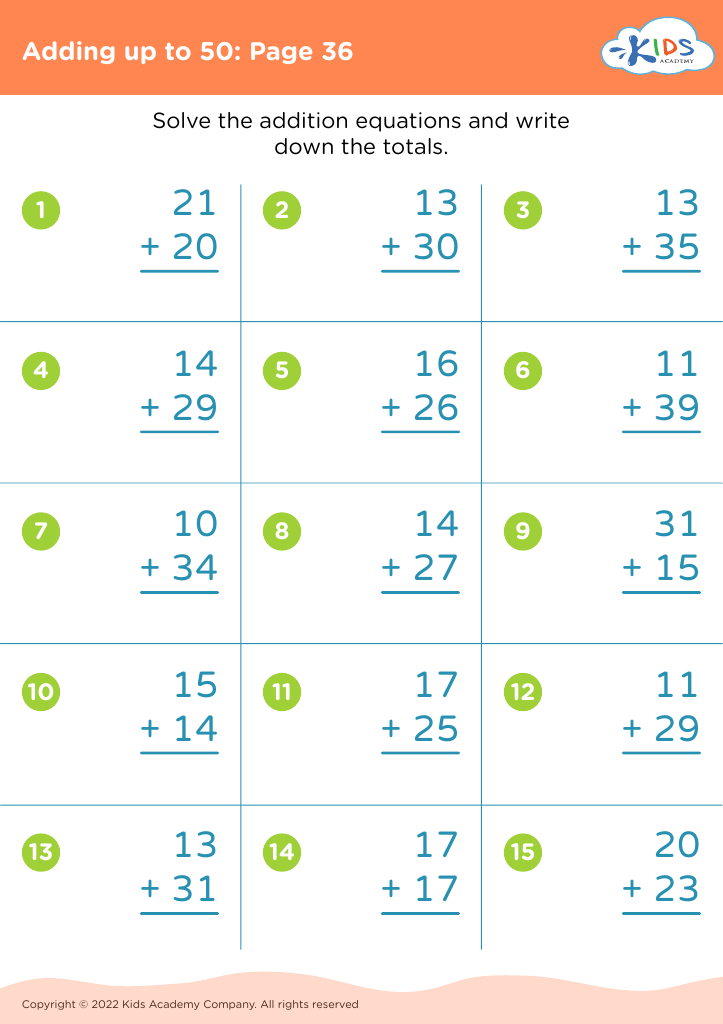
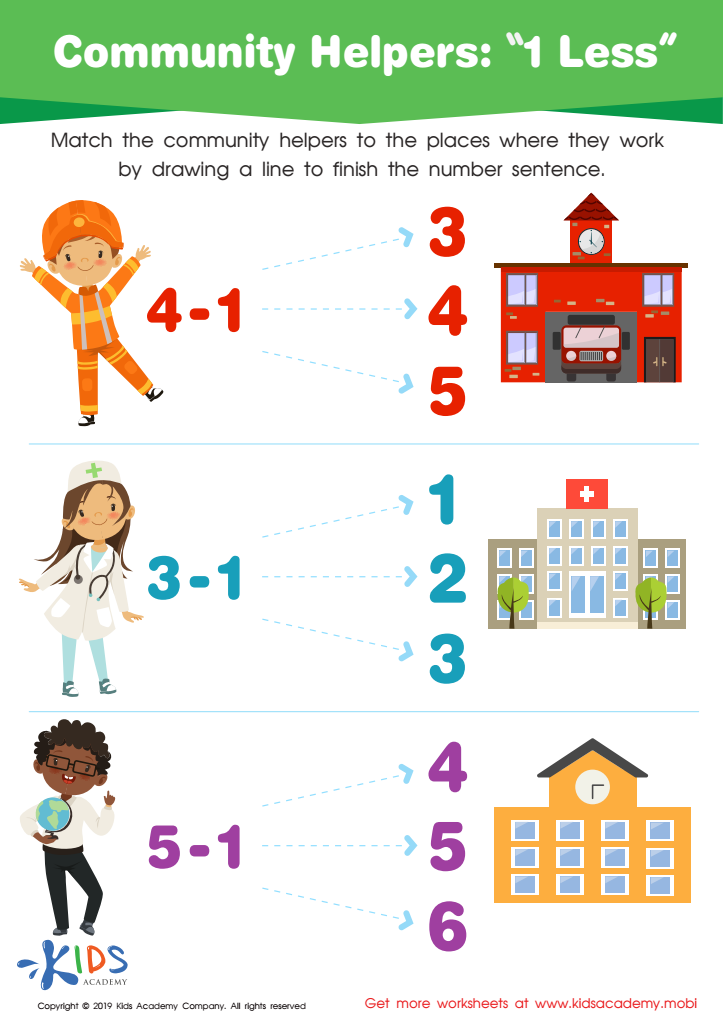
Community Helpers: 1 less Worksheet








Recognizing numbers and understanding basic addition and subtraction are fundamental skills critical for children aged 6 to 9. These elements serve as the building blocks for all future mathematical learning. First, they enable children to develop numerical literacy, which is essential for their everyday functioning, such as counting objects, telling time, and handling money. Understanding numbers and basic arithmetic also stimulates cognitive skills including problem-solving, logical thinking, and memory.
From an educational perspective, grasping these early math concepts sets the foundation for more complex mathematical operations that students will encounter in later grades, such as multiplication, division, and fractions. Early proficiency in math fosters a positive attitude towards the subject, reducing anxiety and building confidence, which can influence academic performance across other disciplines. Additionally, math skills are closely linked to improved literacy; research shows that children who understand basic math concepts also perform better in reading because both skills involve pattern recognition and sequencing.
Finally, for parents and teachers, emphasizing number recognition and basic arithmetic in early childhood is part of a broader strategy to develop well-rounded, intellectually engaged children. It prepares them not just for academic success, but for effective problem-solving in everyday life, instilling essential life skills that have long-term benefits.








