Understand patterns Addition & Subtraction Worksheets for Ages 6-9
6 filtered results
-
From - To
Explore our "Understand Patterns Addition & Subtraction Worksheets" designed specifically for children aged 6-9! These engaging worksheets help young learners grasp the essential concepts of addition and subtraction using patterns. By recognizing and completing numerical sequences, students enhance their problem-solving and critical thinking skills. Each worksheet features colorful designs and age-appropriate challenges that keep kids motivated while learning. Perfect for both classroom activities and at-home practice, these resources support early mathematical development and encourage a love for math. Foster confidence in your child’s mathematical abilities with our enjoyable and educational pattern worksheets today!
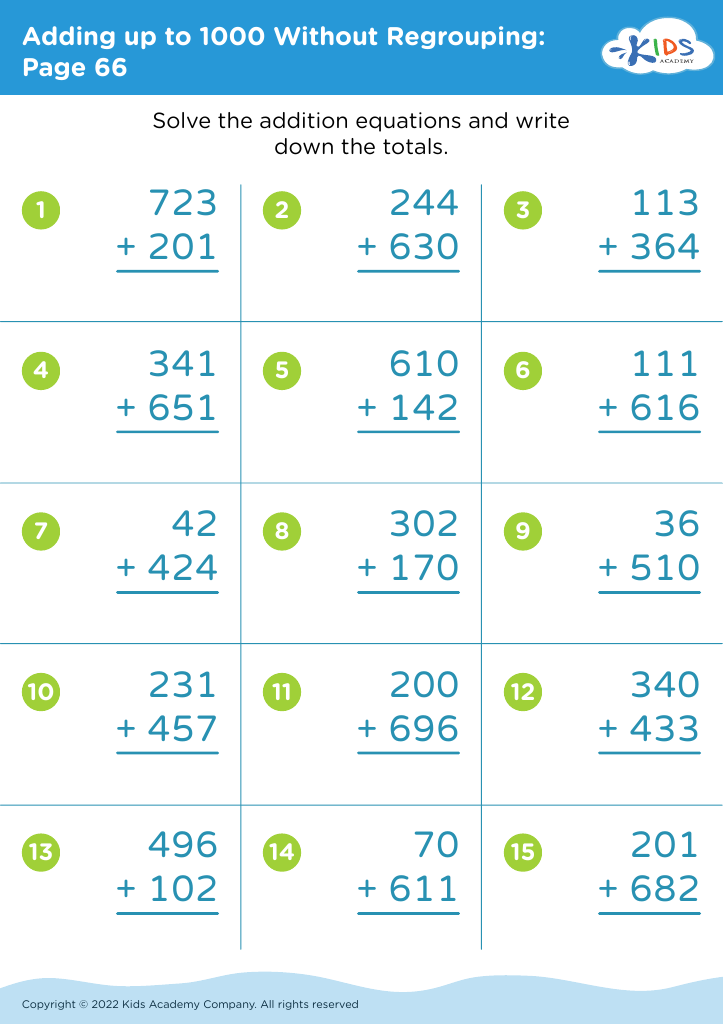
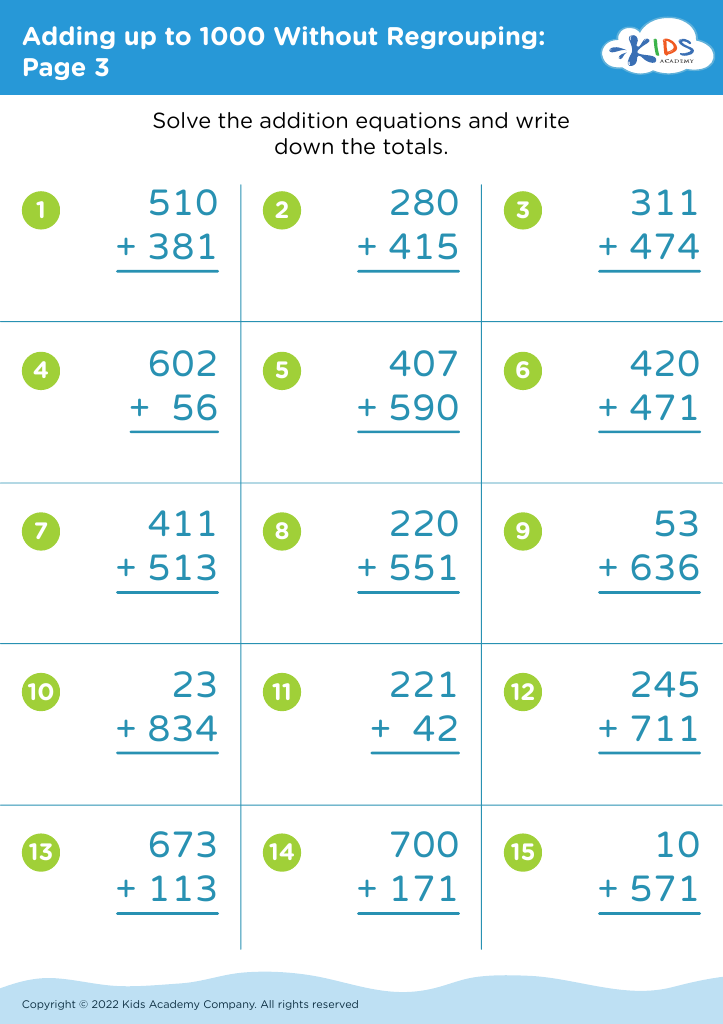
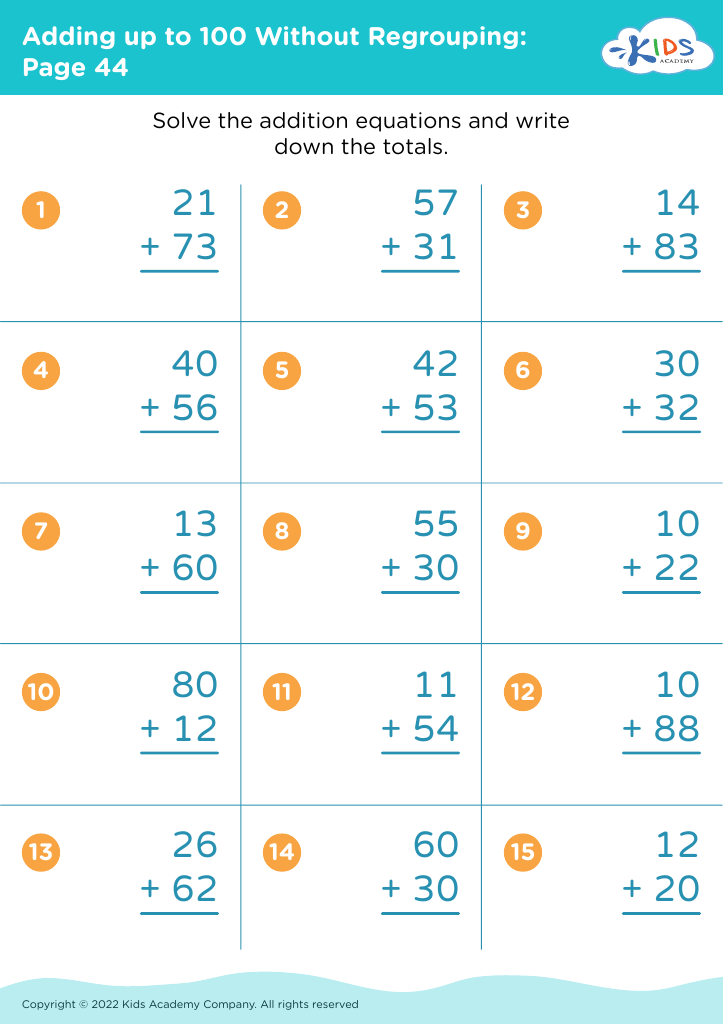
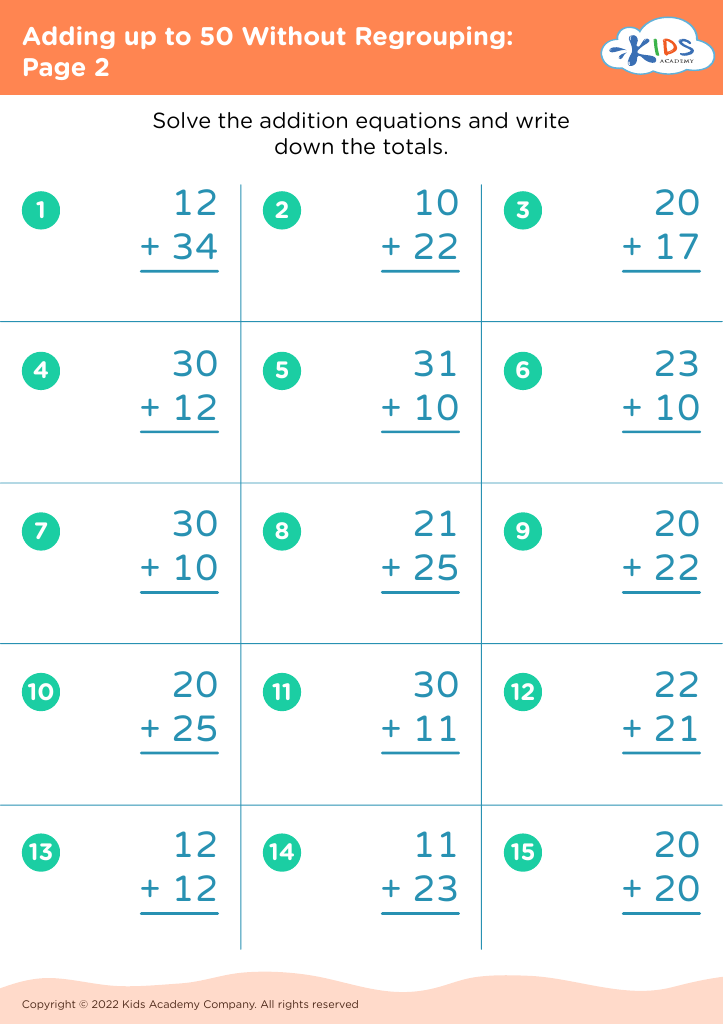
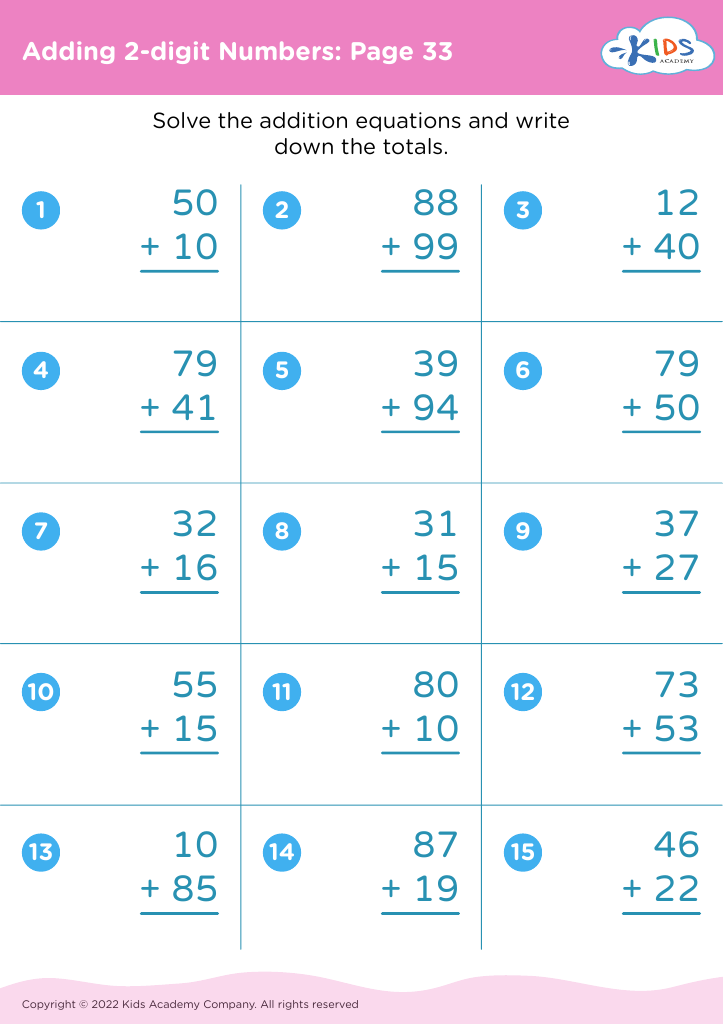
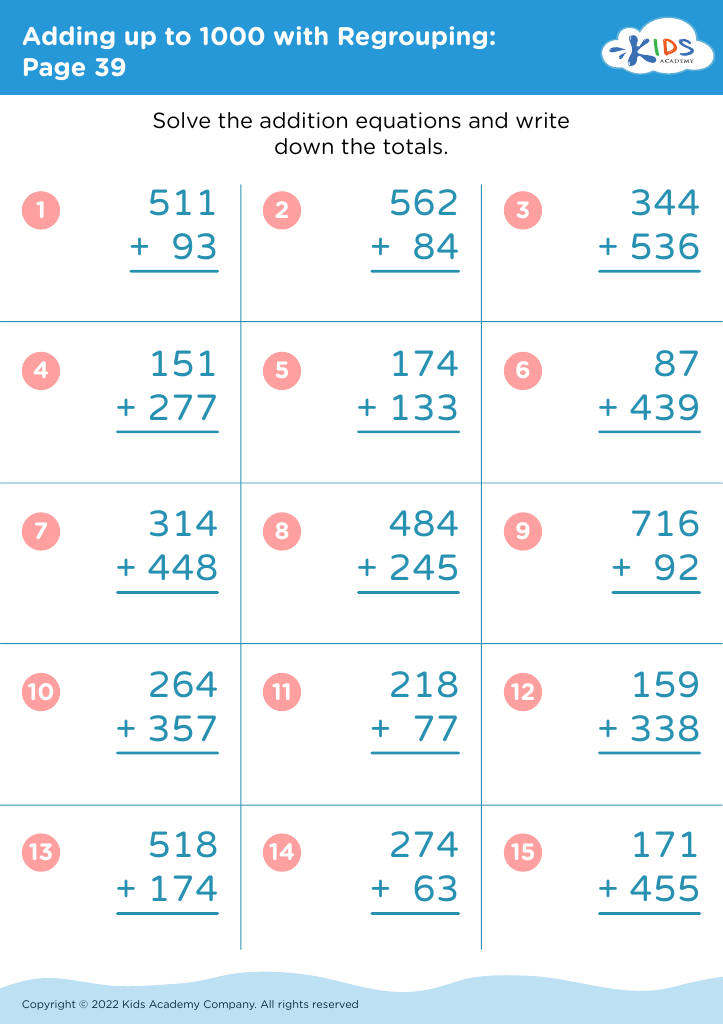








Understanding patterns in addition and subtraction is crucial for children aged 6-9 as it lays the foundation for their mathematical development. Recognizing numerical patterns helps students make connections between numbers, enhancing their problem-solving skills. When children grasp how numbers work together—such as understanding that adding three is similar to adding two and then one—they develop mental strategies, making calculations quicker and accurate.
Moreover, pattern recognition fosters logical thinking and helps children predict outcomes, which is essential in not only mathematics but in everyday life situations. Children learn to analyze and interpret information, strengthening their reasoning skills.
For parents and teachers, focusing on patterns in addition and subtraction reinforces a growth mindset. It encourages students to embrace challenges, view mistakes as learning opportunities, and build resilience. This understanding also supports critical thinking, as students begin to see mathematics as an interconnected system rather than isolated concepts.
Finally, a strong grasp of patterns equips children with the tools they need for more advanced math topics in the future, forming a vital step towards proficiency in mathematics that will benefit them throughout their academic journey and beyond. Encouraging this mastery at an early age sets the stage for lifelong learning and a positive attitude toward math.








