Understand sequences Addition & Subtraction Worksheets for Ages 6-9
5 filtered results
-
From - To
Nurture your child's mathematical skills with our "Understand Sequences Addition & Subtraction Worksheets" tailored for ages 6-9. Designed by educational experts, these engaging worksheets help children master the concepts of sequences through fun and interactive addition and subtraction exercises. Our resources build a strong foundation in problem-solving and logical reasoning, ensuring your young learner gains confidence in math. With vibrant visuals and clear instructions, kids effortlessly grasp complex patterns step-by-step, making learning enjoyable and effective. Support your child's educational journey by incorporating these valuable tools into their learning routine today!
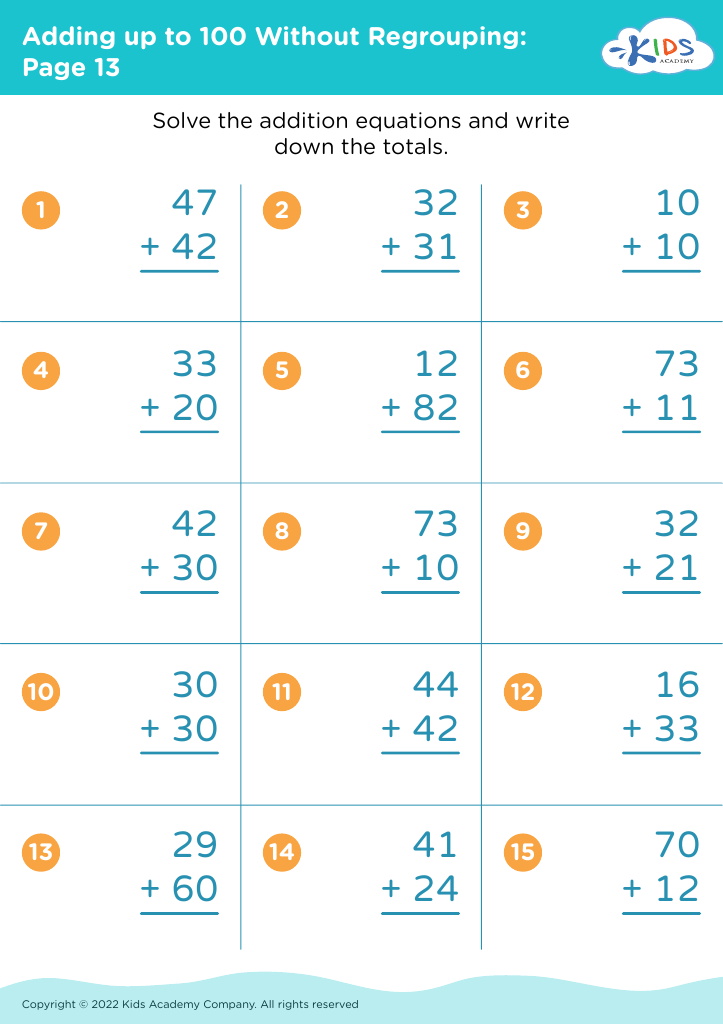
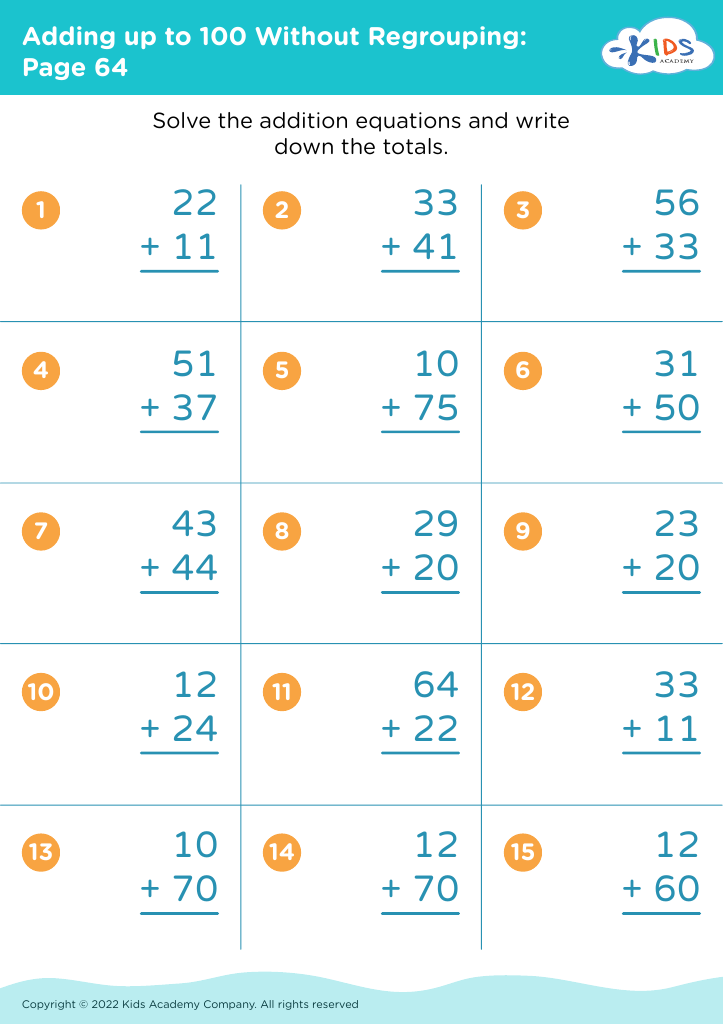
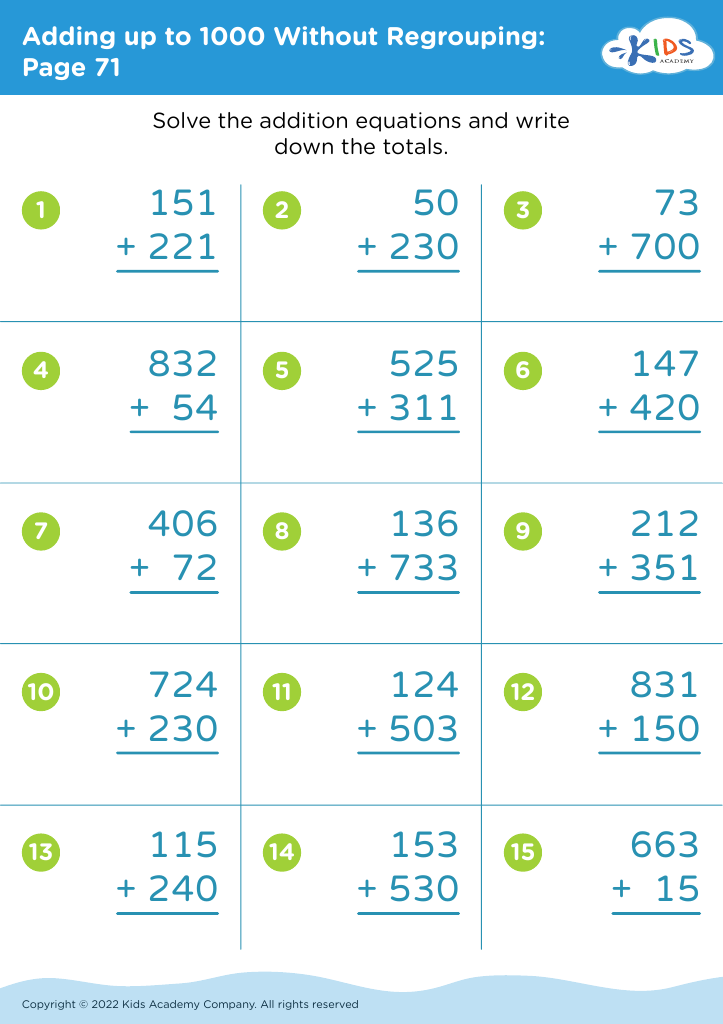
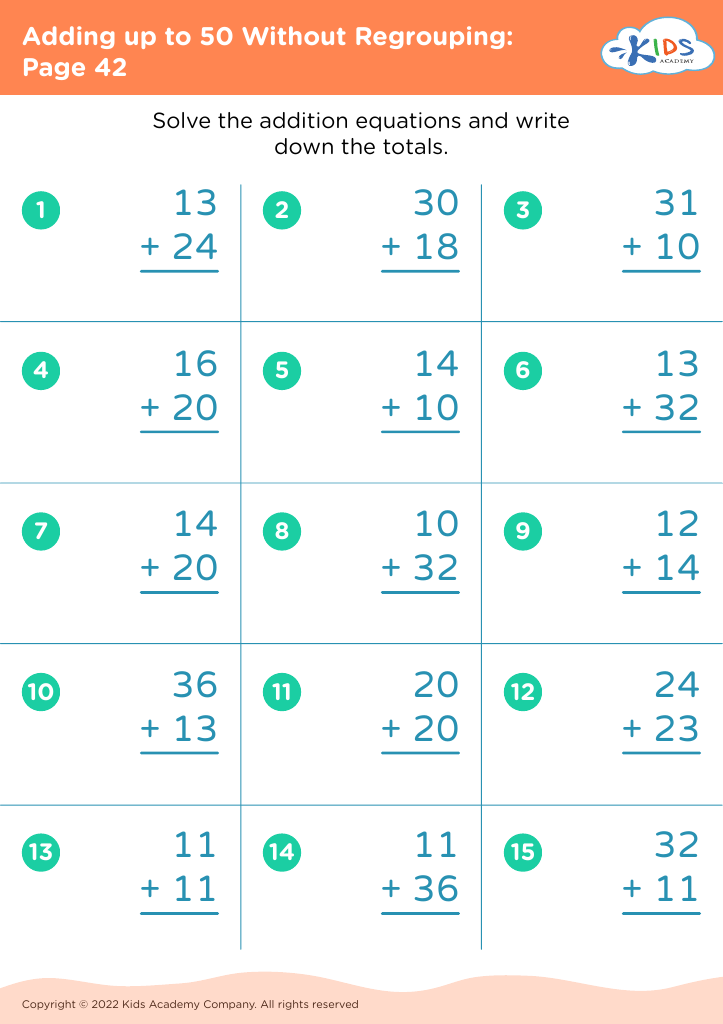
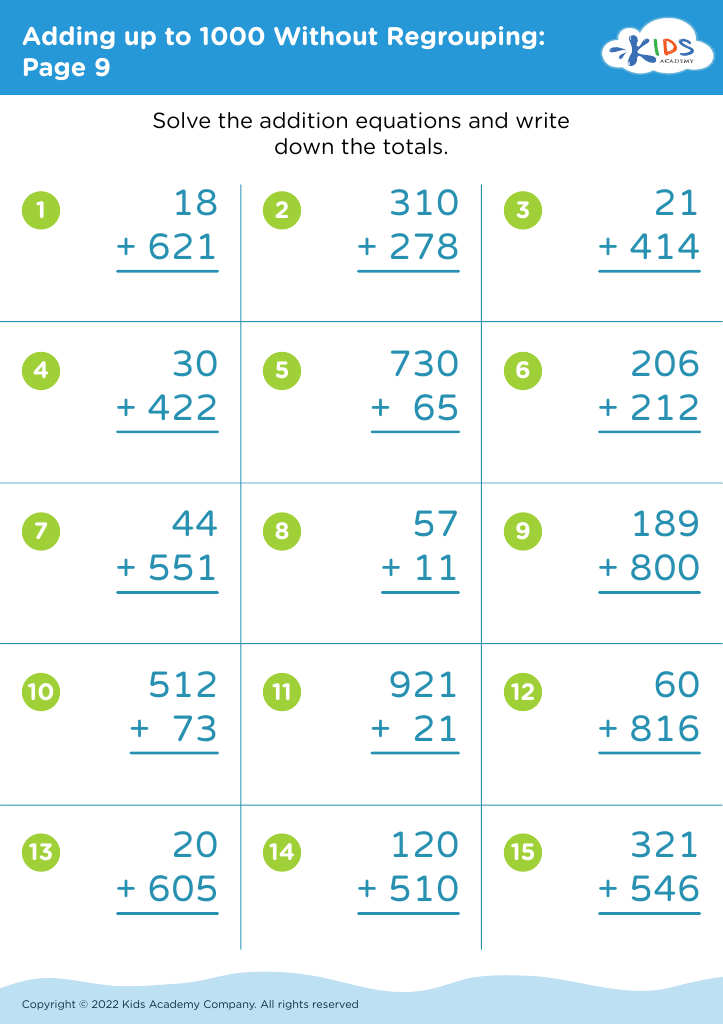








Ensuring children aged 6 to 9 understand sequences in addition and subtraction is fundamental for numerous reasons. Firstly, mastering these skills builds a solid foundation for higher mathematical concepts. Sequences help children recognize patterns, boosting their problem-solving and critical-thinking abilities. This foundation also makes understanding later topics—like multiplication, division, and eventually algebra—much smoother.
Early proficiency in addition and subtraction sequences impacts many areas of daily life, such as time management, budgeting pocket money, and even understanding sports scores. These practical skills foster independence and confidence in young learners. Moreover, recognizing patterns in sequences cultivates logical reasoning, essential not only in math but also in scientific thinking and literacy.
Parental and teacher involvement enhances this learning by making it relevant and engaging. Often, children are more motivated and successful when they see how their skills apply to real-life scenarios. Parents can incorporate these sequences into storytelling, grocery shopping, or setting the table, making learning both fun and meaningful.
Lastly, understanding sequences in early math sets children on a positive educational trajectory, reducing anxiety related to math learning. Sustained parental and teacher support fosters a nurturing environment where children feel encouraged and capable, paving the way for lifelong learning and curiosity.








