Understanding bar graphs Addition & Subtraction Worksheets for Ages 6-9
3 filtered results
-
From - To
Explore our "Understanding Bar Graphs: Addition & Subtraction Worksheets" designed for children ages 6-9. These engaging worksheets help young learners develop essential math skills by visualizing data with bar graphs while practicing addition and subtraction. Each activity encourages kids to interpret information, compare values, and solve problems, fostering critical thinking and analytical skills. Adapting these worksheets to your child's learning pace promotes confidence and reinforces foundational mathematical concepts. Ideal for classroom use or at-home practice, our resources ensure a fun and interactive learning experience. Dive into data discovery and make math enjoyable with our specialized bar graph curriculum!
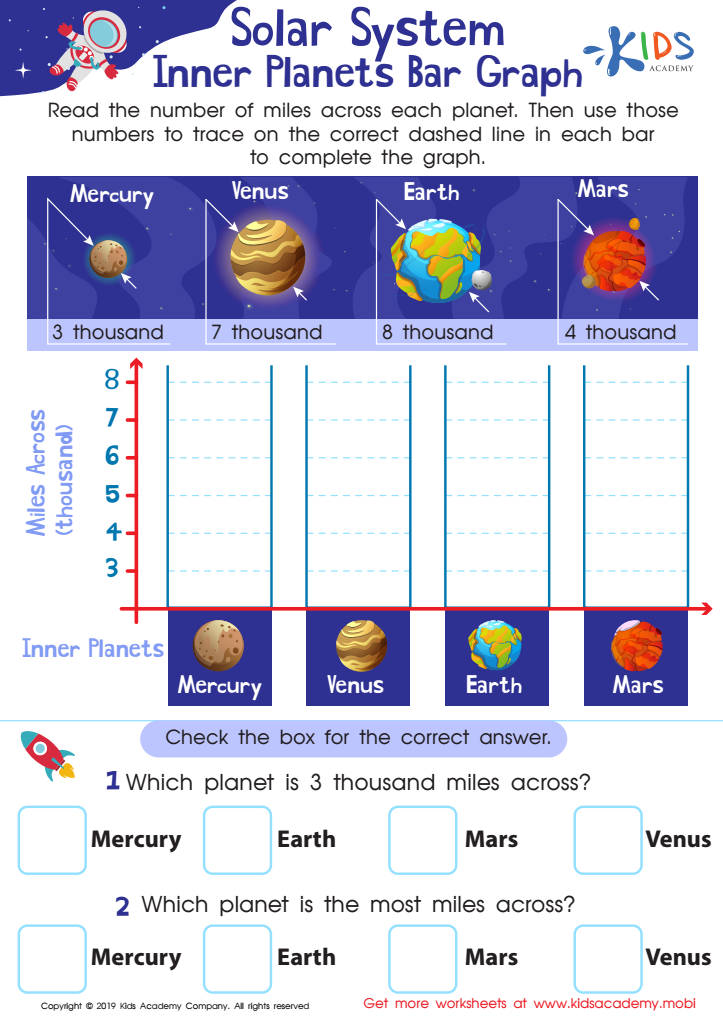
Planets Bar Graph Worksheet
 Assign to My Students
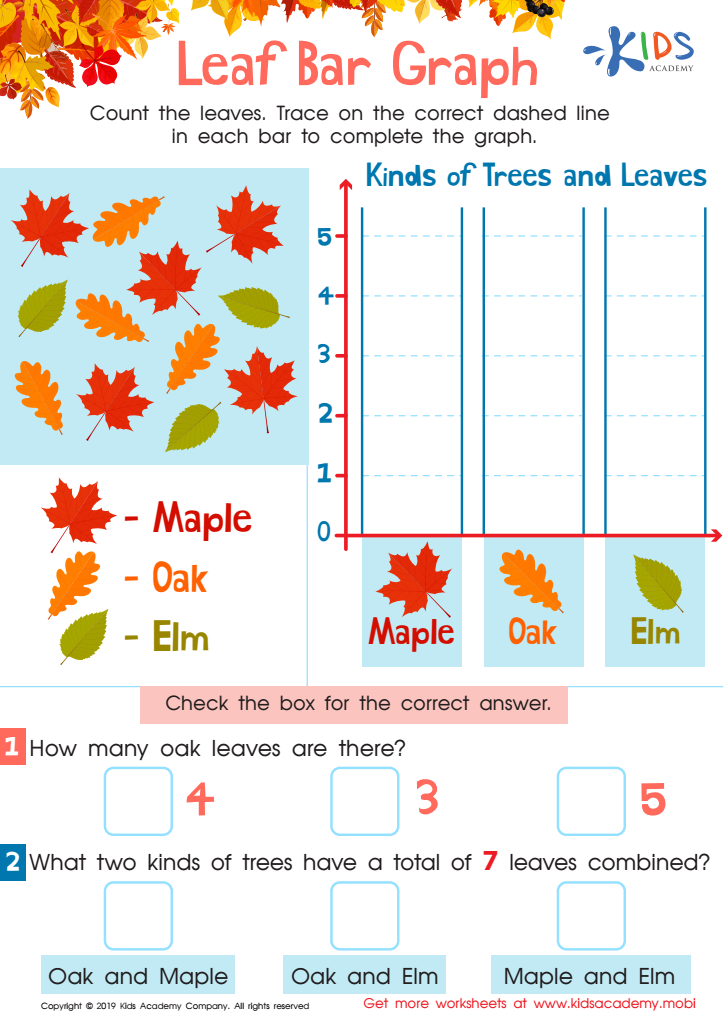
Leaf Bar Graph Worksheet
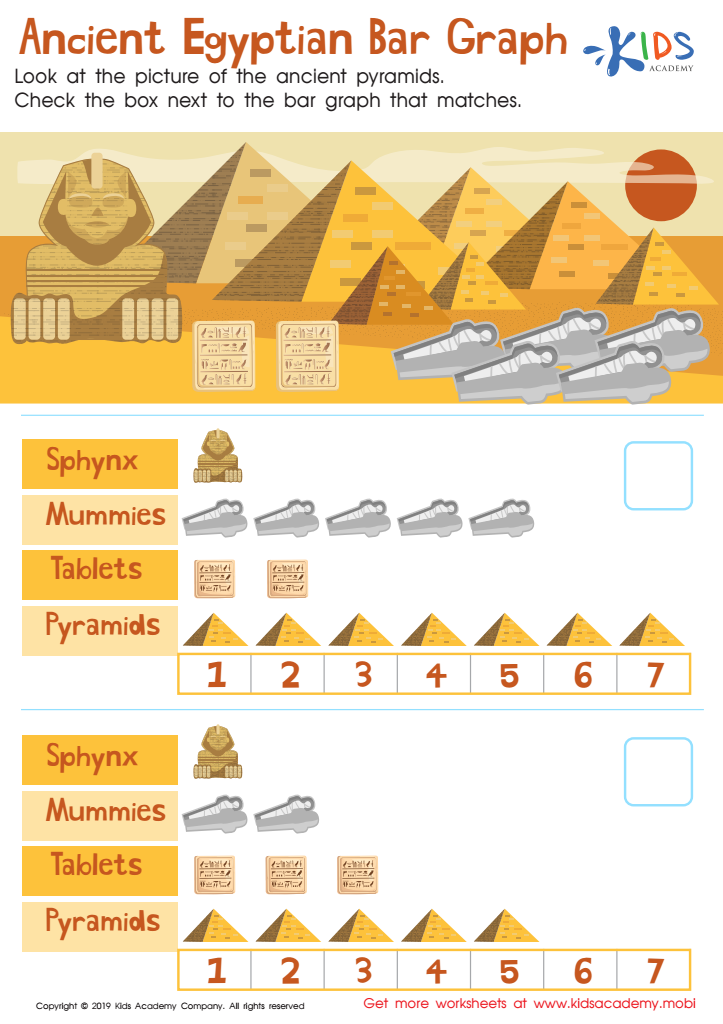
Egyptian Bar Graph Worksheet








Understanding bar graphs, along with addition and subtraction, is crucial for children aged 6-9 as these skills are foundational for their mathematical development and critical thinking. For parents and teachers, fostering these skills can significantly enhance a child's ability to interpret and analyze data, which is increasingly important in our data-driven world.
Bar graphs visually represent information, making abstract data more concrete. By learning to read and create bar graphs, children develop analytical skills that enable them to compare quantities and understand information at a glance. This visualization reinforces their addition and subtraction skills, as children often encounter math through real-life scenarios involving data collection and interpretation, such as counting pets or gathering favorite fruits from friends.
Moreover, these skills contribute to a child's overall confidence in math. As they master basic arithmetic through practical applications like bar graphs, they also build a strong foundation for more complex math concepts in the future. Furthermore, engaging parents and teachers in this learning process fosters a collaborative environment that supports each child's educational journey, enhancing their interest in school subjects and improving their problem-solving abilities. Investing in these skills nurtures well-rounded, mathematically literate individuals ready to tackle future academic challenges.








