Understanding sequencing Addition & Subtraction Worksheets for Ages 6-9
7 filtered results
-
From - To
Discover the importance of sequencing in mastering addition and subtraction with our engaging worksheets designed for children ages 6-9. These resources help young learners develop a solid foundation in math by emphasizing the order of operations when solving problems. By practicing sequencing, kids enhance their critical thinking and problem-solving abilities. Our worksheets feature a variety of colorful and interactive activities that make learning fun while reinforcing essential math skills. Perfect for teachers and parents alike, these materials provide an effective way to build confidence and proficiency in addition and subtraction. Unlock your child's potential today with our sequencing worksheets!
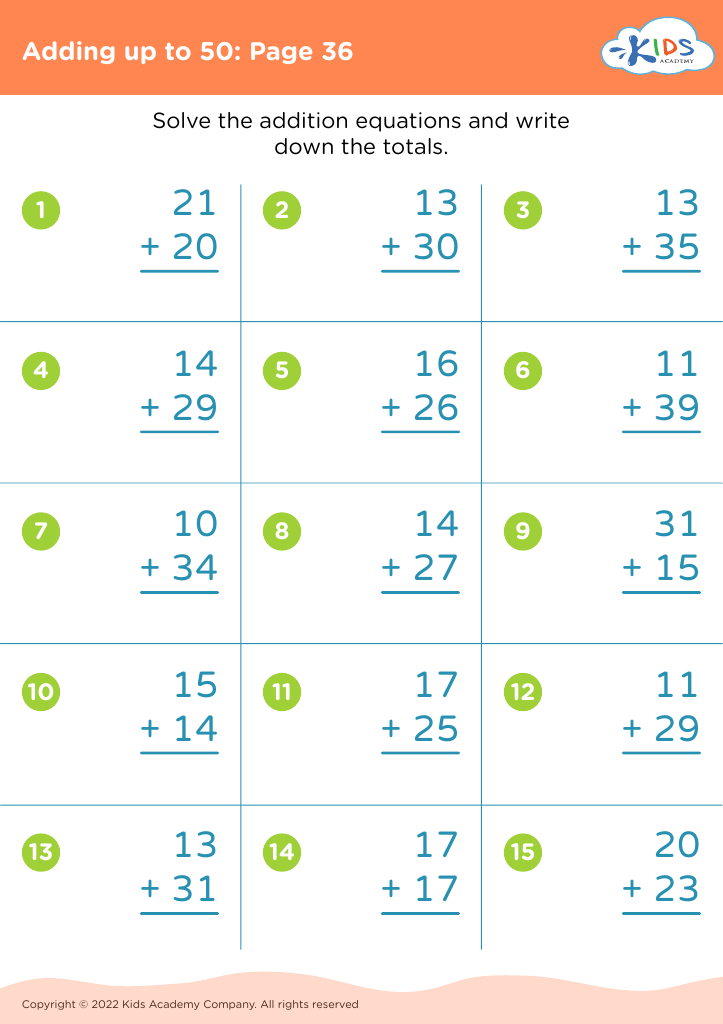
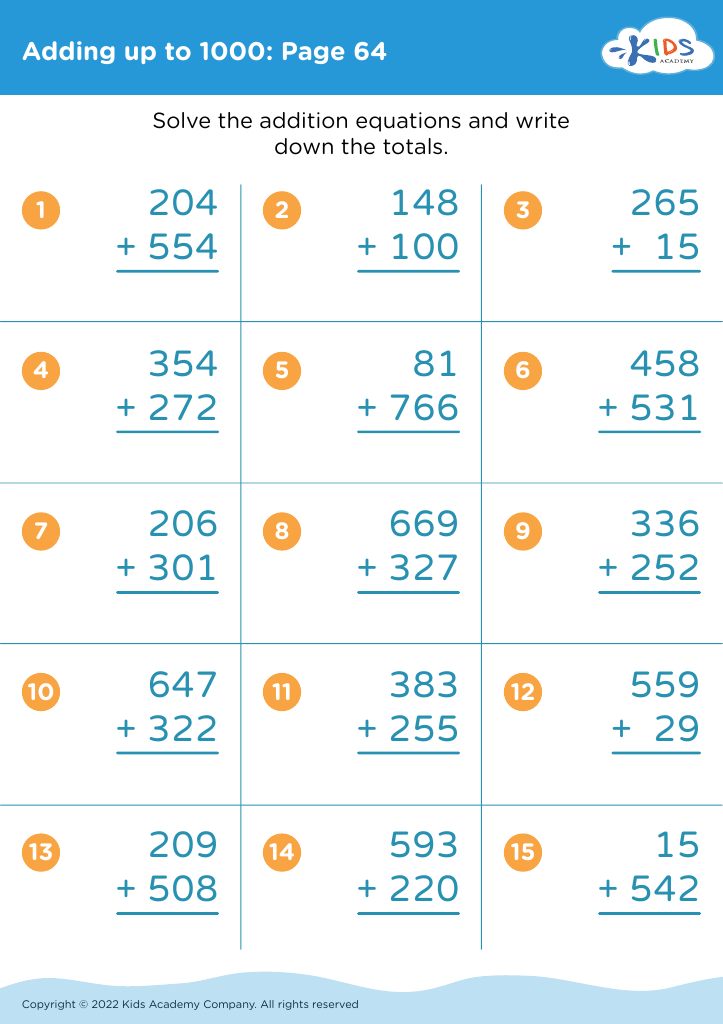
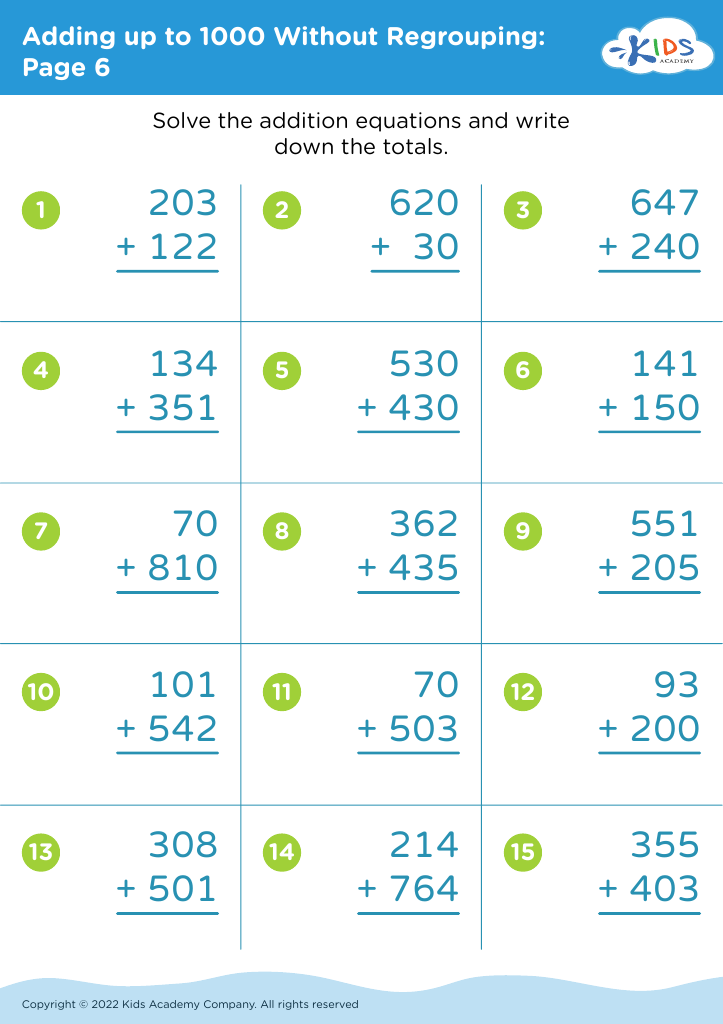
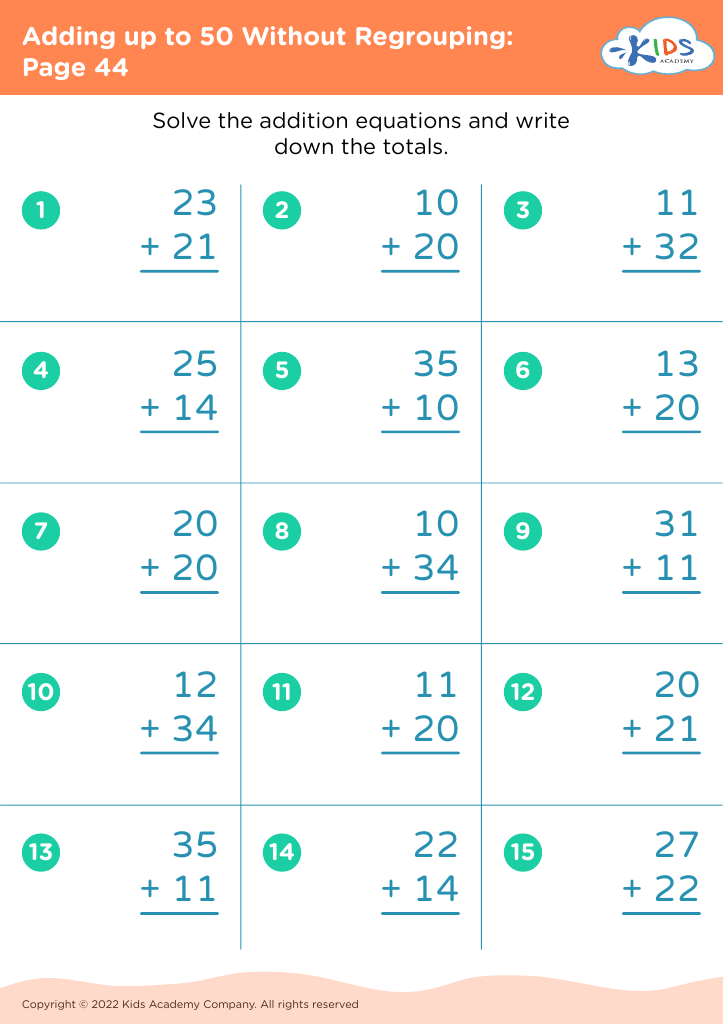
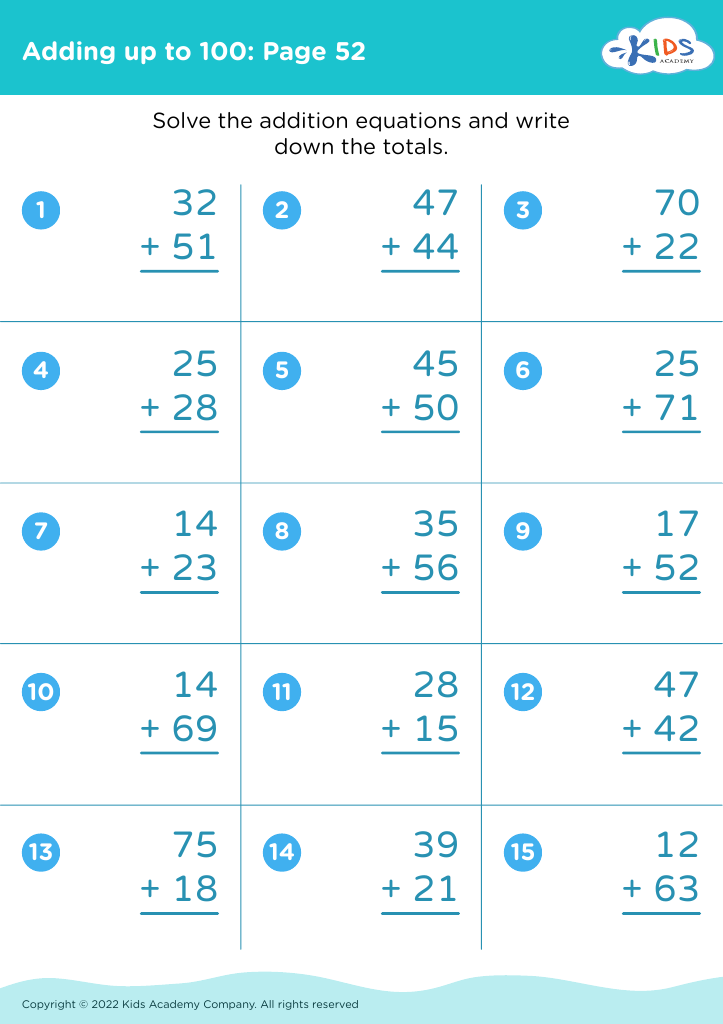
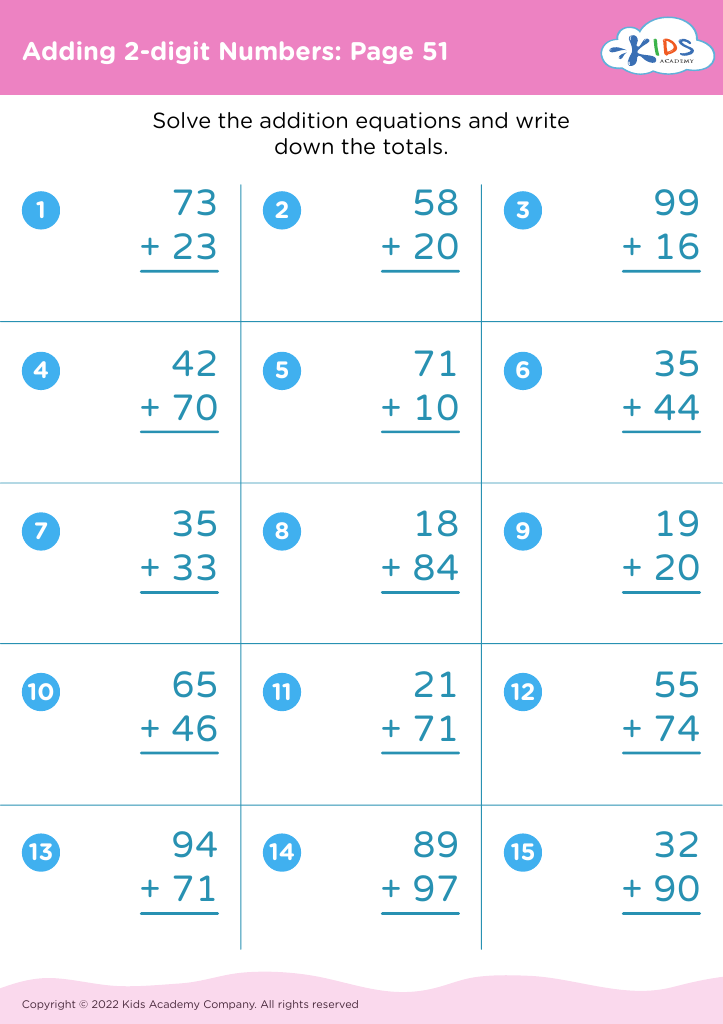
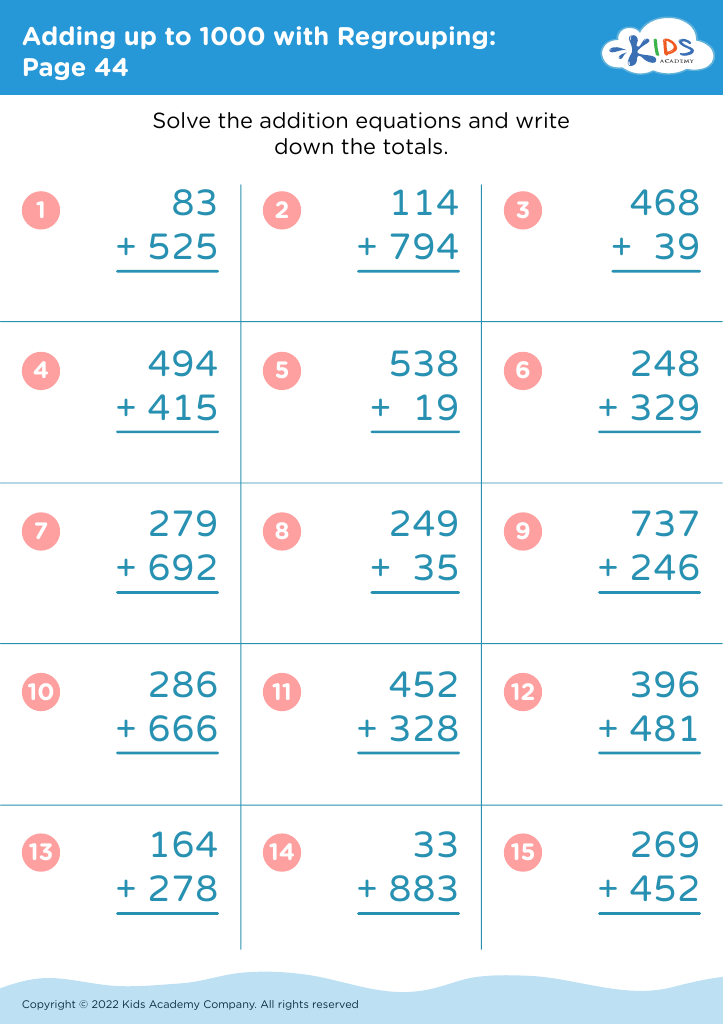








Understanding sequencing in addition and subtraction is crucial for children aged 6-9 as it lays the foundation for mathematical reasoning and problem-solving skills. When children grasp the concept of sequencing, they learn to recognize the order in which arithmetic operations should be performed, enhancing their ability to tackle more complex mathematical problems in the future. This skill helps them break down multi-step problems and carry out calculations systematically, rather than relying on guesswork or rote memorization.
Furthermore, sequencing fosters critical thinking and organizational skills, encouraging children to approach tasks methodically. Teachers and parents who emphasize sequencing can instill a sense of confidence in children, as they learn to manipulate numbers and perform calculations with a clear strategy. This understanding also enables them to grasp related concepts like place value and word problems more effectively.
In a world increasingly driven by quantitative reasoning, fostering a robust understanding of these foundational math concepts will better equip children for future academic challenges. It also helps prepare them for real-world applications, such as budgeting and time management. Therefore, both parents and teachers play a vital role in supporting children’s development of sequencing skills in addition and subtraction, ensuring a solid mathematical foundation for lifelong learning.








