Addition of fractions Addition Worksheets for Ages 6-9
3 filtered results
-
From - To
Discover our fun and engaging Addition of Fractions Worksheets, designed specifically for children aged 6-9! These resources provide a solid foundation for young learners to master the concept of adding fractions. Our worksheets feature colorful illustrations and age-appropriate tasks that encourage interactive learning while building confidence in math skills. Each worksheet promotes critical thinking and helps kids understand how to combine fractions with like denominators. Plus, they offer exciting challenges to keep students motivated! Ideal for use at home or in the classroom, these worksheets are perfect for reinforcing math lessons and making learning enjoyable. Start your child's math adventure today!
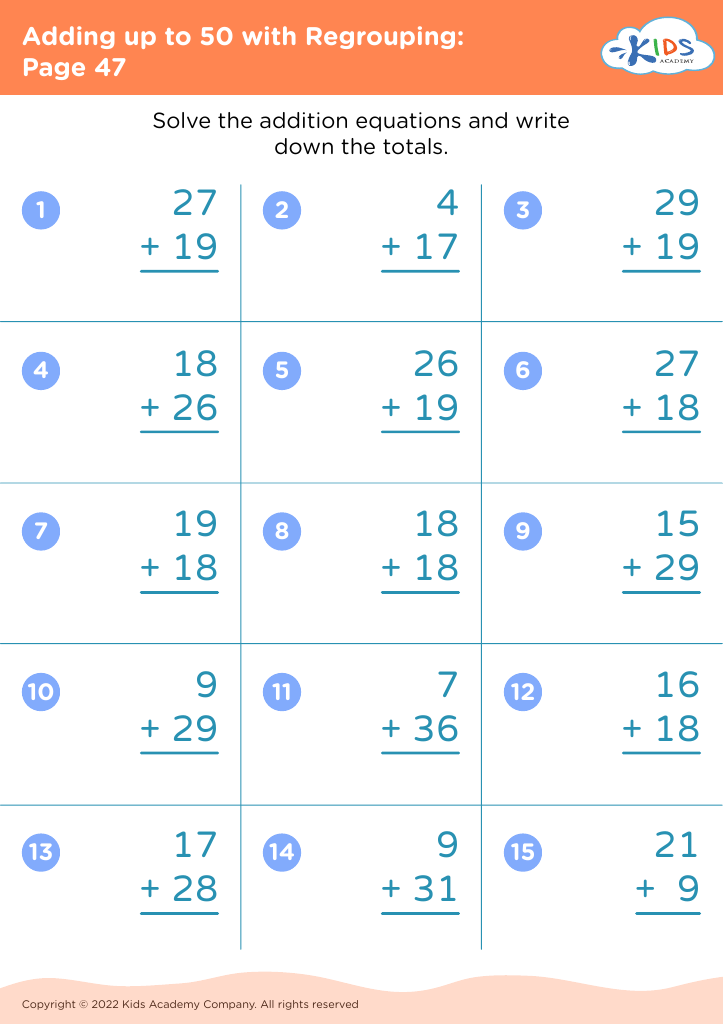
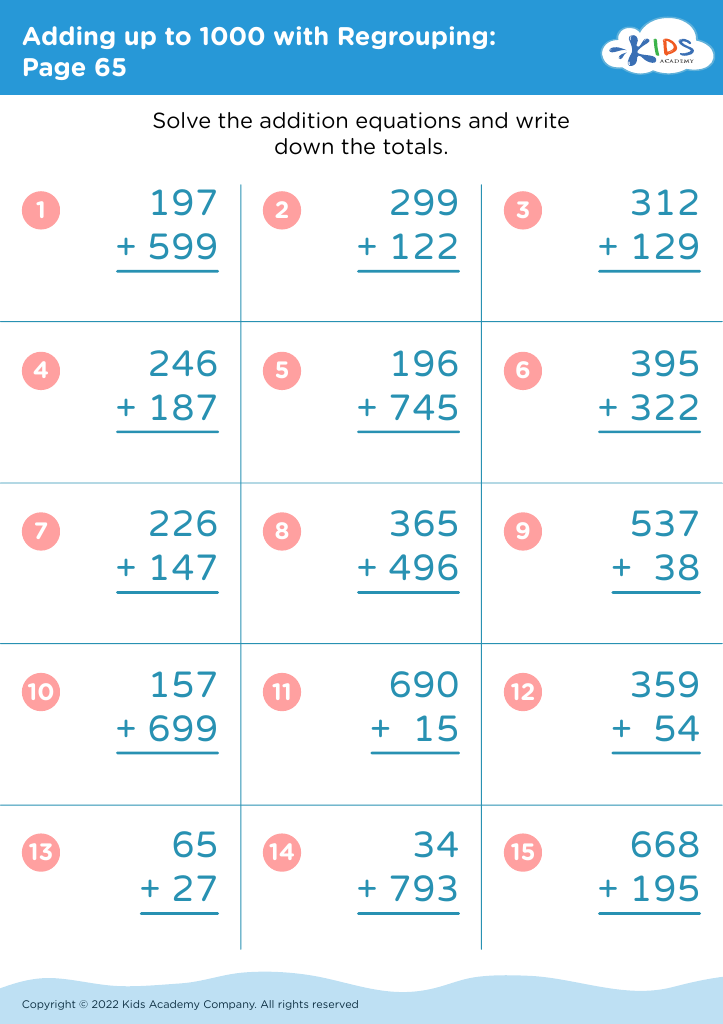
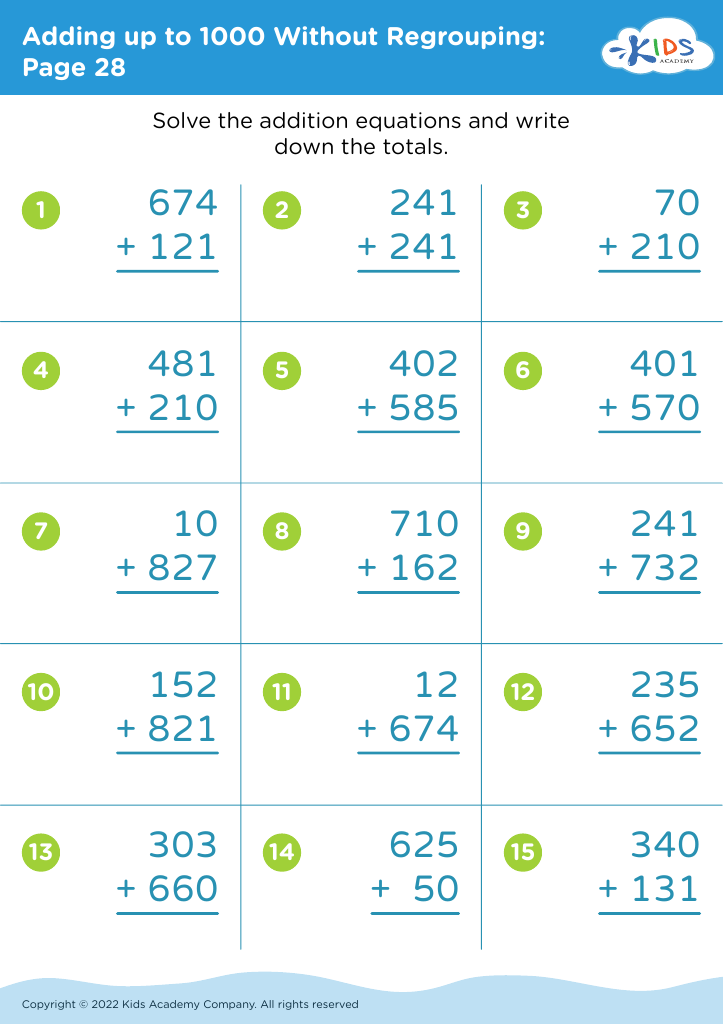








Understanding the addition of fractions is crucial for children aged 6-9 as it forms a foundational skill for their mathematical development. During this stage, children are developing critical thinking and problem-solving abilities; learning to add fractions enhances these skills. Mastering fraction addition helps students grasp the concept of parts of a whole and aids in the understanding of more complex mathematical topics such as ratios, percentages, and equations later on.
Moreover, fractions are commonly encountered in everyday life, from following recipes to measuring ingredients or understanding time. When parents and teachers prioritize this skill, they empower children to make connections between math and real-world applications, fostering a positive attitude towards mathematics.
Addition of fractions encourages collaboration and communication among peers during group activities, enhancing social skills. It also instills patience and perseverance, as adding fractions often requires finding common denominators or simplifying answers.
Furthermore, instilling confidence in mathematical abilities at a young age sets the tone for future success in academics. By demonstrating the significance of fraction addition, parents and teachers can cultivate a strong mathematical foundation, ensuring that children are not only proficient in basic arithmetic but also prepared to tackle more advanced concepts as they progress in their education.








