Critical thinking skills Addition Worksheets for Ages 6-9
7 filtered results
-
From - To
Introducing our engaging Critical Thinking Skills Addition Worksheets for Ages 6-9, designed to enhance young learners' problem-solving abilities in mathematics. These interactive worksheets blend fun and education, fostering children's critical thinking through challenging addition tasks. Each worksheet encourages students to apply logical reasoning, identify patterns, and develop efficient strategies to solve problems. Perfect for classroom use or home practice, these resources aim to build a strong foundation in math while honing essential critical thinking skills. Aligned with educational standards, our worksheets are ideal for making math enjoyable and promoting intellectual growth in children aged 6 to 9.
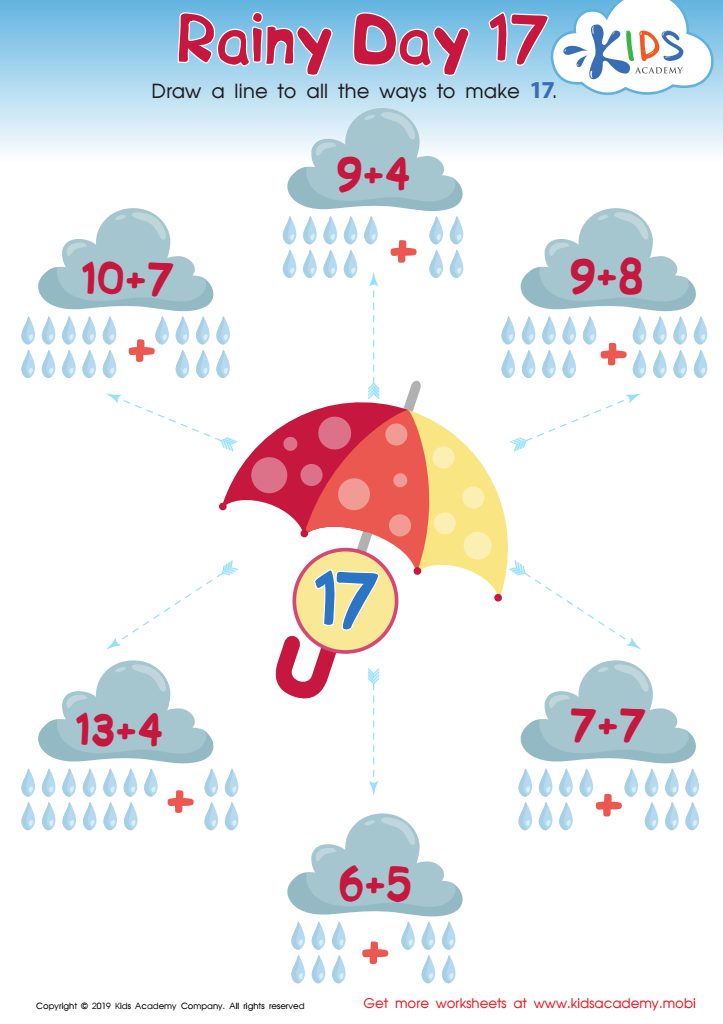
Rainy Day 17 Worksheet
 Assign to My Students
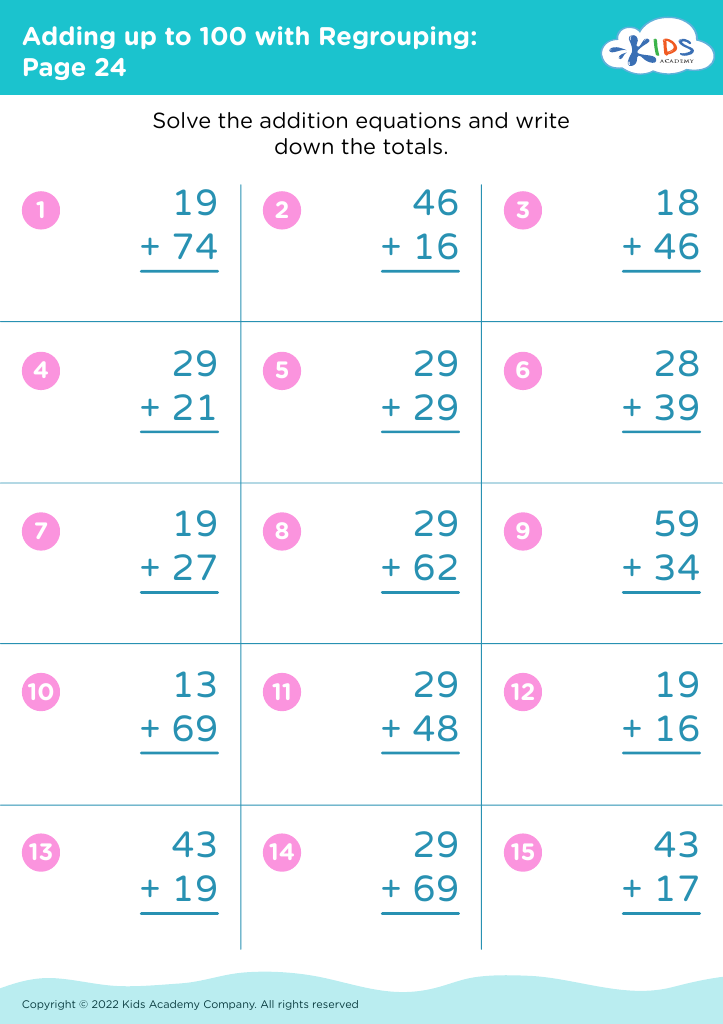
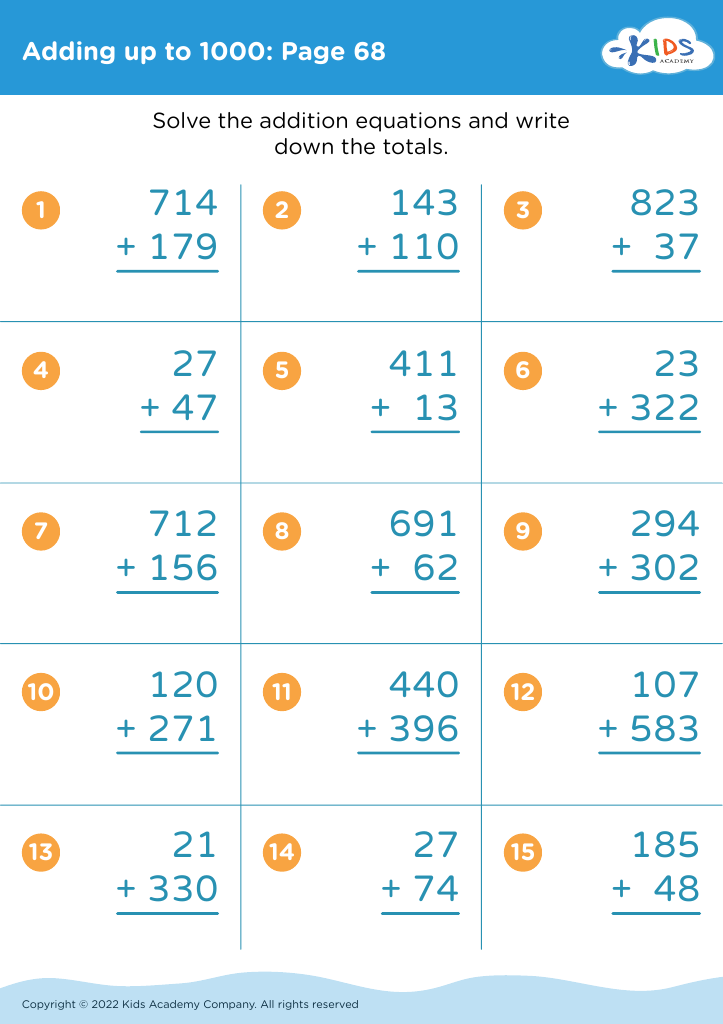
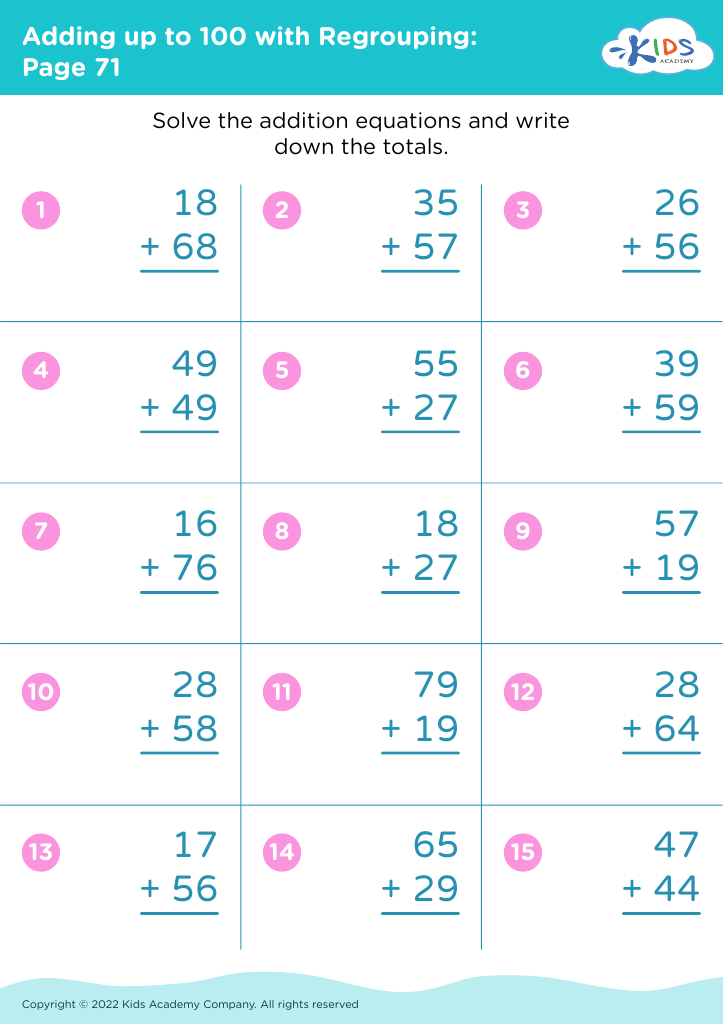
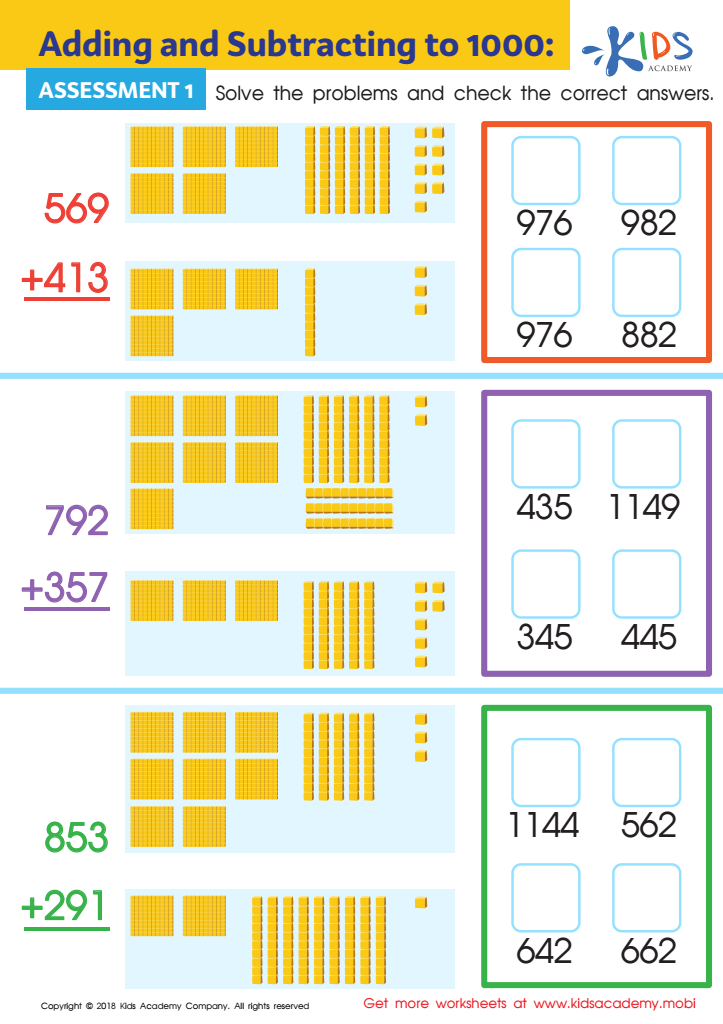
Adding and Subtracting to 1 Worksheet: Assessment 1
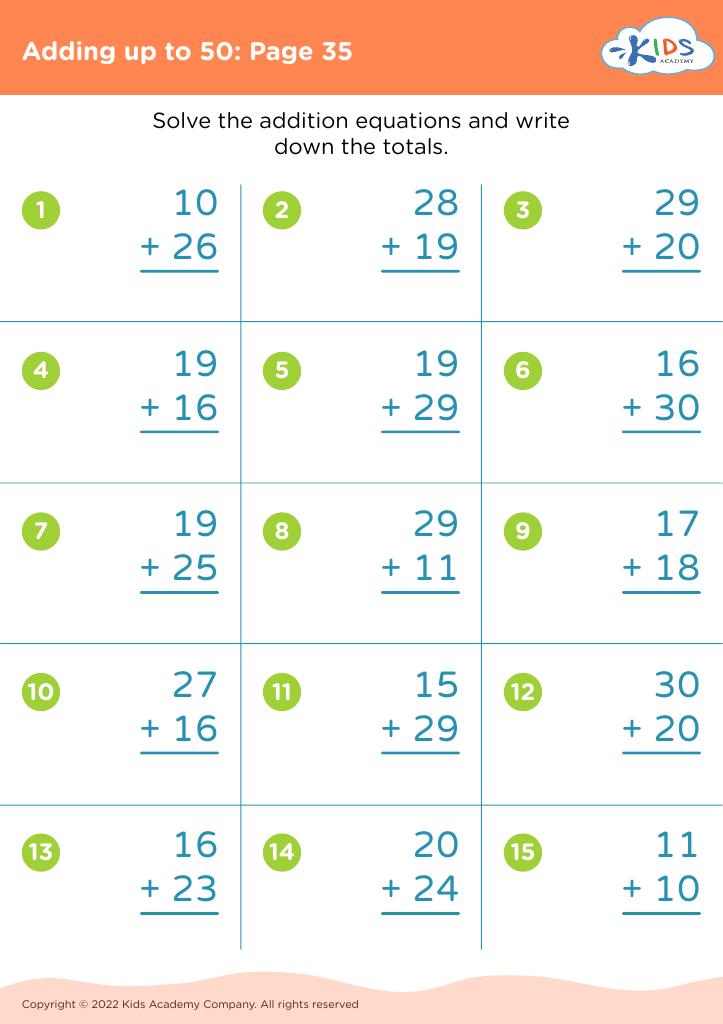
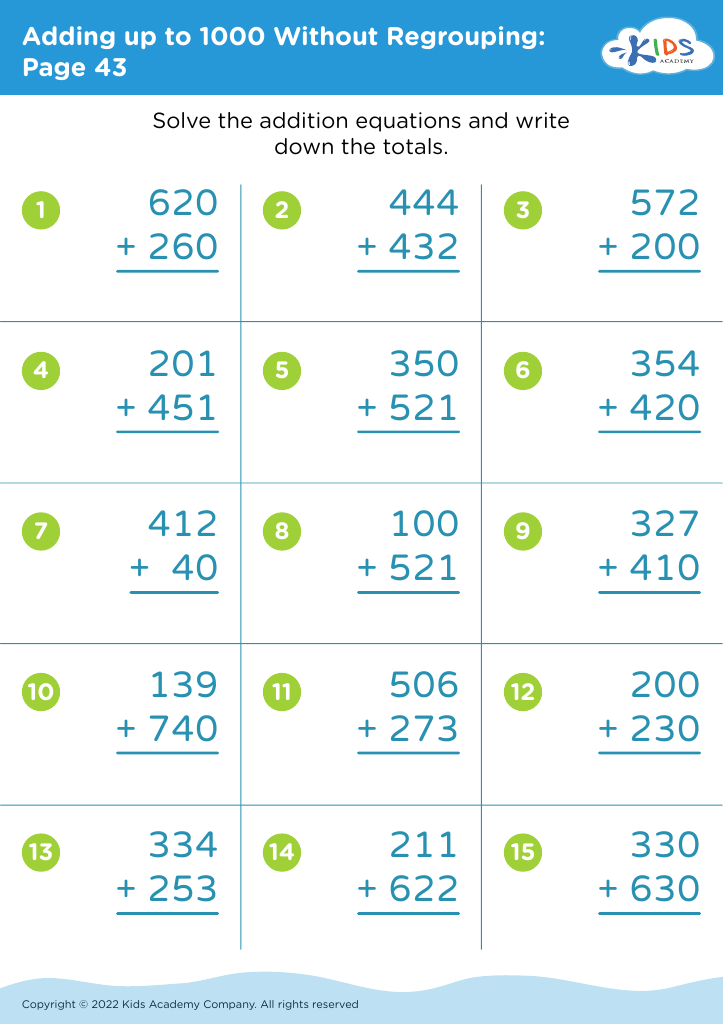








Critical thinking skills are essential to cognitive development and problem-solving, and nurturing these skills in children aged 6-9 is vital for numerous reasons. Within this age range, children are particularly impressionable and capable of grasping foundational concepts that will inform their future learning and decision-making.
Firstly, critical thinking skills enhance a child's ability to understand and process information. In an age where information is abundant, children need the ability to distinguish facts from opinions, evaluate evidence, and draw sound conclusions. This critical skill set empowers them not only in academic settings but also in everyday situations where persuasive arguments and influential media play significant roles.
Secondly, honing critical thinking skills fosters curiosity and a love for learning. When children are encouraged to ask questions, explore various perspectives, and challenge their assumptions, they become more engaged learners. This engagement translates into a deeper understanding of subjects such as math, science, history, and literature.
Lastly, these skills build confidence and independence. As children learn to reason logically and solve problems on their own, they gain a sense of autonomy and self-assurance. This improved confidence can make them more resilient in the face of challenges, fostering lifelong perseverance and adaptability.
For all these reasons, parents and teachers should prioritize the development of critical thinking skills in young children, setting them on a path to becoming thoughtful, informed, and engaged individuals.








