Learn new vocabulary Addition Worksheets for Ages 6-9
4 filtered results
-
From - To
Enhance your child’s math skills with our engaging "Learn New Vocabulary Addition Worksheets" designed specifically for ages 6-9. These versatile worksheets help children familiarize themselves with essential math terms, improving their understanding of addition concepts. By connecting vocabulary with practical addition problems, students develop both language and mathematical skills in a fun and interactive way. Perfect for homeschooling, classrooms, or supplementary learning, these resources foster critical thinking and confidence among young learners. Inspire a love for learning and set the groundwork for future success in math with our carefully crafted worksheets. Start today and watch your child's vocabulary and math skills grow!
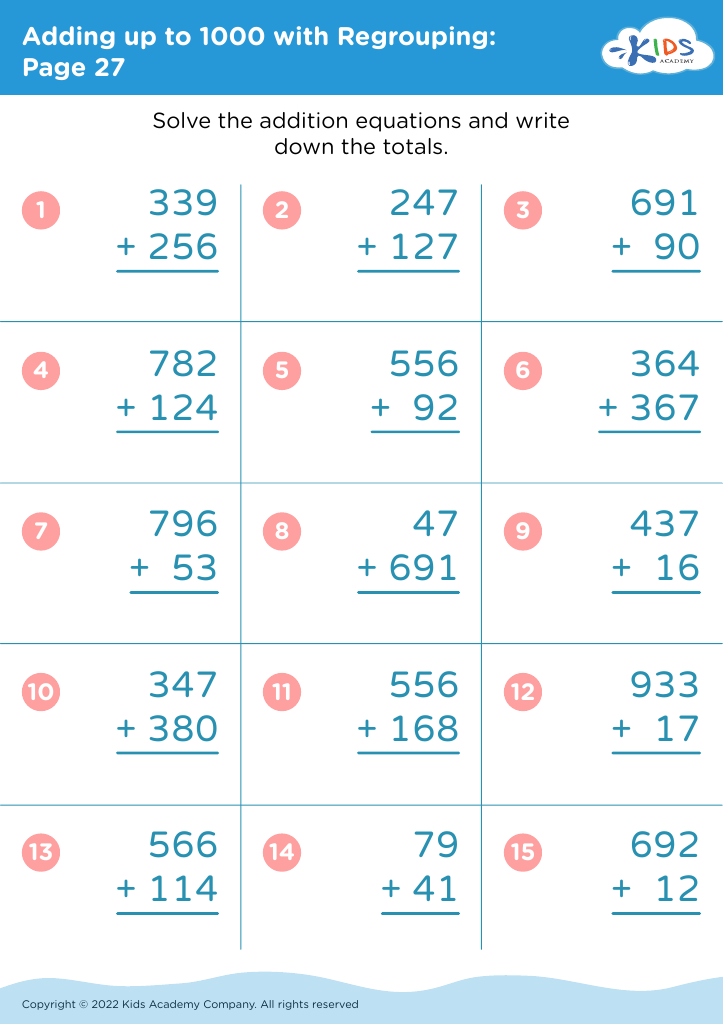
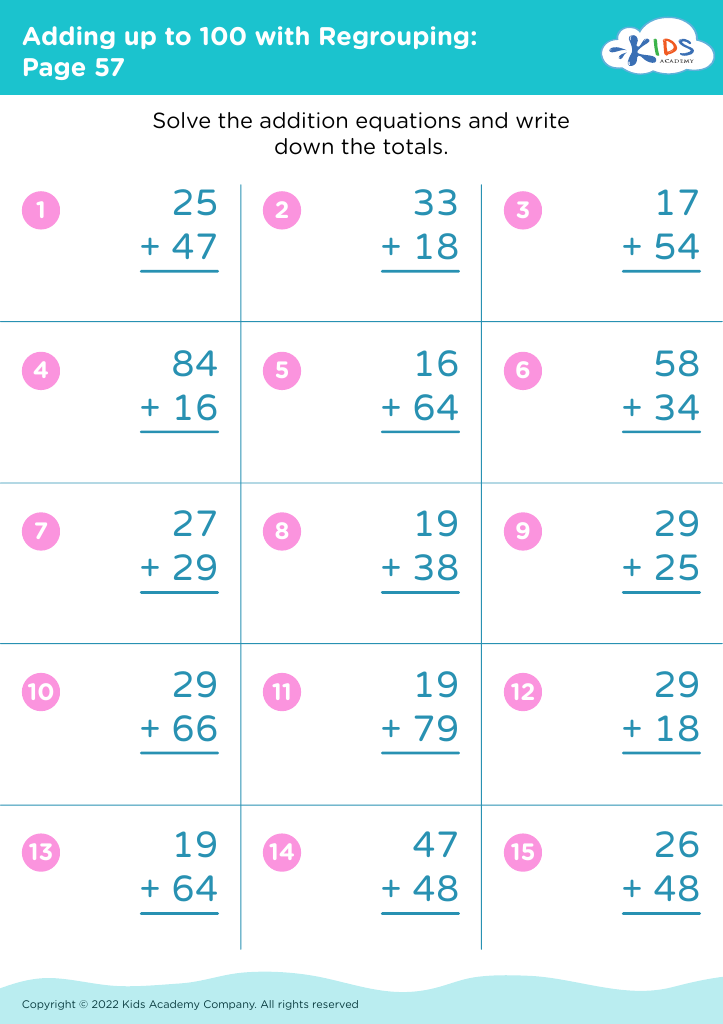
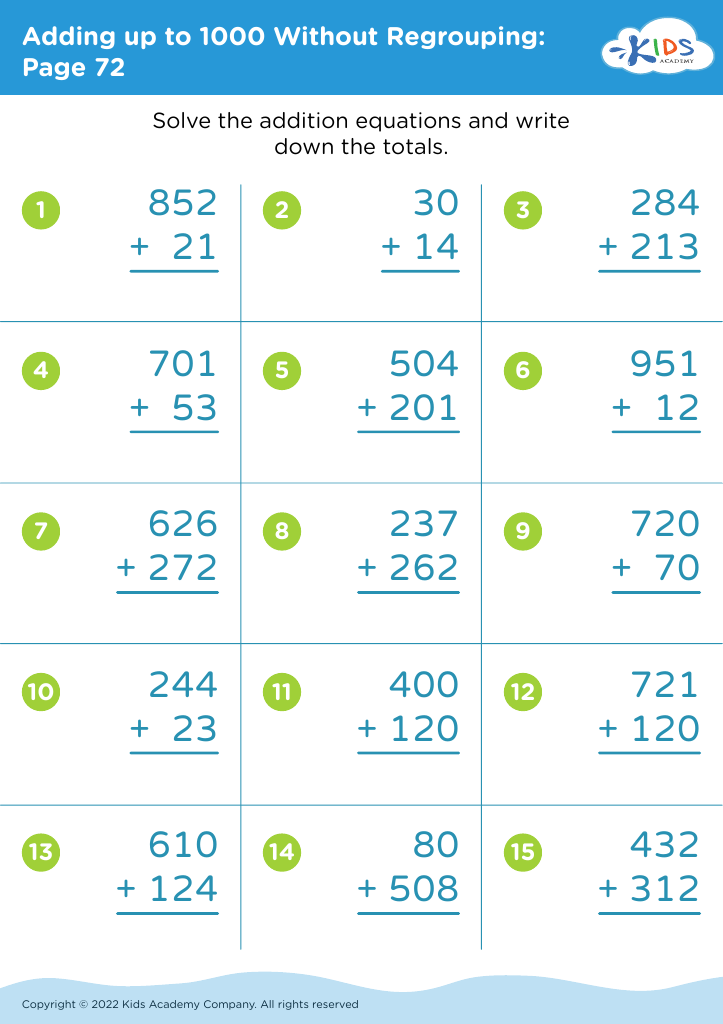
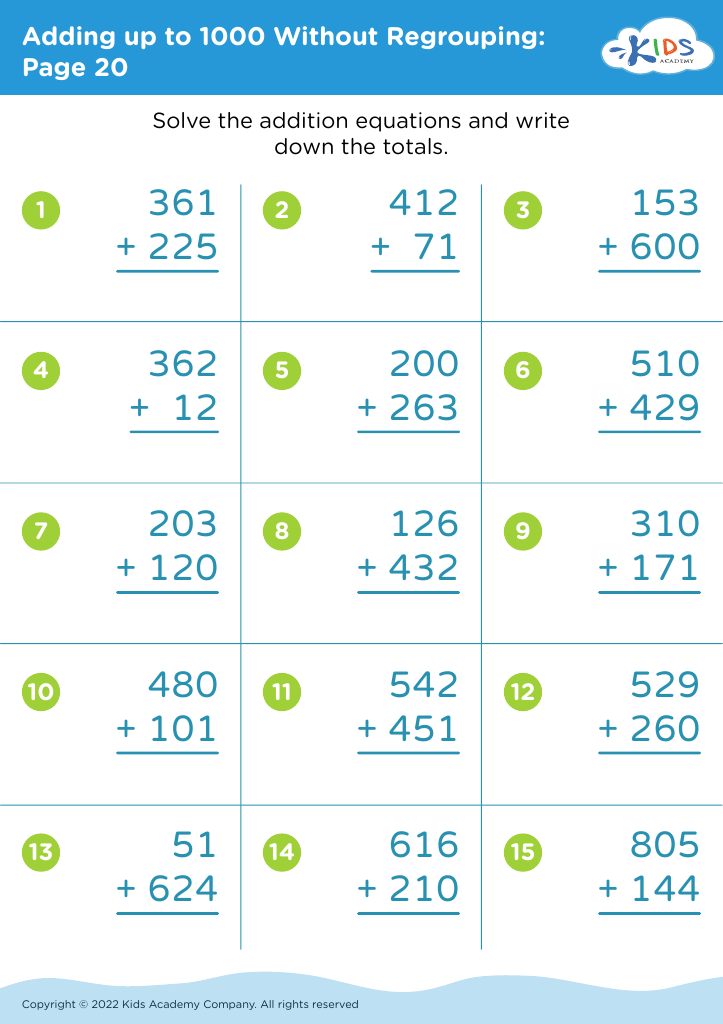








Parents and teachers should care about teaching new vocabulary, particularly in the context of addition for children aged 6-9, because vocabulary development is foundational to mathematical understanding. At this age, children are not only learning to add numbers but also the language associated with mathematical concepts. Knowing terms like "sum," "total," "plus," and "more" helps them articulate their thought processes and engage meaningfully in problem-solving.
Investing in vocabulary related to addition enhances literacy skills as well, as children learn to read and write math problems clearly. This dual development reinforces comprehension, enabling kids to understand word problems and apply their math skills in real-world situations. Moreover, a rich vocabulary can boost children's confidence, making them more willing to participate in discussions and eager to tackle challenging math tasks.
Furthermore, strong mathematical vocabulary is linked to improved academic performance. Children with a solid understanding of addition-related terms are better equipped to grasp more complex concepts in later grades. Overall, focusing on vocabulary not only supports immediate learning in mathematics but sets the stage for future success, making it imperative for parents and teachers to prioritize this aspect of education.








