Filters

158 filtered results

Clear all filters
Favorites
With answer key
Interactive

158 filtered results

Difficulty Level

Grade


Check out this FREE Trial Lesson on Addition for age 6-9!

Standard Addition

Favorites
With answer key
Interactive
  • 6-9
  • Number Recognition
  • Addition
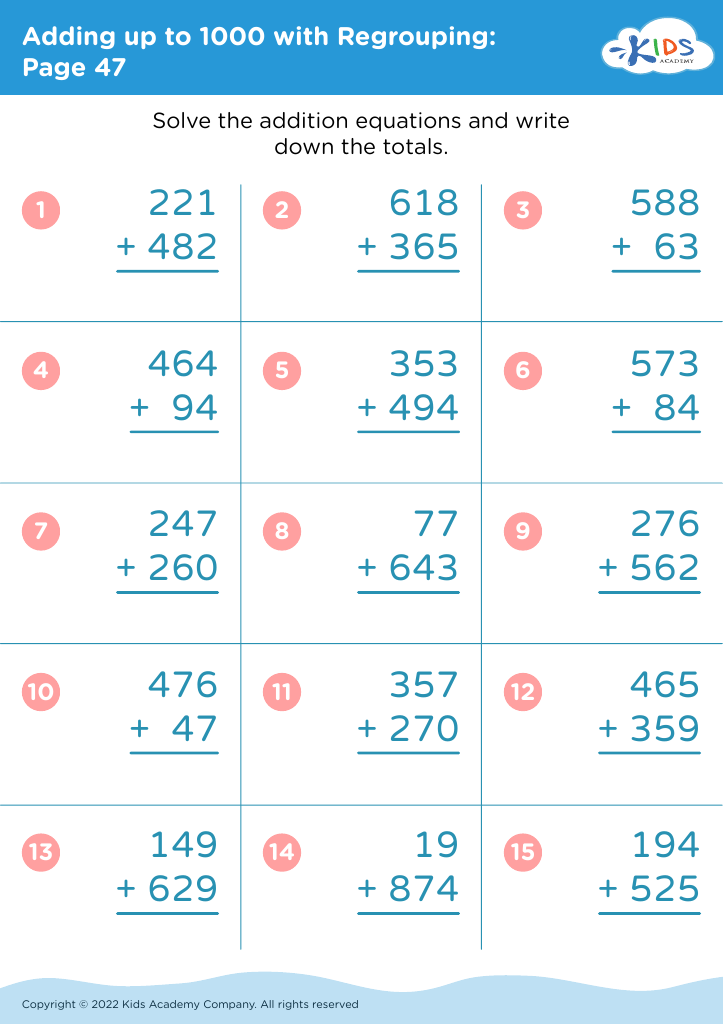
Adding up to 1000 with Regrouping: Page 47
Worksheet
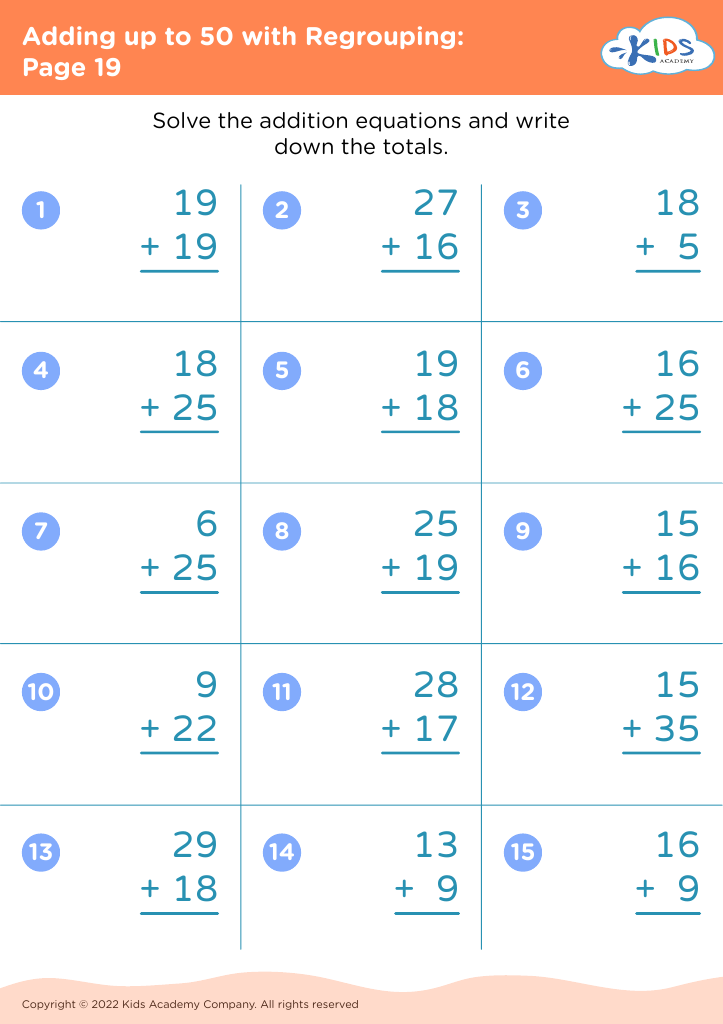
Adding up to 50 with Regrouping: Page 19
Worksheet
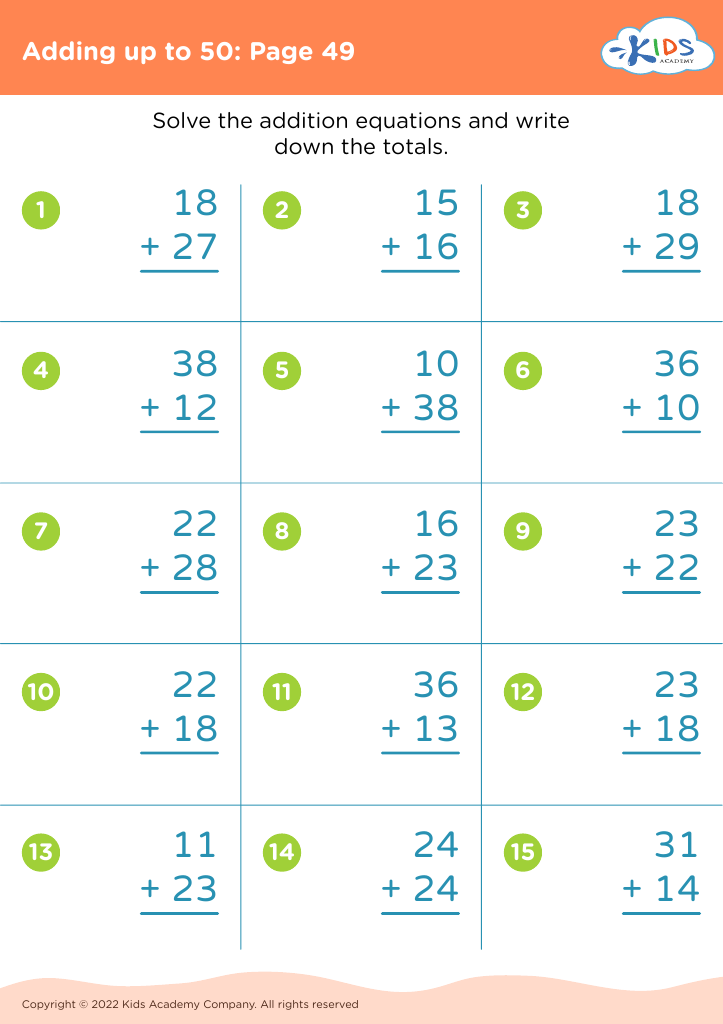
Adding up to 50: Page 49

Adding up to 50: Page 49

Adding up to 50: Page 49
Worksheet
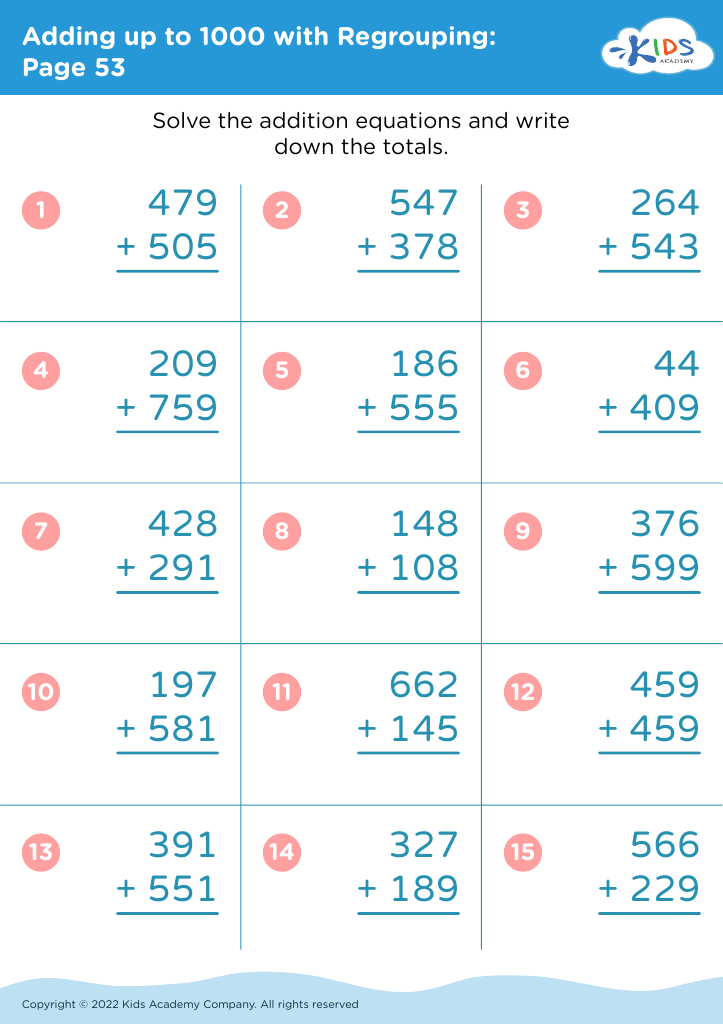
Adding up to 1000 with Regrouping: Page 53
Worksheet
Free addition PDF worksheet for 3rd grade

Free Addition Worksheet

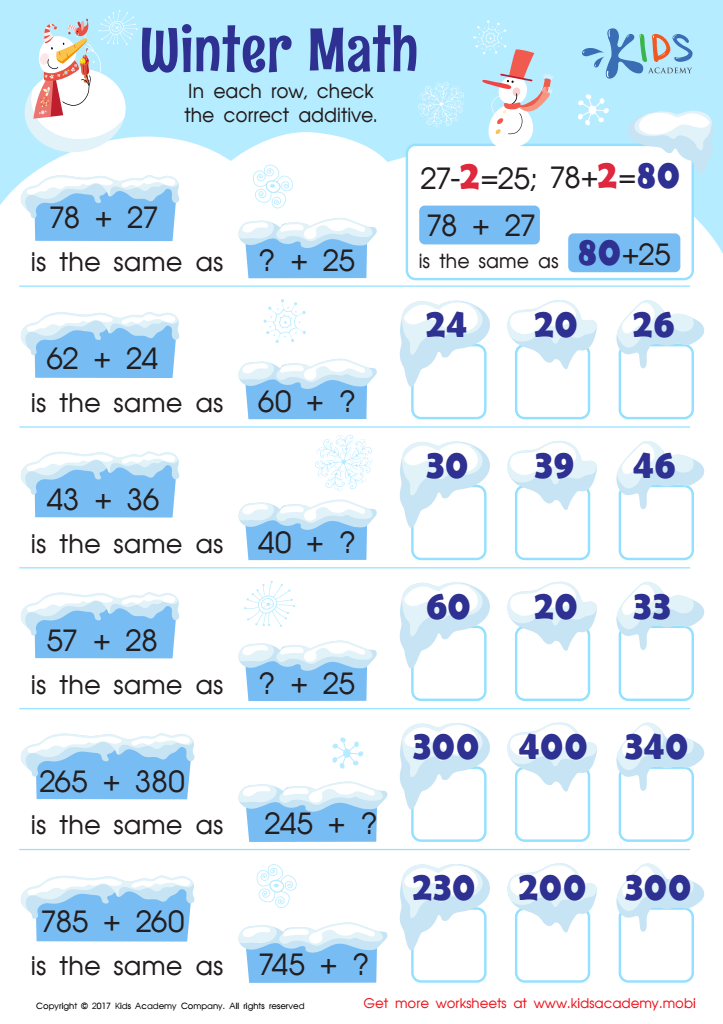
Perfect for a wintry day, challenge your 3rd grader to compare addition equations and fill in the missing numbers in the PDF. This winter-themed worksheet is sure to bring a smile while your 3rd grader practices their addition skills. Perfect for a blustery day, challenge your child to compare addition equations and complete the missing numbers in the PDF.
Free Addition Worksheet
Worksheet
Growing with 15 Worksheet

Growing with 15 Worksheet

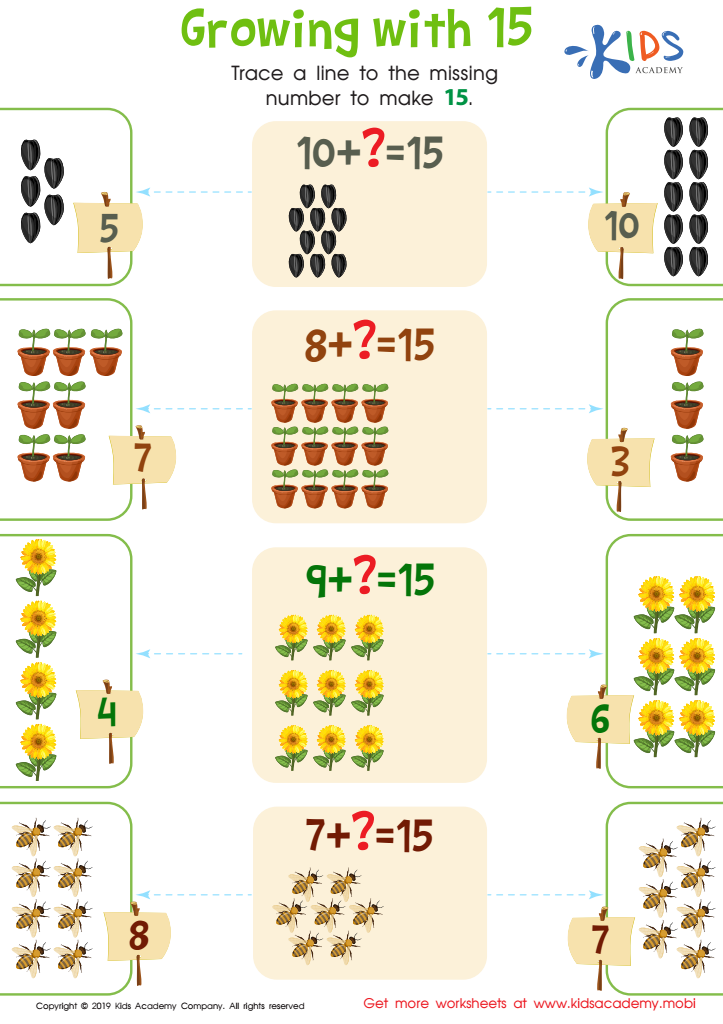
Remind your kids that adding different sets of numbers can give the same total (e.g. 2+3=5, 4+1=5). Test their understanding by asking them for more examples. Move onto the worksheet: count objects, then trace the line to the number making a total of 15.
Growing with 15 Worksheet
Worksheet
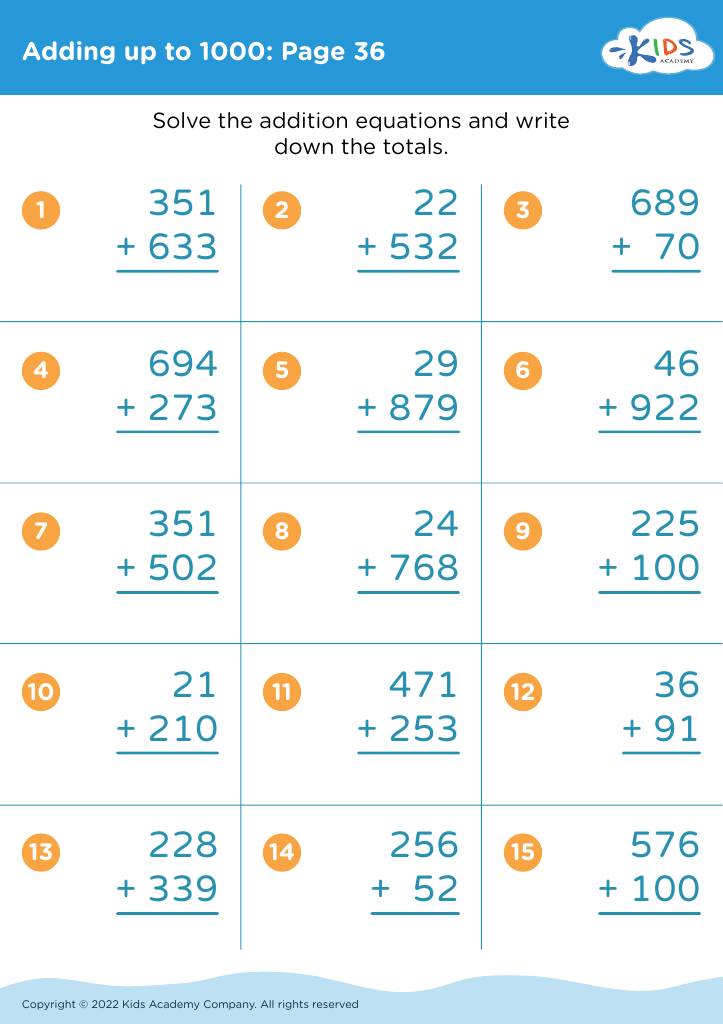
Adding up to 1000: Page 36

Adding up to 1000: Page 36

Adding up to 1000: Page 36
Worksheet
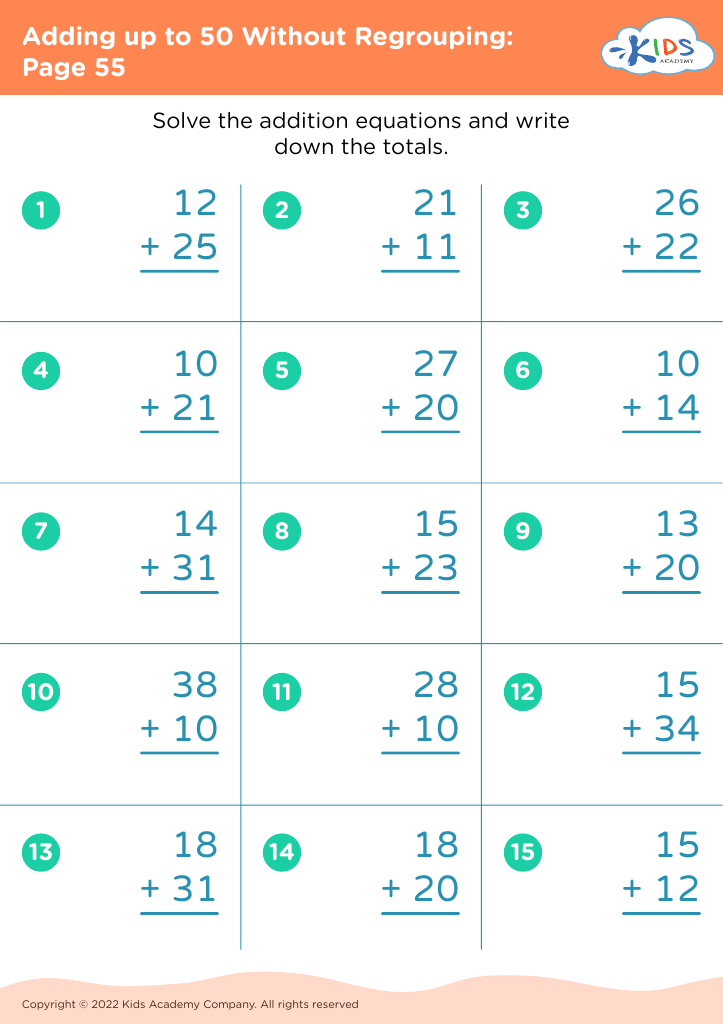
Adding up to 50 Without Regrouping: Page 55
Worksheet
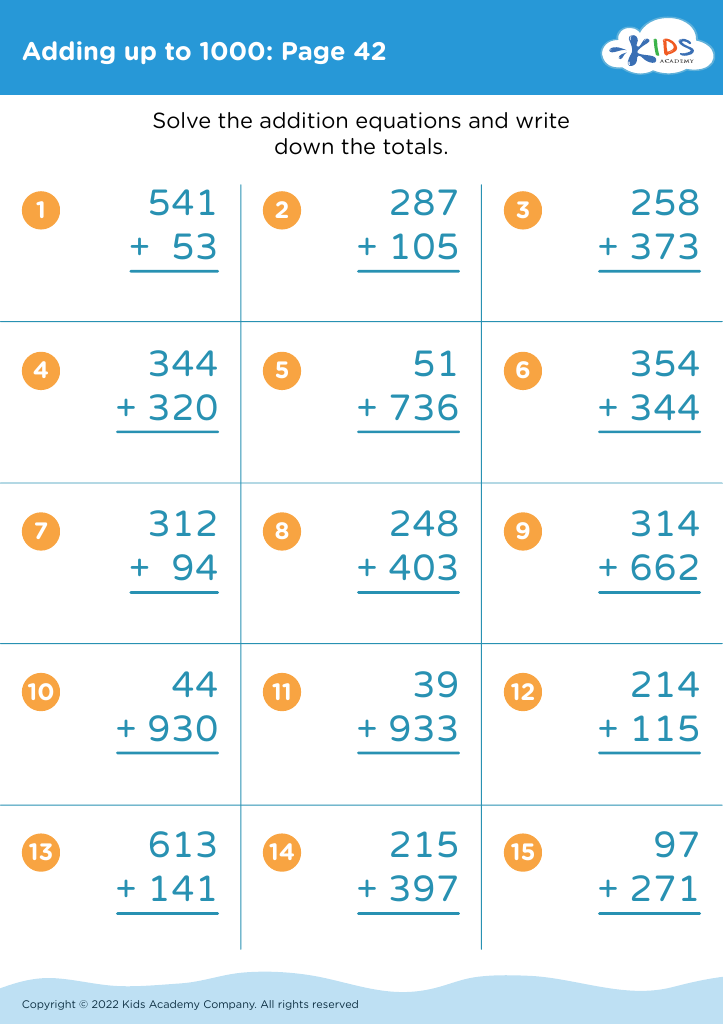
Adding up to 1000: Page 42

Adding up to 1000: Page 42

Adding up to 1000: Page 42
Worksheet
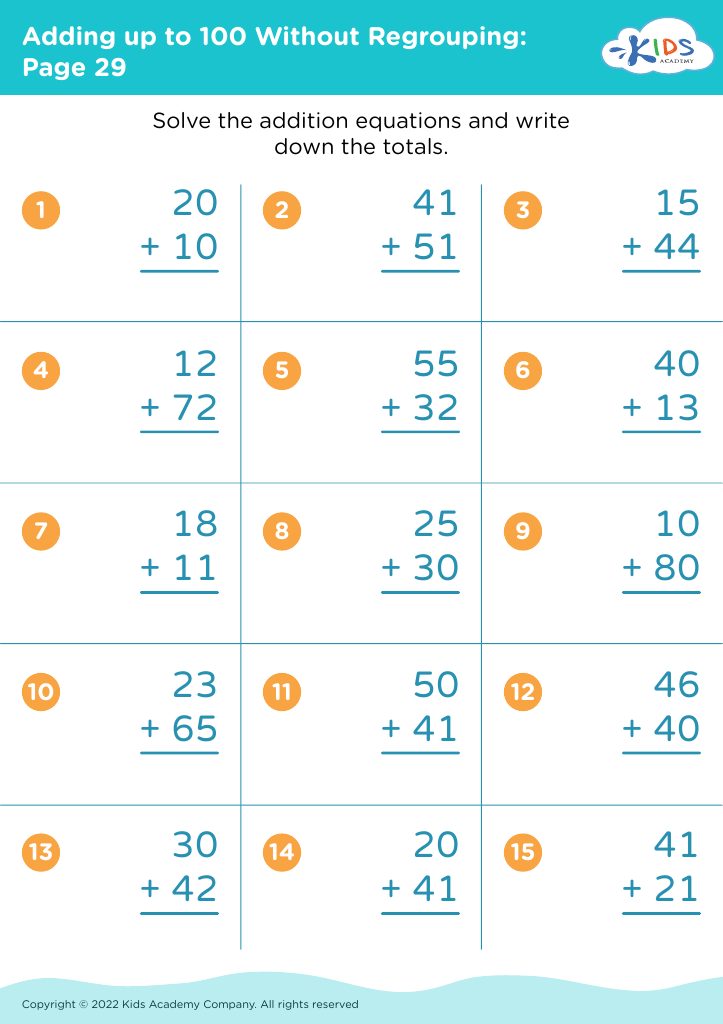
Adding up to 100 Without Regrouping: Page 29
Worksheet
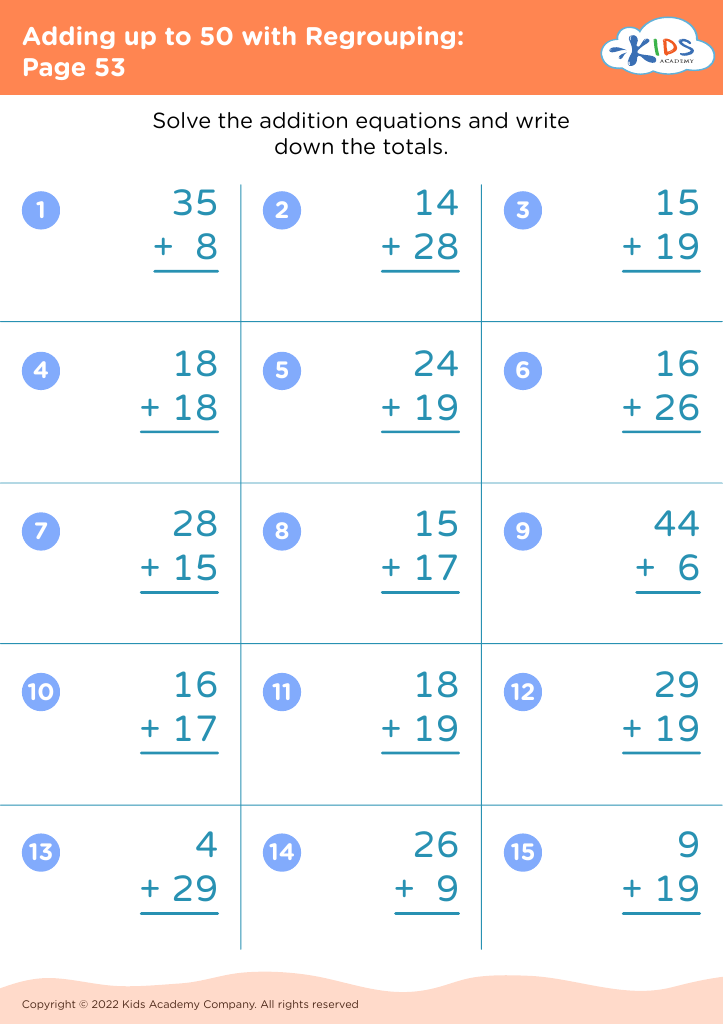
Adding up to 50 with Regrouping: Page 53
Worksheet
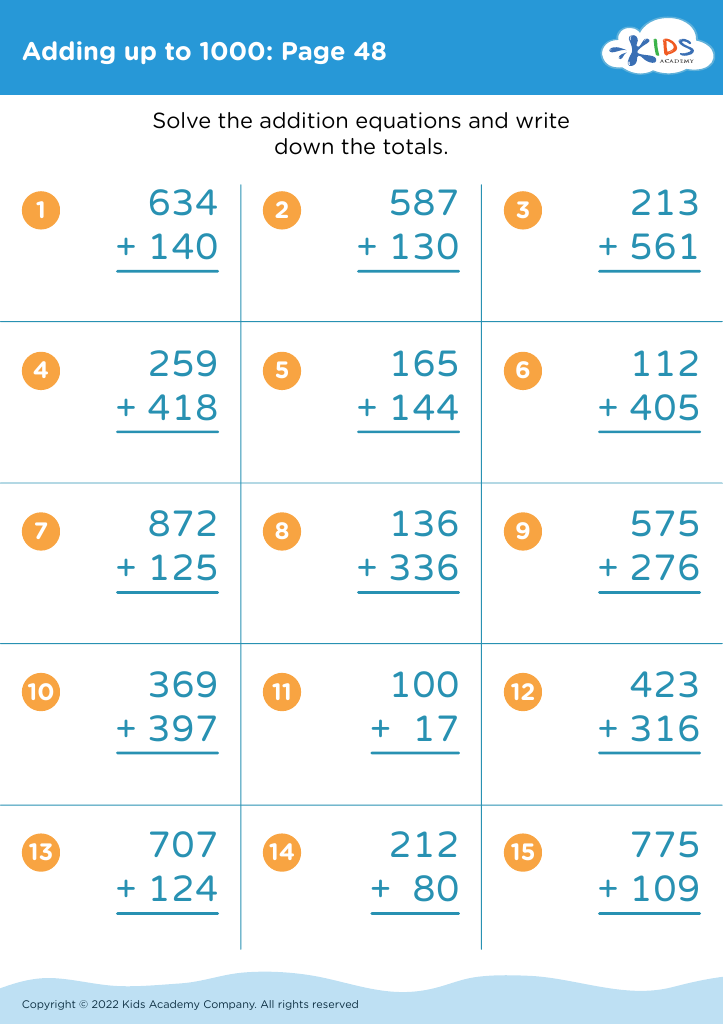
Adding up to 1000: Page 48

Adding up to 1000: Page 48

Adding up to 1000: Page 48
Worksheet
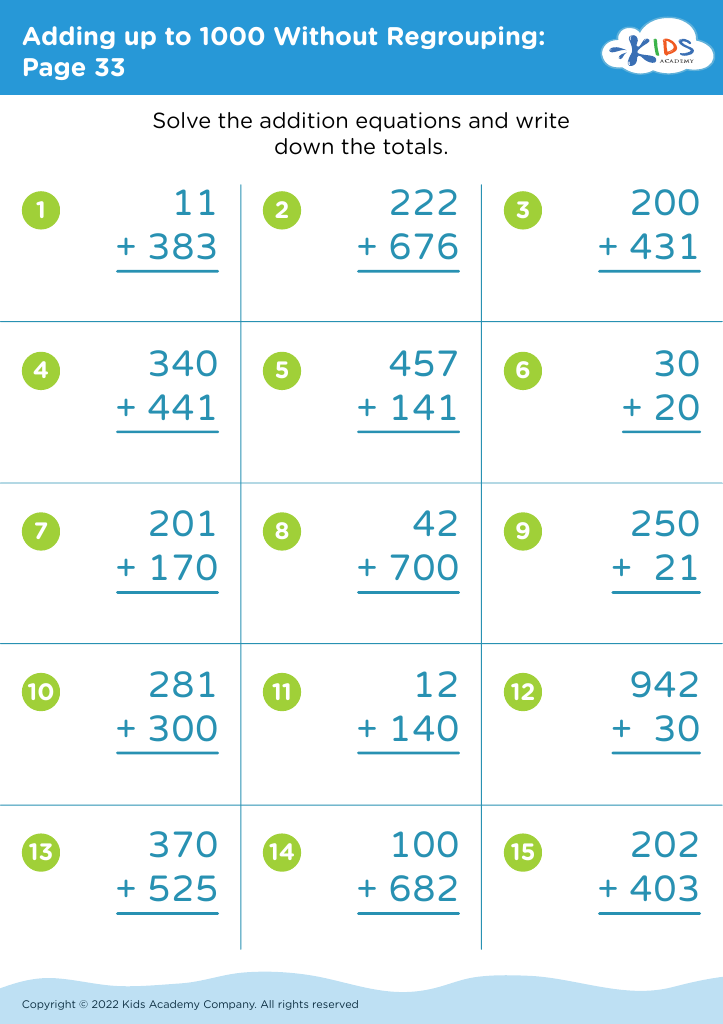
Adding up to 1000 Without Regrouping: Page 33
Worksheet
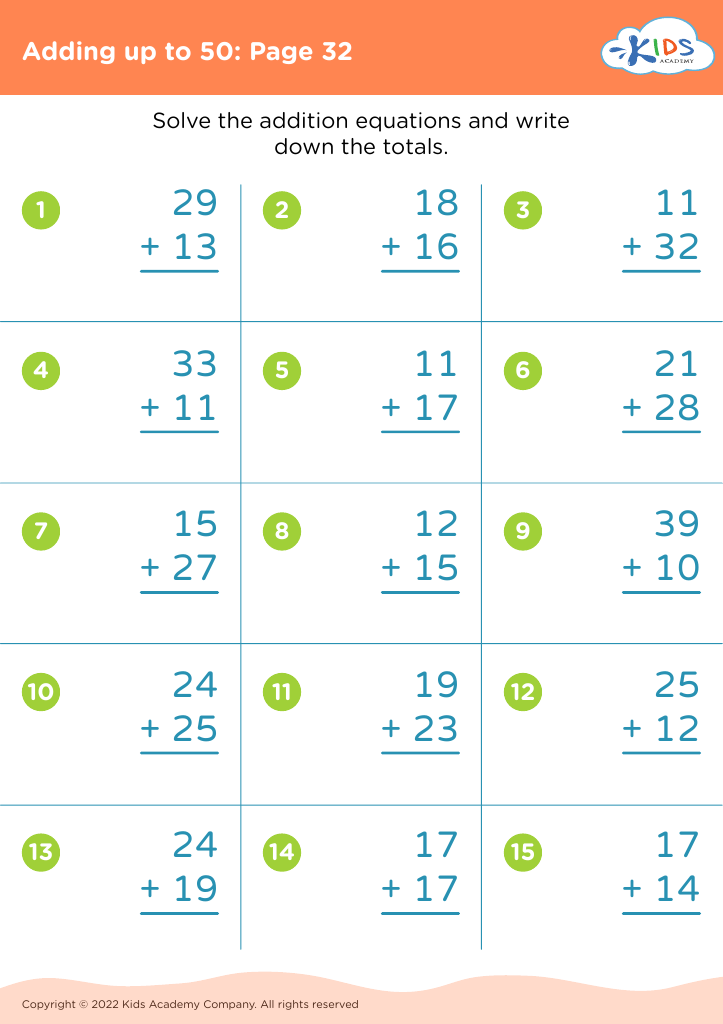
Adding up to 50: Page 32

Adding up to 50: Page 32

Adding up to 50: Page 32
Worksheet


... 6 7

Number recognition and addition skills are foundational elements of mathematics that greatly influence a child's academic journey, especially between the ages of 6 and 9. Developing proficiency in these areas fosters confidence and motivates children to engage with math in a positive light.

Firstly, number recognition serves as a gateway to more complex mathematical concepts. When children are familiar with numbers and their values, they build a solid foundation necessary for future learning in arithmetic and number theory. Mastery of addition is crucial as it is one of the first operations children learn and is used extensively in daily life.

Secondly, strong arithmetic skills can enhance critical thinking and problem-solving abilities. Engaging students in activities that promote addition, such as games or storytelling with numbers, creates a fun and interactive learning experience. This not only keeps children interested but also encourages them to approach math with curiosity.

Lastly, parent and teacher involvement in promoting number recognition and addition fosters a supportive learning environment. When adults actively participate in their child's educational journey, it can lead to improved social skills and collaboration in group settings. Ultimately, a solid grasp of number recognition and addition lays the groundwork for lifelong learning and success in mathematics.