Practice division Addition Worksheets for Ages 6-9
3 filtered results
-
From - To
Welcome to our engaging Practice Division Addition Worksheets designed for children aged 6-9! These worksheets provide an excellent opportunity for young learners to enhance their math skills in a fun and interactive way. With a variety of exercises focusing on division and addition, students will develop a strong foundation in mathematical concepts. Each worksheet is tailored to meet the learning pace of children, ensuring they grasp essential techniques while building confidence. Access printable resources that encourage independent learning and mastery. Perfect for teachers, parents, or homeschooling, these worksheets make math enjoyable and effective! Start exploring today for a brighter math path!
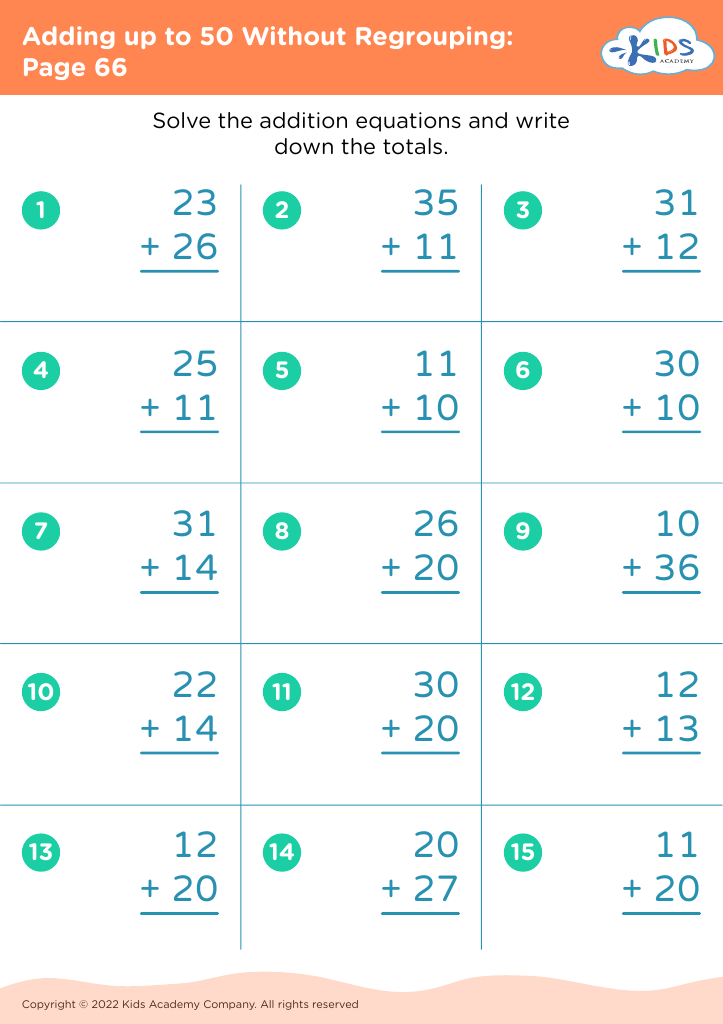
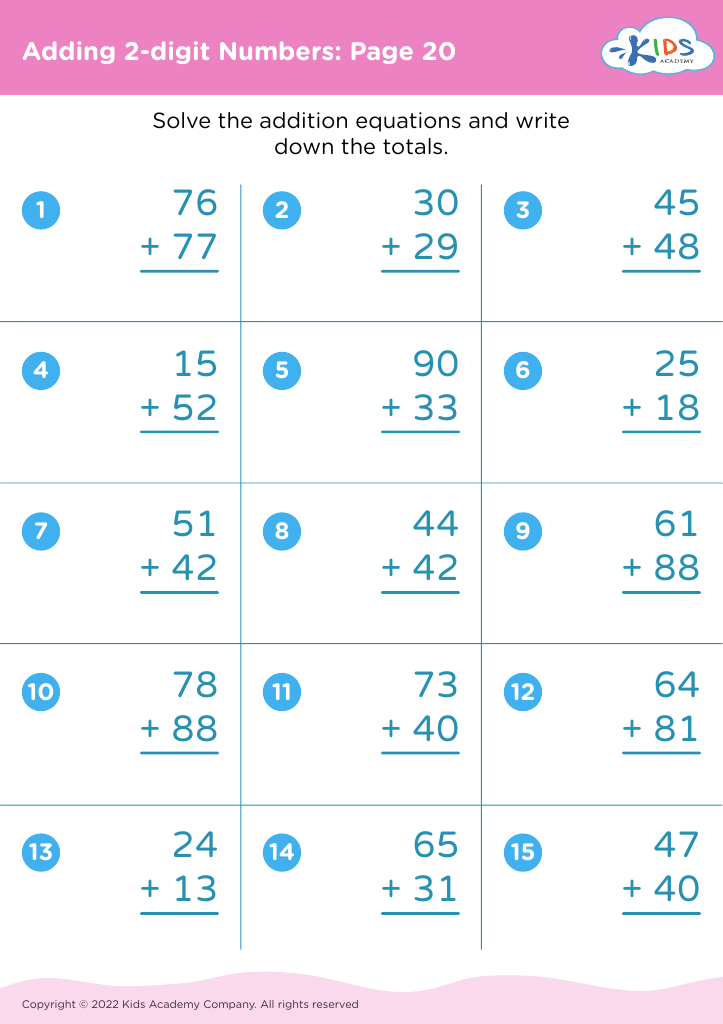
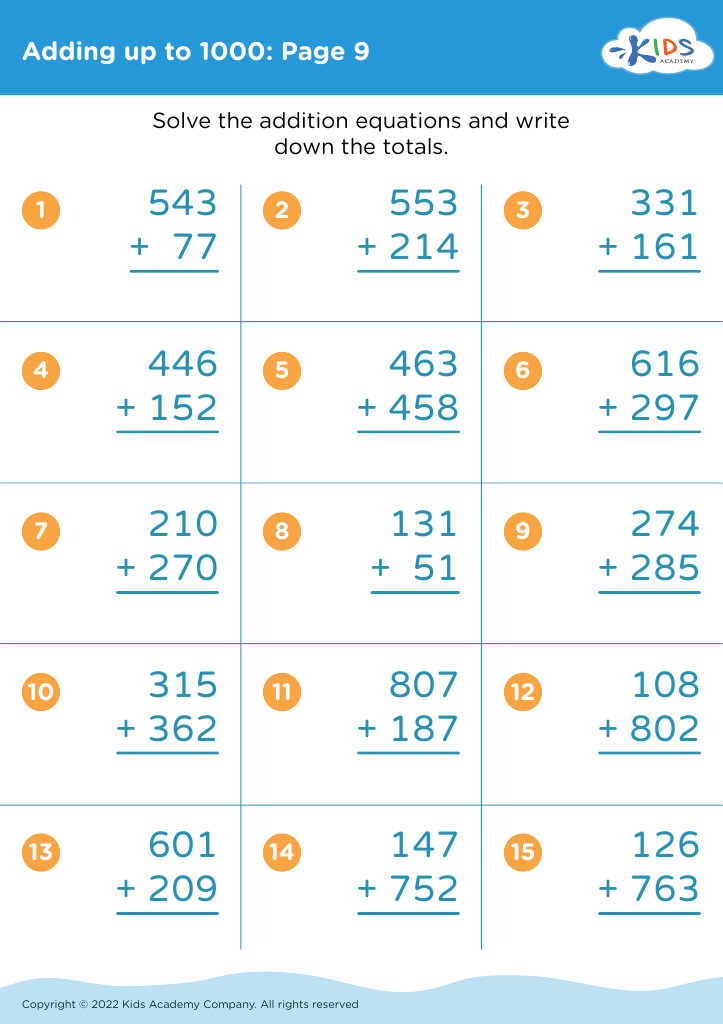







Practice in division and addition for children ages 6-9 is essential for several reasons. At this developmental stage, children are building foundational math skills that are crucial for their future academic success. Mastering addition and division helps them understand the concepts of numbers and how they relate—which are fundamental for problem-solving and reasoning skills.
For parents and teachers, reinforcing these skills through practice fosters confidence and a positive attitude towards math. Children who feel proficient in these areas are more likely to engage actively in math-related activities as they progress in school. Moreover, early mastery contributes to higher levels of achievement in more complex topics such as multiplication, fractions, and long division, which they will encounter later on.
Additionally, practicing these operations promotes critical thinking, as children learn to approach problems from various angles. Engaging them in fun and interactive ways, such as games or real-life applications, can enhance their learning experience, making it enjoyable and effective. Therefore, by prioritizing consistent practice in addition and division, parents and teachers play a pivotal role in equipping children with the skills they will need throughout their educational journey and beyond.








