Recognizing numbers Addition Worksheets for Ages 6-9
4 filtered results
-
From - To
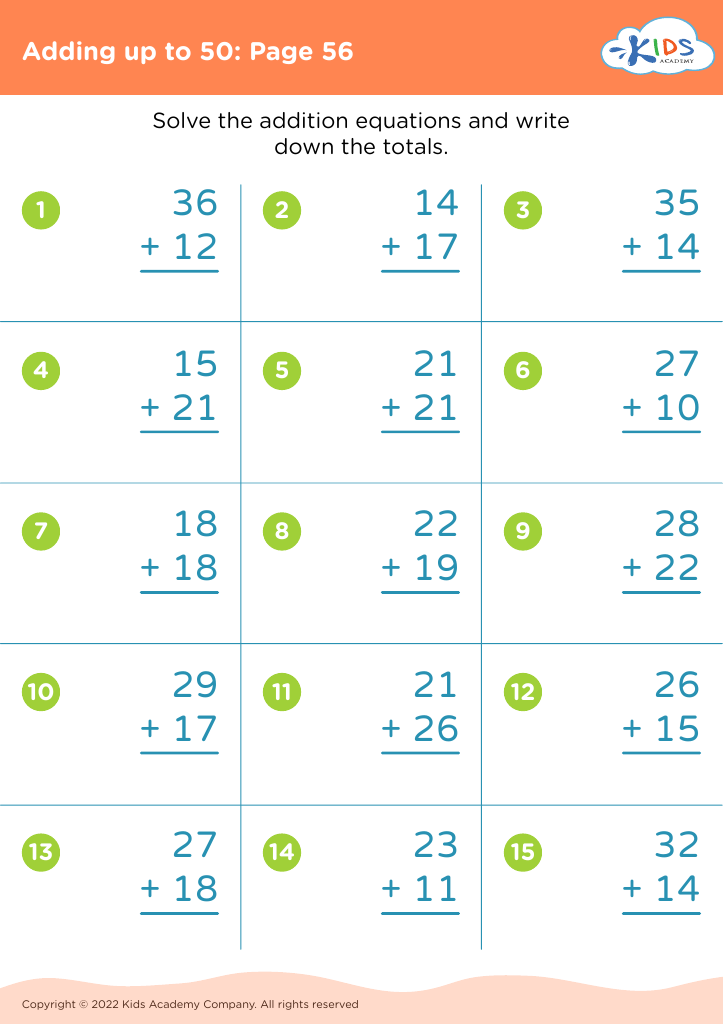
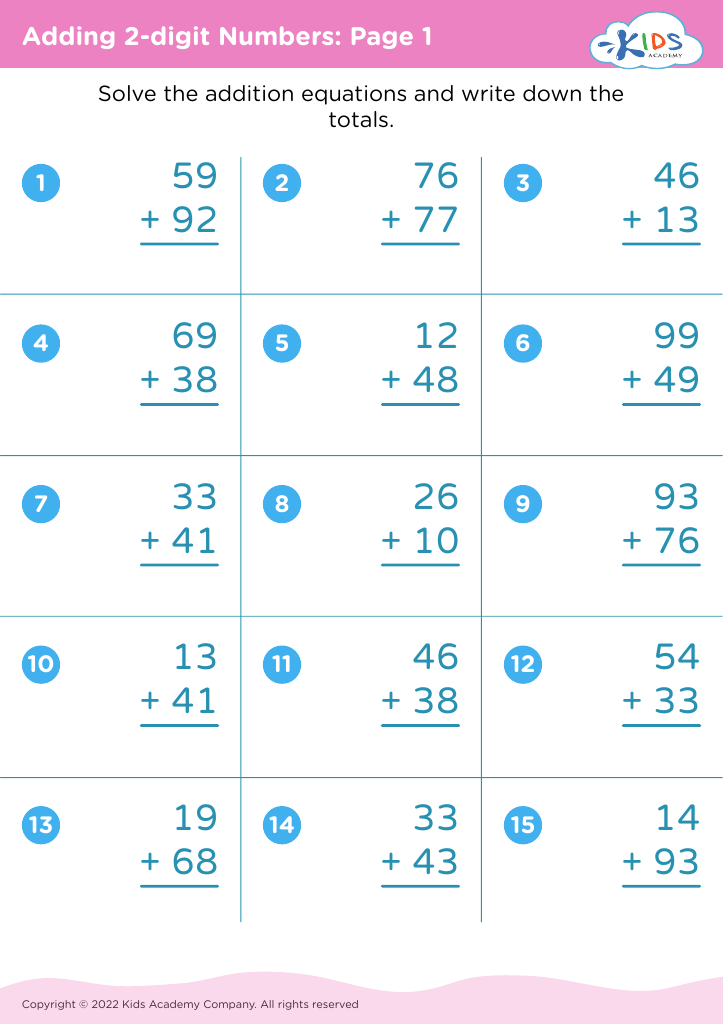
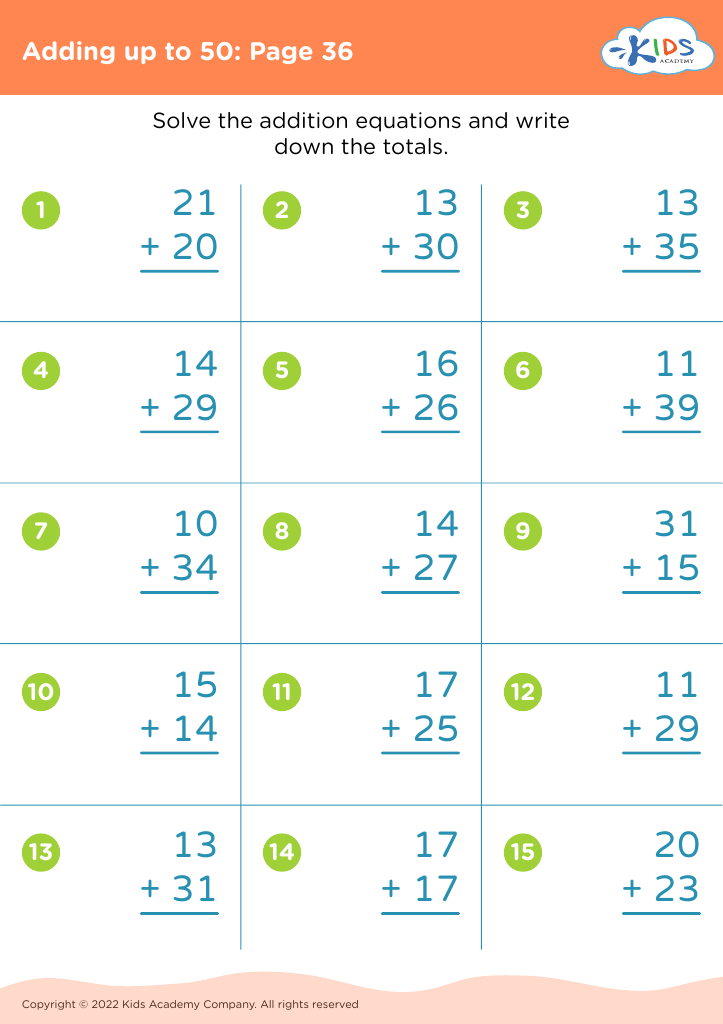
Discover our engaging "Recognizing Numbers Addition Worksheets" designed specifically for children ages 6-9. These worksheets provide a fun and interactive way for young learners to develop essential math skills while improving their number recognition. With colorful illustrations and varied activities, kids will master addition concepts through hands-on practice. Our resources are perfect for home or classroom use, catering to different learning paces and styles. By incorporating these worksheets into your child's routine, you’ll support their confidence in math and prepare them for more complex concepts ahead. Explore the joy of learning with our engaging addition worksheets today!
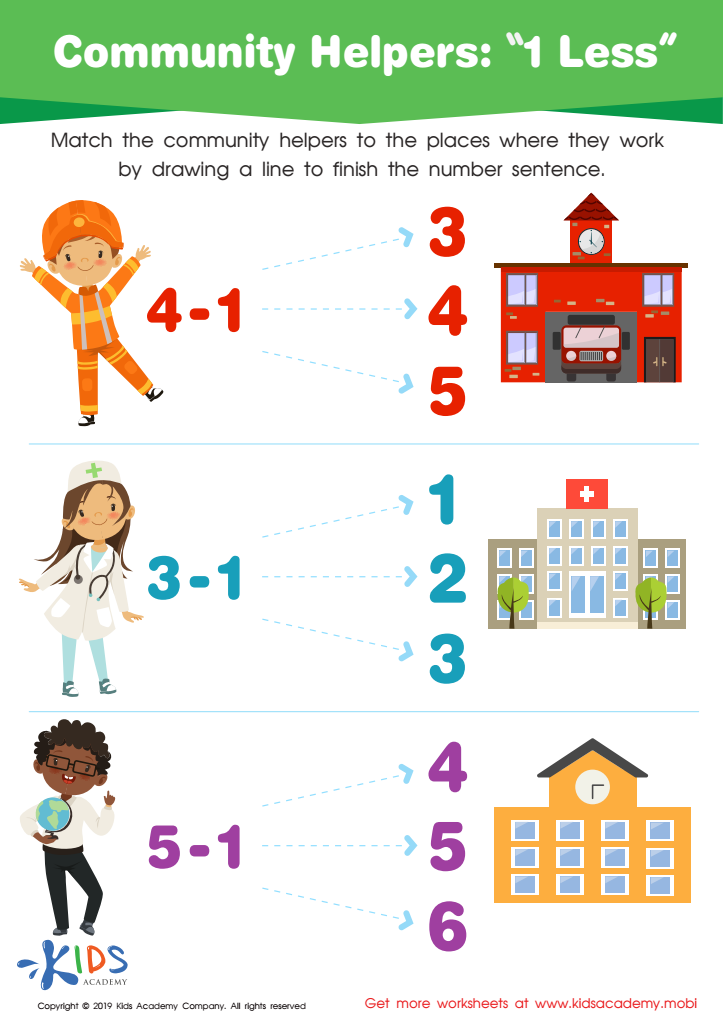
Community Helpers: 1 less Worksheet
 Assign to My Students








Recognizing numbers and understanding the concept of addition are fundamental skills that lay the foundation for a child's overall mathematical development. For children aged 6-9, these skills are crucial as they navigate through early learning stages. Encouraging recognition of numbers helps reinforce cognitive skills, promoting brain development and enhancing focus and concentration.
Moreover, mastery of addition is essential for everyday life. It supports the understanding of basic operations, which is vital for more complex math later on. Fluent addition helps children with problem-solving, critical thinking, and logical reasoning.
Parents and teachers play a key role in nurturing these skills. Engaging activities, such as games and practical applications, can make learning fun and interactive. This approach not only boosts confidence but also fosters a positive relationship with mathematics, making children more likely to excel in future math-related subjects.
Additionally, recognizing numbers and addition enhances social skills during group activities, where children learn to collaborate and communicate effectively. By prioritizing these early math concepts, parents and teachers can ensure that children build a solid framework for future learning, equipping them with the tools necessary to succeed academically and beyond.








