
Spatial awareness Addition Worksheets for Ages 6-9
5 filtered results
Difficulty Level
Grade
Age
-
From - To
Subject
Activity
Standards
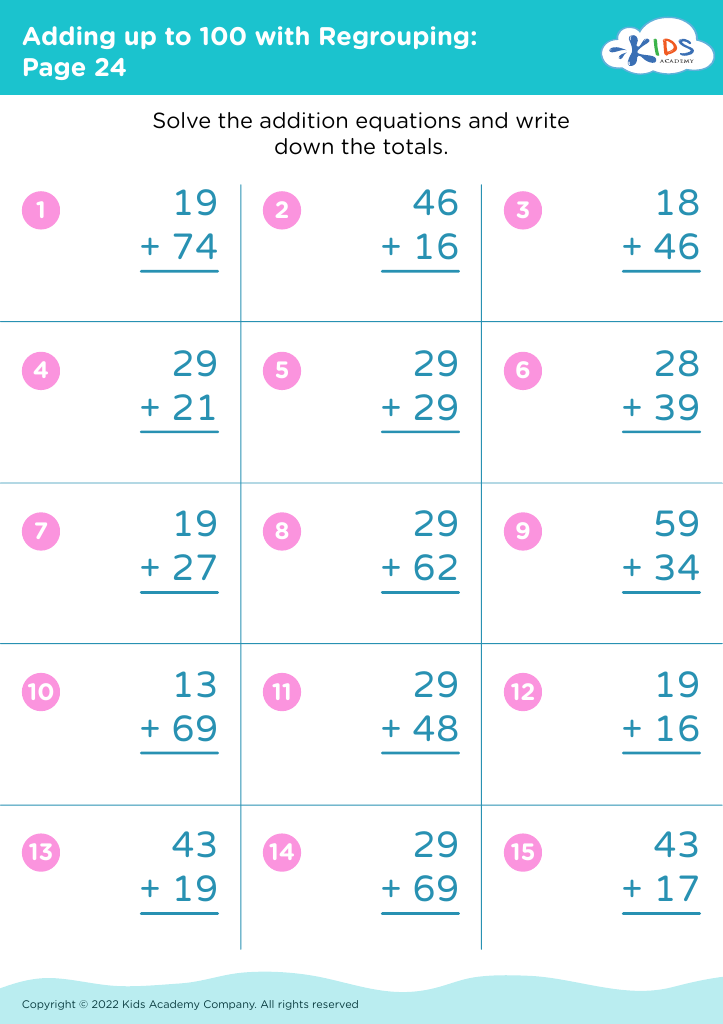
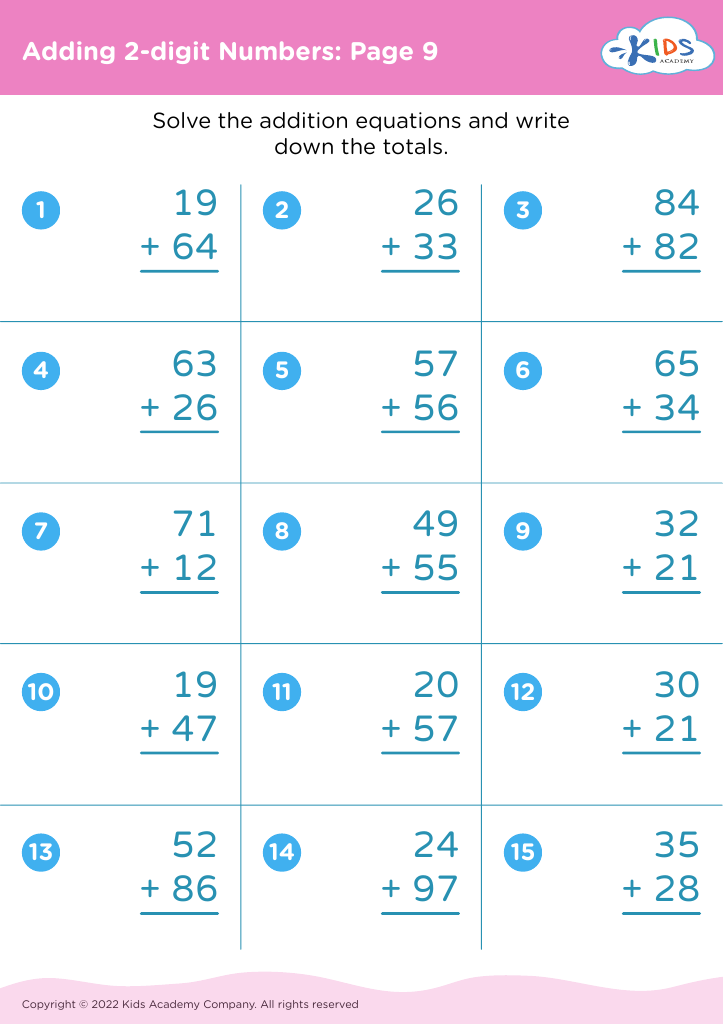
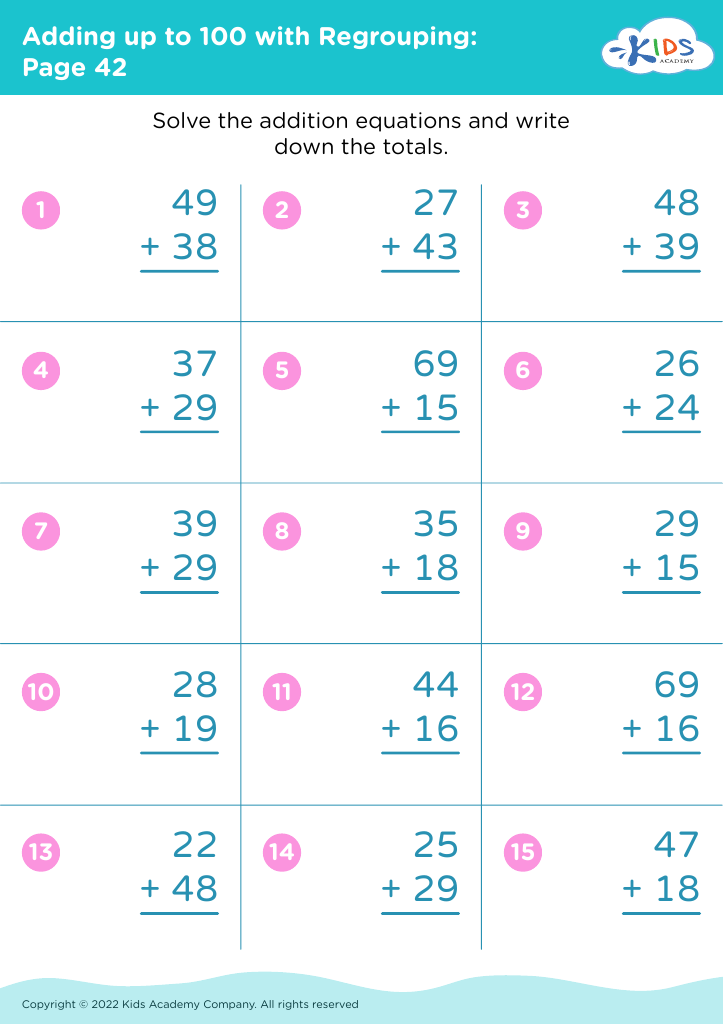
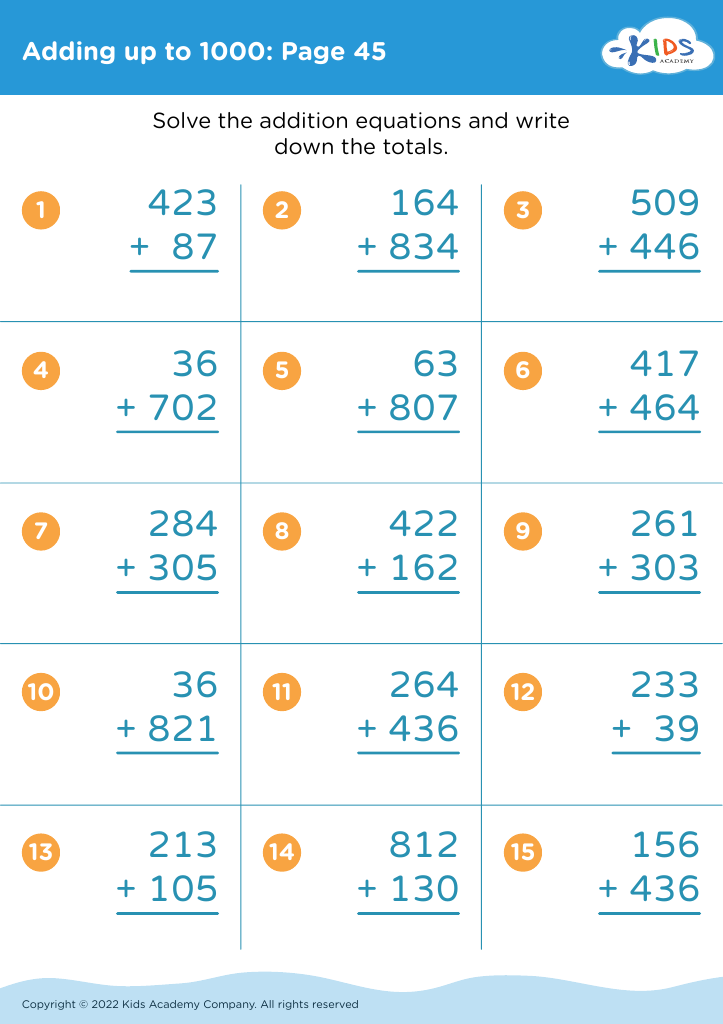
Boost your child's math and spatial skills with our engaging Spatial Awareness Addition Worksheets, designed for ages 6-9. These worksheets merge basic addition with fun spatial exercises, helping young learners grasp essential mathematical concepts while improving their ability to visualize and manipulate objects in space. Each activity is thoughtfully crafted to be both educational and enjoyable, ensuring that kids remain motivated and confident. Perfect for classroom use or at-home practice, our worksheets provide a solid foundation for future math success, fostering critical thinking and problem-solving abilities in a supportive and interactive environment. Explore now and watch your child's skills soar!
Favorites
With answer key
Interactive
Join Kids Academy for Free
Who is primarily going to use this learning content?








Spatial awareness is the ability to visualize and understand the relationships between objects and oneself in a given space. For children ages 6-9, enhancing spatial awareness is crucial because it lays the foundation for critical skills necessary for everyday life and academic success.
Firstly, strong spatial skills contribute significantly to mathematics achievement. Kids who excel in spatial reasoning tend to understand and solve complex math problems more easily. Concepts like geometry, measurement, and even basic arithmetic become more intuitive.
Secondly, spatial awareness is key for developing motor skills. Activities such as playing sports, assembling puzzles, and engaging in arts and crafts require an understanding of space and positioning. These activities help children improve their coordination and dexterity.
Thirdly, spatial reasoning skills support learning in technology and science. For instance, thinking spatially is critical when understanding maps, working with technology, or engaging in early engineering tasks like building simple machines with LEGO sets.
Additionally, improving spatial awareness aids in day-to-day activities and safety. Kids who recognize spatial relationships better navigate their environment, avoiding obstacles and understanding directions more effectively.
Fostering spatial skills through activities like playing with building blocks, drawing, or using spatial language (e.g., "above," "next to") gives children a versatile toolkit for academic learning and practical life skills, enhancing their growth and development in multiple domains.








