
Understand fractions Addition Worksheets for Ages 6-9
20 filtered results
Difficulty Level
Grade
Age
-
From - To
Subject
Activity
Standards
Elevate your child's math skills with our "Understand Fractions Addition Worksheets for Ages 6-9" at Kids Academy! Specifically designed for young learners, these educational worksheets provide engaging activities to help children grasp the concept of adding fractions with like denominators. Through colorful visuals, step-by-step explanations, and practical exercises, kids will find learning fractions fun and accessible. These printables support classroom learning and offer extra practice at home. Empower your child’s mathematical journey and gain confidence with fractions by exploring our expertly crafted resources today!
Favorites
With answer key
Interactive
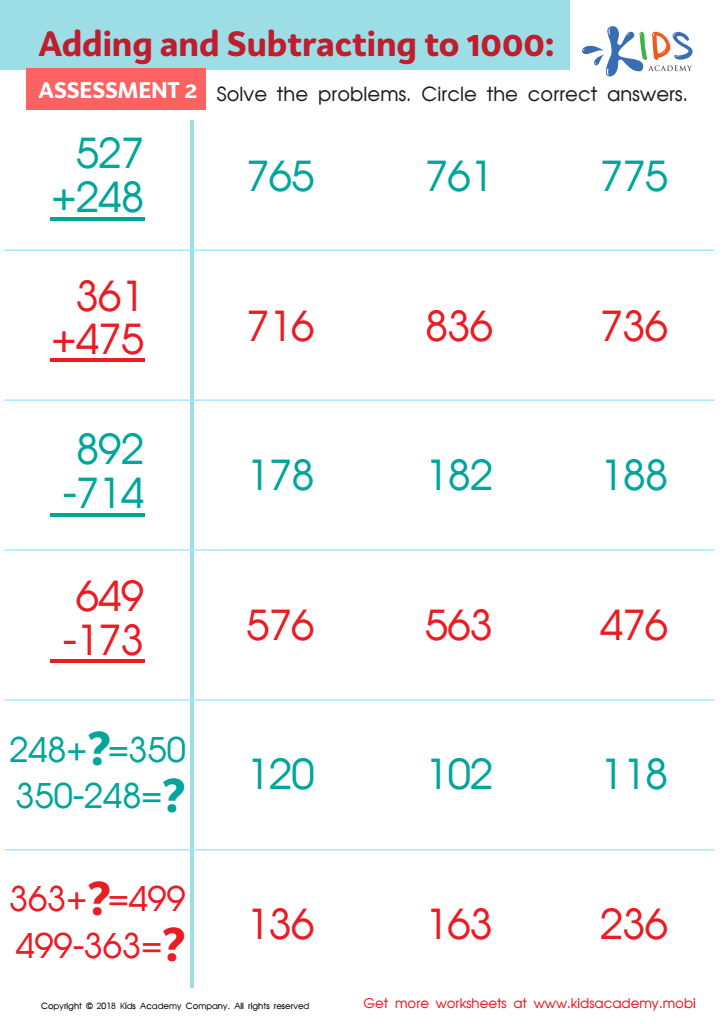
Adding and Subtracting to 1 Worksheet: Assessment 2
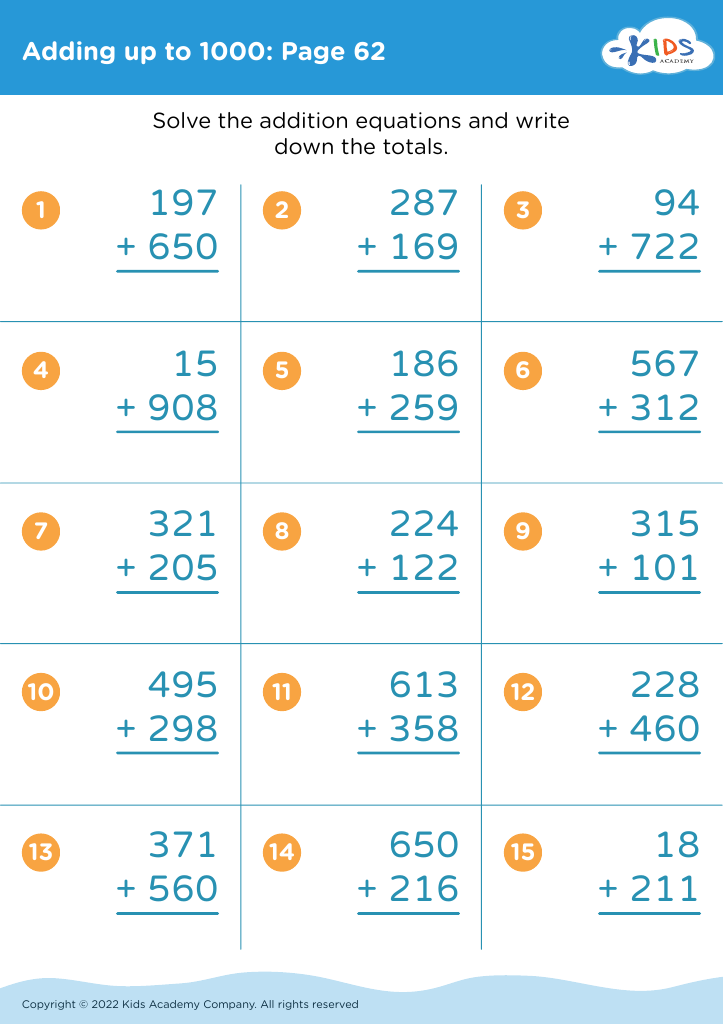
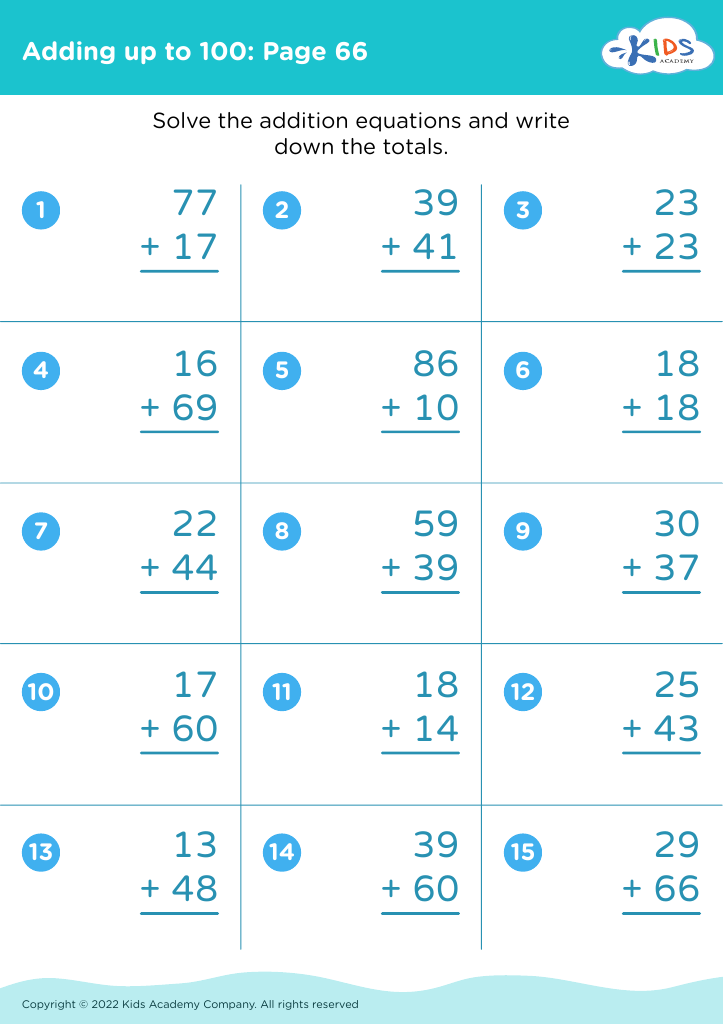
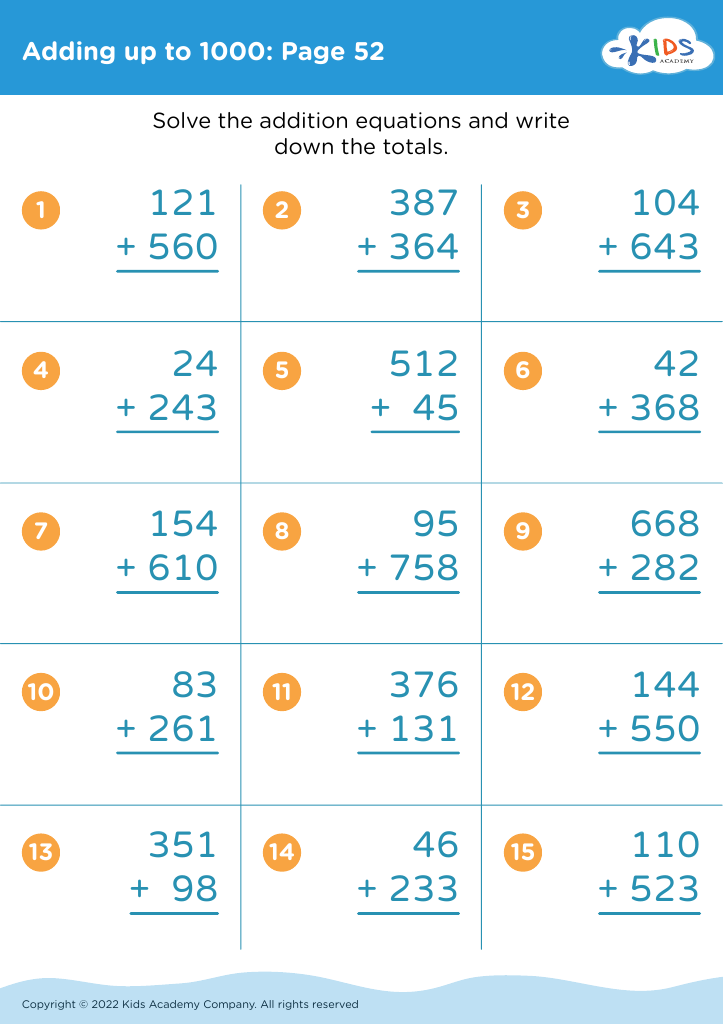
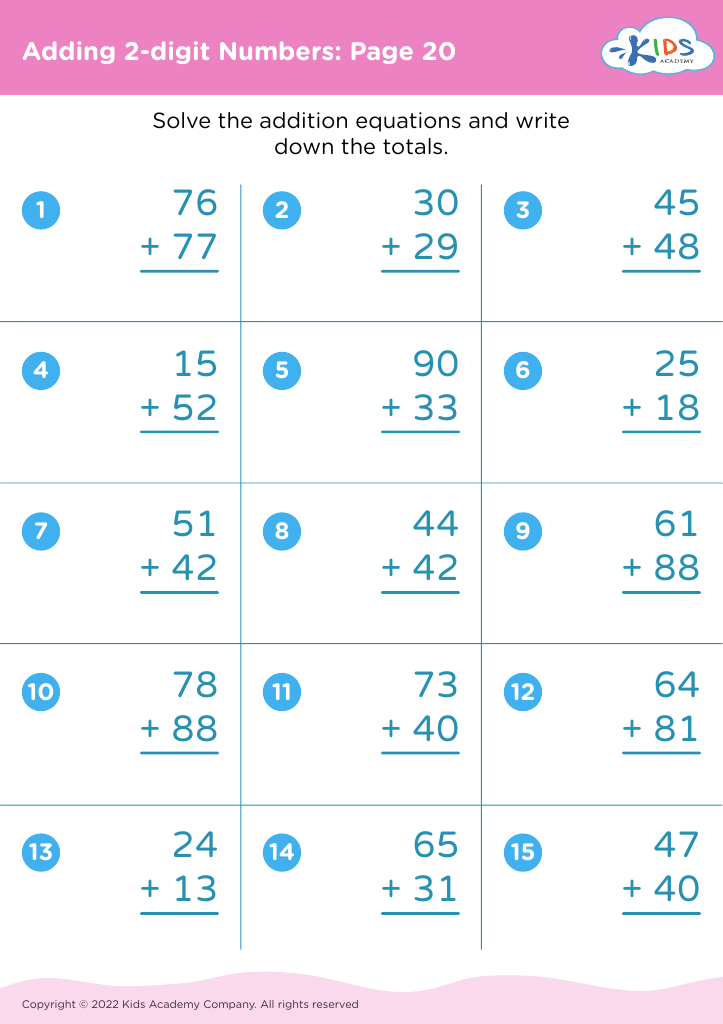
Test your child's addition and subtraction of 3-digit numbers with this assessment worksheet! They'll practice regrouping and pre-algebra skills to show their expertise. Have them work through the page and circle their answers, then see how many they got right to check their understanding and progress.
 Assign to My Students
Adding and Subtracting to 1 Worksheet: Assessment 2
Worksheet
Join Kids Academy for Free
Who is primarily going to use this learning content?








Understanding fractions and fractional addition at a young age lays a critical foundation for children in the 6-9 age group, setting the stage for more advanced mathematical concepts. This early exposure helps develop key skills such as number sense, proportional reasoning, and the ability to work with parts of a whole—skills that are crucial not just in math classes but in everyday life.
For parents, ensuring their child grasps fractions can enhance their child's confidence in math, curbing common anxieties and negative attitudes toward the subject. This confidence can lead to better academic performance across the board, as math is integral to many other subjects, such as science and technology.
Teachers recognize that mastering fractions involves visual, symbolic, and practical learning. By incorporating fractions into lessons, they make arithmetic more engaging and relevant. Moreover, fraction skills are often embedded in standardized tests, so early competency can give children a competitive edge.
In summary, focusing on fractions and their addition for children aged 6-9 equips them with essential life skills, promotes academic confidence, and opens doors to greater opportunities in future learning. Both parents and teachers play pivotal roles in guiding children through this foundational mathematical concept.








