Visual interpretation Addition Worksheets for Ages 6-9
4 filtered results
-
From - To
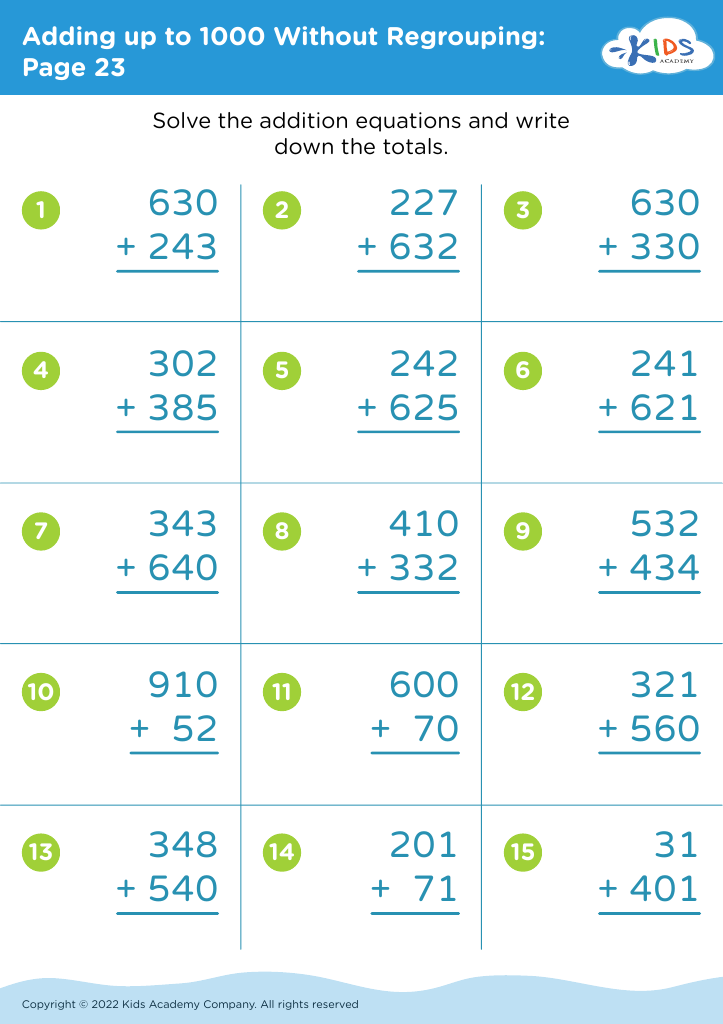
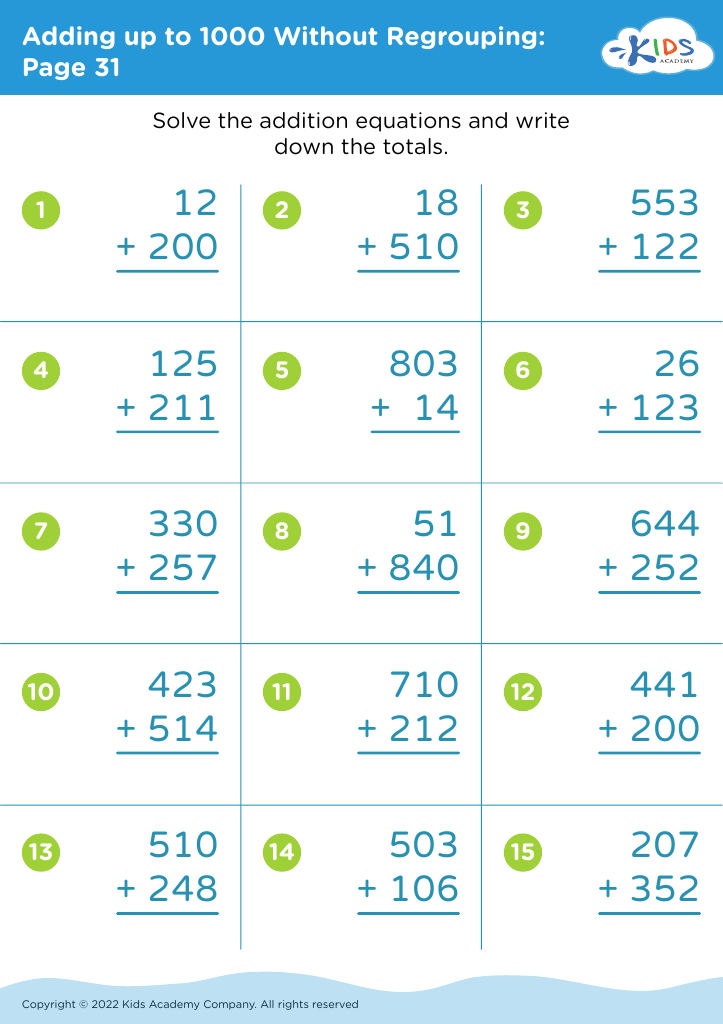
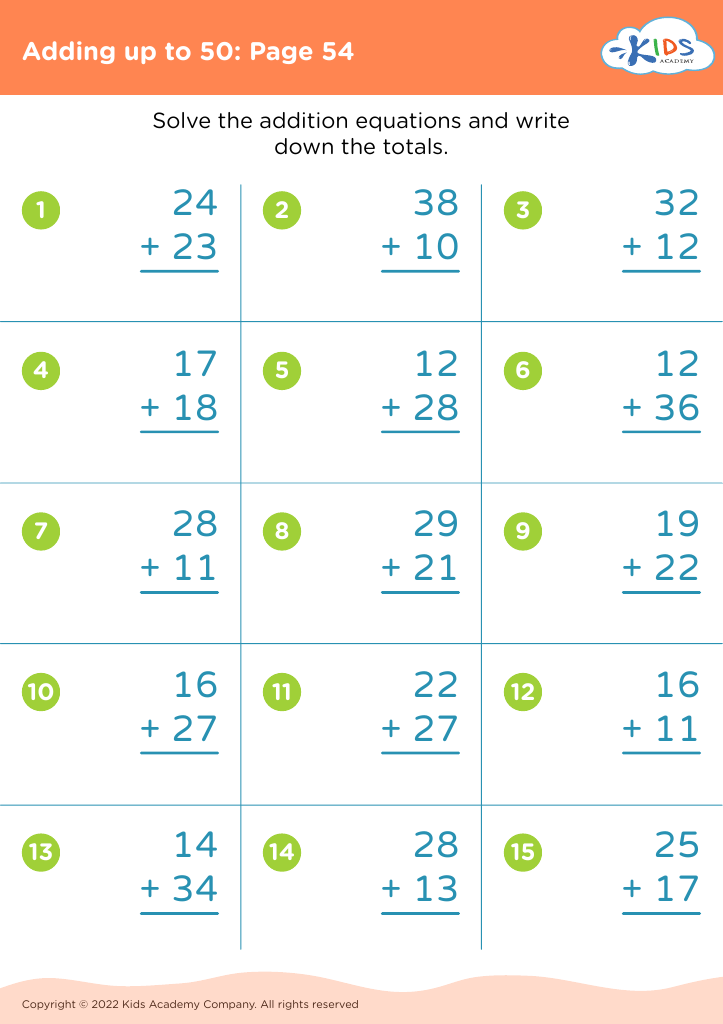
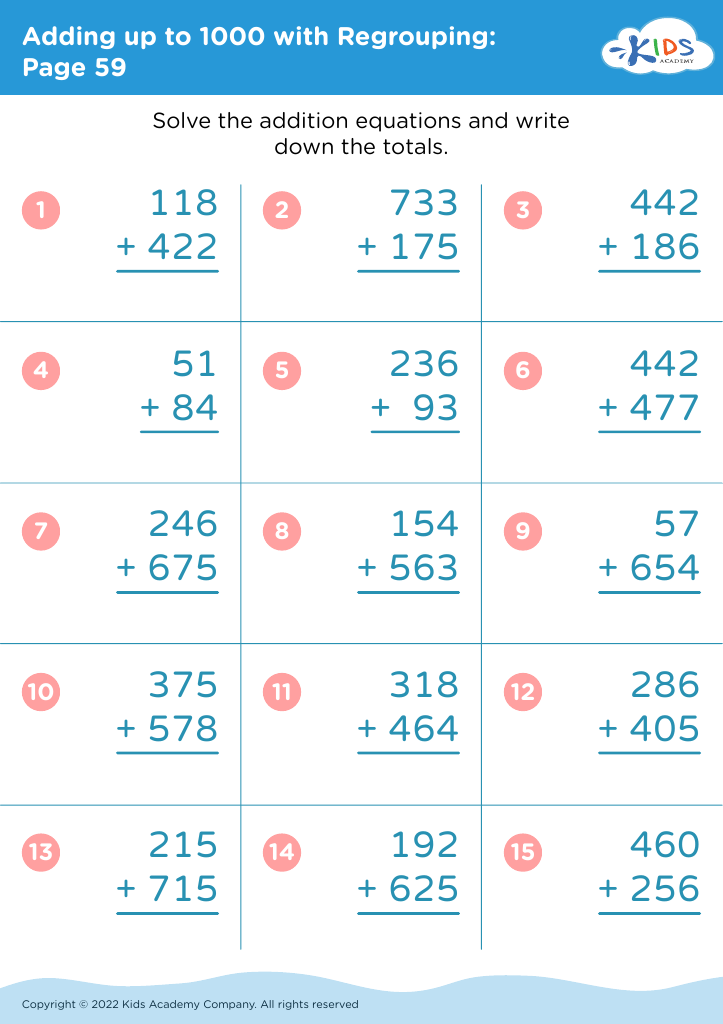
Enhance your child's math skills with our Visual Interpretation Addition Worksheets, specially designed for ages 6-9. These engaging worksheets use colorful illustrations and visual aids to help young learners understand and master basic addition concepts. By converting word problems into easy-to-grasp images, these exercises make math exploration enjoyable and effective. Ideal for classroom use or at-home practice, our worksheets not only enhance calculation speed but also boost confidence in tackling math challenges. Bridge the gap between theory and practice with our interactive addition resources, perfect for nurturing a solid math foundation in a fun, visual way.








Parents and teachers should prioritize visual interpretation in teaching addition for children aged 6-9 because it lays a strong foundation for future math skills. Visual interpretation encompasses using images, objects, and illustrations to represent mathematical concepts, making abstract ideas more concrete and accessible for young learners.
At this developmental stage, children are often more receptive to learning through visual aids. Techniques such as using counters, number lines, and picture representations help them grasp the meaning of addition in a tangible way. These visual tools can turn an abstract concept like addition into something they can see and manipulate, thereby deepening their understanding.
Moreover, visual interpretation addresses multiple learning styles. While some children may quickly grasp numerical addition, others might struggle without a visual context. Visual aids can bridge this gap, ensuring a more inclusive learning environment where every child has an opportunity to succeed.
Furthermore, visual interpretation encourages problem-solving and critical thinking. It moves beyond rote memorization, promoting a deeper understanding of how numbers interact with each other. This lays the groundwork for more complex math concepts in later years.
Overall, incorporating visual interpretation in addition not only makes math fun and engaging but also supports the cognitive development of young learners, making them more confident and proficient in mathematics.








