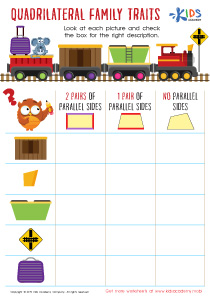
Shape Recognition Area and Perimeter Worksheets for Ages 6-9
3 filtered results
-
From - To
Discover engaging Shape Recognition Area and Perimeter Worksheets designed for children aged 6-9! Our resources help young learners identify and understand various shapes while applying concepts of area and perimeter. Through interactive activities, kids will enhance their spatial reasoning and mathematical skills, making learning both fun and effective. These visually appealing worksheets encourage critical thinking and problem-solving, providing a solid foundation in geometry. Perfect for classroom or at-home learning, they cover essential topics aligned with educational standards. Explore our collection today and help your child master shape recognition while boosting their confidence in math!
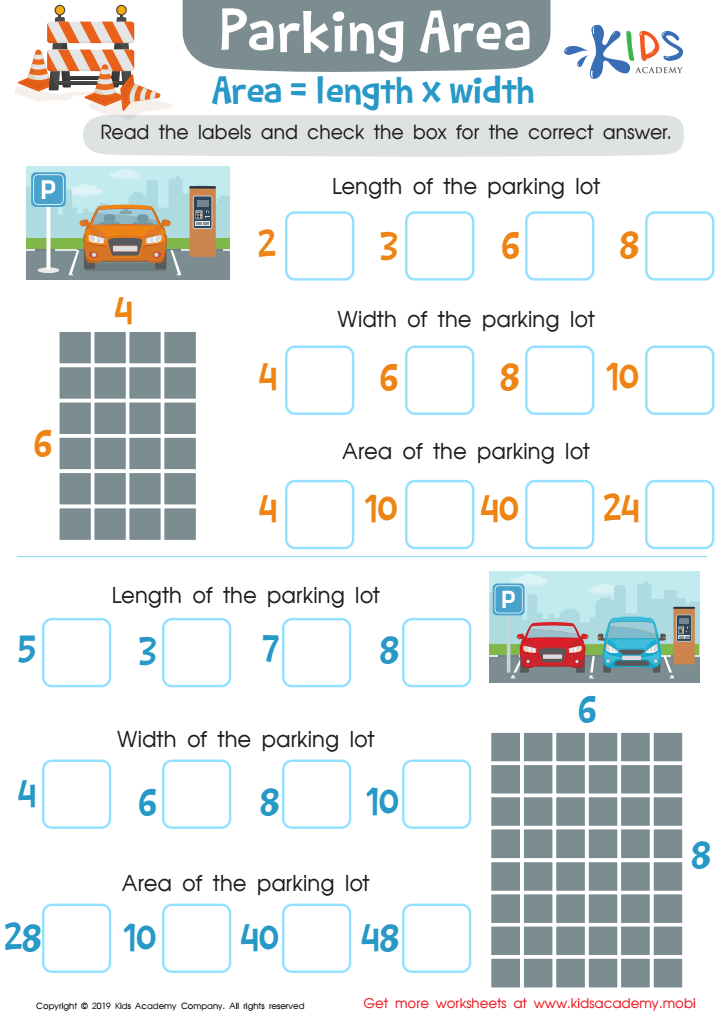
Parking Area Worksheet
 Assign to My Students
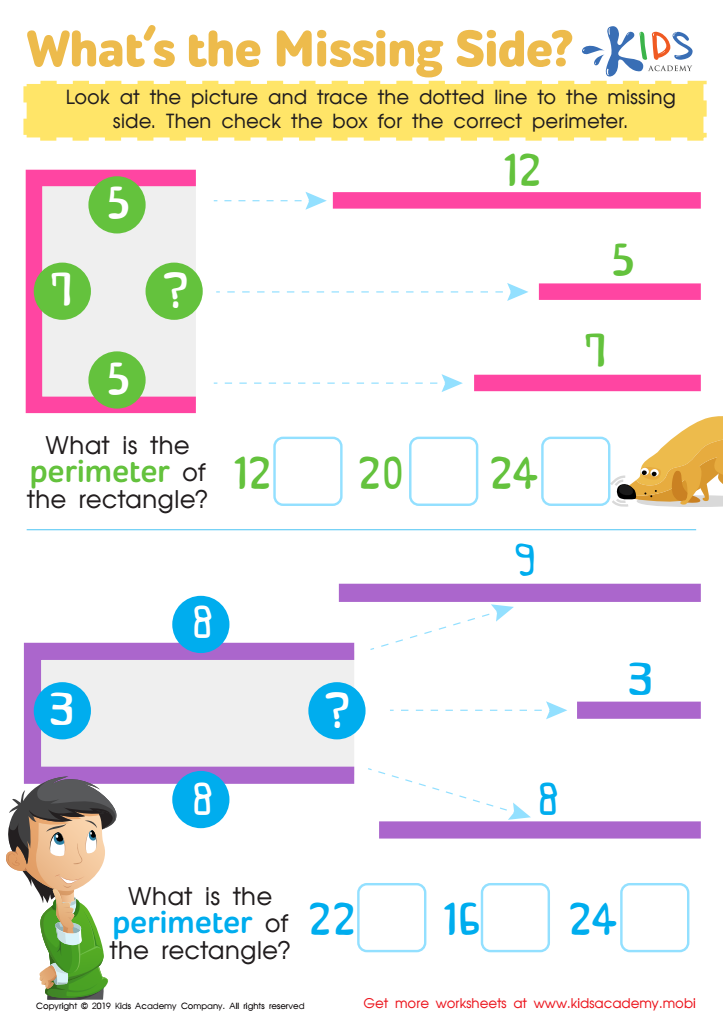
What's the Missing Side Worksheet
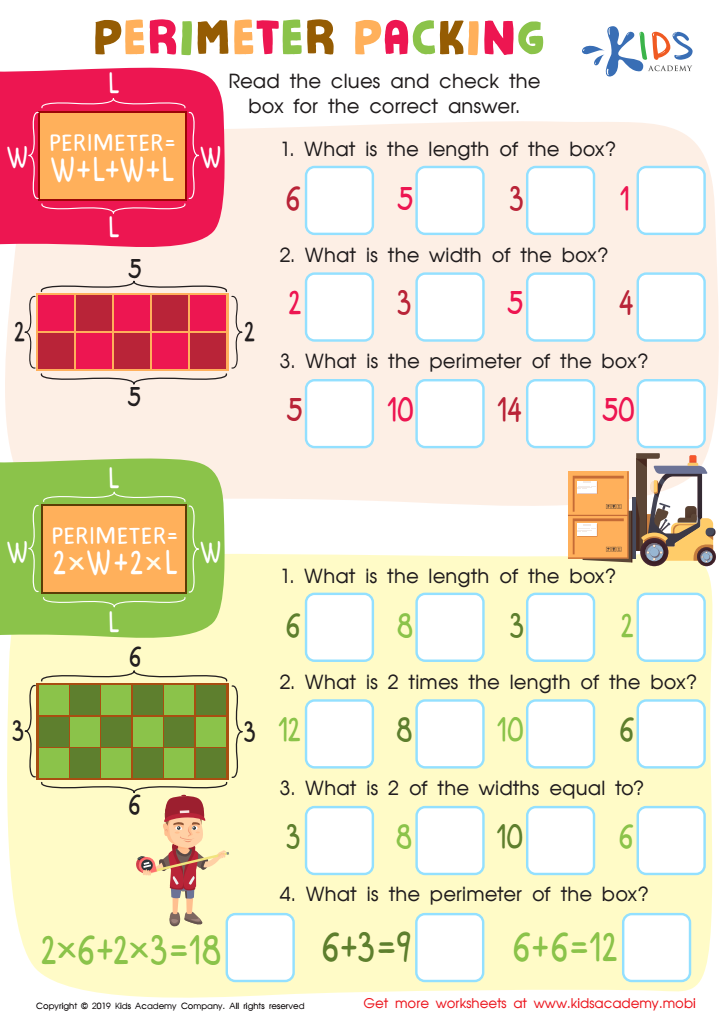
Perimeter Parking Worksheet








Shape recognition and understanding area and perimeter are vital skills for children aged 6-9, as they serve as foundational concepts in mathematics and develop critical thinking abilities. By recognizing shapes such as squares, rectangles, triangles, and circles, children begin to make connections between their everyday environment and mathematical principles. This recognition bolsters spatial awareness, which is crucial for problem-solving in real-life situations.
Understanding area and perimeter further enhances their mathematical comprehension. Area teaches children about the space within a shape, which is essential in various contexts—like knowing how much paint is needed for a room. Perimeter helps them understand the concept of distance around an object, fostering skills that can be applied in scenarios like planning a garden or laying out sports fields.
For parents and teachers, encouraging the mastery of these concepts can enhance a child's confidence in math and foster a positive attitude towards learning. Additionally, these foundational skills support later advanced topics in geometry, algebra, and even science. Ultimately, teaching shape recognition alongside area and perimeter equips children with essential tools for critical thinking, spatial reasoning, and practical life applications. This early mastery can shape their future academic and occupational choices in STEM fields.