Understanding area Area and Perimeter Worksheets for Ages 6-9
3 filtered results
-
From - To
Discover our "Understanding Area and Perimeter Worksheets" designed for children ages 6-9! These engaging, age-appropriate resources help young learners grasp essential math concepts through interactive exercises. Students will explore the relationship between area and perimeter, enhancing their spatial reasoning skills while having fun. Our worksheets include a variety of activities such as drawing, measuring, and problem-solving to cater to different learning styles. Perfect for both classroom and home practice, these worksheets encourage kids to appreciate math in everyday life. Dive into the world of measurement and watch your child's confidence in math grow! Start learning today!
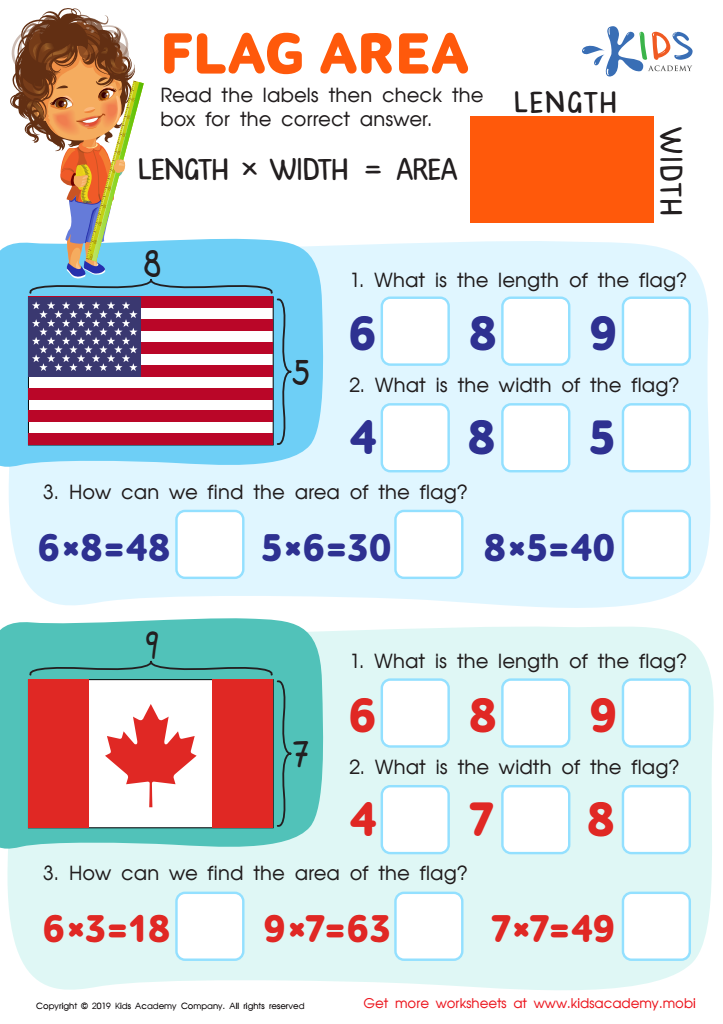
Flag Area Worksheet
 Assign to My Students
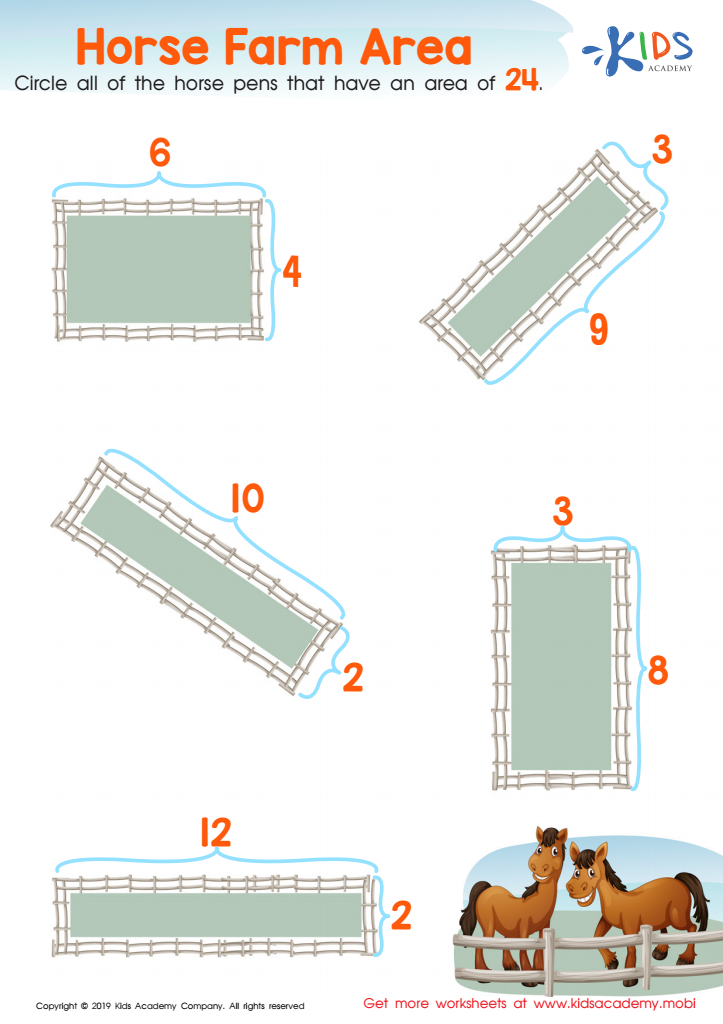
Horse Farm Area Worksheet
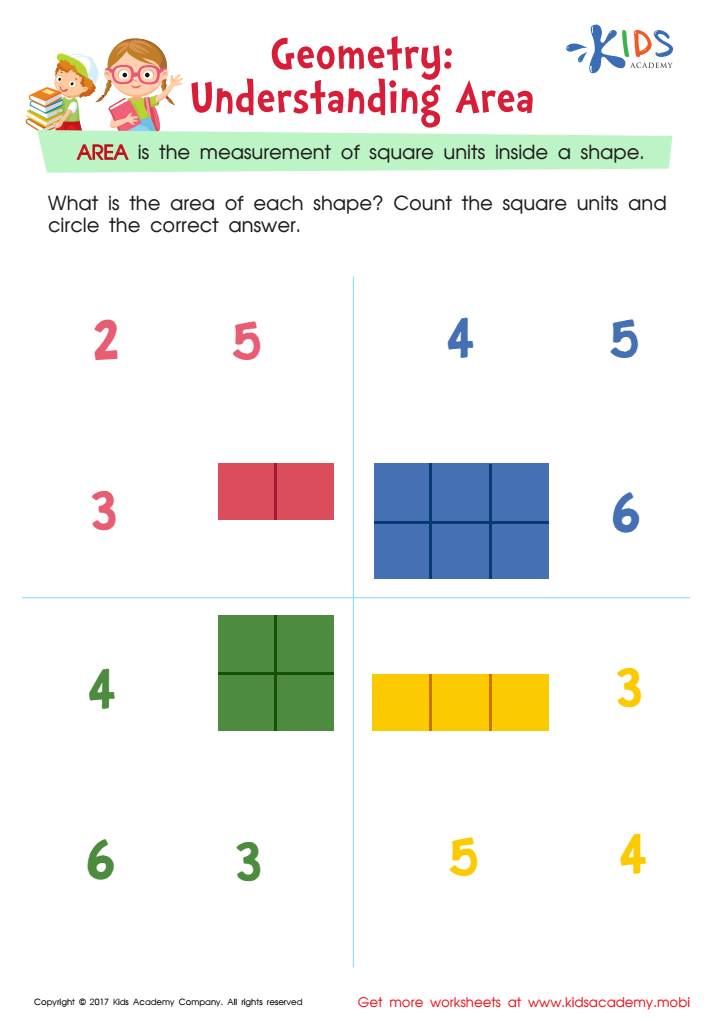
Understanding Area Worksheet








Understanding area and perimeter is crucial for children aged 6-9 as it lays the foundation for their mathematical development and real-life problem-solving skills. These concepts help young learners make sense of the world around them. By grasping area, children learn to calculate the space within different shapes, which can enhance their spatial awareness—a vital skill for tasks ranging from packing a suitcase to arranging furniture.
Perimeter, on the other hand, teaches children about the boundary length of objects, connecting to fields such as art and architecture. For parents and teachers, understanding these concepts fosters deeper conversations about math in everyday contexts. Engaging with area and perimeter can be a springboard for integrating creative activities, such as measuring a garden or designing a classroom layout, turning abstract ideas into tangible experiences.
Additionally, these concepts promote critical thinking and problem-solving, enhancing cognitive skills. Early comprehension of area and perimeter also establishes a groundwork for more advanced mathematics, such as geometry and measurement in higher grades. By supporting children in mastering these fundamental concepts, parents and teachers empower them to think logically, paving the way for academic success and practical life skills.