Differentiating shapes Geometry Worksheets for Ages 6-9
3 filtered results
-
From - To
Explore our engaging Differentiating Shapes Geometry Worksheets designed for children ages 6 to 9! These tailored worksheets help young learners identify and differentiate between various geometric shapes, laying a strong foundation for their understanding of geometry. Children will enjoy colorful visuals and interactive activities that bolster their shape recognition skills while fostering critical thinking and problem-solving abilities. With varying difficulty levels, these resources cater to diverse learning styles, ensuring every child can excel. Perfect for classroom use or at-home practice, our geometry worksheets turn learning into a fun adventure in discovering the world of shapes! Start shaping young minds today!
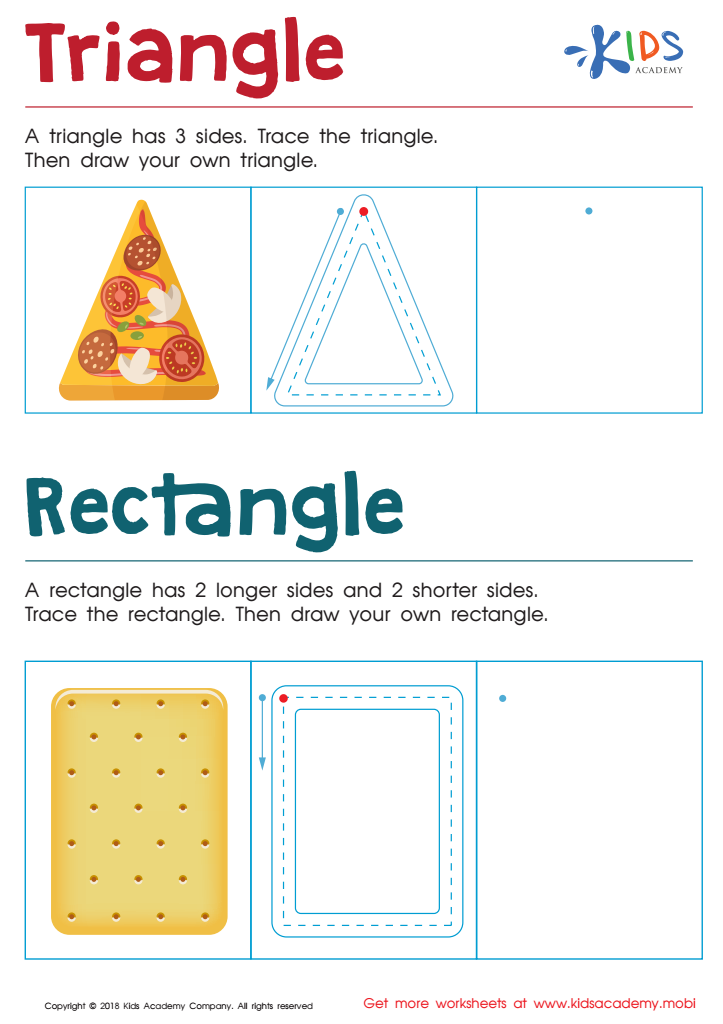
Triangle Rectangle Worksheet
 Assign to My Students











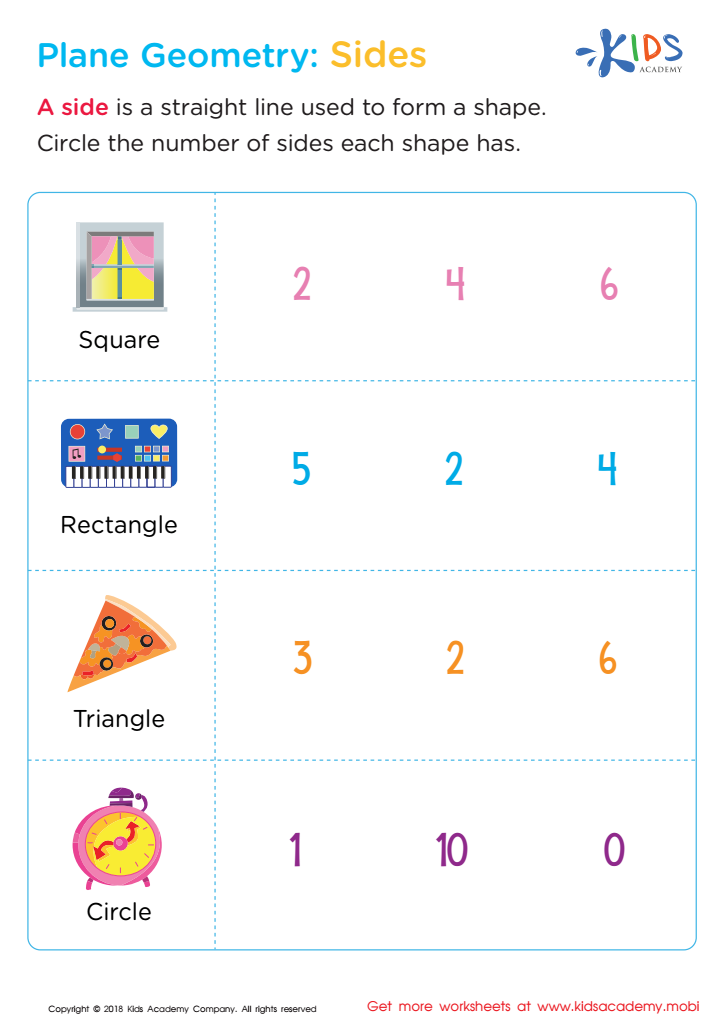
Plane Geometry: Sides Worksheet
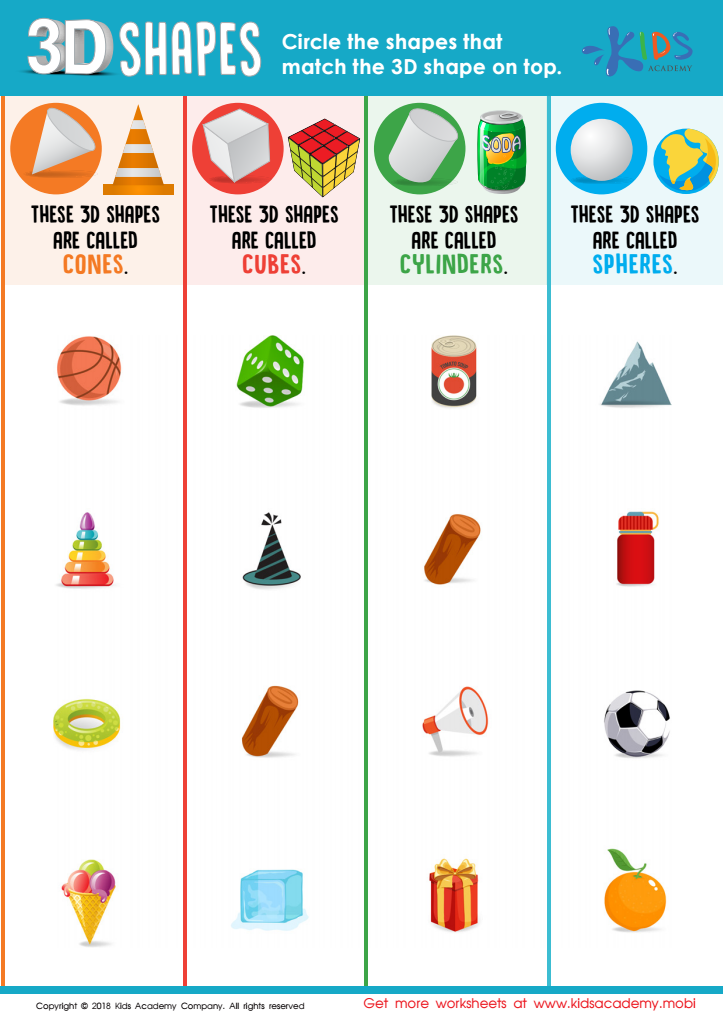
3D Shapes Worksheet








Differentiating shapes in geometry for children aged 6-9 is crucial for their cognitive and social development. At this age, children are naturally curious and develop essential critical thinking skills as they explore and categorize various shapes. Understanding properties such as edges, angles, and symmetry not only strengthens their mathematical foundation but also enhances their problem-solving abilities across subjects.
Moreover, differentiating shapes helps children recognize patterns and spatial relationships, which are vital in fields like art, science, and everyday life activities. Engaging in shape-related activities can improve fine motor skills as children manipulate objects, draw shapes, or create geometric designs.
In addition, learning about shapes fosters teamwork and communication skills. Group activities that involve shape sorting or creating designs encourage collaboration and dialogue among peers. This interaction develops social skills and confidence as they share ideas.
For parents and teachers, recognizing the importance of shape differentiation aids in tailoring lessons to meet diverse learning needs. Differentiation ensures that each child can learn at their own pace and level, making the learning experience more inclusive and effective. By emphasizing geometric understanding, they equip children with the tools to navigate both academic challenges and real-world situations effectively.








