Recognizing shapes Geometry Worksheets for Ages 6-9
5 filtered results
-
From - To
Explore our engaging "Recognizing Shapes Geometry Worksheets" designed for children aged 6-9! These worksheets provide fun and interactive activities that help young learners identify, match, and categorize various shapes. Through colorful visuals and appealing exercises, children will build foundational geometry skills, enhancing their ability to recognize shapes in their environment. Each worksheet offers a variety of challenges that cater to different learning styles, ensuring an enjoyable learning experience. Ideal for home or classroom use, our resources align with early math standards, fostering a love for geometry in your child. Ignite curiosity and shape recognition skills with our expertly crafted worksheets!
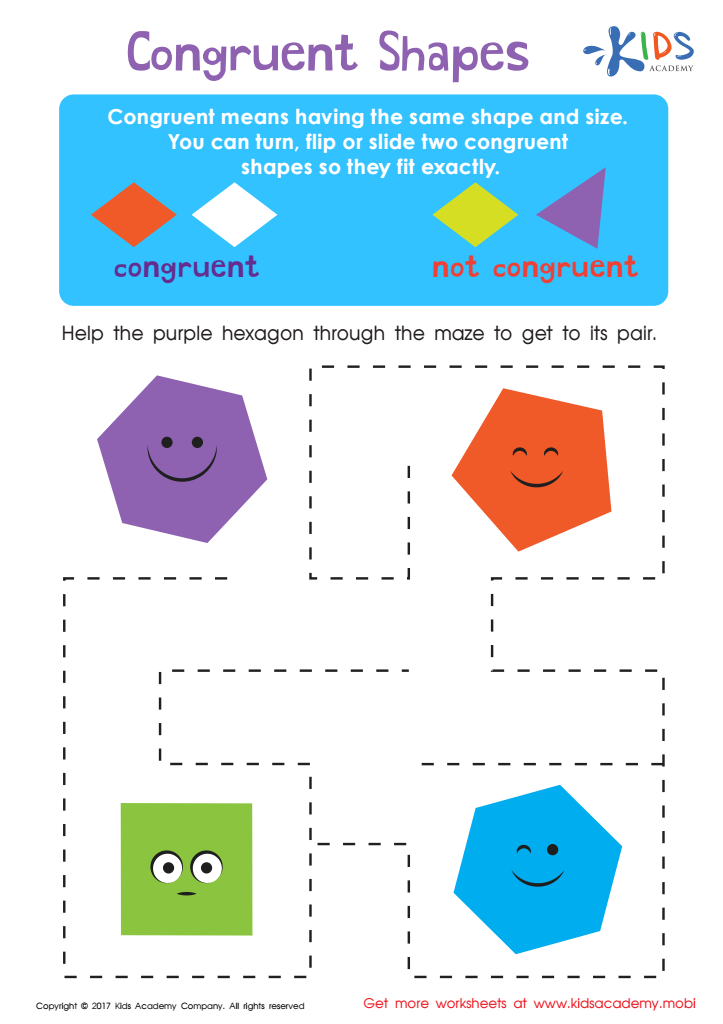
Congruent Shapes Worksheet
 Assign to My Students











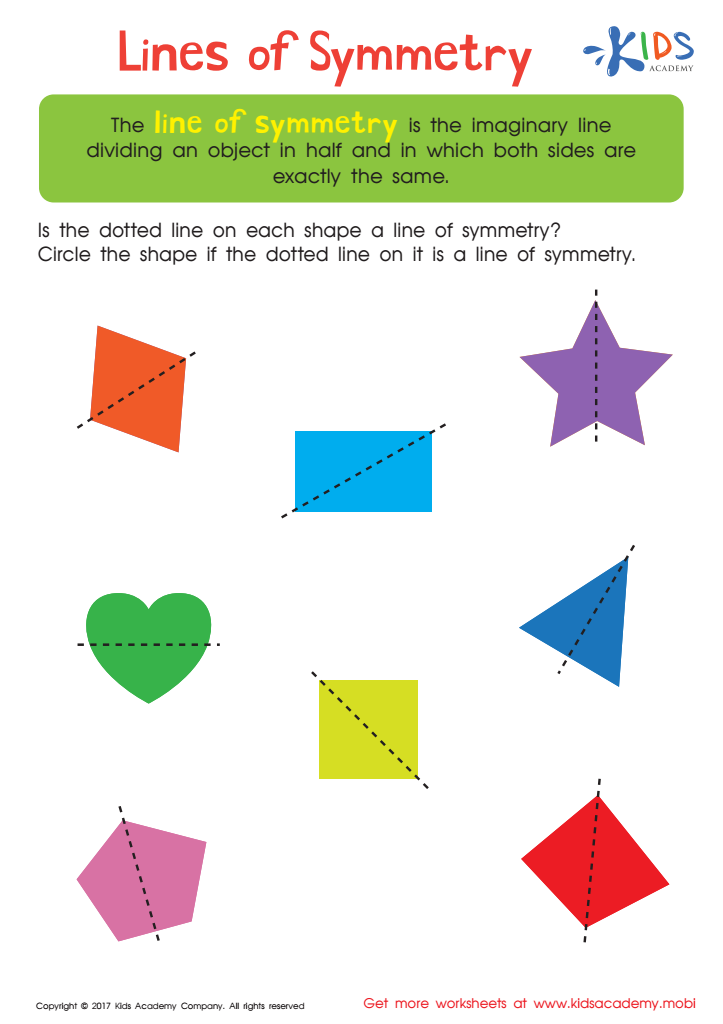
Lines of Symmetry Printable
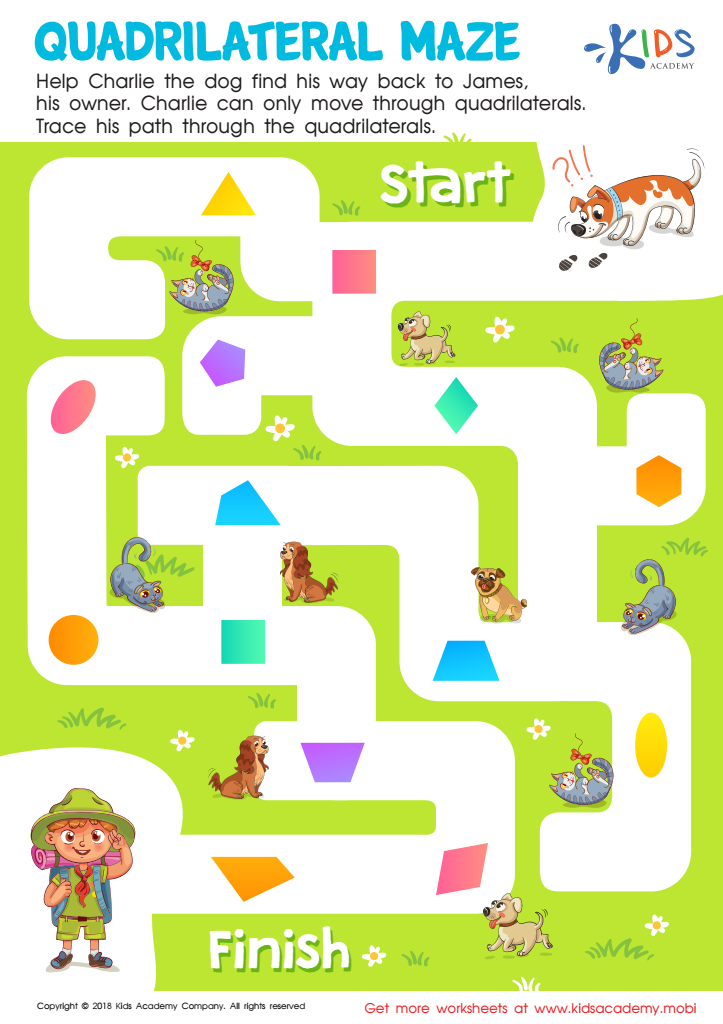
Quadrilateral Maze Worksheet
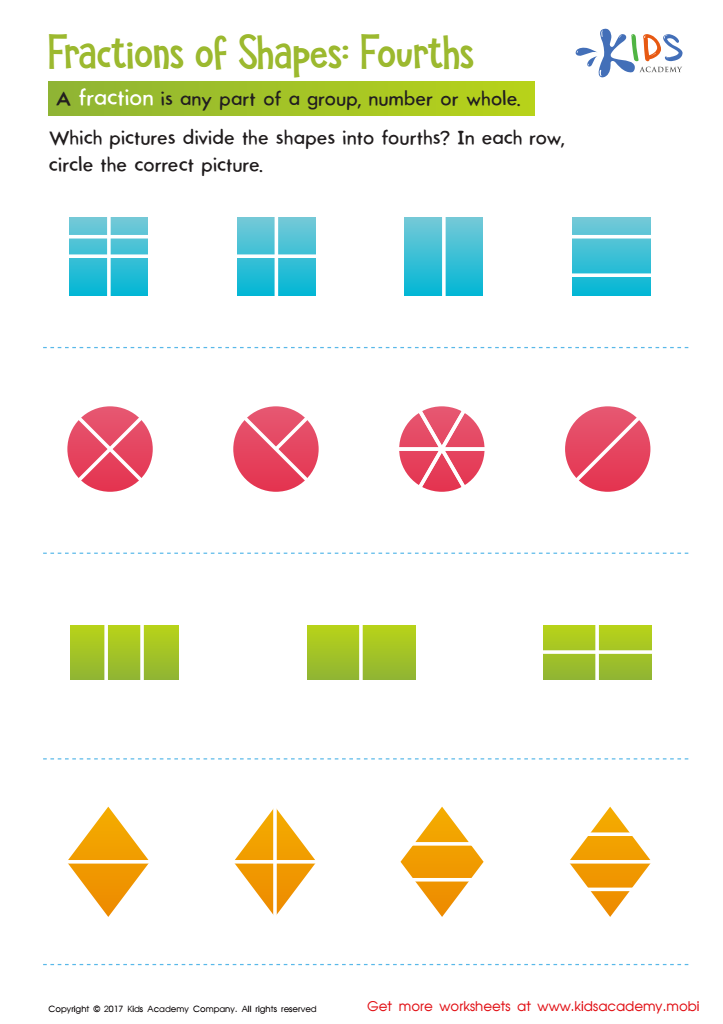
Fractions of Shapes Worksheet
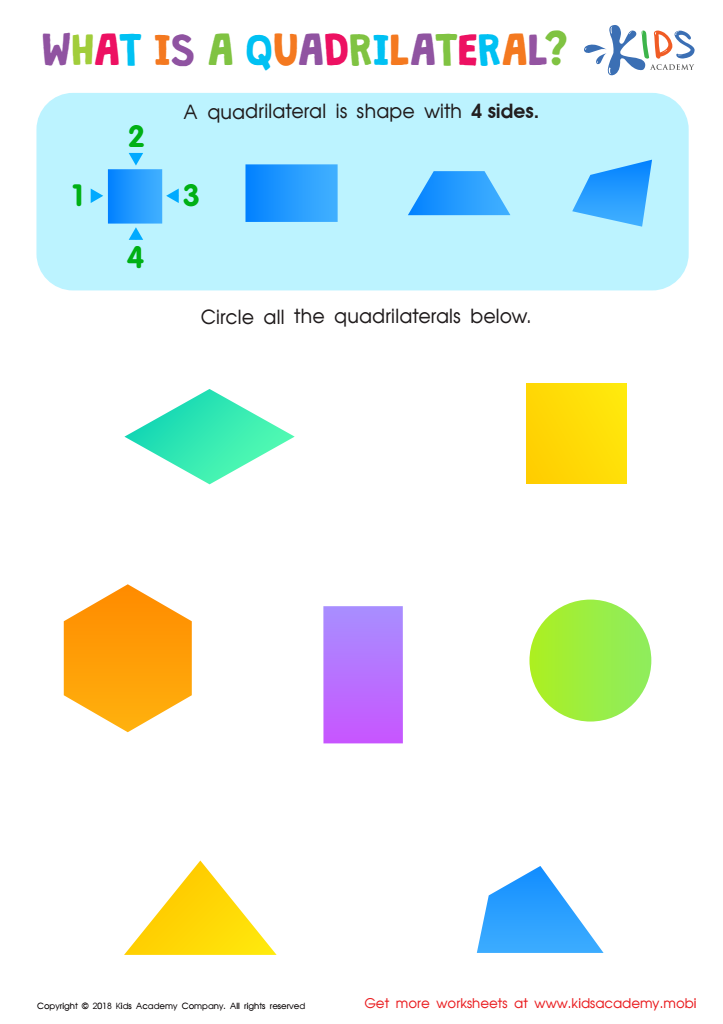
What Is a Quadrilateral? Worksheet








Recognizing shapes is a fundamental concept in geometry that plays a crucial role in the cognitive development of children aged 6-9. At this stage, children are refining their understanding of the world around them, and shapes provide a foundational framework for spatial awareness. When parents and teachers prioritize geometric shape recognition, they help children develop critical thinking and problem-solving skills.
Understanding shapes fosters not only mathematical skills but also language development. Children learn to describe, classify, and compare shapes, enhancing their vocabulary and communication abilities. Moreover, recognizing shapes is linked to advanced concepts like symmetry, patterns, and spatial reasoning, which are essential for subjects beyond mathematics, including art and science.
Incorporating shape recognition in daily activities can ignite curiosity and engagement. Parents and educators can use real-world objects, interactive games, and visuals to nurture this skill, making learning both fun and impactful. By investing time and effort in teaching shapes, adults can lay the groundwork for their children’s future academic success and enable them to navigate and understand their environment more effectively. Ultimately, recognizing shapes prepares children to tackle more complex mathematical ideas as they continue their educational journey.








