Sorting skills Geometry Worksheets for Ages 6-9
5 filtered results
-
From - To
Boost your child's mathematical foundation with our "Sorting Skills Geometry Worksheets" designed for ages 6-9. These engaging worksheets make learning geometry fun by focusing on sorting various shapes, sizes, and colors. Children will enhance critical skills like classification, comparison, and logical thinking, while aligning with important educational standards. Perfect for both classroom and home use, our worksheets provide a variety of exercises to keep young learners captivated and excited about math. Elevate your child's geometry skills and confidence with our expertly crafted sorting activities. Start your child's journey to mastering shapes today with Kids Academy!
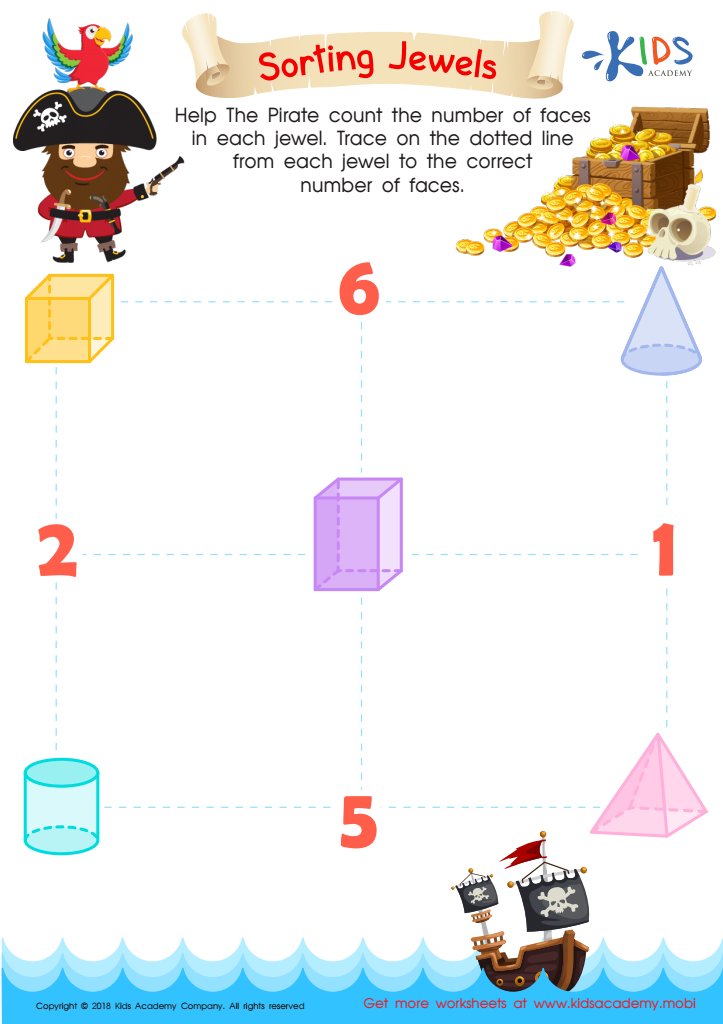
Sorting Jewels Worksheet
 Assign to My Students











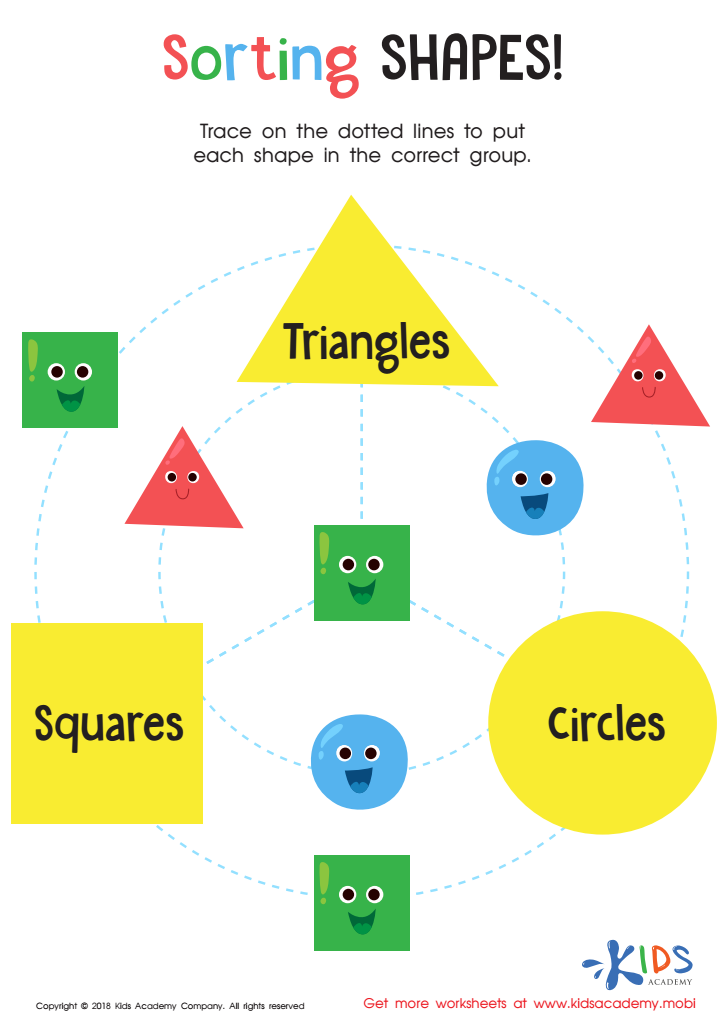
Sorting Shapes - Part 3 Worksheet
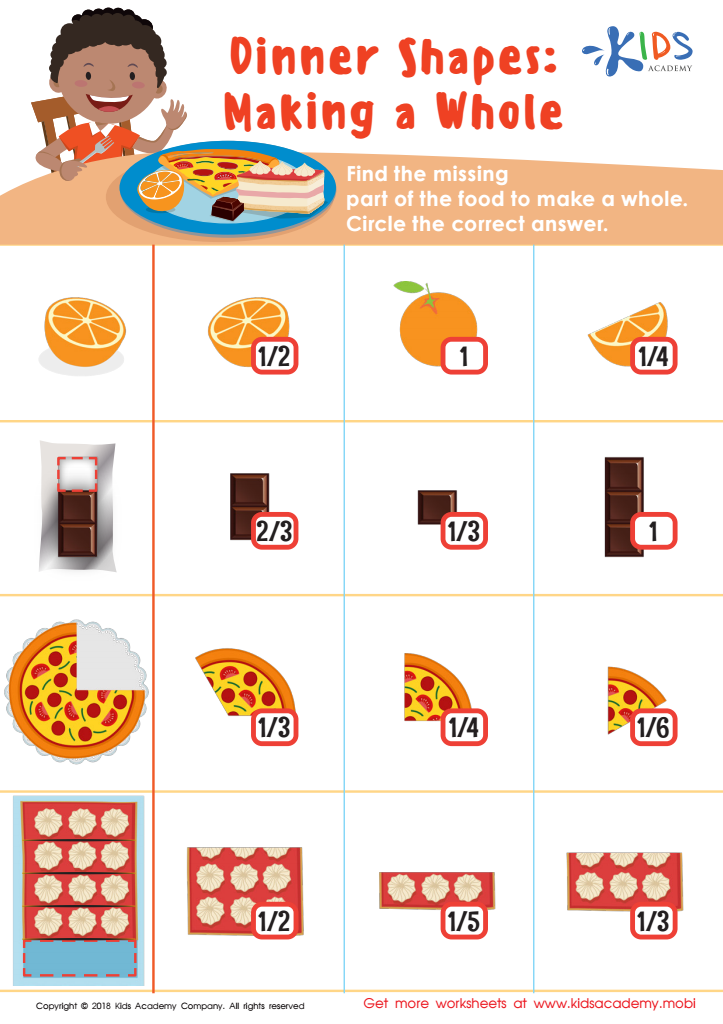
Dinner Shapes: Making a Whole Worksheet
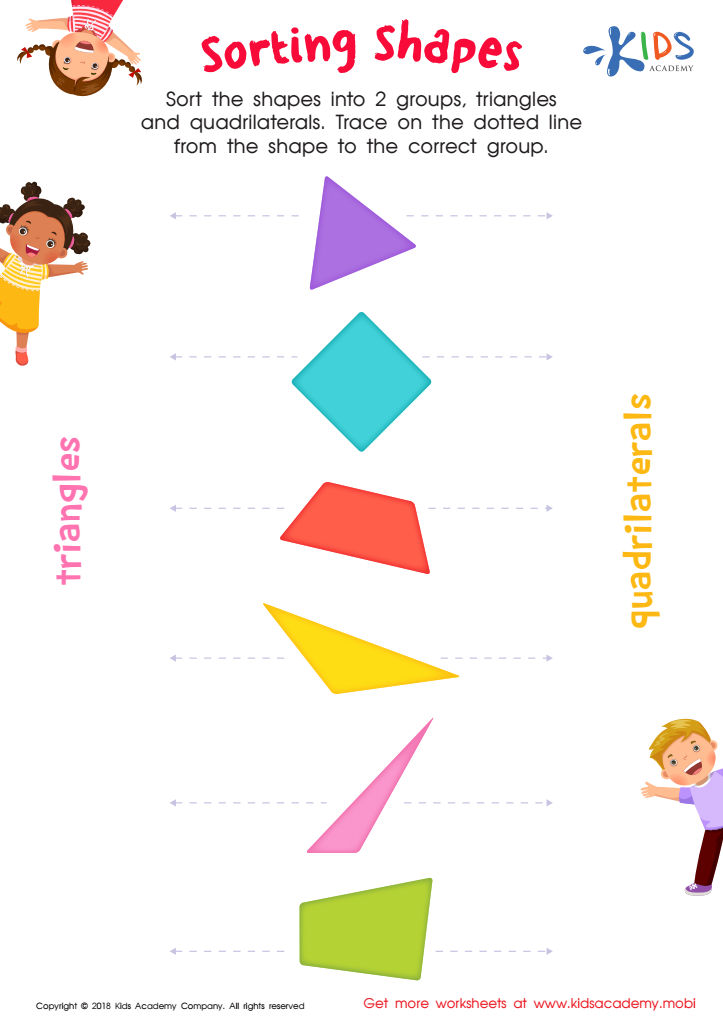
Sorting Shapes Worksheet
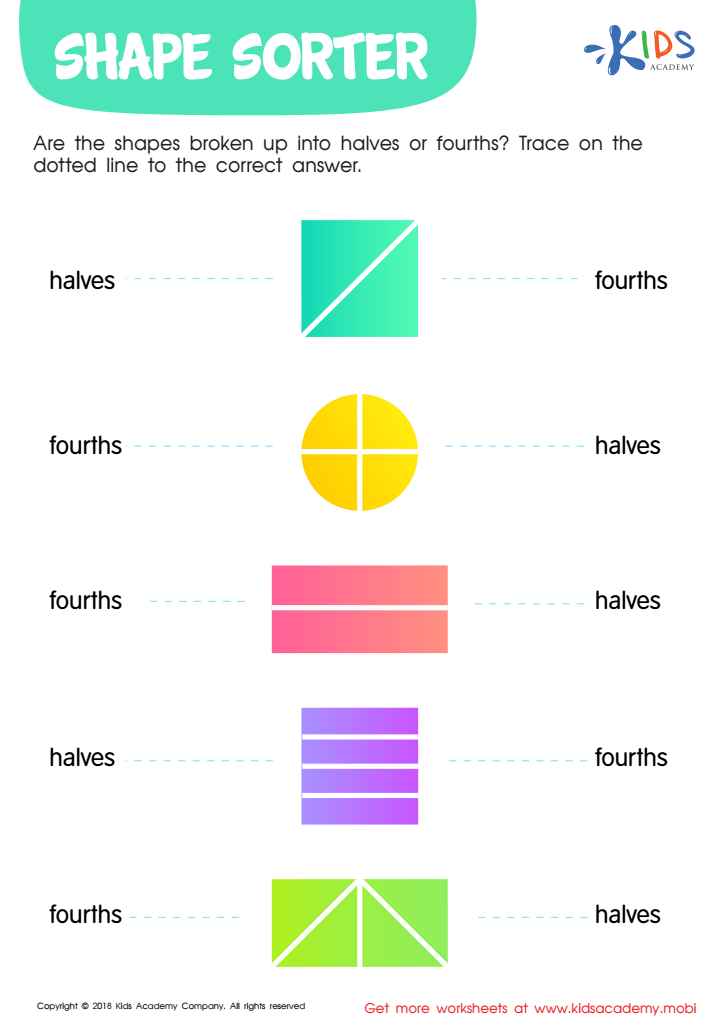
Shape Sorter Worksheet








Sorting skills and geometry are fundamental concepts in early childhood education, particularly for children aged 6-9. These skills form the building blocks for more advanced mathematical reasoning and problem-solving abilities.
Developing sorting skills helps children categorize objects based on attributes like shape, size, color, or texture. This activity is foundational because it encourages logical thinking and the ability to identify patterns, both of which are critical cognitive skills. Sorting teaches children to analyze similarities and differences, an essential step towards understanding more complex concepts in math and science.
Geometry, on the other hand, introduces children to the language and structure of the spatial world. It enhances their understanding of shape, space, and the relationships between objects. For example, recognizing and naming basic shapes—like squares, circles, and triangles—can lead to a stronger grasp of more complex geometric concepts in later years. Geometry also integrates well with other subjects, such as art and physical education, fostering a well-rounded educational experience.
Incorporating sorting and geometry into early education not only builds a strong mathematical foundation but also enhances children's problem-solving skills, spatial awareness, and ability to think logically. This sets them up for success in other academic domains and contributes positively to their overall cognitive development.








