Understanding area Geometry Worksheets for Ages 6-9
3 filtered results
-
From - To
Discover our engaging "Understanding Area Geometry Worksheets" designed specifically for children aged 6-9! These worksheets introduce young learners to the concept of area through fun, hands-on activities. With colorful illustrations and relatable examples, kids will explore different shapes and learn how to measure and calculate area in an enjoyable way. Our resources support critical thinking while enhancing math skills and vocabulary. Perfect for at-home study or classroom use, these worksheets will foster a love for geometry and build a strong foundation for future math success. Spark your child's curiosity about shapes and areas with our thoughtfully crafted materials!
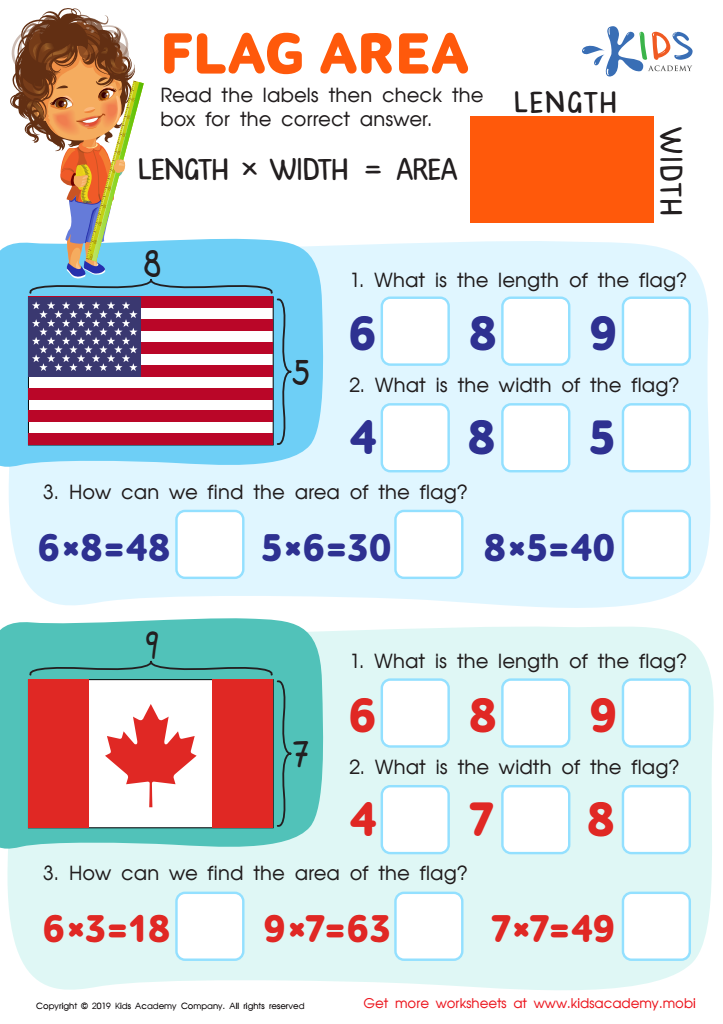
Flag Area Worksheet
 Assign to My Students











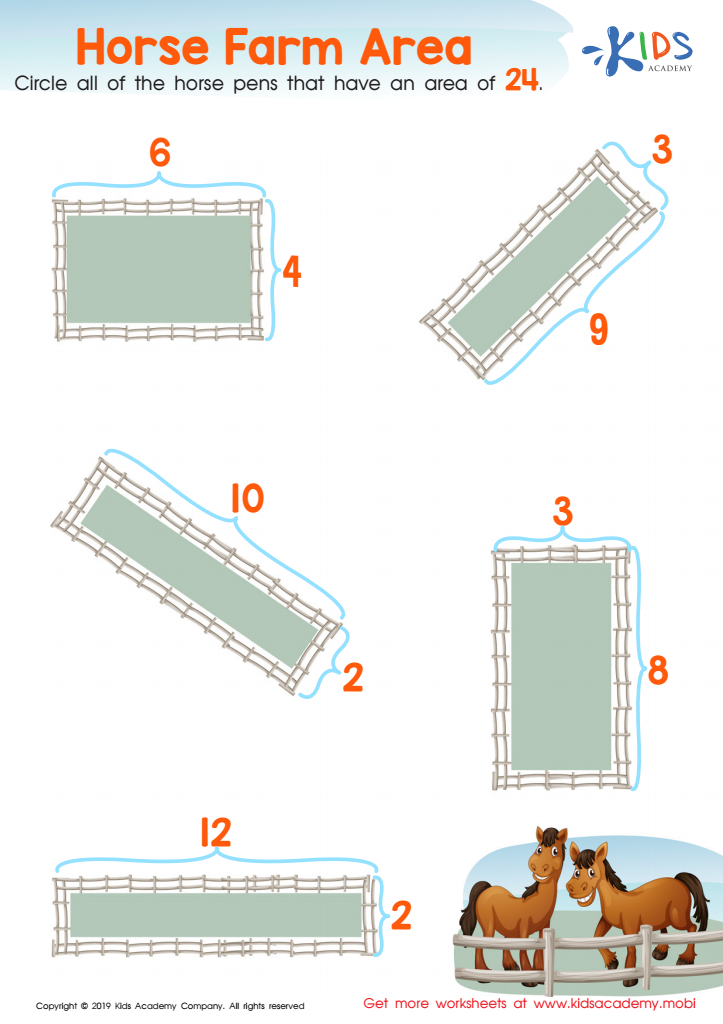
Horse Farm Area Worksheet
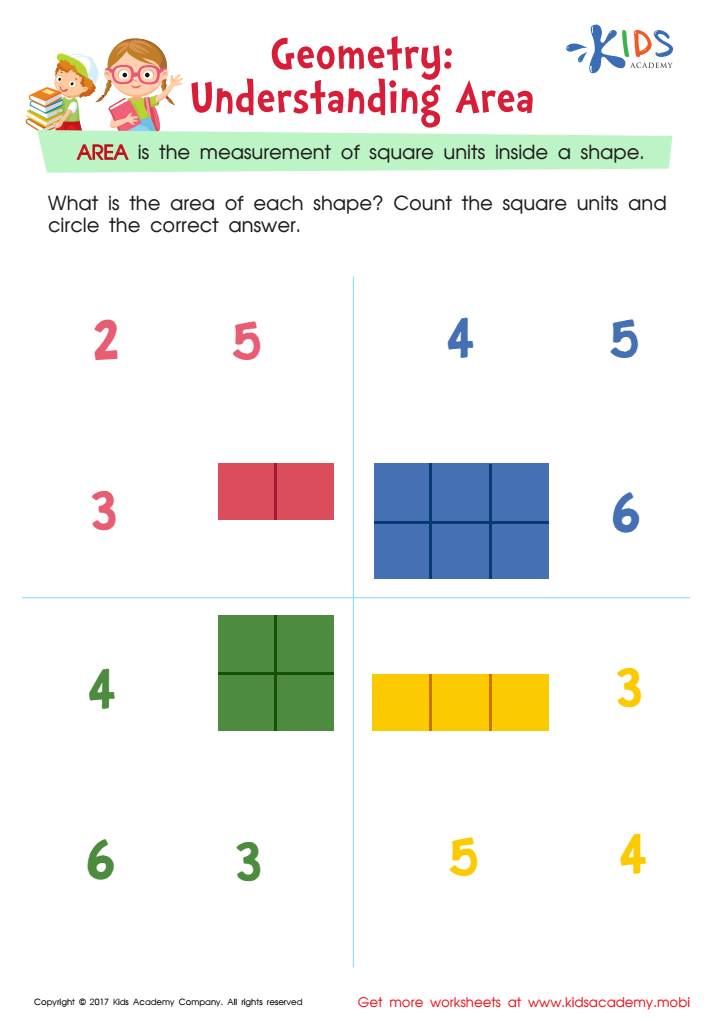
Understanding Area Worksheet








Understanding area and geometry is crucial for children aged 6-9 for several reasons. Firstly, these mathematical concepts lay a strong foundation for critical thinking and problem-solving skills. At this age, children transition from concrete to more abstract thinking, and grasping the idea of area helps them visualize and understand relationships in their environment.
Secondly, geometry is not just about shapes; it enhances spatial awareness, which is vital for everyday activities and future learning in various subjects, including science and art. Whether measuring a room for furniture or evaluating the dimensions of a picture they want to draw, understanding area is applicable in real-life situations.
Moreover, familiarity with area concepts promotes confidence in mathematics, helping to alleviate math anxiety that some children may face as they progress in their education. Engaging with hands-on activities reduces the intimidation of abstract numbers and transforms learning into an enjoyable experience.
Finally, instilling a solid grasp of geometry and area during these formative years lays groundwork for more complex mathematical concepts in the future, ensuring students are well-prepared for higher-level math. Teachers and parents play a vital role in nurturing this understanding and encouraging positive attitudes towards math.








