Mental math skills Numbers Worksheets for Ages 6-9
5 filtered results
-
From - To
Boost your child's mental math skills with our engaging worksheets designed for ages 6-9! These carefully crafted resources promote number recognition and reinforce essential arithmetic abilities through fun exercises. Children will explore various techniques to enhance their mental calculations, laying a solid foundation for future math success. By using these worksheets, kids will develop confidence and speed in solving problems without the need for pen and paper. With colorful illustrations and interactive activities, learning becomes an enjoyable adventure. Visit our website to access a variety of mental math worksheets that make math learning exciting and effective for your young learners!
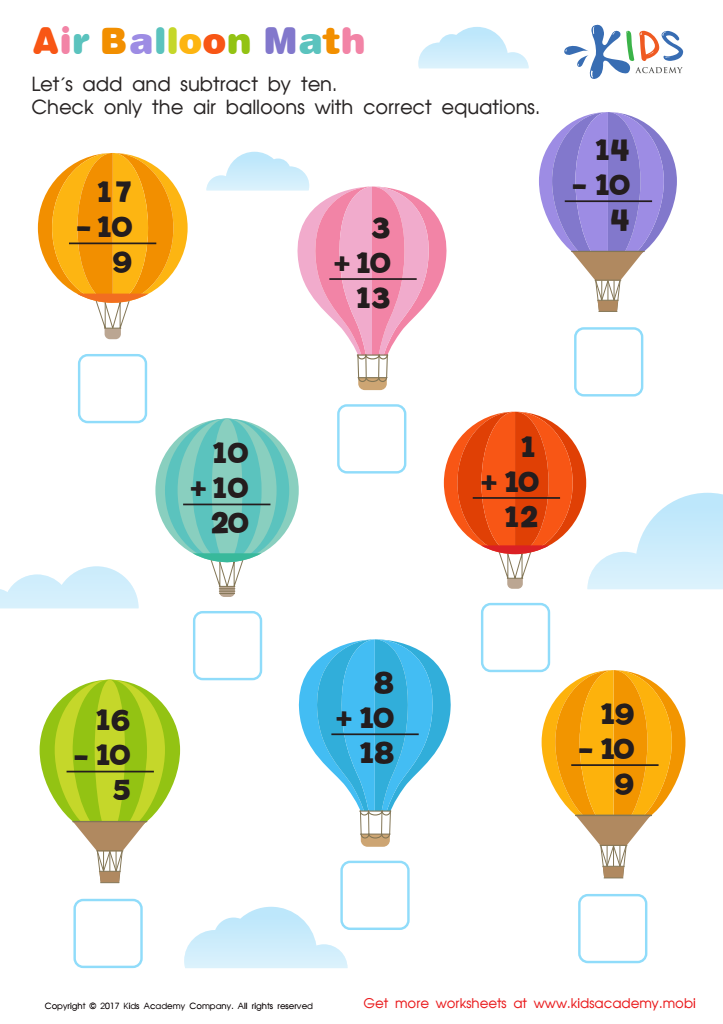
Air Balloon Math Worksheet
 Assign to My Students
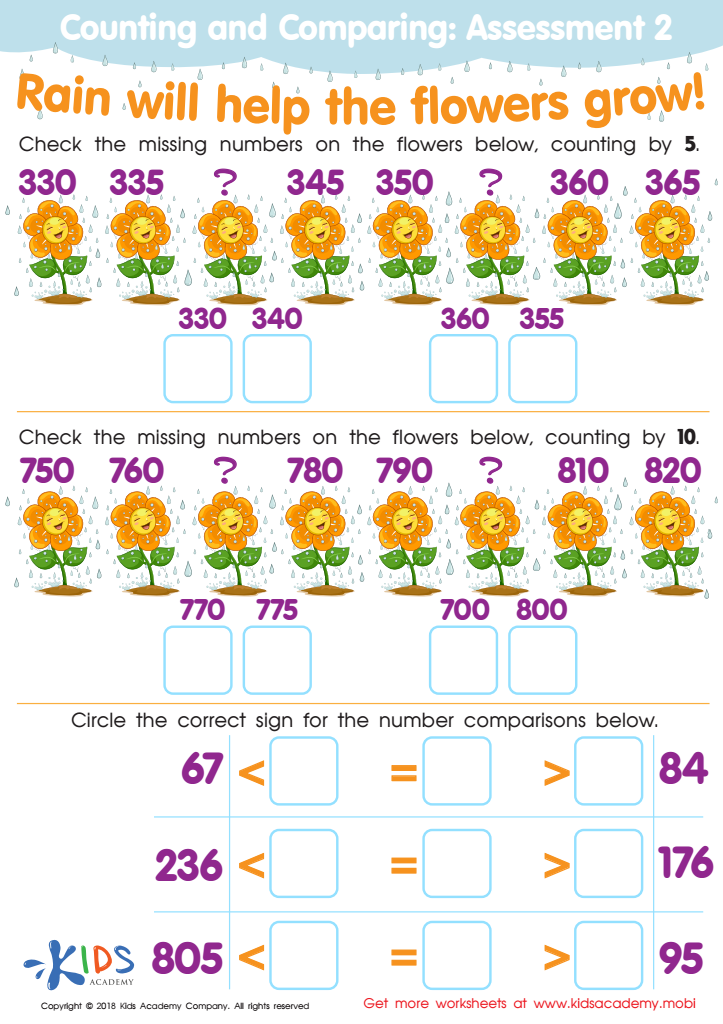
Counting and Comparing: Assessment 2 Worksheet
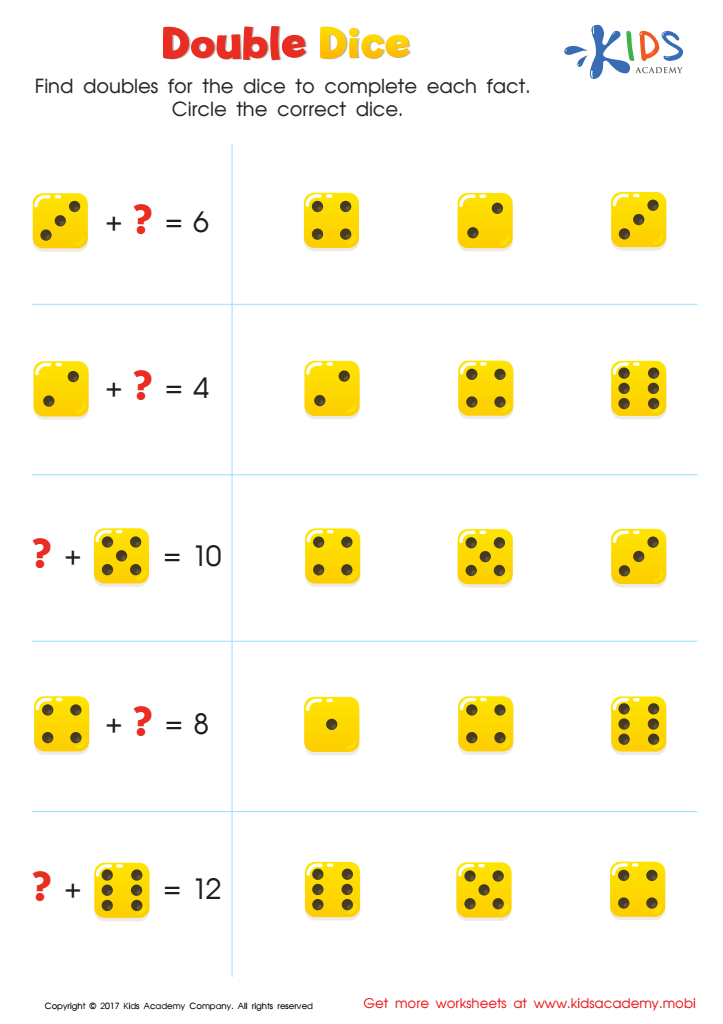
Addition Facts: Double Dice Worksheet
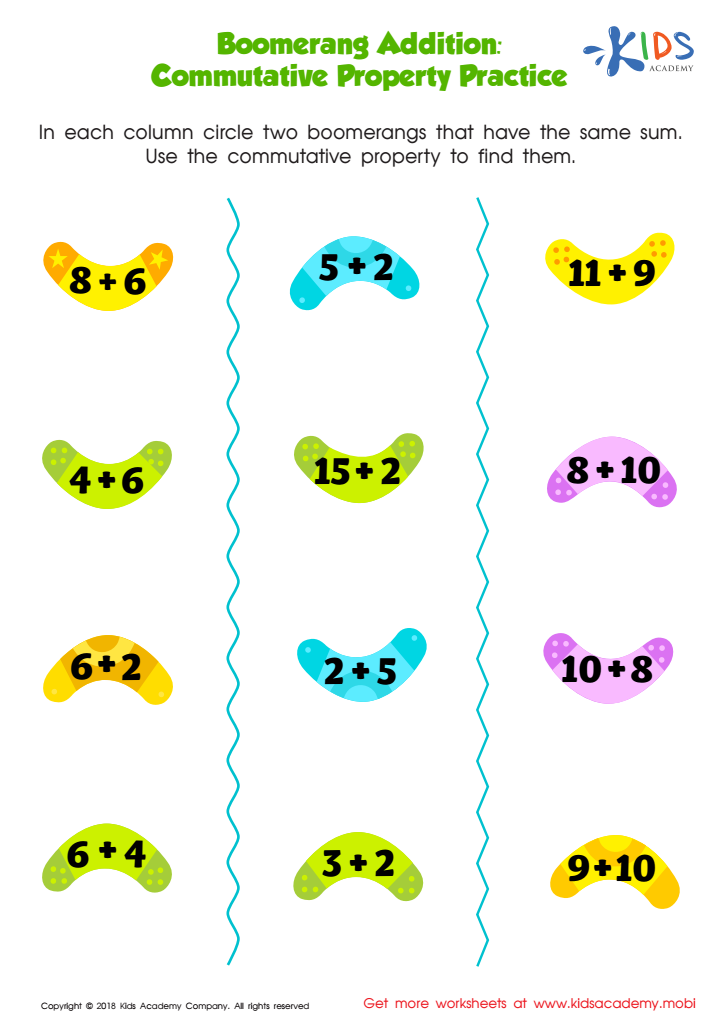
Boomerang Addition Worksheet
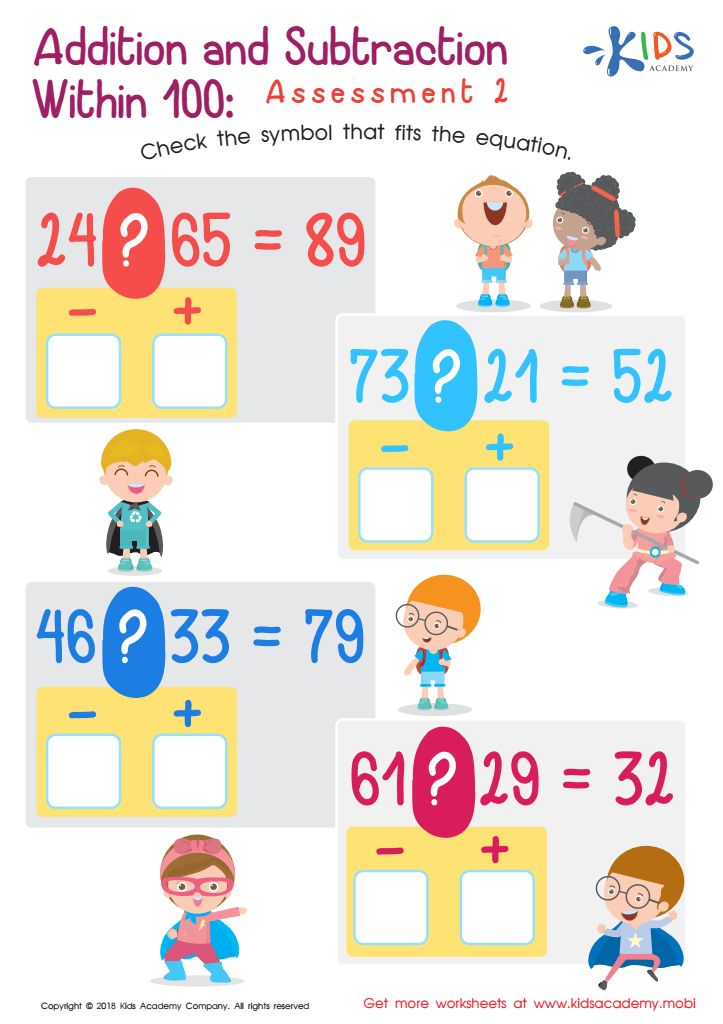
Addition and Subtraction Within 1: Assessment 2 Worksheet







Mental math skills are crucial for children aged 6-9 as they lay the foundation for strong mathematical understanding and problem-solving abilities. Parents and teachers should prioritize these skills for several reasons. Firstly, mental math enhances children's number sense, allowing them to intuitively understand concepts such as addition, subtraction, and multiplication. This understanding not only aids in arithmetic but also prepares them for more complex mathematical operations in later grades.
Furthermore, mental math promotes confidence and independence in students. When children can solve problems in their heads, they feel empowered and less reliant on calculators or written methods. This self-assurance can lead to a greater enjoyment of math; students who engage with numbers confidently often approach math with a more positive attitude.
Additionally, developing mental math skills supports cognitive development by improving memory, concentration, and overall brain function. Engaging regularly in these exercises can help children enhance their critical thinking skills and foster a strong work ethic.
Lastly, mental math skills are necessary in everyday life, enabling children to handle practical tasks, like estimating costs, managing time, or making quick decisions. By emphasizing mental math in their education, parents and teachers equip kids with essential skills for academic success and daily challenges.








