Pattern recognition Numbers Worksheets for Ages 6-9
5 filtered results
-
From - To
Explore our engaging Pattern Recognition Numbers Worksheets designed specifically for children aged 6-9. These fun and colorful worksheets aim to enhance your child's ability to identify and analyze number patterns, a vital skill for developing strong mathematical foundations. Each worksheet features a variety of exercises that encourage critical thinking and help improve number sense. Perfect for classroom activities or home practice, these resources promote active learning and help reinforce key math concepts. With targeted exercises, children will build confidence while honing their ability to recognize sequences and relationships between numbers. Start your child's learning journey today with our interactive worksheets!
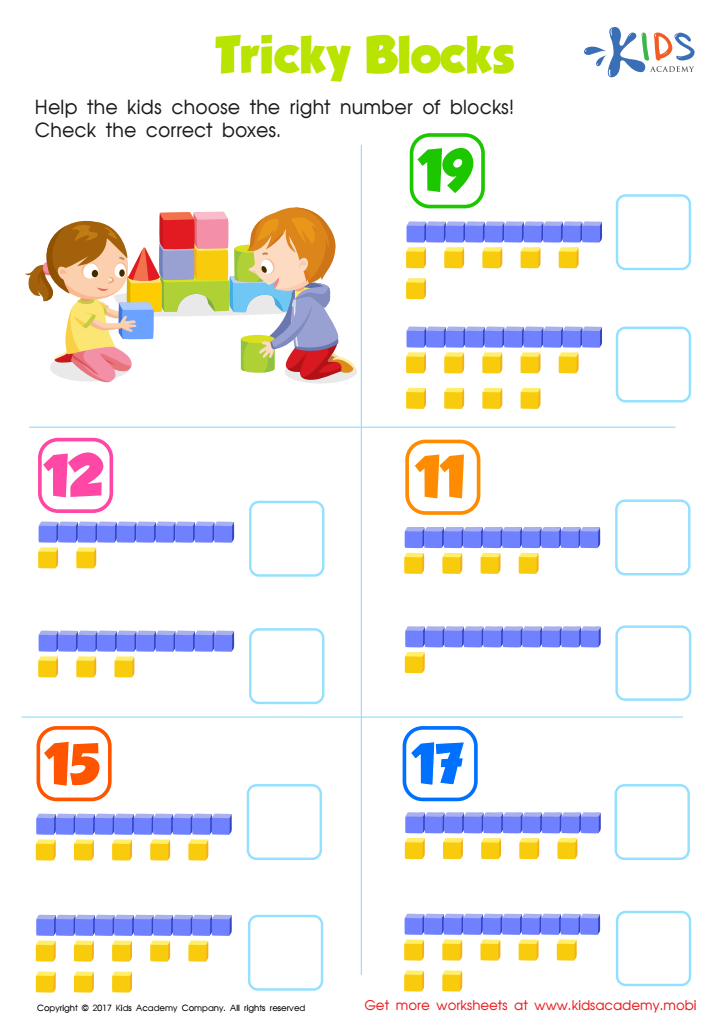
Tricky Blocks Worksheet
 Assign to My Students
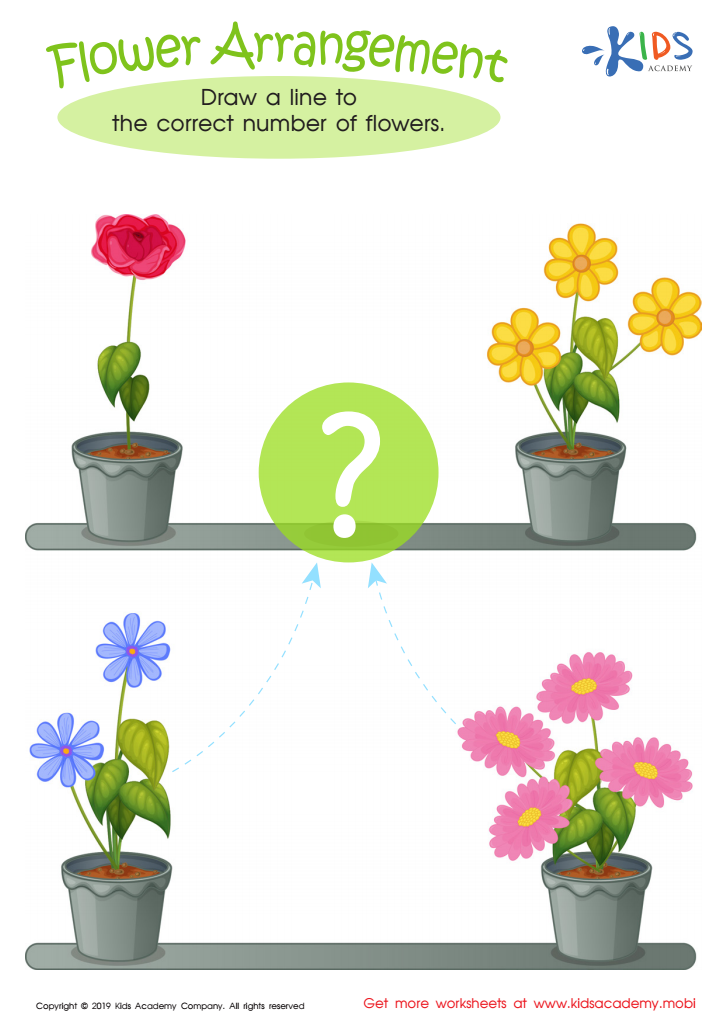
Flower Arrangement Worksheet
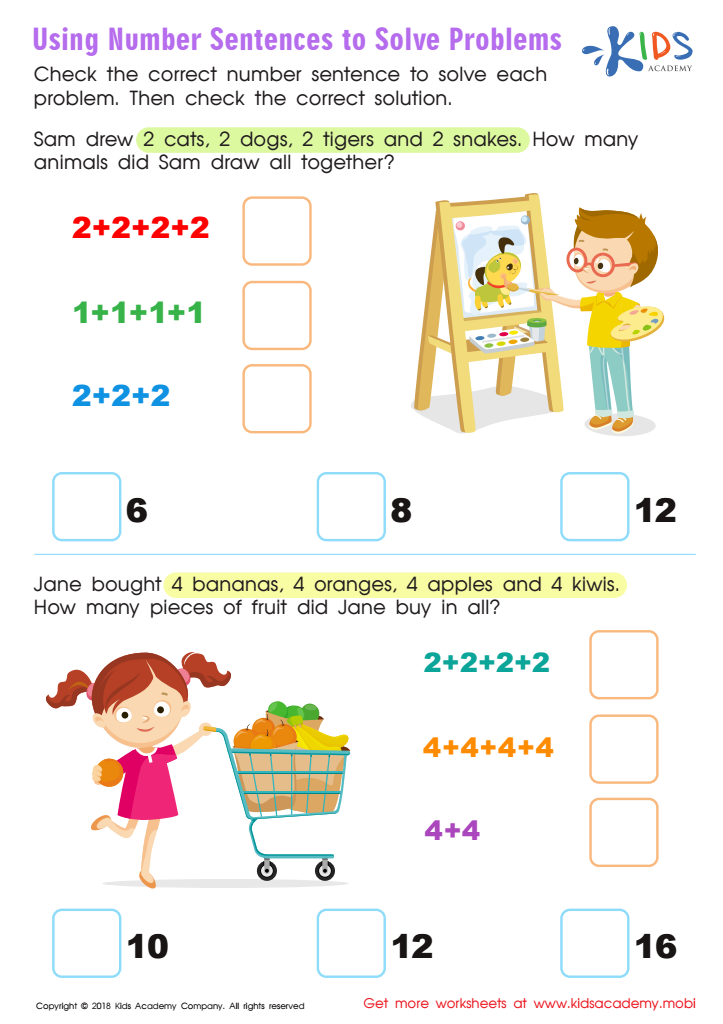
Using Number Sentences to Solve Problems Worksheet
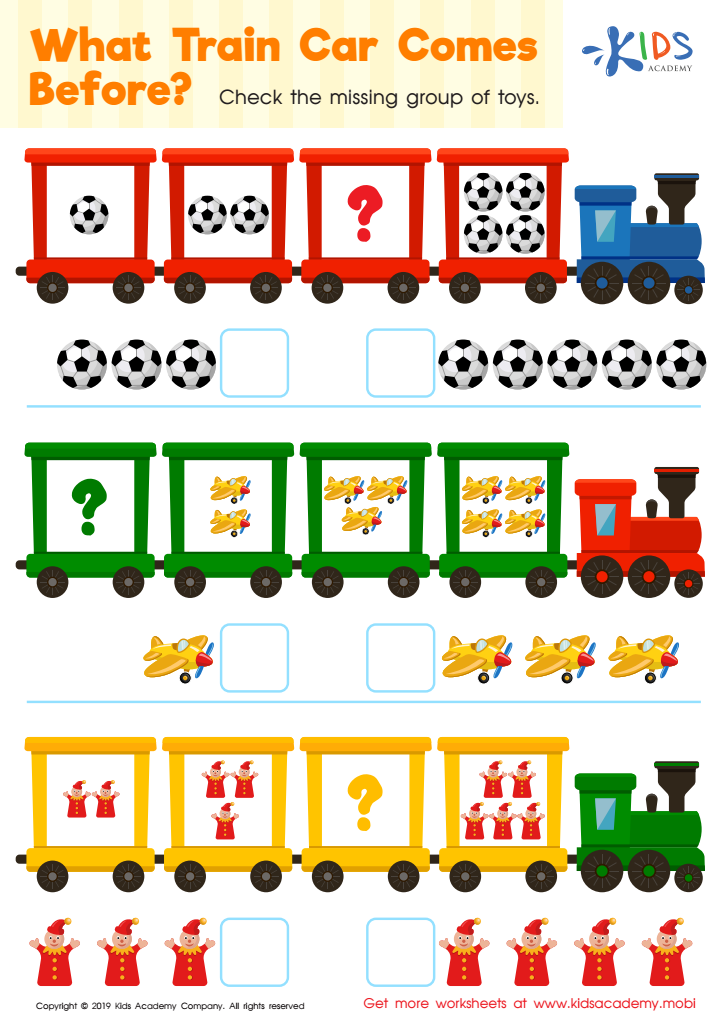
What Train Car Comes Before? Worksheet
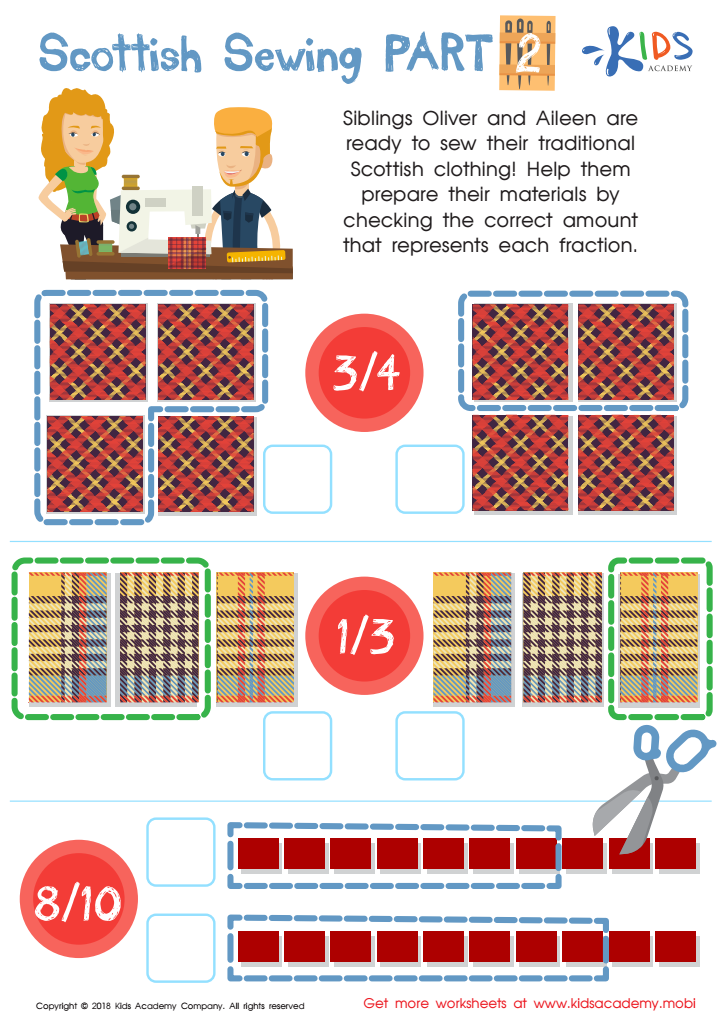
Scottish Sewing Part 2 Worksheet








Pattern recognition in numbers is a foundational skill for children aged 6-9, playing a crucial role in their mathematical development and cognitive growth. By identifying patterns, children learn to make connections between concepts, enhancing their problem-solving abilities and critical thinking skills. For parents and teachers, fostering this skill can lead to a deeper understanding of mathematical principles, laying the groundwork for more complex topics in future grades.
Engaging with number patterns helps to cultivate a child’s ability to analyze situations, draw conclusions, and predict outcomes, which are essential skills not only in math but across various subjects and real-life scenarios. Moreover, recognizing patterns can bolster students’ confidence in their math capabilities, making math feel more approachable and enjoyable.
Also, pattern recognition supports the development of skills such as addition and subtraction, as children learn to extend sequences, which ultimately fosters number sense. This early exposure creates a positive attitude towards mathematics, reducing math anxiety in later years. Overall, by supporting children’s ability to recognize patterns in numbers, parents and teachers lay a solid foundation for their future academic success and a lifelong appreciation for mathematics.








