Problem-solving practice Numbers Worksheets for Ages 6-9
3 filtered results
-
From - To
Enhance your child's critical thinking and math skills with our Problem-Solving Practice Numbers Worksheets designed for ages 6-9. These engaging worksheets encourage young learners to tackle a variety of real-world problems using numbers, promoting logical reasoning and active learning. Each worksheet offers relatable scenarios and interactive exercises that challenge children to apply their math knowledge creatively. Perfect for home or classroom use, these resources help build confidence in problem-solving abilities while making learning enjoyable. Explore our collection today and watch your child's mathematical skills flourish through fun, stimulating practice tailored to their developmental needs!
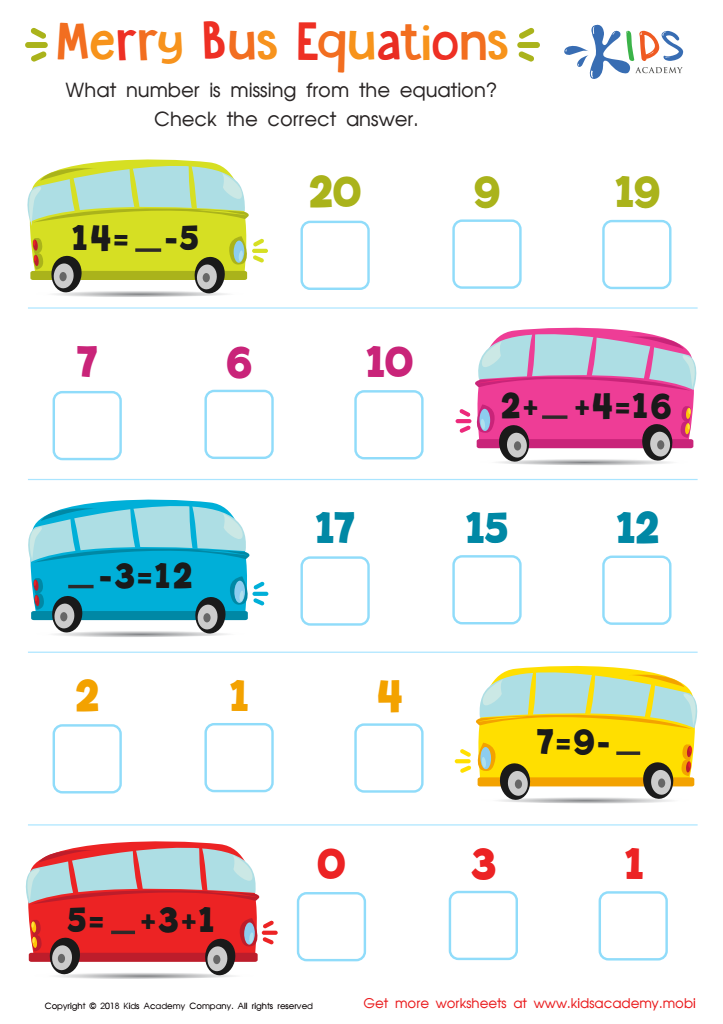
Merry Bus Equations Worksheet
 Assign to My Students
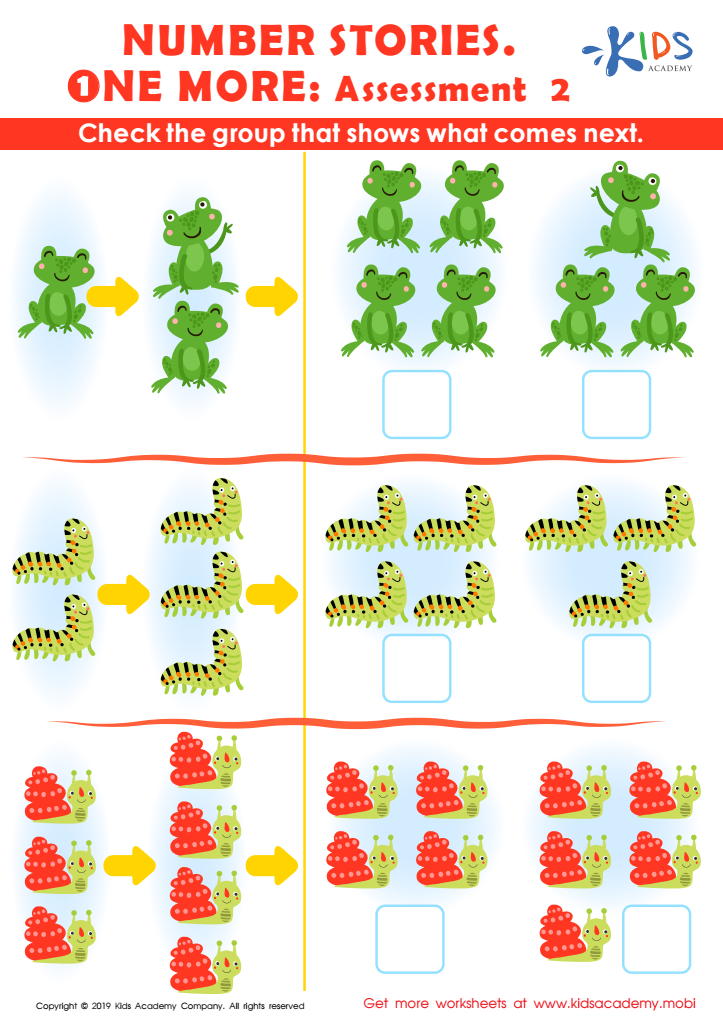
Number Stories One More – Assessment 2 Worksheet

What Is a Line Plot? Worksheet








Parents and teachers should prioritize problem-solving practice for children aged 6-9 because it lays the foundation for critical thinking and cognitive development. At this stage, children are naturally curious and eager to explore, making it an opportune time to introduce problem-solving skills. Engaging in problem-solving activities enhances a child's ability to analyze situations, identify patterns, and develop strategies to approach challenges.
Moreover, problem-solving fosters resilience and adaptability. Children learn that failure is part of the learning process and that persistence can lead to success. These skills are not just vital for mathematics but are transferable to various subjects and real-life situations, equipping children to navigate complexities as they grow.
Additionally, problem-solving practice encourages collaboration and communication among peers, promoting social skills during group activities. This collaborative approach helps children learn to listen, share ideas, and appreciate diverse perspectives.
Finally, developing strong problem-solving abilities at a young age can boost a child's confidence in their intellectual capabilities, setting them on a path toward lifelong learning and achievement. Thus, incorporating problem-solving practice is crucial for both parents and teachers in nurturing well-rounded, capable individuals.








