Understanding number relationships Numbers Worksheets for Ages 6-9
3 filtered results
-
From - To
Explore our "Understanding Number Relationships" worksheets tailored for kids aged 6-9. These engaging printable activities nurture crucial math skills, helping young learners grasp essential number concepts. Designed to promote practice and understanding, our worksheets foster connections between numbers through hands-on exercises and fun tasks. Whether it's comparing, ordering, or recognizing patterns, your child will enjoy mastering foundational math ideas in a stimulating way. Aligning with curriculum standards, these resources are perfect for both classroom and home learning. Set the stage for math success and boost your child's confidence with our expertly crafted worksheets.
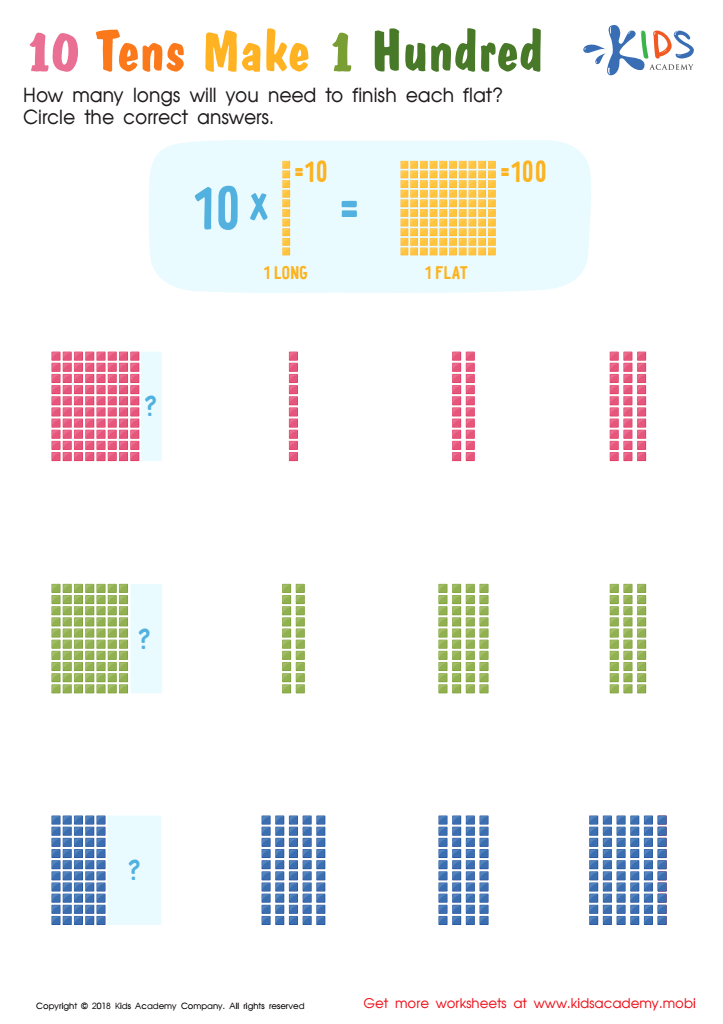
10 Tens Make 1 Hundred Worksheet
 Assign to My Students
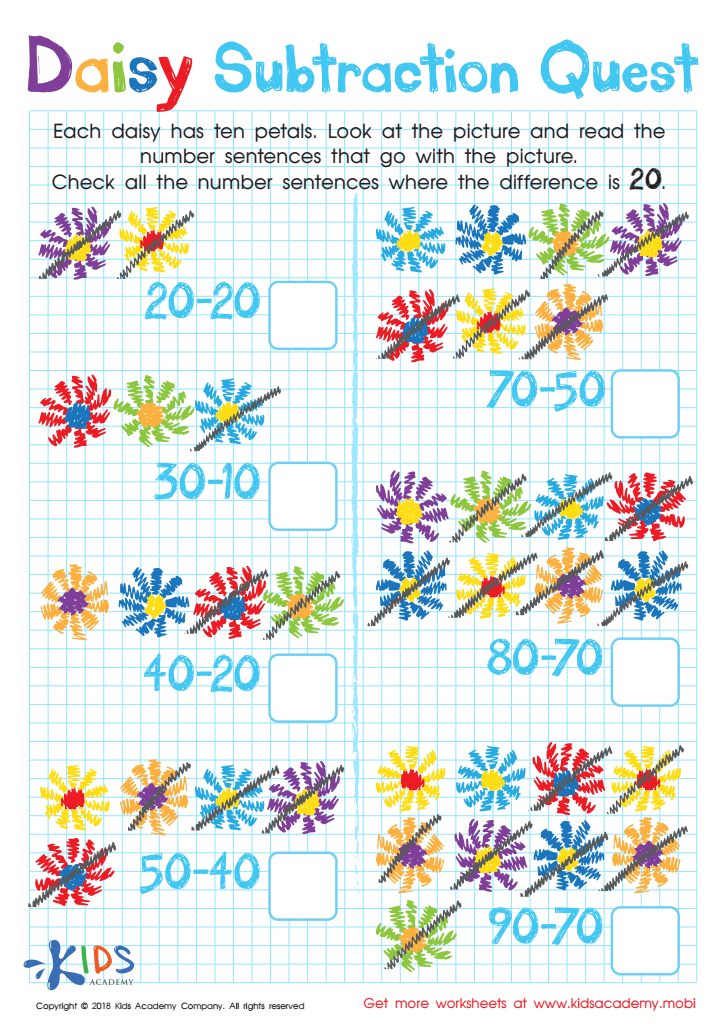
Daisy Subtraction Quest Worksheet
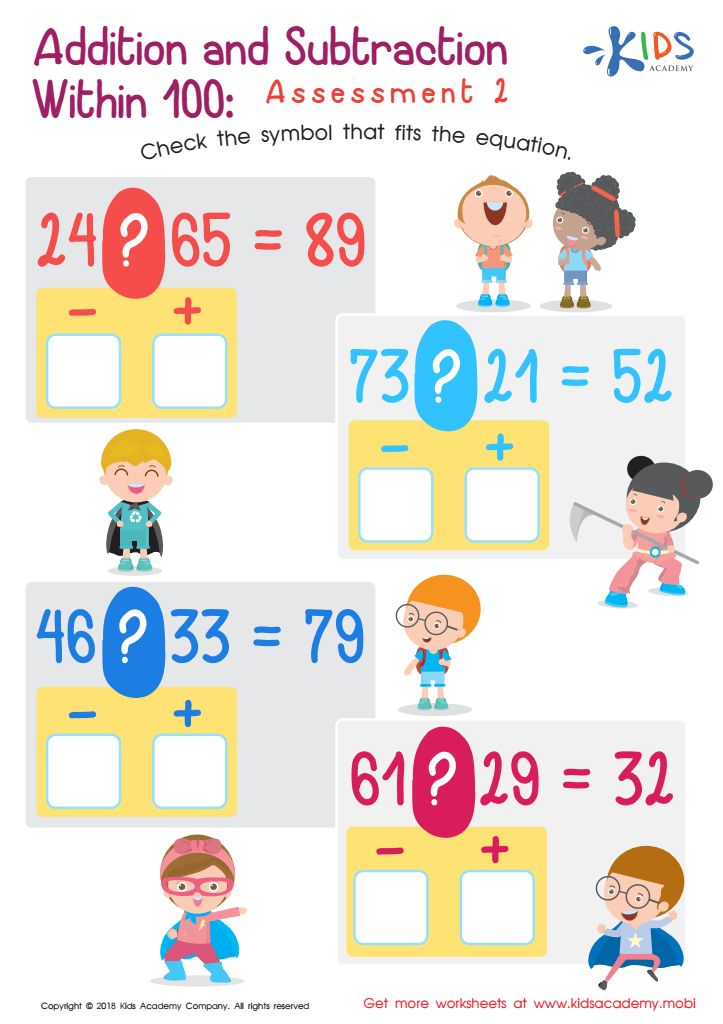
Addition and Subtraction Within 1: Assessment 2 Worksheet








Understanding number relationships is crucial for children aged 6-9 because it forms the foundation for their overall mathematical development. At this stage, children are transitioning from simple counting to more complex concepts like addition, subtraction, multiplication, and division. Grasping number relationships helps them see how numbers interact, which is essential for problem-solving and logical reasoning.
When children comprehend number relationships, they can better visualize and understand concepts such as "more than," "less than," and "equal to." This understanding is not only vital for basic arithmetic but also for more advanced mathematical theories they will encounter later. For example, recognizing that 8 is 2 more than 6 or that 5 is half of 10 gives them a deeper understanding of mathematical operations and principles.
Moreover, early proficiency in number relationships fosters a positive attitude towards mathematics. When children understand the "why" behind mathematical operations, they are more likely to find math enjoyable and are less likely to develop math anxiety. This positive disposition sets the stage for lifelong success in math-related subjects.
Therefore, parents and teachers should prioritize teaching number relationships to young children. It equips them with the critical thinking skills they need for academic success and daily life, fostering a generation of confident and capable problem solvers.








